
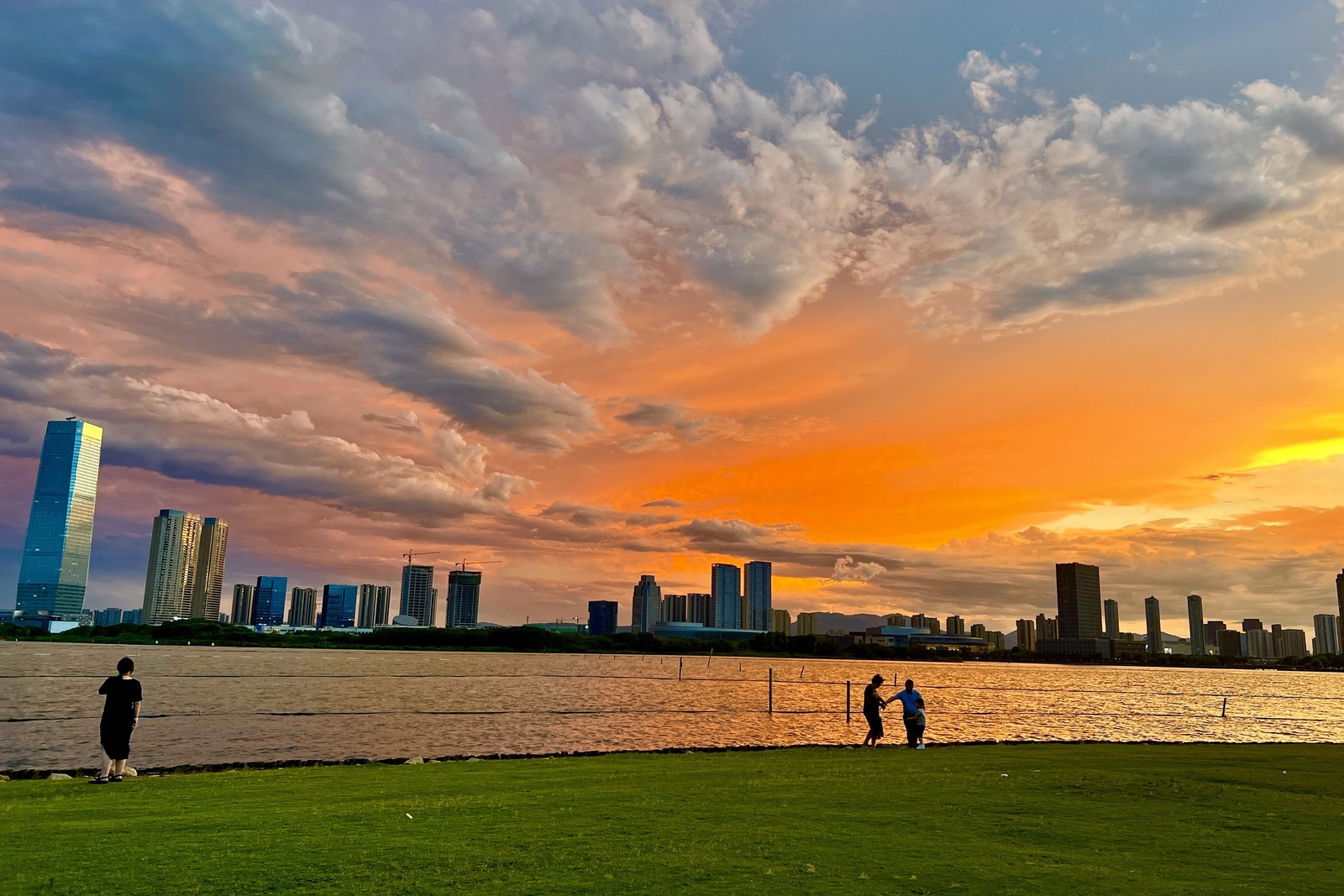
江北嘴 Jiāngběizuǐ, Jiangbeizui, literally the River North Point, is the headland of 江北区 Jiāngběi Qū, Jiangbei District, that faces 渝中区 Yúzhōng Qū, Yuzhong District, straight across the water where the Jialing River meets the Yangtze at Chaotianmen. Chongqing is a municipality of southwest China, and its two central banks stare at each other across the water: the old city on the south peninsula, the new financial district on this one. From the lawns of Jiangbeizui, Chongqing performs its best trick – an entire city skyline balanced on a peninsula across the water – while the near shore stays low, green and walkable: a theatre shaped like a ship, a science museum the colour of stone, a lawn where wedding parties gather at a polite distance. Stay for the evening and the far bank switches on its lights district by district, and the mirror reverses – you are standing inside the postcard, looking out.
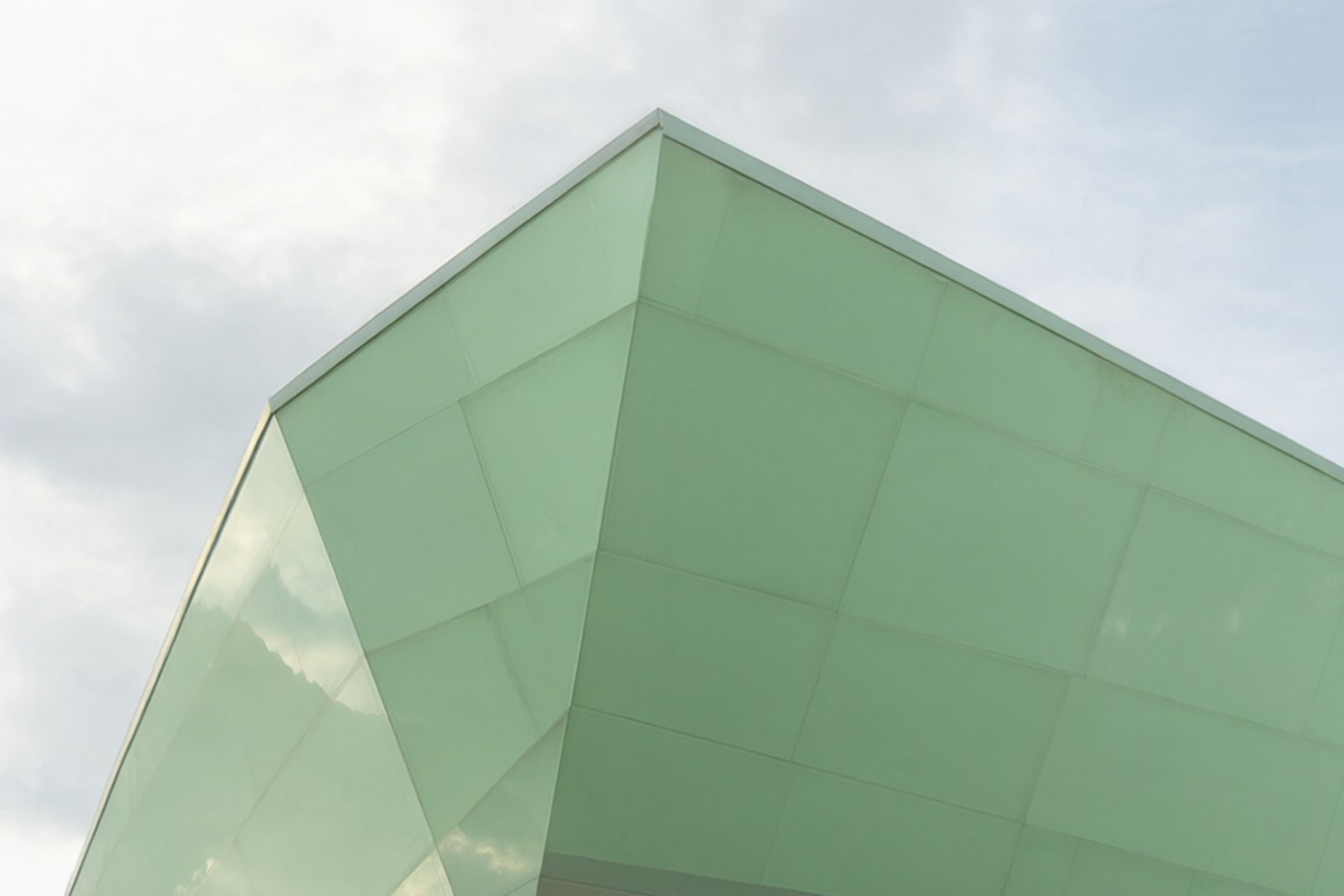
重庆大剧院 Chóngqìng Dàjùyuàn, the Chongqing Grand Theatre, anchors the waterfront, and it does not behave like a building so much as a vessel. Ground was broken on 28 January 2007 and the hall was completed and taken into use on 6 September 2009, designed by the Hamburg-based practice gmp under Meinhard von Gerkan with the East China Architectural Design and Research Institute as Chinese partner. The design theme is 孤帆远影 gūfān yuǎnyǐng, a lone sail fading into the distance: the architects credited the docks and ferries of the boat city for the image, and the pale green glass walls do read as a hull leaning out of the river haze. The building runs to roughly 103,000 square metres of floor area and tops out around 64 metres; in 2011 it took both the Luban Award and the Tien-yow Jeme Award, Chinese engineering’s two favourite honours. By day the glass glows a faint jade; by night the shell becomes a lantern and the lawn in front of it the cheapest seat in the house.
The headland itself has a shorter memory than most of the city. 江北城 Jiāngběichéng, Jiangbeicheng, was an old walled town on this spot, and through the 2000s the quarter was rebuilt wholesale as the central business district the city now calls Jiangbeizui; the towers are young and the past survives in pockets. The most surprising pocket is inside the park: the exhibition hall at 睿陵 Ruìlíng, the Rui Ling, the tomb of 明玉珍 Míng Yùzhēn, Ming Yuzhen, the fourteenth-century founder of the short-lived 大夏 Dàxià, Da Xia state, who declared himself emperor at Chongqing in 1363 and died in 1366, buried, as the records put it, north of the river. His tomb came to light in 1982 during construction work on 上横街 Shànghéngjiē, Shanghengjie, in the old town, the 玄宫之碑, the Stele of the Dark Palace, among the finds, and the site was listed for municipal protection in 1983. The small hall reopened free to the public on 30 December 2021, and since 1995 communities of the Ming family in Korea have travelled to Chongqing to pay their respects. Its opening hours are posted on site rather than published widely, so treat the door as a bonus.
重庆科技馆 Chóngqìng Kējìguǎn, the Chongqing Science and Technology Museum, stands beside the theatre and makes the material contrast deliberate: where the theatre is glass, the museum is stone and steel, it opened on 9 September 2009 and quickly became the city’s favourite free afternoon with children. Few city-centre science museums are free; Chongqing’s is, and children happily queue for the online-booked free ticket. Beyond the two buildings the park simply gives itself away: a great central lawn, tree-shaded paths and a riverbank boardwalk along the Jialing, with the road-rail bridge that carries metro line 6 over the river as scenery at one end. Weekend mornings belong to kites and to wedding photographers, who keep to the lawn’s far edge; weekday evenings belong to residents walking off dinner. The honest advice is to pick a bench on the water side and let the opposite bank do its slow evening performance.
Practicalities
Tickets. Everything outdoors here is free: the central park, the theatre’s exterior and the riverbank walk. The science museum is free with an online reservation, and the small Rui Ling exhibition hall in the park is free as well. As of October 2026, subject to change – check before you go.
Opening hours. The park is open around the clock. The science museum runs Tuesday to Sunday from 09:30 to 17:00, with last entry at 16:30. The theatre can be viewed from outside at any hour; entry to the halls follows that evening’s performance arrangements, and the Rui Ling hall posts its hours on site.
Closing day. The park has no closing day. The science museum closes on Mondays except statutory holidays. The Rui Ling hall’s arrangements are announced on site, so if the little museum is the reason for the trip, confirm locally first.
Getting there. Metro line 6 serves the headland directly: 大剧院 Dàjùyuàn, Dajuyuan, the Grand Theatre station, and 江北城 Jiāngběichéng, Jiangbeicheng, both empty into the CBD within a short walk of the lawn, the theatre and the museum.
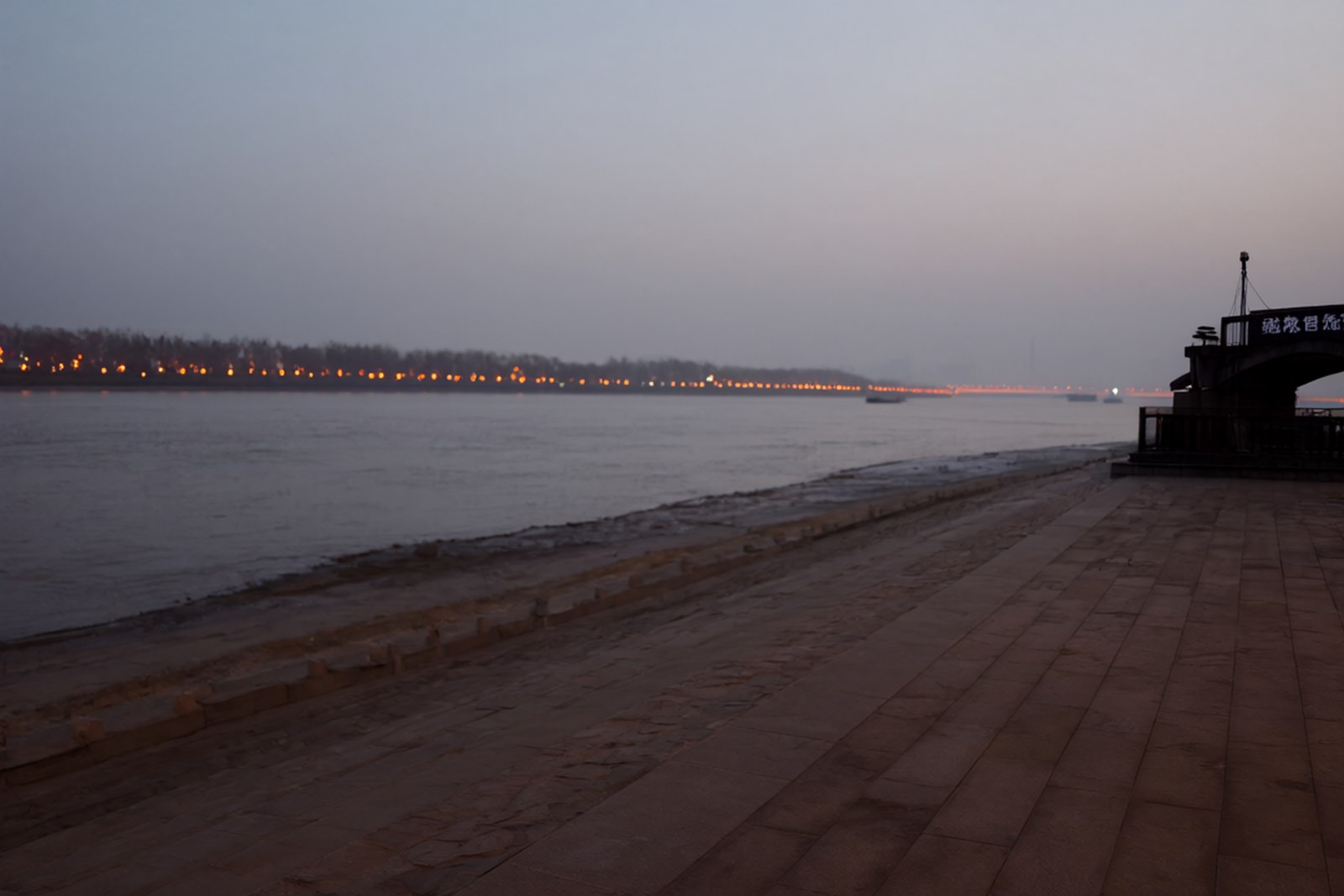
flowcloud would say that Jiangbeizui is the bank Chongqing built so it could stand back and admire itself, and that a city which gives its best view away for free, on a lawn, with a glass ship parked at one end, has worked out what riverfronts are actually for.
Getting there: Jiangbeizui is the CBD headland of Jiangbei District, Chongqing, a municipality of southwest China, facing the old Yuzhong peninsula across the confluence of the Jialing and Yangtze rivers; the Chongqing Grand Theatre, begun on 28 January 2007 and completed on 6 September 2009 to a gmp design themed on a lone glass sail, and the free Chongqing Science and Technology Museum of 9 September 2009 line the waterfront of a free, all-day park, with the free tomb-museum of Ming Yuzhen among its trees; the science museum keeps 09:30 to 17:00 Tuesday to Sunday and closes on Mondays except statutory holidays, with current booking and on-site notices to follow for it and the Rui Ling hall; arrive by metro line 6 to Dajuyuan or Jiangbeicheng (checked October 2026, subject to change).