
The Epic’s Homeland: Janger Culture City and the Hero Halls of Hoboksar
英雄史诗传千载,金顶穹庐待客来 Yīngxióng shǐshī chuán qiānzǎi, jīndǐng qiónglú dài kè lái – The heroes’ epic passes down a thousand years; the golden-domed yurt-hall awaits its guests.
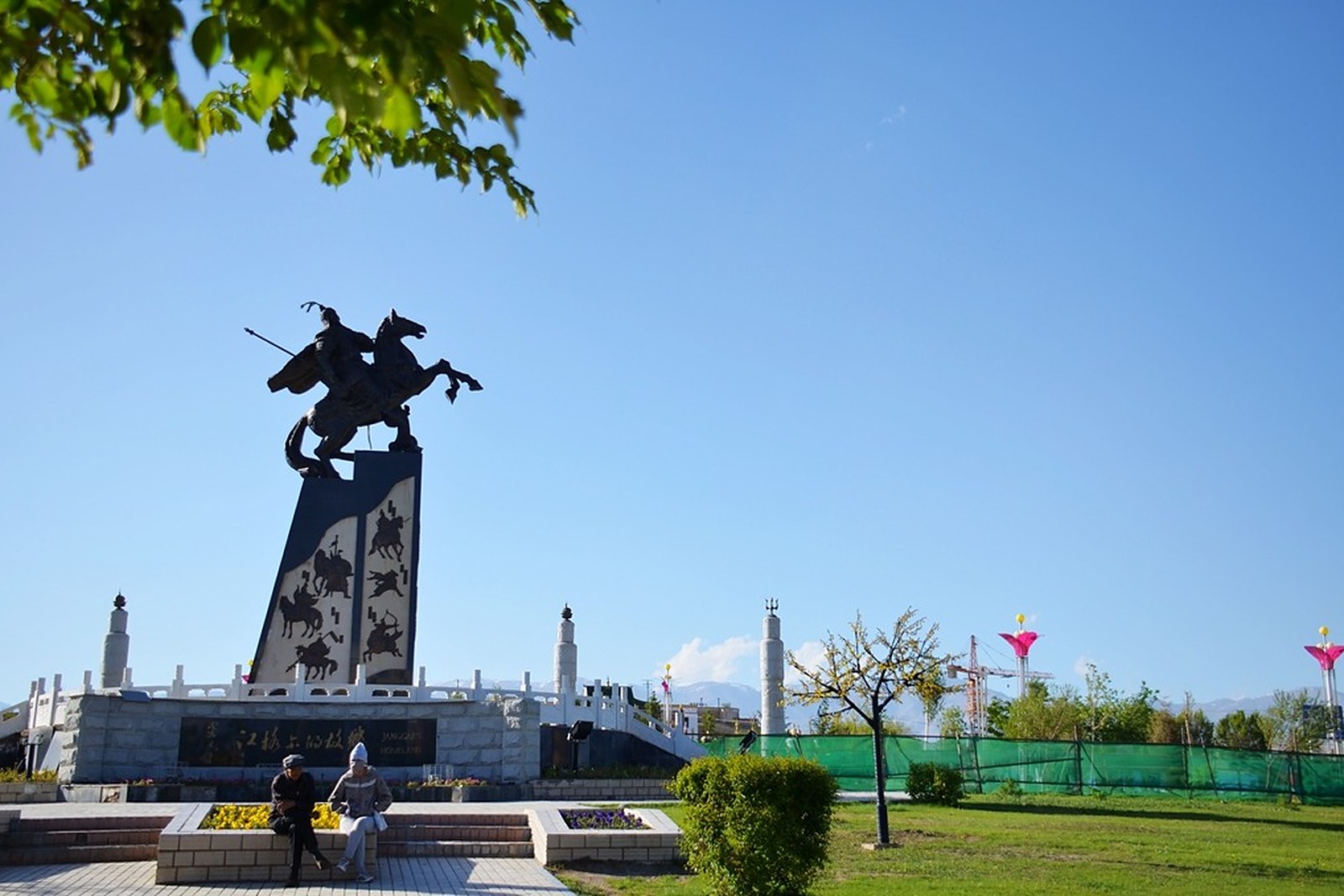
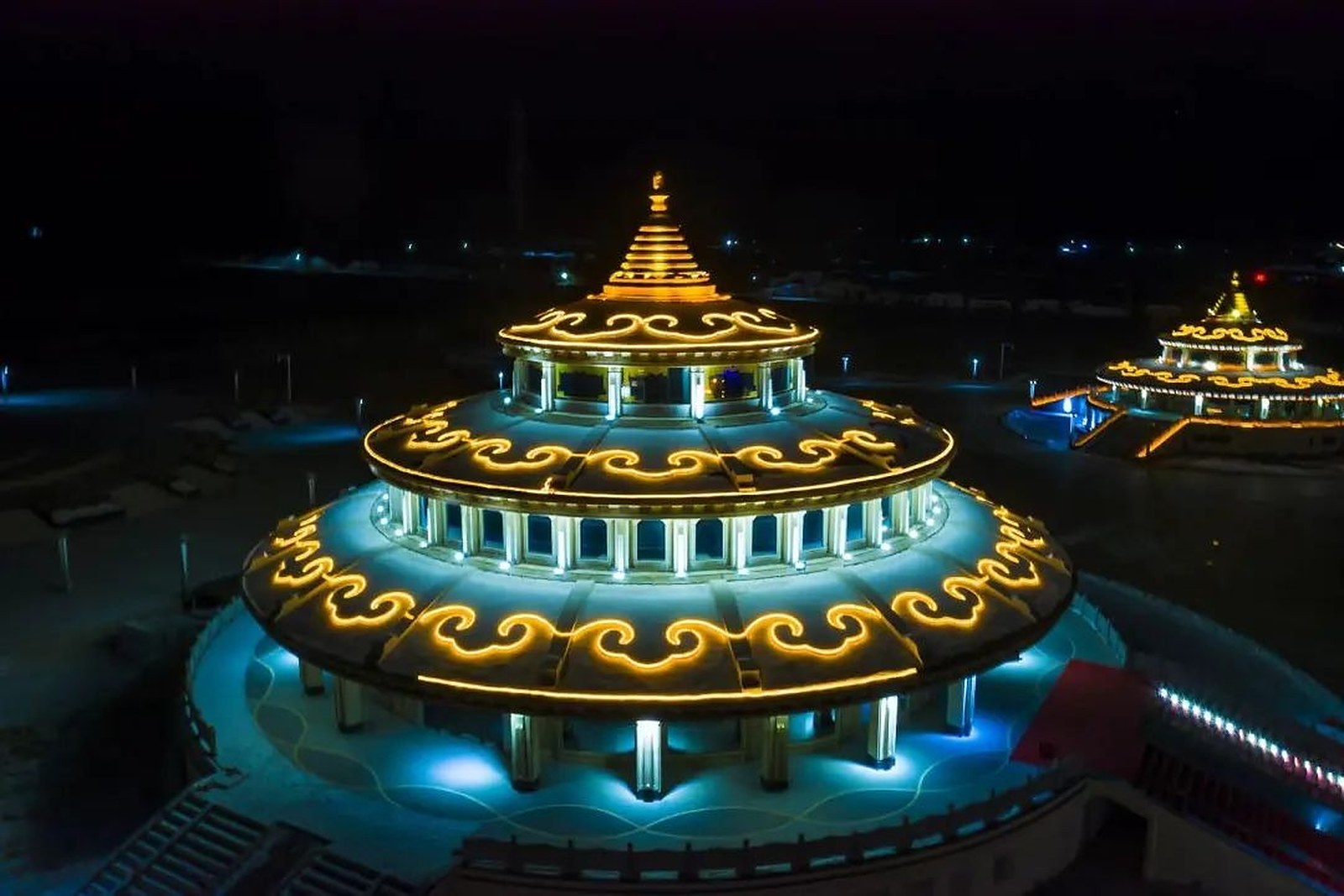
江格尔文化城 Jiānggé’ěr Wénhuà Chéng the Janger Culture City stands on the steppe edge of 和布克赛尔 Hébùkèsài’ěr Hoboksar, Xinjiang’s Mongol autonomous county and the self-declared homeland of the Janger – the living epic of the hero Jangar and his warriors, sung to this day at county gatherings (worth confirming the details for the hall hours, since the culture city doubles as museum and festival ground and its calendar follows the county’s). The architecture says everything at once: a great golden-domed hall shaped like a noble’s yurt, ranks of hero statues on the square, and the snow ridges of the Sawur range behind.
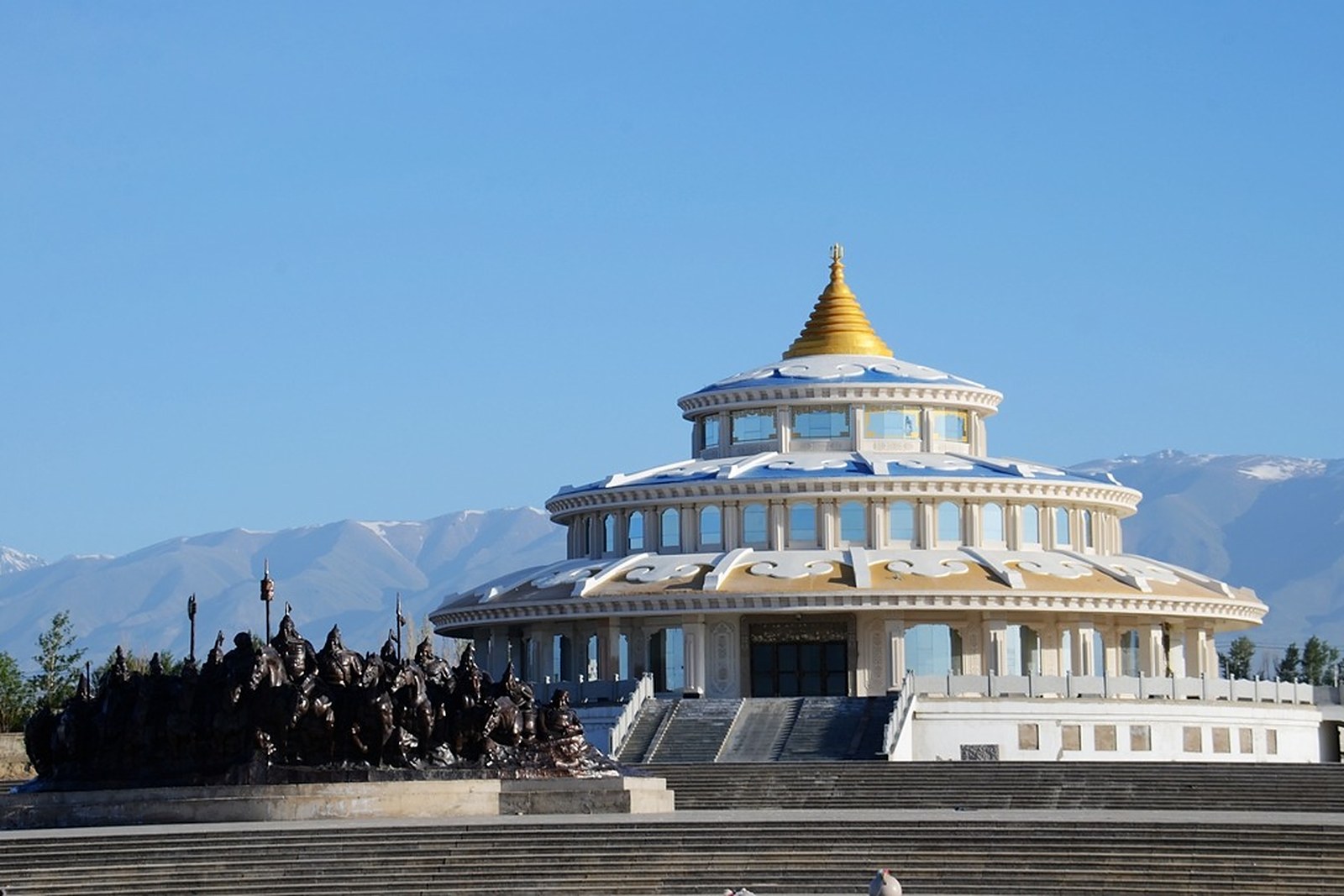
Two plans cover the visit. The first is the hall circuit: the exhibits trace the epic’s verses, the singers’ lineage and the Oirat Mongol history of the county, with the great hall’s interior worth the ticket alone. The second is the town plan – the county seat keeps a Janger square where elders still perform on summer evenings, and the steppe roads out of town pass herder camps within ten minutes. The stock answer in kind: see the hall in the morning, eat the county’s lamb noodles at noon, and come back to the square when the light goes gold.
Call it honestly: Hoboksar is a long drive from anywhere – three hours plus from Tacheng city – and the culture city is a modest-scale museum built around one enormous idea (worth confirming the details for festival dates, when the square fills with singers and the county’s hotels fill with them too). What repays the journey is the singing itself: a Janger performance holds a room the way no display case can, and the hall gives that tradition a proper roof – gilded, domed, and shaped like the tent the epic was first sung in.
Practicalities
Nearly everything else on this Tacheng list trades a different mood on the same prefecture: choose 安集海大峡谷 Ānjíhǎi Dàxiágǔ the Anjihai Grand Canyon for the red strata, 塔城红楼 Tǎchéng Hónglóu the Tacheng Red Mansion for the trade-era brick, 巴尔鲁克山 Bā’ěrlǔkè Shān the Barluk mountains for the bloom slopes, or 库鲁斯台草原 Kùlúsītái Cǎoyuán the Kurustai grassland for the flat meadows – four more doors into the same 塔城地区 Tǎchéng Dìqū Tacheng Prefecture. Once the drive is planned, our Tacheng food map fills the eating hours.
Practicalities
Words and Names
flowcloud would say the Janger hall is the epic’s campfire made permanent: gilded walls, a domed roof, and seventy heroes standing guard on the square. All checked November 2026.
Getting there: Hoboksar county town sits about two hundred kilometres north-east of Tacheng city on paved highways; buses and shared cars run from Tacheng and Karamay, self-drive takes roughly three hours, and the culture city stands on the county town’s southern edge beside its square. All checked November 2026.