
An Isle of Poets Between Two Pagodas: Jiangxin Island
双塔凌空镇瓯江,一屿诗心照古今 Shuāng tǎ líng kōng zhèn Ōu Jiāng, yī yǔ shī xīn zhào gǔ jīn – Twin pagodas stand guard over the Ou River; one isle of poetic hearts lights past and present
江心屿 Jiāngxīn Yǔ Jiangxin Isle floats midstream in the 瓯江 Ōu Jiāng Ou River directly opposite downtown Wenzhou – a ten-minute ferry from the quay, and one of China’s four famous river isles. Its two pagodas, Tang in origin and rebuilt through the Song, stood for a thousand years as lighthouses guiding ships into the port, and the world navigation federation counts both among the world’s hundred historic beacon towers. 谢灵运 Xiè Língyùn Xie Lingyun wrote here first, and the poets kept coming – 文天祥 Wén Tiānxiáng Wen Tianxiang sheltered on the isle, and the courtyard of 江心寺 Jiāngxīn Sì Jiangxin Temple still holds the steles they left.
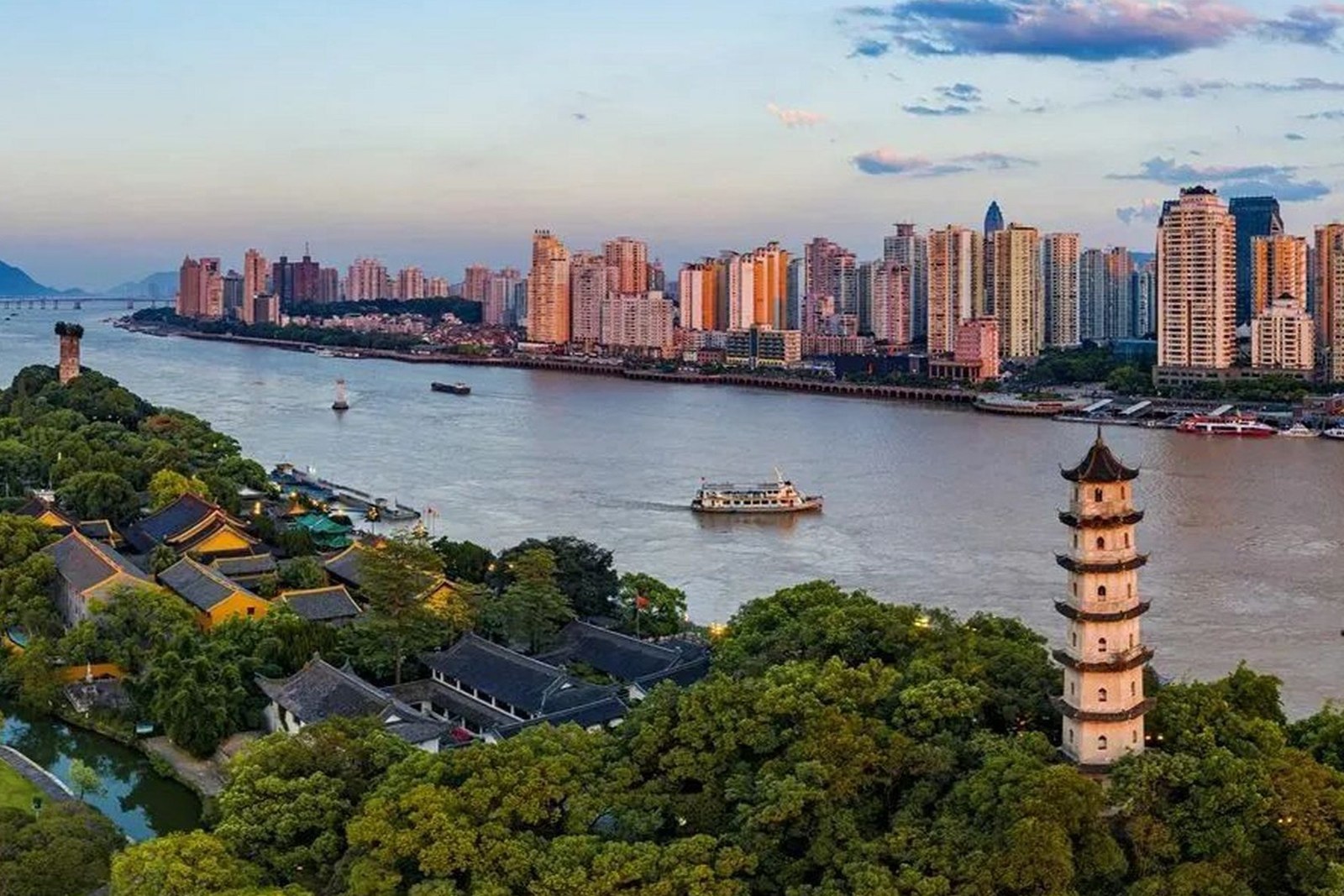
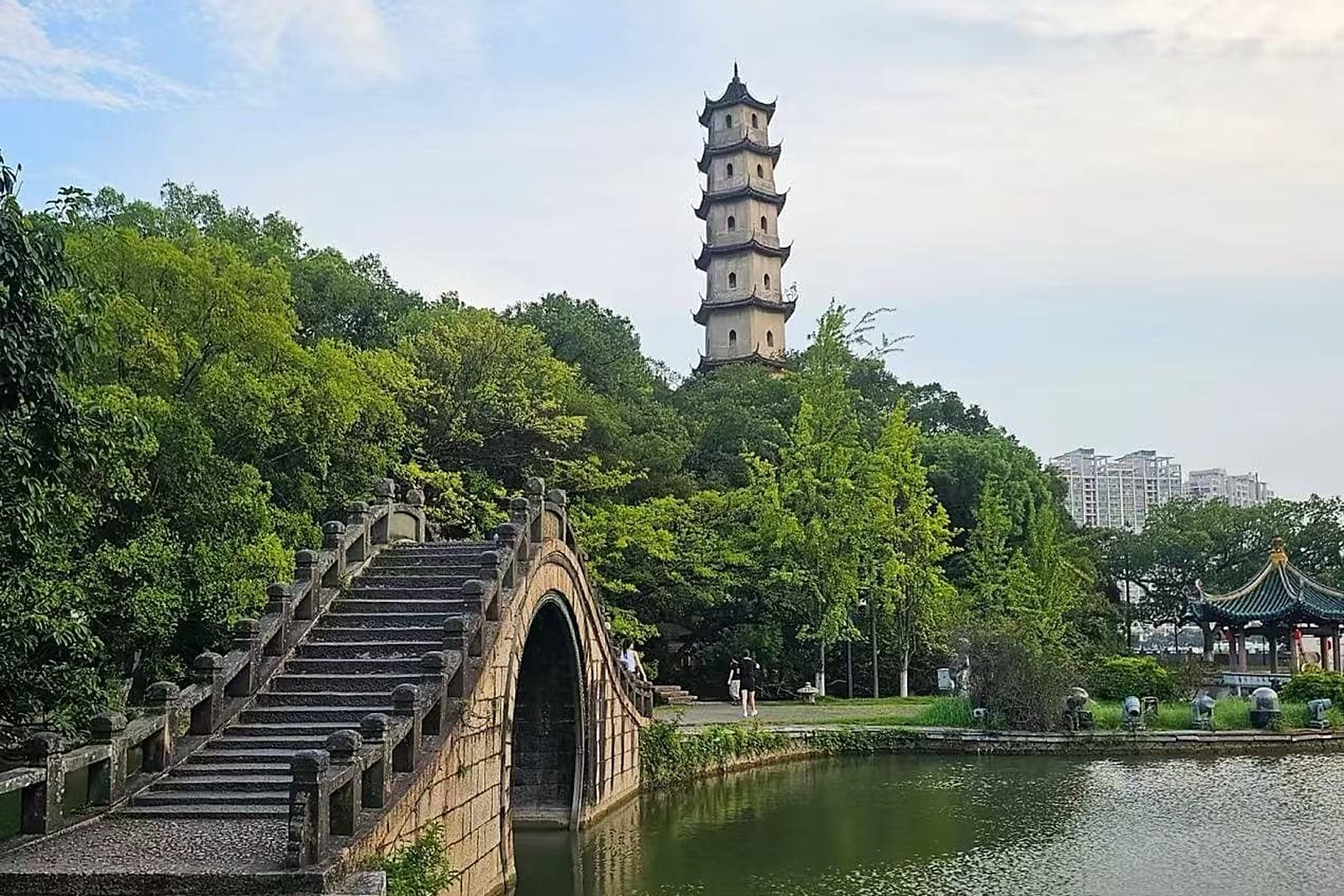
The ferry crossing is half the pleasure: the city skyline slides past, then the isle’s green closes over – pagoda east, pagoda west, temple bell between. On the island the walks loop the two towers past the Song well, the old British consulate lawn and the camphor trees said to predate the temple itself.
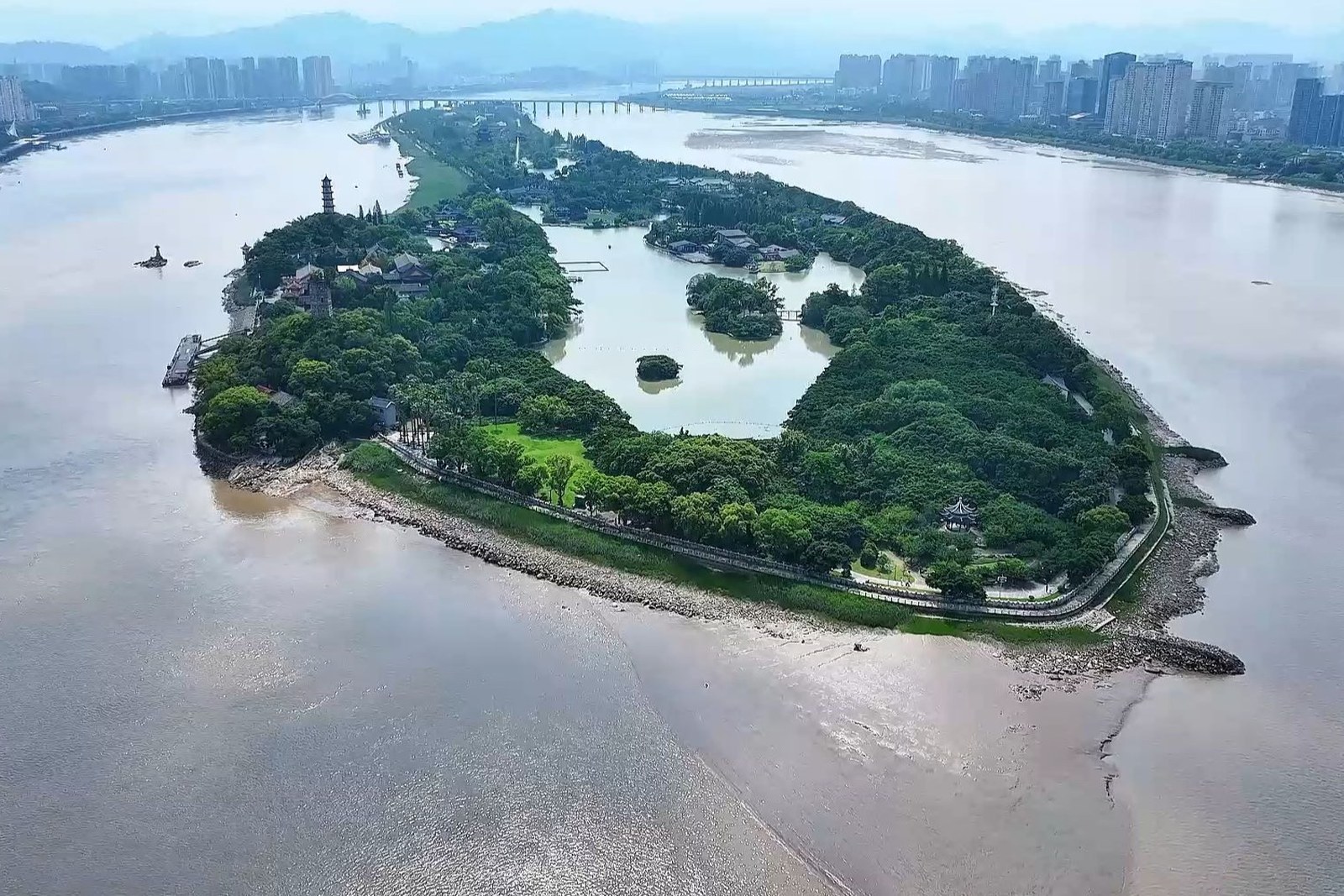
The isle keeps a museum of itself: the poetry garden engraves sixty-odd classical poems written on or about the isle, and the western lawn holds concerts in summer. Locals treat the place as their Central Park – morning taichi under the banyans, kites over the east lawn, evening strollers racing the last ferry.
Stay for the night crossing if you can: the twin pagodas light up and the ferry deck becomes the best free seat in Wenzhou. Pair the isle with the riverside promenade and 朔门古港 Shuòmén Gǔgǎng the Shuomen ancient-port ruins on the north bank – the Song-era docks that made this river a maritime highway.
Practicalities
- The ferry runs from the Jiangxin quay on Wangjiang Road every few minutes; the crossing takes under ten minutes and returns run late into the evening.
- The isle is flat and fully walkable; the electric sightseeing car loops it for those short on time.
- Early morning belongs to taichi locals, dusk to photographers – midday is the quietest ferry.
- The poetry garden and temple sit inside one through-ticket; the east and west pagoda grounds are open strolls.
Words and Names
江心屿 Jiāngxīn Yǔ Jiangxin Isle, “river-heart islet”; 瓯江 Ōu Jiāng the Ou River, Wenzhou’s mother river; 江心寺 Jiāngxīn Sì Jiangxin Temple; 江心双塔 Jiāngxīn Shuāng Tǎ the twin pagodas, historic navigation beacons; 朔门古港 Shuòmén Gǔgǎng the Shuomen ancient port ruins. Beyond the isle, the same 温州市 Wēnzhōu Shì Wenzhou City keeps more places worth the detour: 雁荡山 Yàndàng Shān the peaks of Yandang, 楠溪江 Nánxī Jiāng the raft river of Nanxi, 洞头列岛 Dòngtóu Lièdǎo the islands of Dongtou, or 泰顺廊桥 Tàishùn Lángqiáo the covered bridges of Taishun – four more doors into the same 温州市 Wēnzhōu Shì Wenzhou City. Once the pagodas have lit up behind you, our Wenzhou food map fills the table.
flowcloud would say Jiangxin is a bookmark in the river: two towers that guided ships for a millennium, a temple that kept the poets’ names, and a ferry short enough to make the isle part of the city’s evening walk. All checked November 2026.
Getting there: The Jiangxin ferry quay stands on Wangjiang Road ten minutes on foot from Wuma Street – boats cross every few minutes, the ride takes under ten, and evening ferries run past the pagoda light-up. All checked November 2026.