
Jianshui Ancient Town: The Slow County Town of Tofu Wells and Seventeen Arches
临安城里豆腐香,朝阳楼前岁月长。Lín’ān chéng lǐ dòufu xiāng, Cháoyáng lóu qián suìyuè cháng – In the streets of Lin’an the tofu is fragrant; before Chaoyang Tower the years run long.
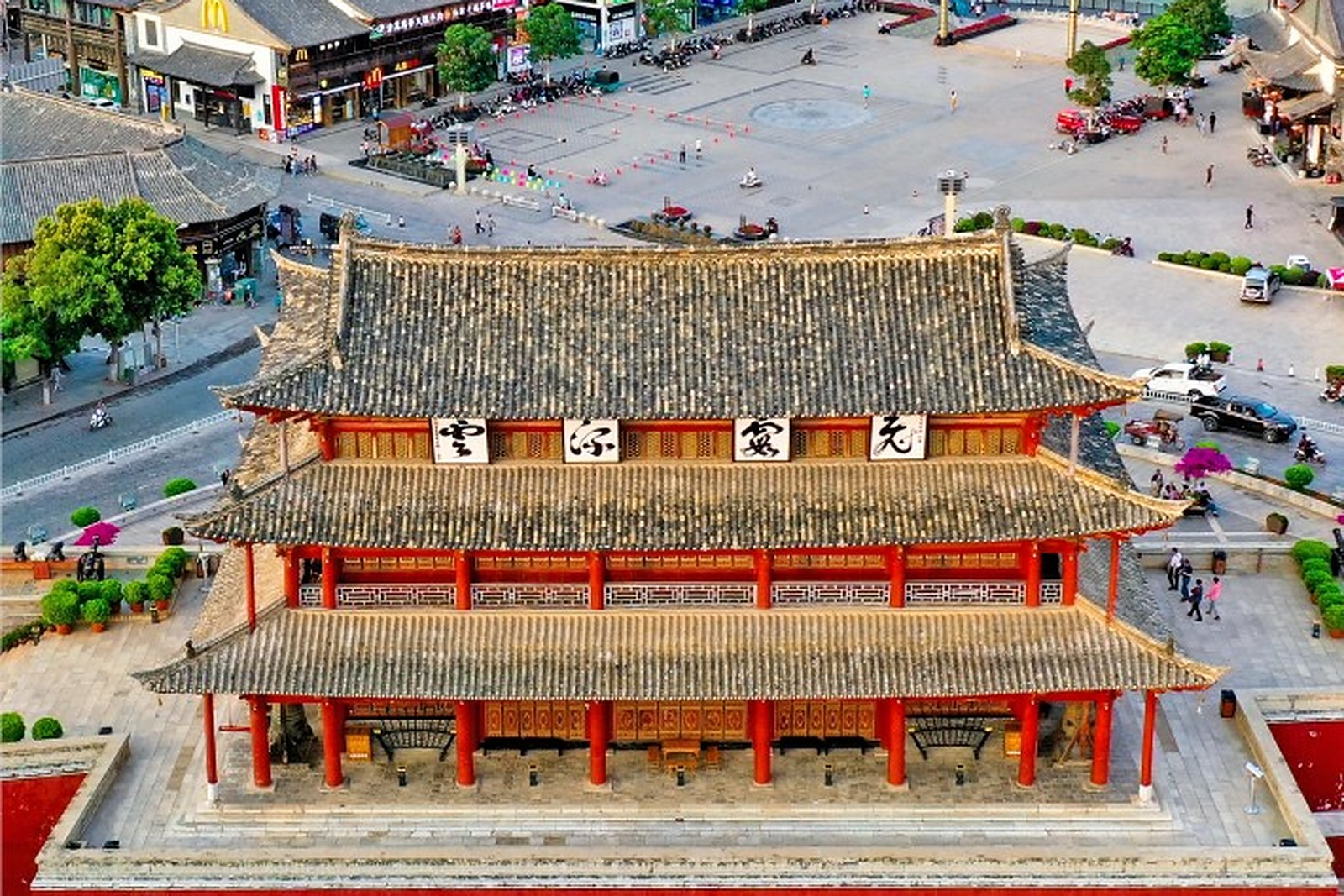
建水古城 Jiànshuǐ Gǔchéng Jianshui Ancient Town is not a rebuilt quarter with a uniform — it is, to be plain, the real 县城 xiànchéng county town of 建水县 Jiànshuǐ Xiàn Jianshui County in 红河哈尼族彝族自治州 Hónghé Hānízú Yízú Zìzhìzhōu Honghe, once the seat of 临安府 Lín’ān Fǔ Lin’an Prefecture in the 明清 Míng Qīng Ming–Qing centuries, and the town still lives inside its walls. The landmarks line the old axis: the 朝阳楼 Cháoyáng Lóu Chaoyang Tower gate tower the town sizes against 天安门 Tiān’ānmén Tiananmen, the 文庙 Wénmiào Confucian temple reckoned second in size in the country after 曲阜 Qūfù Qufu, the 临安路 Lín’ān Lù old street, and the 双龙桥 Shuānglóng Qiáo Shuanglong Bridge — the 十七孔桥 Shíqī Kǒng Qiáo seventeen-arch bridge in its local name. What you are actually visiting is a living town, not a museum quarter: the 大板井 Dàbǎnjǐng wells still feed the 豆腐坊 dòufu fáng tofu workshops whose 建水烧豆腐 Jiànshuǐ shāo dòufu is the town’s daily bread, and the honest frame is a slow, working county town that happens to be very old.
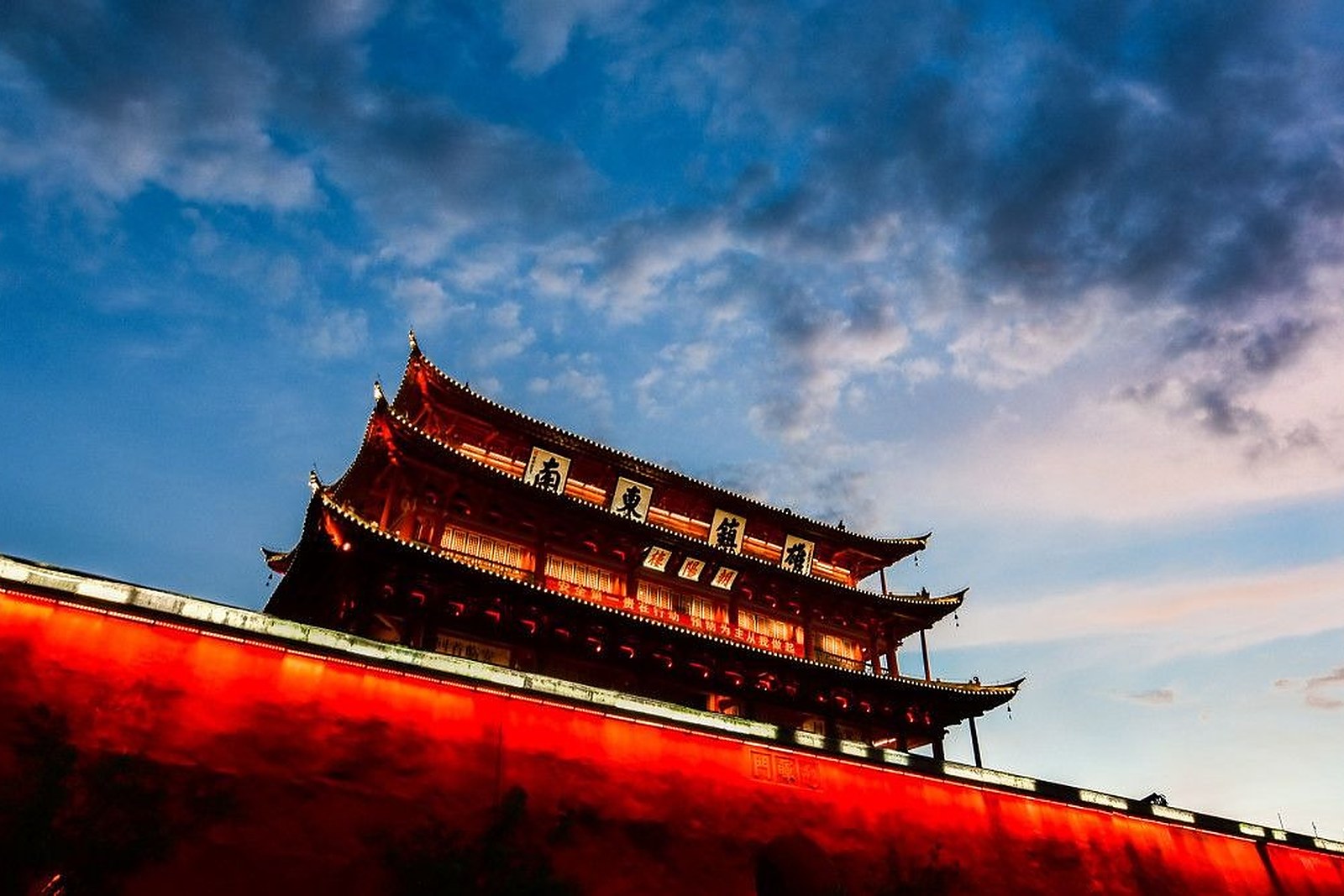
The honest grade is “a genuine old county town, slower than the famous ones,” and the slowness is the recommendation. Unlike the 大理 Dàlǐ–丽江 Lìjiāng circuit, 建水 Jiànshuǐ has not been turned into a souvenir stage: the old street is where people live, the 文庙 Wénmiào is working heritage rather than a photo prop, and the rhythm is a 县城 xiànchéng rhythm — morning tofu, evening mahjong. The practical notes: the 朝阳楼 Cháoyáng Lóu climb and the 文庙 Wénmiào are ticketed (worth confirming the current admission for each and for any combined old-town pass, because the ticketing has been reorganised more than once), and the 古城小火车 gǔchéng xiǎohuǒchē old-town mini train linking the town to 双龙桥 Shuānglóng Qiáo and 团山 Tuánshān runs to its own schedule (worth confirming the current route, stops and fare, because the little train’s operation has changed over the years). Getting here is the easy end of Honghe: 建水 Jiànshuǐ sits on the 昆玉河铁路 Kūn–Yù–Hé tiělù Kunming–Yuxi–Hekou rail line and the expressway network, with 蒙自 Méngzì the nearest high-speed hub (worth confirming the current train services and connections, as the new lines have reshuffled the timetable).
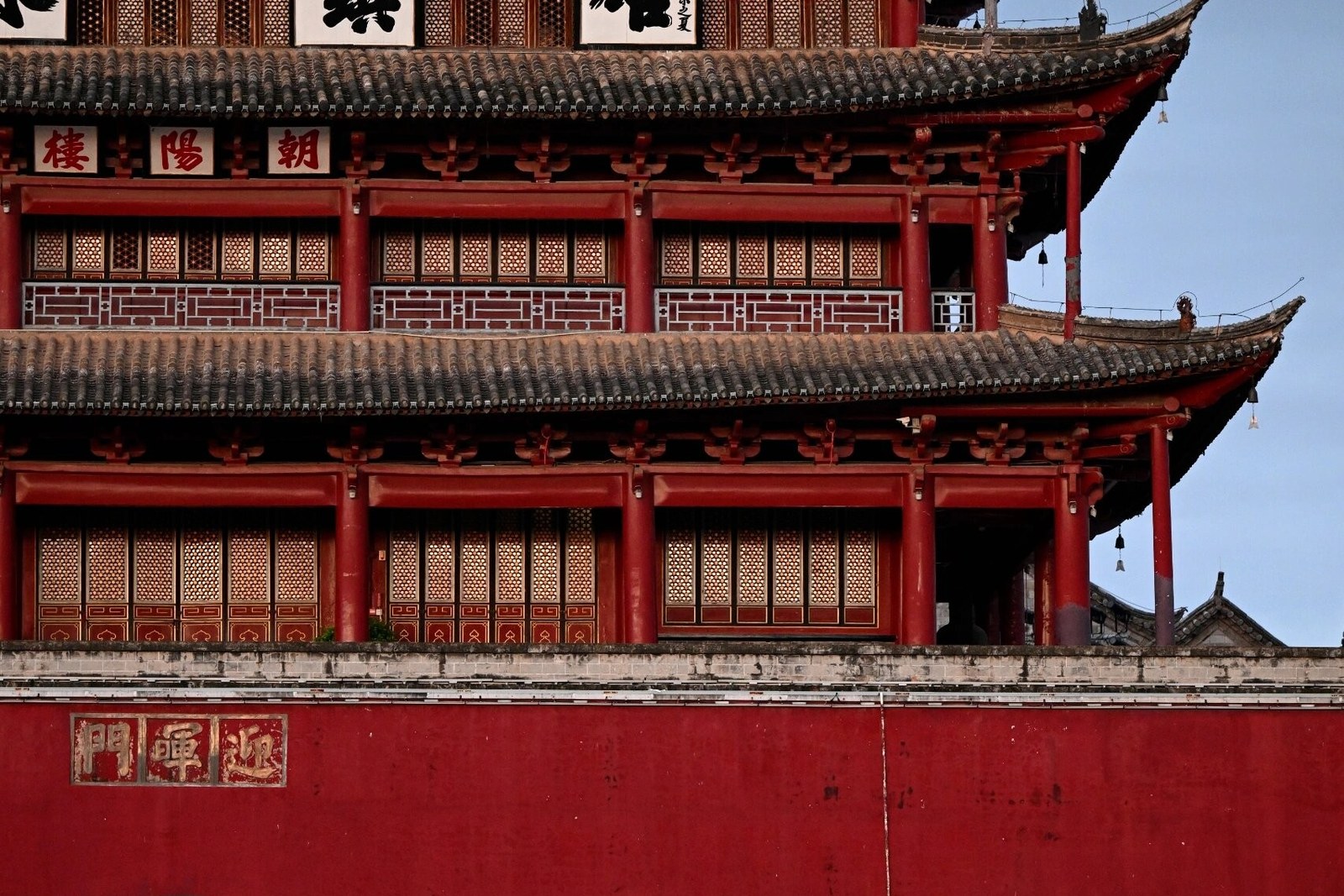
The wry truth is that Jianshui is sold as the ancient town before tourism found it, and it is closer to that than 大理 Dàlǐ or 丽江 Lìjiāng — but it still runs on tickets. What is overrated is the 朝阳楼 Cháoyáng Lóu as a monument: it is a pleasant gate tower with a view over the roofs, and the 天安门 Tiān’ānmén comparison is a slogan that grows in the telling (worth confirming the exact age claim before you repeat it — the two-hundred-years line shifts direction in different versions). What is genuinely worth it is the ordinary: the 大板井 Dàbǎnjǐng well where the town still draws water, the charcoal grills of 烧豆腐 shāo dòufu along the old street, the seventeen arches of 双龙桥 Shuānglóng Qiáo at their best in reflection, and the 文庙 Wénmiào at a quiet hour. Best season is spring and autumn, when the 滇南 Diānnán southern-Yunnan sun is mild and the lanes are walkable; winter is dry and clear, summer is green, rainy and occasionally flooded. Go slowly, walk or bike the old town, eat tofu twice a day, and treat 建水 Jiànshuǐ as a base for 朱家花园 Zhūjiā Huāyuán, 团山 Tuánshān and the rest, because the town rewards the person who stays two nights and quietly outlasts the day-tripper.
The self-deprecating footnote: I climbed the 朝阳楼 Cháoyáng Lóu, photographed the roofs, and filed it under nice gate tower — then I sat down at a charcoal grill off the old street, ordered 烧豆腐 shāo dòufu I could not stop eating, and understood what the town is actually for. 建水古城 Jiànshuǐ Gǔchéng rewards the person who slows to county-town speed and quietly tires the one chasing monuments. Go for the wells and the grill, walk the bridge at dusk, and let the 文庙 Wénmiào be the history you admit to and the tofu be the history you remember.
Practicalities
- Rating: The genuine, walled county town of Jianshui County, Honghe, old seat of Lin’an Prefecture; a living Ming–Qing old town with the Chaoyang Tower gate, the great Confucian temple, the seventeen-arch Shuanglong Bridge and the tofu-well culture — slower and more real than Dali or Lijiang.
- Tickets: The tower climb and the 文庙 Wénmiào are charged (worth confirming the current price for each and for any combined old-town pass — the ticketing has been reorganised more than once, and the 朝阳楼 Cháoyáng Lóu climb has opened and closed at times). The old street and lanes are free to walk.
- Address: 建水古城 Jiànshuǐ Gǔchéng, 建水县 Jiànshuǐ Xiàn Jianshui County, 红河哈尼族彝族自治州 Hónghé Hānízú Yízú Zìzhìzhōu Honghe — on the Kunming–Yuxi–Hekou rail line and the expressway network, with 蒙自 Méngzì the nearest high-speed hub (worth confirming current train connections, as the new lines have reshuffled timetables).
- Time needed: Two nights is the honest minimum for the old town at county pace, plus day trips to 双龙桥 Shuānglóng Qiáo, 朱家花园 Zhūjiā Huāyuán and 团山 Tuánshān; the town itself is a walking, one-landmark-at-a-time place.
Words and Names
建水古城 Jiànshuǐ Gǔchéng Jianshui Ancient Town · the living old county town of Jianshui County, Honghe 建水县 Jiànshuǐ Xiàn Jianshui County · the Honghe county whose town is the ancient town 朝阳楼 Cháoyáng Lóu Chaoyang Tower · the old gate tower the town sizes against Tiananmen 建水文庙 Jiànshuǐ Wénmiào Jianshui Confucian Temple · the temple reckoned second in the country after Qufu 双龙桥 Shuānglóng Qiáo Shuanglong Bridge · the seventeen-arch bridge, 十七孔桥 Shíqī Kǒng Qiáo 大板井 Dàbǎnjǐng Dabanjing Well · the old wells whose water feeds the town’s tofu shops
flowcloud would say that 建水古城 Jiànshuǐ Gǔchéng is Honghe’s living old county town — 朝阳楼 Cháoyáng Lóu, the 文庙 Wénmiào, 双龙桥 Shuānglóng Qiáo and the 大板井 Dàbǎnjǐng tofu wells — and that the honest move is two nights at county-town pace, because the town is genuinely old and genuinely slow, the tower and temple tickets and the 古城小火车 gǔchéng xiǎohuǒchē mini train need their prices and routes verified, and the place rewards the person who eats 烧豆腐 shāo dòufu twice a day while quietly tiring the one chasing monuments. All checked October 2026.
Getting there: Jianshui county town, about two hours by road or rail south of Kunming (worth confirming the heritage narrow-gauge train times and the Confucian Temple ticket); the old town is walkable from Lin’an Road, with Chaoyang Tower as the landmark. All checked October 2026.