
Jiaohe Ancient City: The River-Locked Earth Town, the Tang-Dynasty Governor’s Seat and the Best Sunset Ruin on the Silk Road in Turpan, Xinjiang
两河环抱故王台,一土掏成千载城。Liǎng hé huánbào gù wáng tái, yī tǔ tāo chéng qiān zǎi chéng – Two rivers clasp the terrace of vanished kings; one mass of earth, dug hollow, became a city of a thousand years.
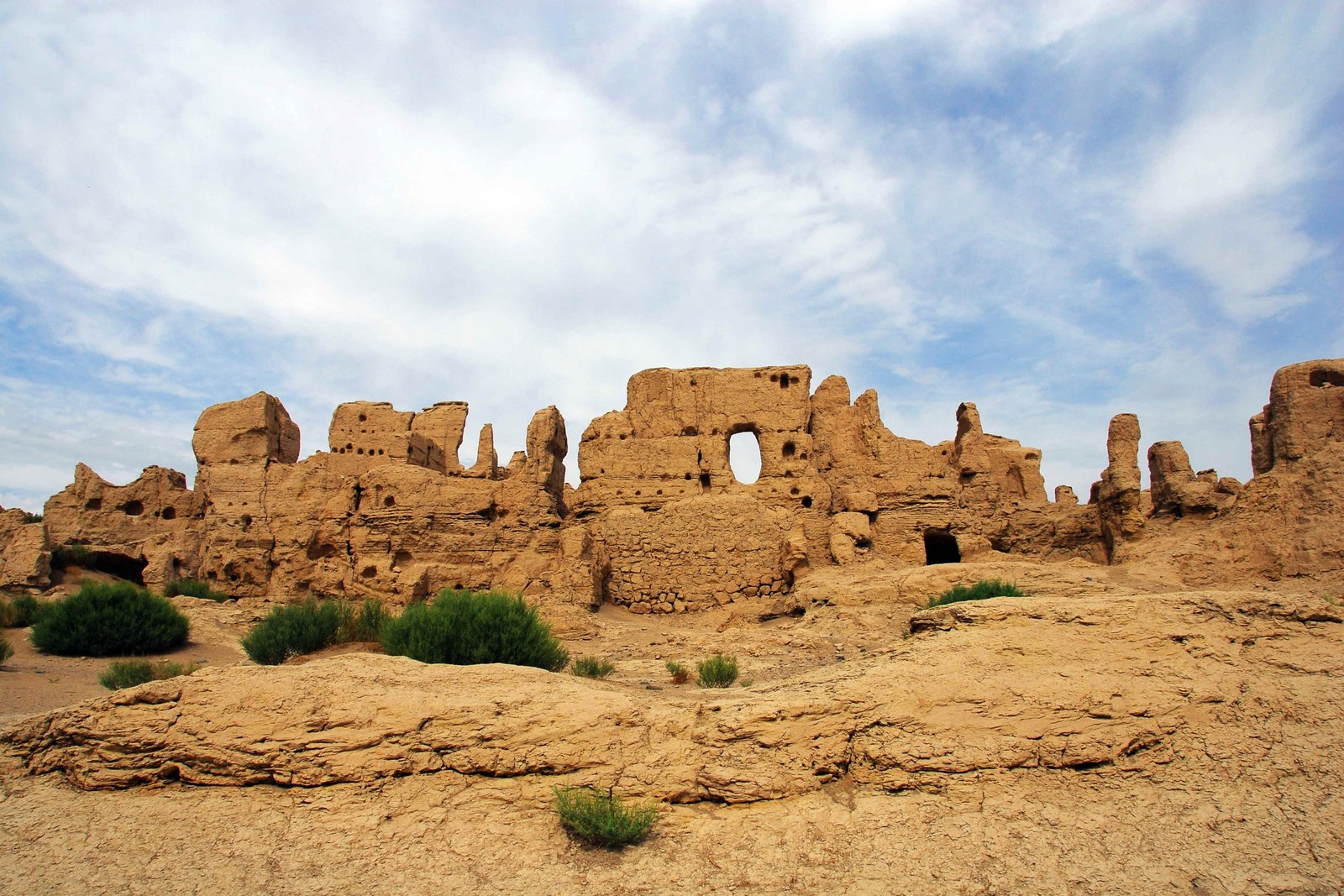
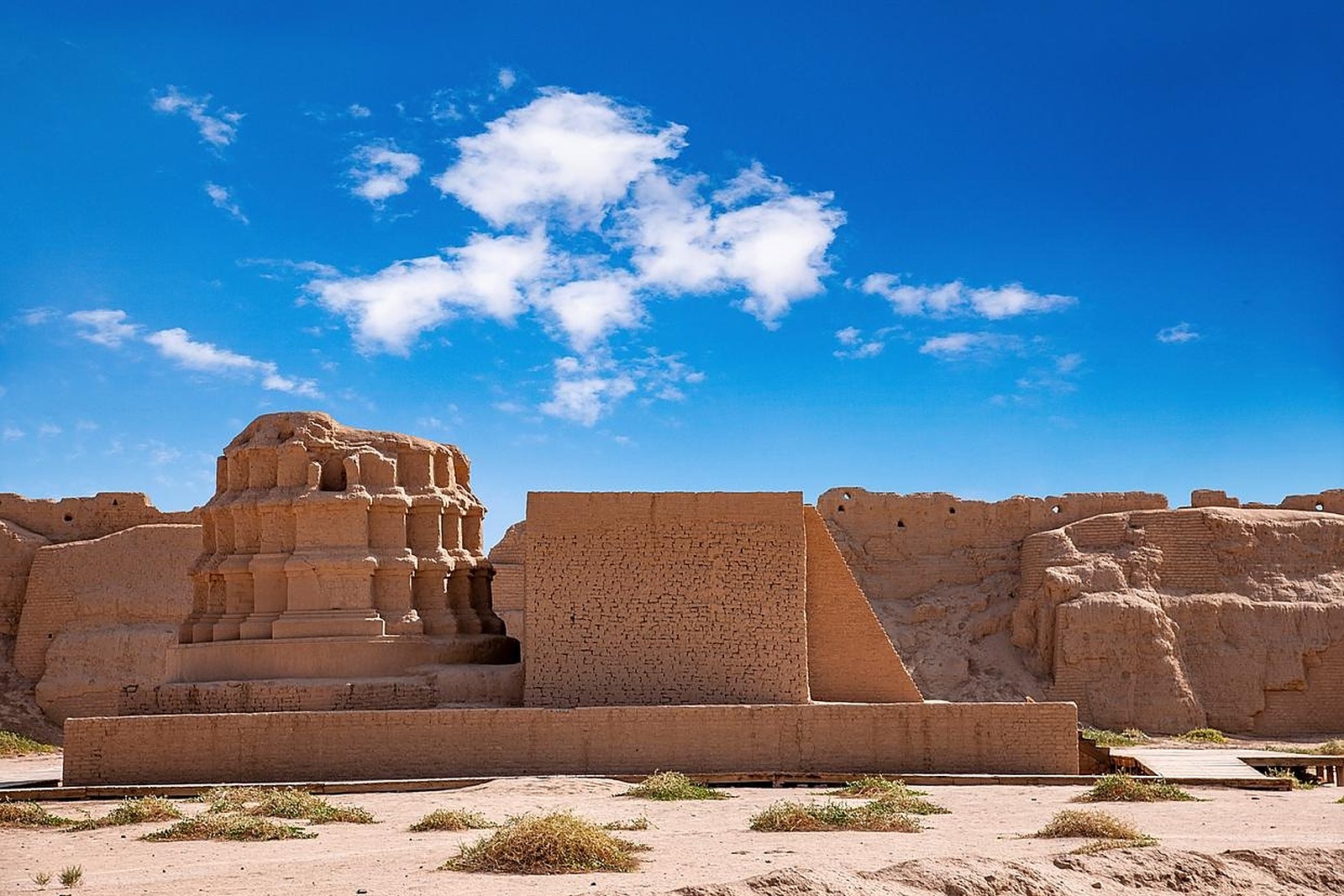
交河故城 Jiāohé Gùchéng the Jiaohe Ancient City occupies a long boat-shaped bluff some ten kilometres west of 吐鲁番市 Tǔlǔfān Shì Turpan City, where two rivers meet and cut a sheer-sided island out of the loess – and instead of building a city upon it, the ancient inhabitants dug one down into it. Nothing here was raised brick by brick: temples, watchtowers, courtyards and an entire street grid were carved out of the living earth, which is why the ruin reads less like fallen architecture than like a city sculpted from below and left open to the sky (worth confirming the details for the protective route changes, which the conservation teams adjust as the earthen walls weather). The settlement began as the capital of the 车师 Chēshī Jushi people two thousand years ago, passed through the Han and Tang administrations – the 安西都护府 Ānxī Dūhùfǔ Protectorate-General once sat here – and emptied by the Mongol era, leaving a ghost town whose Buddhist stupa courts and monastery cells still keep their floor plans legible. The register is hush and glare: dry air, wind-polished walls, and the view of green fields on three sides from a city of dust.
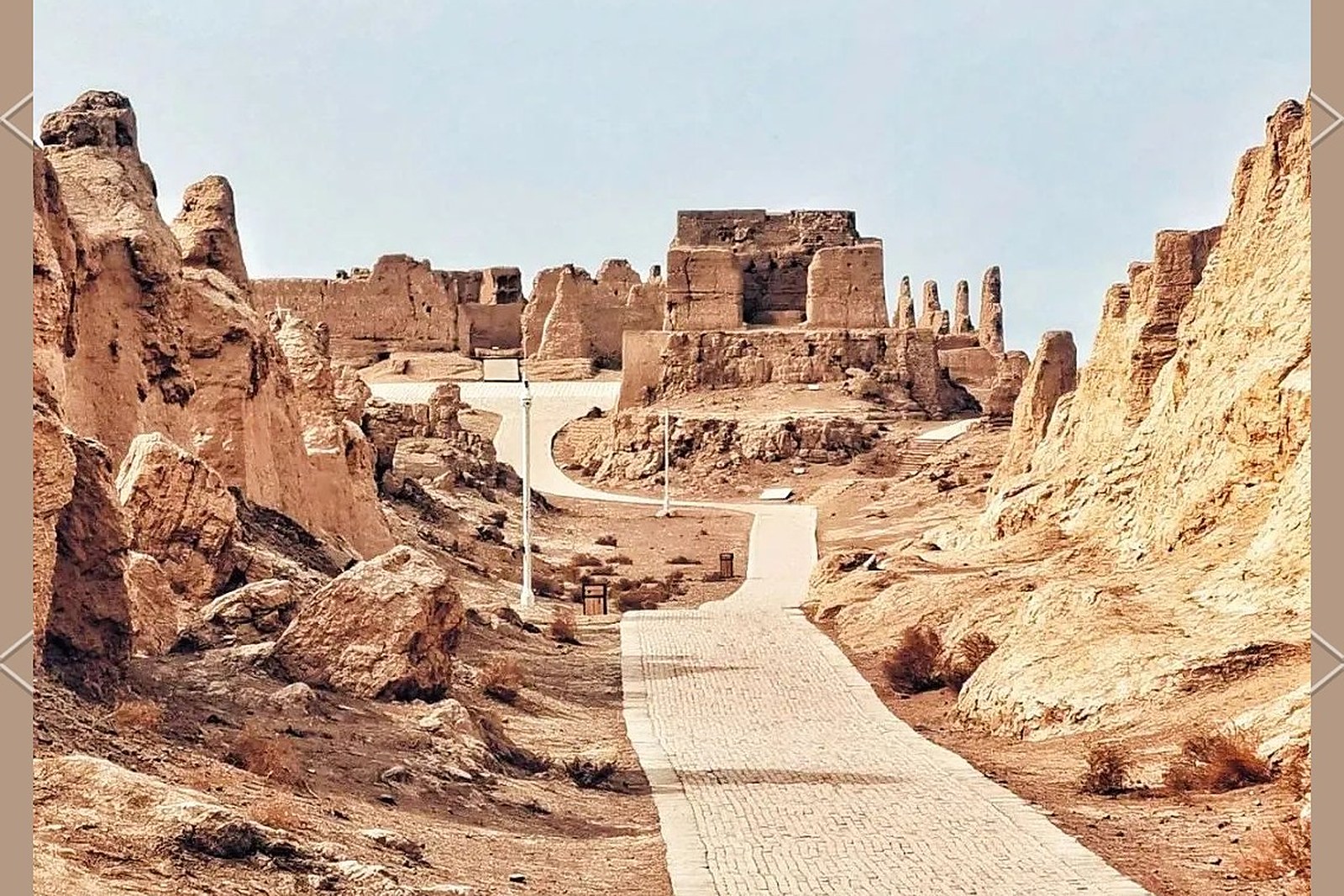
Two crowds walk the raised causeway: Silk Road pilgrims who have read the UNESCO plaque and want the scale of the thing, and sunset photographers who time the entry hours so that the low light turns the earthen walls amber and doubles them in long blue shadow (worth confirming the details for the evening entry sessions, which the site runs in the high season). The stock answer in kind: the most complete earth-built ruin in China, a maze that photographs in every direction, and an afternoon that teaches what water meant in the desert better than any museum hall.
Call it honestly: Jiaohe is a ruin and nothing else – no shade worth the name, no café, no explanatory spectacle beyond the walls themselves – and travellers expecting a rebuilt attraction will meet an empty terrace and wonder where the show is (worth confirming the details for the on-site museum hours, which soften the visit with models and finds). What the map repays is the discipline of the light: come in the last two hours of the day, when the tour buses have turned back toward the city, and the central avenue – rutted, roofless, forty feet wide – reads like a page the wind has been writing on for six centuries. Against that: the site is vast enough to absorb its crowds, the perimeter walk puts green oasis on one side and red rock on the other, and the stupa court at the northeast end is the quietest beautiful square in Xinjiang. Come at the golden hour, bring a hat and a litre of water, and let the emptiness do the performing – the city dug into the earth gives back exactly the silence you bring to it.
Practicalities
Nearly everything else on this Turpan list trades a different mood on the same oasis: choose 高昌故城 Gāochāng Gùchéng Gaochang Ancient City for the walled ruin of the fire land, 葡萄沟 Pútáo Gōu Grape Valley for the vine-shaded gorge, 火焰山 Huǒyànshān the Flaming Mountains for the red ridges of the Monkey King’s trial and 坎儿井 Kǎn’érjǐng the Karez Wells for the underground rivers that made all of it possible – four more doors into the same 吐鲁番市 Tǔlǔfān Shì Turpan City. Once the day is planned, our Turpan food map fills the eating hours.
Practicalities
Words and Names
flowcloud would say that a Jiaohe day is bought for the light and the hush – golden-hour walls to blue dusk in the November 2026 snapshot, all worth confirming the details – and that the honest move is to come late and walk slowly, because the city dug from the earth gives exactly what the sunset is selling, keep the stupa court and the central avenue as the plan, and let the wind carry two thousand years of news to the river below. All checked November 2026.
Getting there: The ruins lie some ten kilometres west of the city in 亚尔镇 Yà’ěr Zhèn Yaer Town – taxis and tour buses run the straight road out from the city centre in half an hour or so (worth confirming the details for the last entry hour, which moves with the sunset across the seasons); the museum hall at the gate explains the digging before you climb. All checked November 2026.