
The Monastery in the River: Jiaoshan Island, Zhenjiang
焦山浮玉立江心,万佛塔高云自深 Jiāoshān fúyù lì jiāngxīn, Wànfó tǎ gāo yún zì shēn – Jiaoshan, floating jade, stands mid-river; the Ten-Thousand-Buddha Pagoda rises where the clouds grow deep
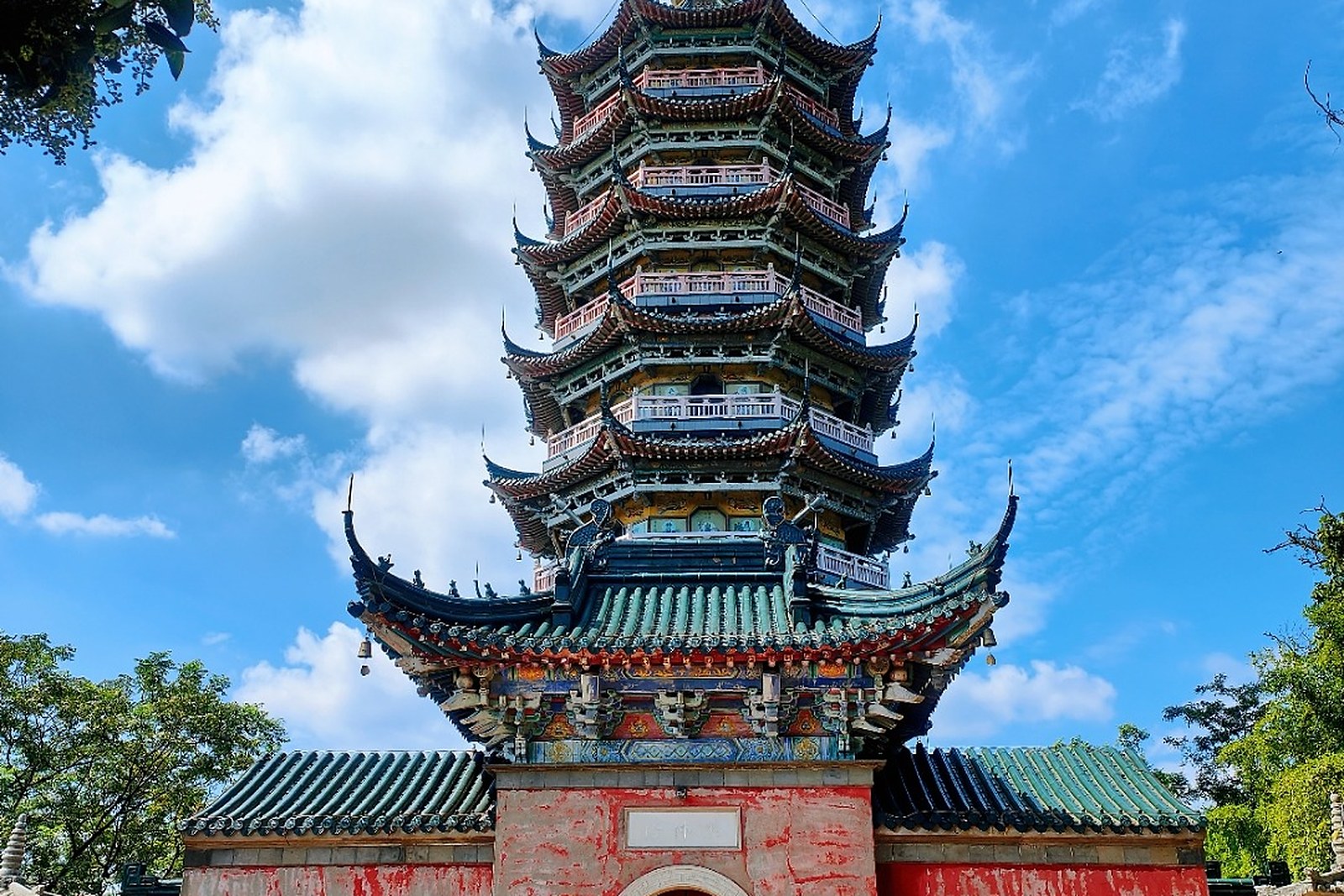
正文:焦山 Jiāoshān Jiaoshan is the temple hill you reach by boat – a green island sitting squarely in the Yangtze off Zhenjiang, wooded from shore to shore and crowned by the brick 万佛塔 Wànfó Tǎ Wanfo Pagoda. Where Jinshan wraps its hill in buildings, Jiaoshan hides them: the local phrase runs “the hill wraps the temple,” because the monastery courts and stele cabinets tuck into the island’s interior greenery and disclose themselves only to the walker. The island’s 定慧寺 Dìnghuì Sì Dinghui Temple dates its foundation to the Eastern Han, which makes the island’s Buddhist occupancy older than most of the cities on this stretch of river, and the ferry that crosses to it has been the only front door for most of that time.
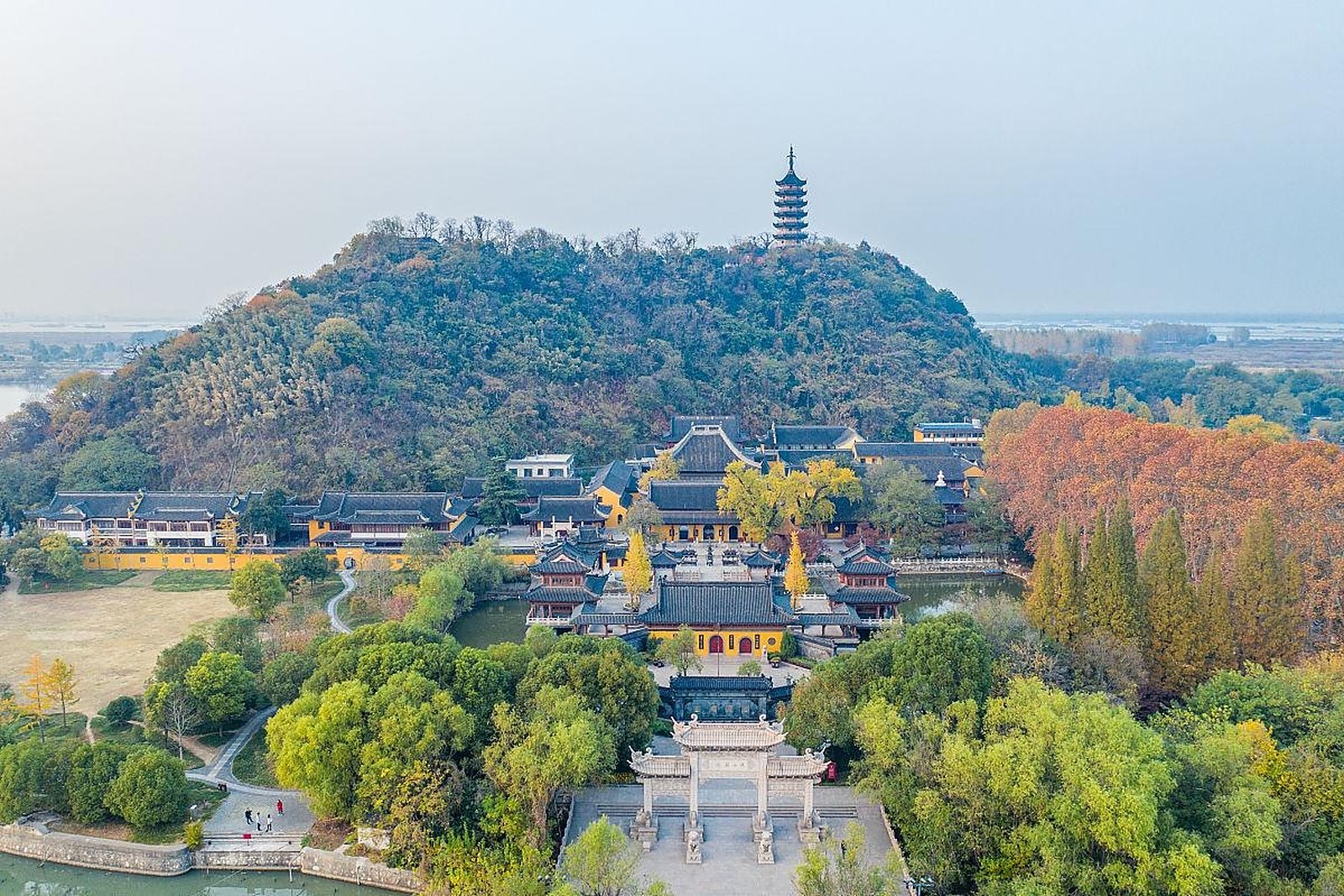
The crossing is the right way to arrive. Ten minutes from the south-bank pier, the boat slides past reed banks and moored barges, and the island builds itself in front of you – pagoda above, trees below, the yellow temple gate at the landing. The temple courts open immediately beyond: a Great Hall with heavy singing monks, courtyard camphors, and the island’s particular quiet, a monastery quiet with river traffic murmuring around it like a held breath.
Jiaoshan’s second fame is ink. The island’s 碑林 Bēilín stele forest gathers more than four hundred inscribed stones, headlined by the 《瘗鹤铭》 Yì Hèmíng Yiheming – the “Burial of a Crane” elegy, fragments of a sixth-century calligraphy masterwork lost to the river for centuries and fished back stone by stone – prized since the Tang as a fountainhead of southern calligraphy. The cabinets around the courts display rubbing after rubbing, and the calligraphy-minded plan their whole day here while the rest of us walk on to the camphor groves, the ancient boiler-room of the anti-British batteries of 1842, and the climb to the pagoda terraces.
The island rewards a full half-day. Paths loop the shore under plane trees and magnolias, pavilions face the current where Zhenjiang’s river traffic slides past at eye level, and the Wanfo Pagoda’s galleries give the island’s one proper panorama – river to the horizon in three directions, the city’s towers faint to the south. Ferry back before dusk, when the last boats bunch up and the island’s lights come on behind you like a lantern set adrift.
Practicalities
Beyond the island, the same 镇江市 Zhènjiāng Shì Zhenjiang City keeps more places worth the detour: 金山风景区 Jīnshān Fēngjǐngqū Jinshan Scenic Area with its wrapped hill, 北固山 Běigù Shān Beigu Mountain the kingdoms crag, 西津渡 Xījīndù Xijindu the ancient ferry street, or 茅山 Máoshān Maoshan the Taoist peak in Jurong – four more doors into the same 镇江市 Zhènjiāng Shì Zhenjiang City. Once the ferry is back, our Zhenjiang food map fills the table.
Practicalities
Words and Names
flowcloud would say Jiaoshan is the quiet member of Zhenjiang’s three hills: a monastery behind green curtains, a library of river-recovered stones, and the best boat ride any city temple ever asked you to take. All checked November 2026.
Getting there: The island sits mid-river – reach it by the short ferry from the Jiaoshan pier on the south bank, twenty minutes by taxi from downtown; entry plus ferry is ticketed, paths are flat once ashore, and Dinghui Temple, the stele forest and the pagoda circuit fill a calm half-day. Mornings beat the midday tour boats. All checked November 2026.