
The problem with 夹山寺 Jiāshān Sì is that it may also be a tomb, and nobody can prove it either way. The temple is a Zen monastery in the hills south of 石门县城 Shímén, founded in 870 and rebuilt repeatedly, known for centuries as one of the great monasteries of southern Hunan. And it is also the place where, according to a persistent and well-argued theory, 李自成 Lǐ Zìchéng — the peasant rebel who took Beijing in 1644 and ended the Ming dynasty, and who is officially recorded as having died in Hubei in 1645 — in fact survived, walked away from his own army, and lived out the last decades of his life here as a monk under the name 奉天玉和尚 Fèngtiānyù Héshang. The 闯王陵 Chuāngwáng Líng, the tomb of the Rebel King, stands in the grounds.
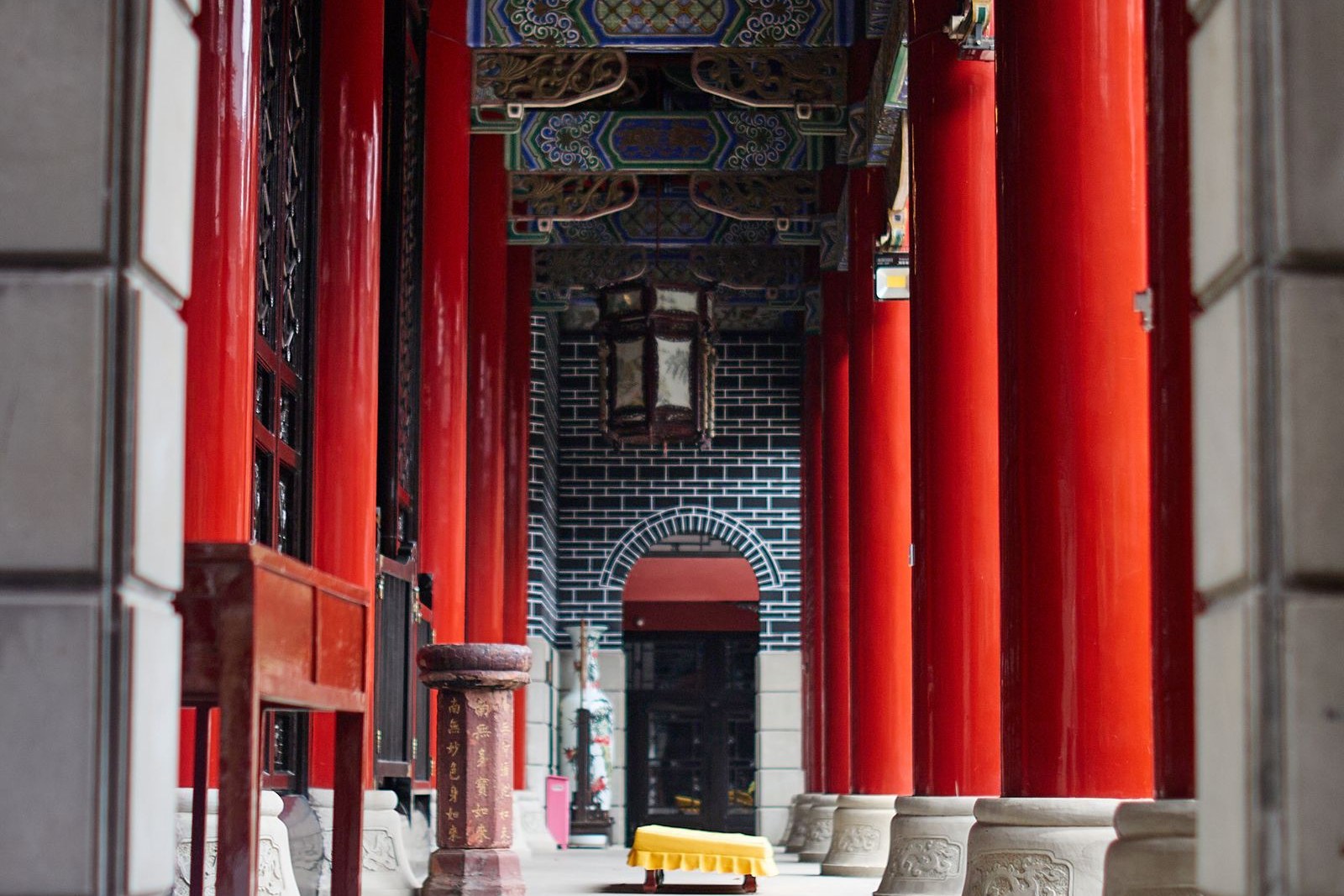
The temple is a real one first and a mystery second. It was founded in the 咸通 Xiántōng era of the Tang, in 870, and prospered through the Song and Ming; it was here that 圆悟克勤 Yuánwù Kèqín, one of the most influential Chan masters of the Song, taught and produced the 碧岩录 Bìyán Lù, the Blue Cliff Record — a collection of koans with commentary that became one of the foundational texts of Zen, studied in China, Korea and Japan for nine hundred years. That alone would make the site important. The monastery was destroyed in the wars of the seventeenth century and rebuilt in the Qing; the present halls are modest, grey-walled, set against a wooded hillside, with a spring, 碧岩泉 Bìyán Quán, that gives the Blue Cliff Record its name.
The Li Zicheng story is the reason most people come. The argument rests on finds made in the twentieth century: a monk’s tomb at the temple with an inscription referring to 奉天玉和尚, the discovery of objects and documents suggesting that this monk had been a military man of high rank, and a genealogy preserved by a local family that appears to trace descent from Li Zicheng through a son who escaped. The theory has serious academic supporters and serious critics; the official historical position remains that Li died at 通城 Tōngchéng in Hubei in 1645. What is certain is that the 闯王陵 Chuāngwáng Líng in the temple grounds is a large and carefully built tomb complex, that the 夹山 Jiāshān area has been quietly claiming him since the Qing, and that the mystery has survived three hundred and fifty years of attempts to close it.
The site sits inside 夹山国家森林公园 Jiāshān Guójiā Sēnlín Gōngyuán, a wooded hill park with walking trails, a tea garden and, in spring, a respectable show of blossom. The combination of a working monastery, a legendary tomb and a forest makes it the most rewarding half-day in the north of the prefecture for anyone who is not climbing 壶瓶山 Húpíng Shān.
Practicalities
Tickets. 夹山国家森林公园 Jiāshān Guójiā Sēnlín Gōngyuán adult ¥55, student and senior concession ¥29.80. The temple and the tomb complex are inside the park and not separately charged.
Opening hours. Roughly 08:00–17:30. The temple itself is active religious property and keeps its own hours for services; the park gates are the binding constraint.
Closing day. No closing day for the park; the temple can restrict access to some halls on festival days when it is busy with worshippers, which is worth knowing around the Spring Festival and the Buddha’s birthday.
Getting there. About 8 kilometres and 20 minutes by taxi (¥30–50) from 石门县城 Shímén county town; about two hours by road from 常德 Chángdé city. 石门县站 Shíménxiàn Zhàn on the high-speed line is a short drive away, and the temple is on the way to 壶瓶山 Húpíng Shān, which makes the two an obvious pairing.
What People Get Wrong
They come for the tomb and skip the temple. The Blue Cliff Record was written here; the 碧岩泉 Bìyán Quán is named in it; and the monastery’s place in the history of Zen is a better-attested claim than the one about the emperor. Also, most visitors do not walk up into the forest above the halls, which is where the site stops being a monument and becomes a hillside.
Getting there
By car from 常德 Chángdé or by train to 石门 Shímén and then a taxi. Half a day covers the temple, the tomb and a walk in the park. It is the natural stop on the road between 常德 Chángdé and 壶瓶山 Húpíng Shān, and it pairs with 城头山 Chéngtóushān to the east if you are working through the county’s archaeology.
flowcloud would say that a monastery which produced one of the foundational texts of Zen and may also be hiding the body of the man who ended the Ming has an unusually strong claim on both the spiritual and the political history of the country, and that the fact it cannot prove the second is exactly why people still drive out here.
Getting there: 夹山寺 (Jiāshān Sì) and 闯王陵 (Chuāngwáng Líng), 夹山国家森林公园 (Jiāshān Guójiā Sēnlín Gōngyuán), 石门县 (Shímén Xiàn), 常德市 (Chángdéshì), 湖南 (Húnán). Open roughly 08:00–17:30, no closing day; adult ticket ¥55, concession ¥29.80. About 20 minutes and ¥30–50 by taxi from 石门 (Shímén) county town, two hours by road from 常德 (Chángdé). See the temple and the Blue Cliff spring before the tomb.