
Jietai Temple: The Great Ordination Altar, the Wondrous Pines and the Peony Courtyard of Mentougou District, Beijing
坛传辽代戒如山,松抱石塔岁岁青。Tán chuán Liáo dài jiè rú shān, sōng bào shí tǎ suì suì qīng – The altar hands down Liao-dynasty precepts heavy as mountains; the pines embrace the stone pagoda, green year upon year.
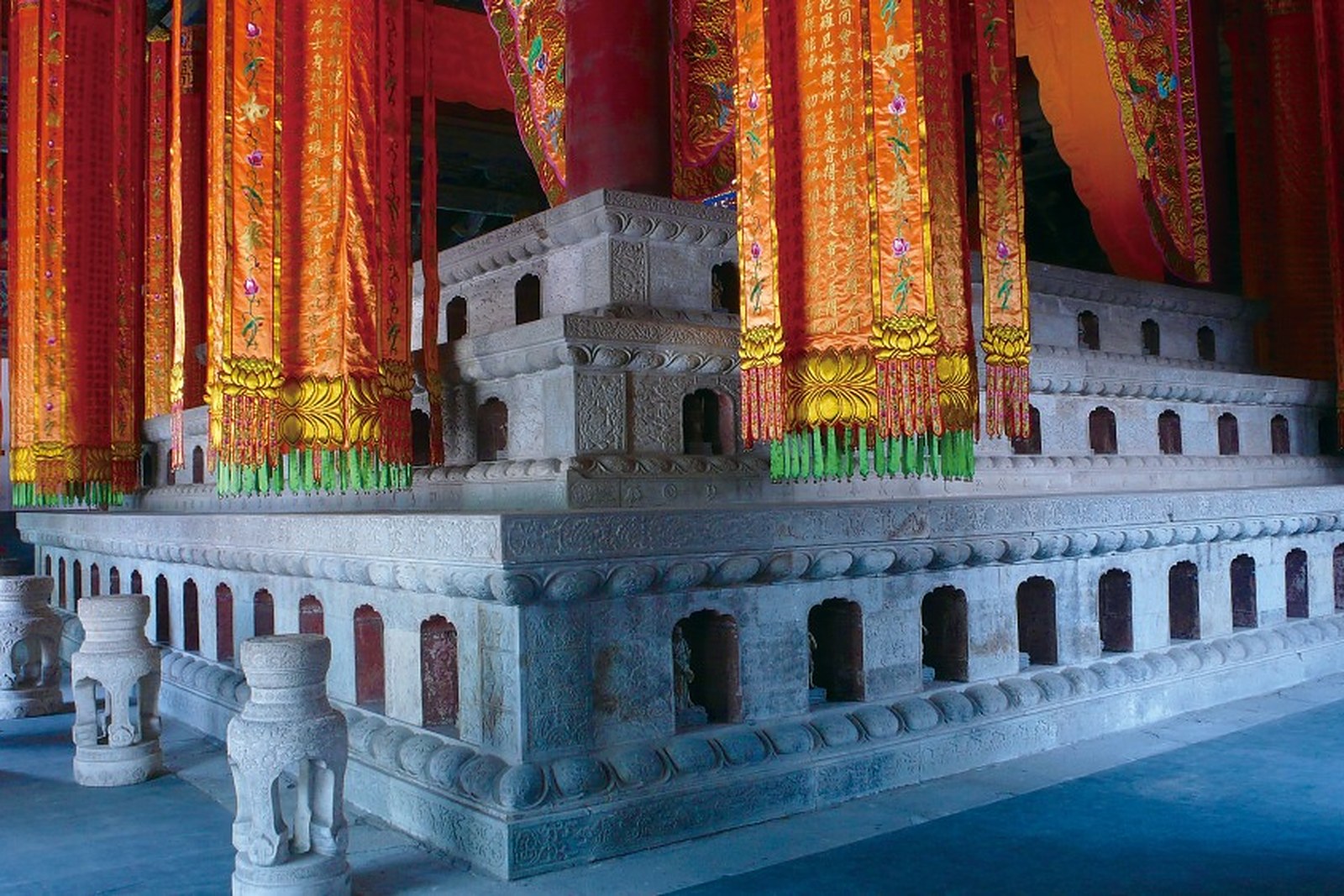
戒台寺 Jiètái Sì Jietai Temple is not a hill temple with one famous object — it is, plainly put, a monastery built around a single altar of national rank: on the lower slopes of 马鞍山 Mǎ’ān Shān Ma’anshan, the Saddle Mountain, in western 门头沟区 Méntóugōu Qū Mentougou District, Beijing, it keeps the 戒坛 jiètán ordination platform on which monks were formally bound to the precepts — an altar of Liao-dynasty origin, reworked in Ming times, that tradition counts among the three great ordination platforms of China alongside Hangzhou’s 昭庆寺 Zhāoqìng Sì Zhaoqing Temple and Quanzhou’s 开元寺 Kāiyuán Sì Kaiyuan Temple (a ranking repeated everywhere and best taken as tradition — worth confirming the details). Around the altar the temple’s second fame grows out of the ground: ancient pines with names — 九龙松 Jiǔlóng Sōng Nine-Dragons Pine, 卧龙松 Wòlóng Sōng Reclining-Dragon Pine, 抱塔松 Bàotǎ Sōng Embrace-the-Pagoda Pine leaning its great arm over a small stupa, and the 活动松 Huódòng Sōng Moving Pine, whose single moving branch is said to shiver the whole tree (worth confirming the details for which trees are pointed out and how) — plus the 牡丹院 Mǔdān Yuàn Peony Courtyard, whose spring flowers still set the temple’s calendar. What you actually visit is a compact climb of terraced courts, altar hall and pine garden.
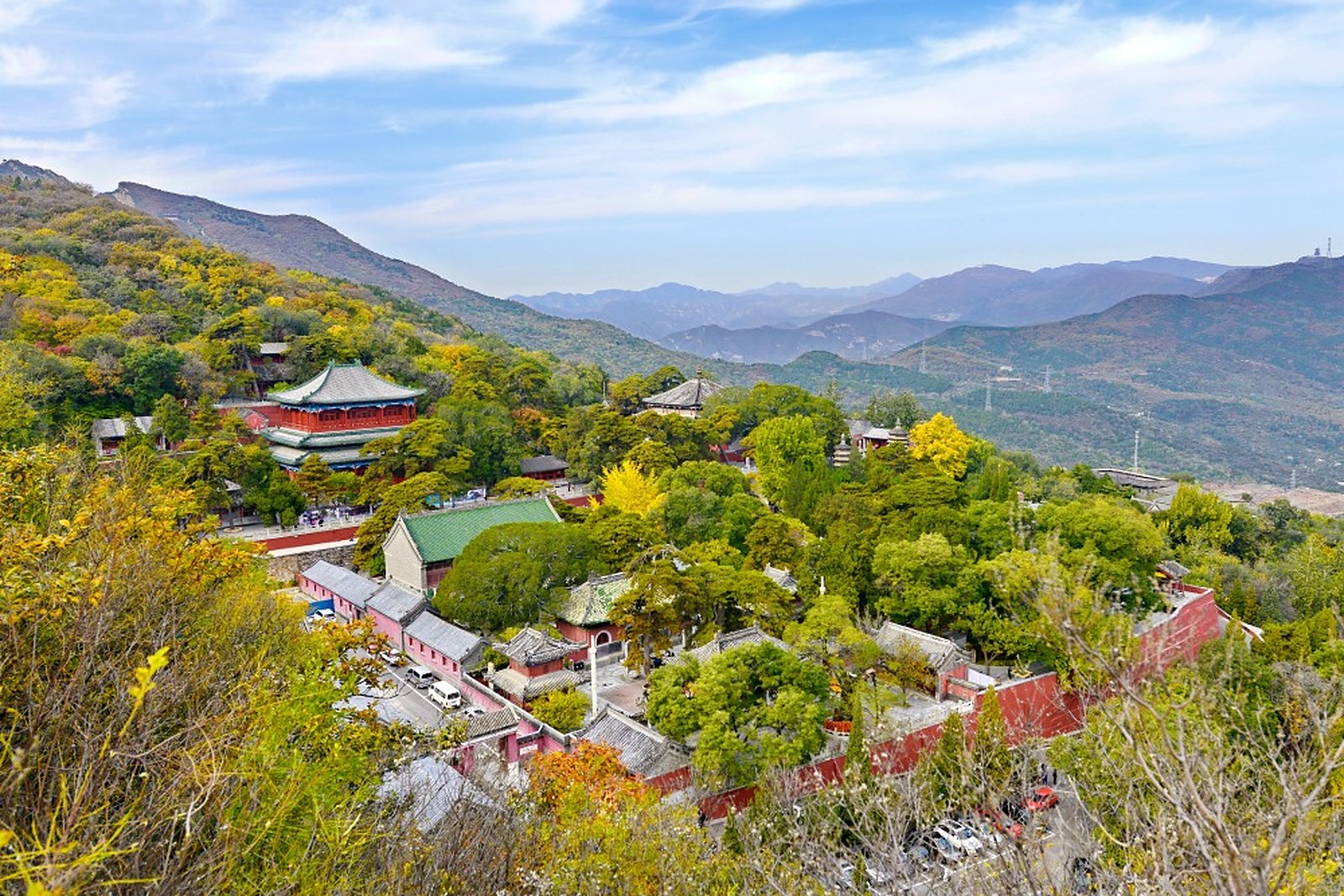
Call it honestly: a ticketed temple that asks for half a mountain day and repays unhurried ones. Entry is ticketed and the hours and current arrangements are worth confirming the details before setting out; the temple sits up a winding approach on 马鞍山 Mǎ’ān Shān, on the hill road that continues toward 潭柘寺 Tánzhè Sì — the classic pairing, done honestly in one long day or, better, two mornings (worth confirming the details for the road and parking). Spring brings the 牡丹院 Mǔdān Yuàn peony weeks and crowds to match; out of season weekdays leave the pine terraces nearly private. The honest warning is terrain: the courts step uphill and the famous trees stand at different levels, so anyone planning altar and pines in twenty minutes will see neither properly. Give the place two slow hours and let the resin smell do its work.
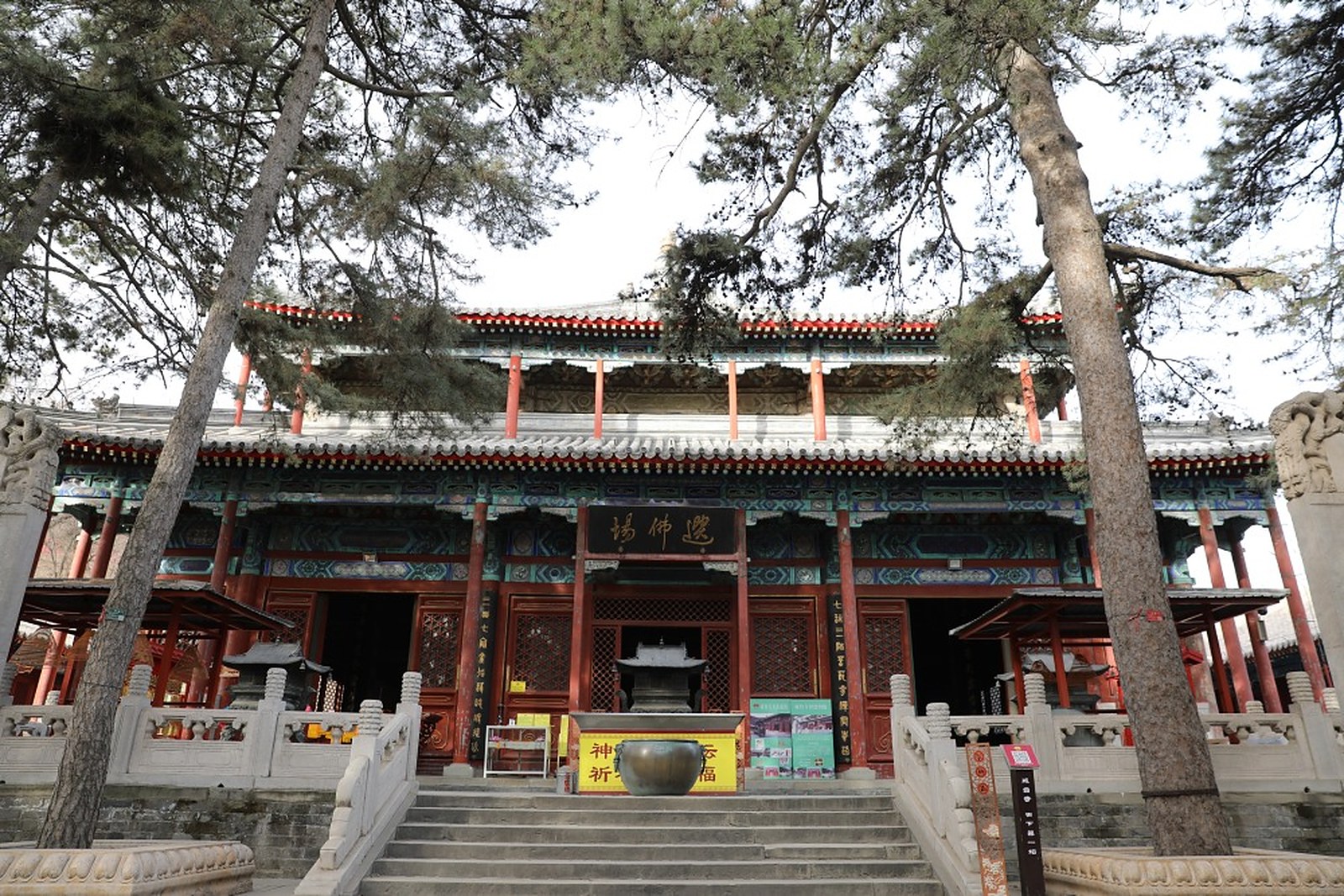
The honest star is the pines, not the platform. You may look into the hall where the 戒坛 jiètán stands, but the altar is best taken on faith and the trees are outside, unglassed and older than most dynasties of rebuilding: 抱塔松 Bàotǎ Sōng sheltering its little pagoda like a bent elder, 卧龙松 Wòlóng Sōng stretched flat along its terrace like a dragon at rest. What gets oversold is the superlative — “one of China’s three great altars” is the phrase every sign repeats, and the object itself, largely covered, rewards devotion more than sightseeing (worth confirming the details for viewing arrangements). What repays the effort is everything around the altar: the view from the upper courts down the valley, the smell of resin on the terraces, and the quiet geometry of the 牡丹院 Mǔdān Yuàn Peony Courtyard in any season, flowers or no flowers. Come for the layering of the place: temple, then altar, then pine.
The self-aware postscript: I reached the pine terraces as a keeper was collecting needles into sacks, and she told me the Moving Pine has to be explained twice to every tour group — once as a tree, once as a trick — before anyone believes either. That is the visit in miniature. 戒台寺 Jiètái Sì suits whoever treats it as a study in living wood and one great altar first, a leg-stretch second — walk the terraces, wait under each pine, look back downhill — and exhausts anyone expecting a complex on the scale of its neighbour over the ridge. Everything else on this Mentougou list is close at hand or a valley away: the proverb-and-ginkgo courts of 潭柘寺 Tánzhè Sì Tanzhe Temple across the ridge, the ingot-shaped stone lanes of 爨底下村 Cuàndǐxià Cūn Cuandixia Village deep to the west, the pilgrimage summit of 妙峰山 Miàofēng Shān Miaofeng Mountain to the north, and the graduate lanes of 灵水村 Língshuǐ Cūn Lingshui Village by 斋堂镇 Zhāitáng Zhèn — all in the same 门头沟区 Méntóugōu Qū Mentougou District that keeps its altars and pines in the hills.
Practicalities
- Rating: ★★★★☆ — an altar of national rank wrapped in the strangest pine garden near Beijing; the 抱塔松 Bàotǎ Sōng and the peony courtyard outrank the covered altar itself; pair it with Tanzhe Temple or give it its own slow morning.
- Tickets: Ticketed entry, with seasonal arrangements around the peony season (worth confirming the details for current rates, hours and hall access).
- Address: 戒台寺 Jiètái Sì Jietai Temple, lower slopes of 马鞍山 Mǎ’ān Shān Ma’anshan, west 门头沟区 Méntóugōu Qū Mentougou District, Beijing — on the hill road shared with 潭柘寺 Tánzhè Sì.
- Time needed: Two hours for courts, altar hall and pine terraces; half a day with the ridge pairing toward 潭柘寺 Tánzhè Sì.
Words and Names
戒台寺 Jiètái Sì Jietai Temple · the “Ordination Platform Temple” of the Saddle Mountain 戒坛 jiètán ordination altar · the great platform where monks take the full precepts 马鞍山 Mǎ’ān Shān Ma’anshan · the Saddle Mountain at whose foot the temple sits 九龙松 Jiǔlóng Sōng Nine-Dragons Pine · the ancient pine of twisting arms by the courts 抱塔松 Bàotǎ Sōng Embrace-the-Pagoda Pine · the pine that leans its arm over a small stupa 卧龙松 Wòlóng Sōng Reclining-Dragon Pine · the pine stretched flat along its terrace 活动松 Huódòng Sōng Moving Pine · the tree said to shiver whole when one branch is moved 牡丹院 Mǔdān Yuàn Peony Courtyard · the quiet court that sets the spring calendar
flowcloud would say that 戒台寺 Jiètái Sì is one great altar with a pine garden wrapped around it — the Liao-origin 戒坛 jiètán of the tradition counted with 昭庆寺 Zhāoqìng Sì and 开元寺 Kāiyuán Sì among the three great ordination platforms (worth confirming the details), and the named pines 九龙松 Jiǔlóng Sōng, 卧龙松 Wòlóng Sōng, 抱塔松 Bàotǎ Sōng and 活动松 Huódòng Sōng standing over the terraces beside the 牡丹院 Mǔdān Yuàn Peony Courtyard — and that the honest move is two slow hours on a weekday, because tickets, hours and peony-season crowds all shift (worth confirming the details), the covered altar is the faith half and the pines are the sight half, and the temple repays whoever waits under each tree while losing anyone trying to do altar and pines in twenty minutes. All checked October 2026.
Getting there: Buses run from the western city toward the mountain foot, and from the western ends of metro Line 1 and the S1 Line a bus or taxi rides up the approach to the temple on the slopes of 马鞍山 Mǎ’ān Shān in west 门头沟区 Méntóugōu Qū Mentougou District, Beijing — the same hill road system that serves 潭柘寺 Tánzhè Sì over the ridge, so the two temples make a natural pairing (worth confirming the details for current bus routes, taxi costs, road conditions and holiday schedules). All checked October 2026.