
金鳌山·金鳌田园综合体 Jīn’áo Shān · Jīn’áo Tiányuán Zōnghétǐ, the Jin’ao Mountain rural complex, graded AAAA in April 2024, spreads across the terraced fields of 石盘村 Shípán Cūn Shipan Village in 跳磴镇 Tiàodēng Zhèn Tiaodeng Town – about 200 mu of five-colour terraced flower sea in season – with the 金鳌寺 Jīn’áo Sì Jinao Temple’s 状元井 Zhuàngyuán Jǐng Zhuangyuan well and the legend of “ten Jinao, nine jinshi” (十载金鳌九进士 shí zǎi Jīn’áo jiǔ jìnshì), the county-exam graduates the mountain is said to have produced. It is a rural-tourism complex rather than a scenic ticket: the flowers are seasonal, the temple is a working one, and the homestay cluster on the slope is the part you can book. No uniform gate tariff is published; the fields are free to walk in season.
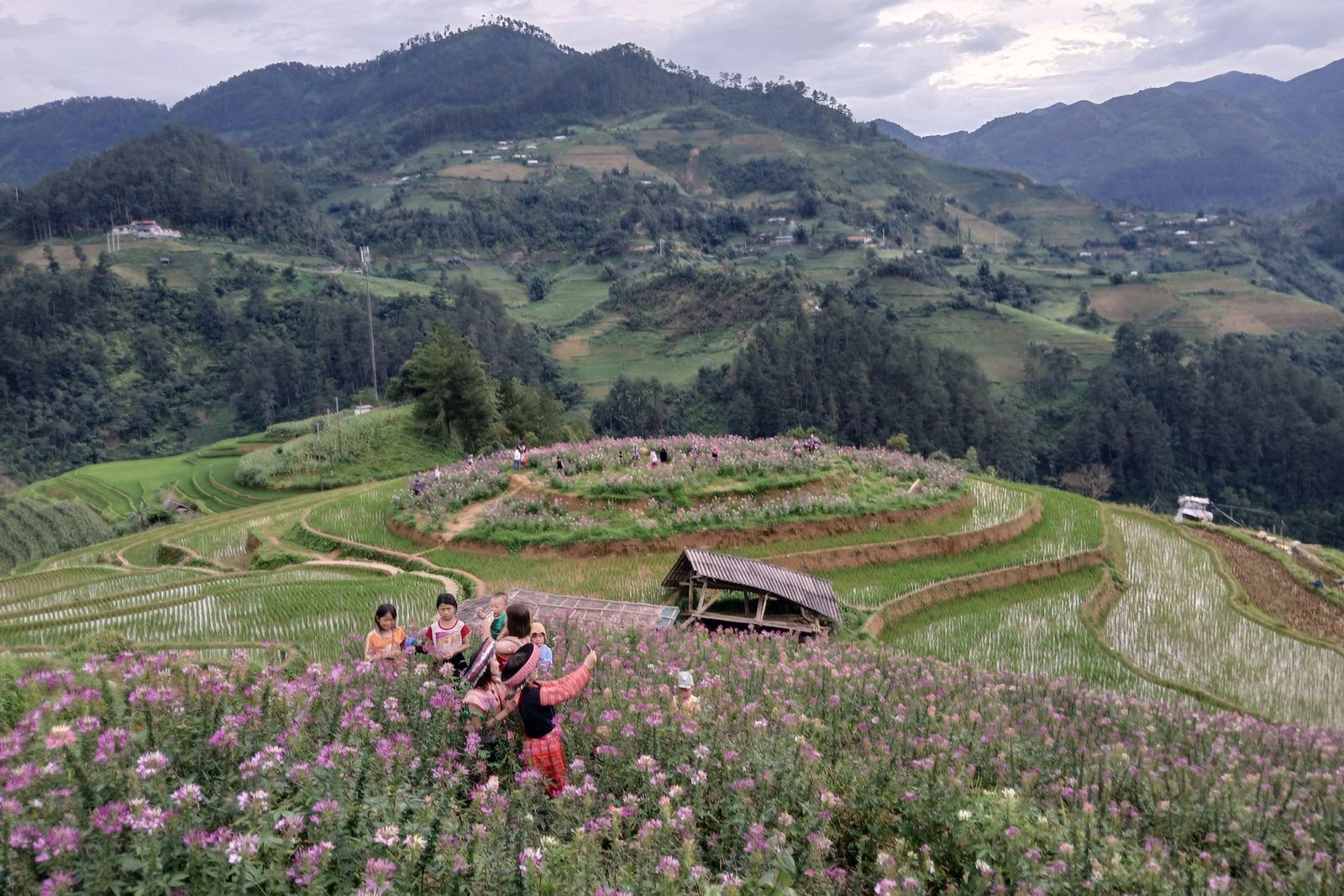
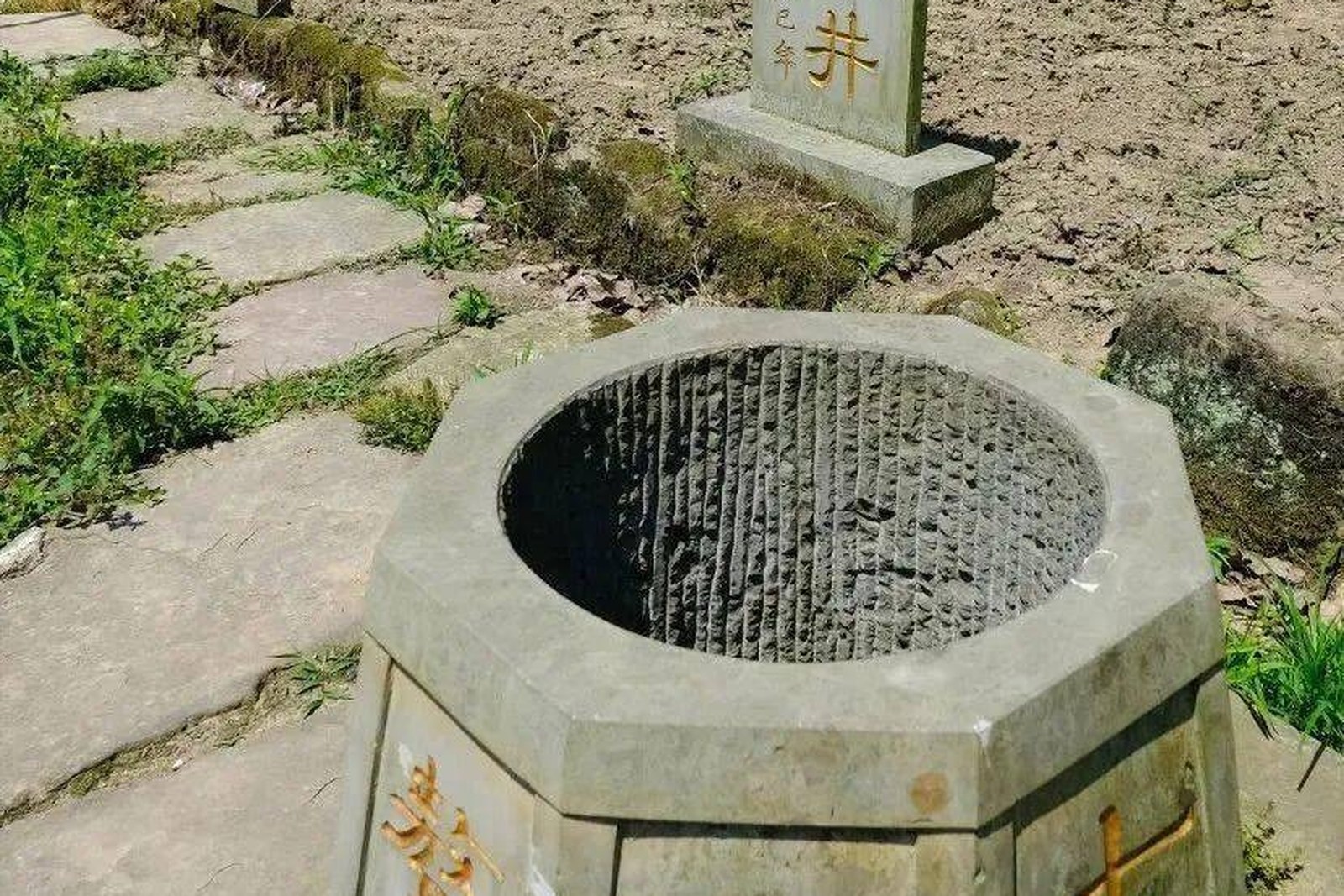
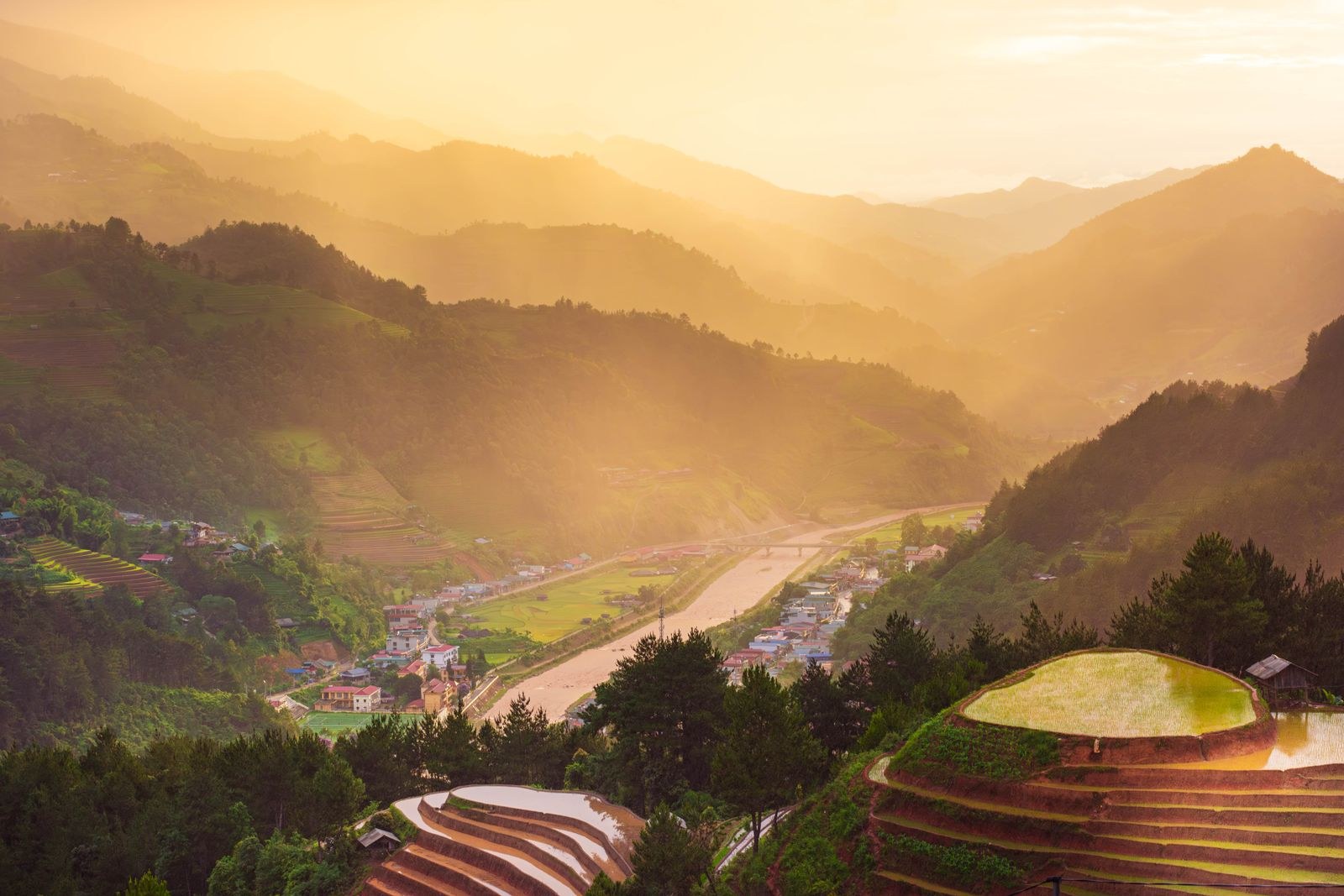
What the visitor actually walks is terraced fields rather than a gated garden. The complex spreads across the terraced flower sea of Shipan Village – about 200 mu of five-colour terraced blooms in season – and the 金鳌山 Jin’ao Mountain behind it is the reclaimed hill the terraces climb, so the “complex” is a working rural landscape rather than a walled park. The 金鳌寺 Jinao Temple sits among the terraces with its 状元井 Zhuangyuan well, a working temple rather than a museum piece, and the “ten Jinao, nine jinshi” legend is the story the mountain tells: the claim that the mountain produced nine successful county-exam graduates across ten Jinao cohorts, a local boast rather than a documented count. The AAAA grade of April 2024 is the complex’s status, achieved after the district’s rural-tourism push on ground that reached Dadukou from 巴县 Bāxiàn Ba County in the March 1995 transfer.
The flowers are the draw and they are seasonal, which is the honest limit. The five-colour terraced flower sea is a spring-and-summer proposition, and out of season the terraces are working fields rather than a display, so the useful sentence is that you time the visit to the bloom rather than to the clock. The 金鳌寺 Jinao Temple is a working temple year-round, which means the cultural anchor is always there even when the flowers are not, and the 状元井 Zhuangyuan well is the fixed point the legend attaches to. The homestay cluster on the slope – 长江石居 Chángjiāng Shíjū, 山屿汐·雲 Shānyǔxī Yún, 金鳌别院 Jīn’áo Biéyuàn, 多多小院 Duōduō Xiǎoyuàn among a dozen – is the bookable part, and the stay column covers it; this travel piece names the cluster as the part you can sleep in and stops there.
The grade is the part a visitor must understand before quoting it, and the split is stated plainly rather than hidden. The AAAA of April 2024 applies to the 金鳌山·金鳌田园综合体 Jin’ao Mountain rural complex as a rural-tourism entity, not to a gated scenic area with a uniform tariff, and no single gate price is published for the fields, because the terraces are free to walk in season and the temple asks nothing. The honest sentence is that you visit an AAAA rural complex that has no ticket booth, and the flowers and the temple are the reason rather than the gate. The comparison with the district’s other AAAA – the Chongqing Industrial Culture Park – is exact: both are AAAA, and only the park’s museum context differs, while the Jin’ao complex is fields and a working temple.
What the record does not give is a tariff, and that absence is the complex’s nature rather than a gap. No uniform gate charge, no posted hours for the fields, and only the temple keeps its own rhythm, so the practical answer is to come in flower season, walk the terraces for free, and book a slope courtyard if you mean to stay. The 1995 land transfer is why the complex is Dadukou at all – the mountain and its terraces came from Ba County – and the rural-tourism grade is the district’s way of naming ground it only acquired thirty years ago.
Practicalities
Tickets: None published, and that is the complex’s nature rather than a gap: the 金鳌山·金鳌田园综合体 Jin’ao Mountain rural complex is an AAAA rural-tourism entity (graded April 2024) with no uniform gate tariff, because the terraced fields are free to walk in season and the 金鳌寺 Jīn’áo Sì Jinao Temple asks nothing. The useful caveat is the grade split – the AAAA belongs to the rural complex, not to a gated scenic area with a booth – so the honest sentence is that you visit an AAAA with no ticket window, and the flowers and the temple are the reason rather than the gate. No source publishes a charge for the fields or the well, so the practical answer is to come in bloom and pay nothing.
Opening hours: Daylight, in season, and this is the only window the fields keep – the five-colour terraced flower sea is a spring-and-summer display, and out of season the terraces are working fields rather than a garden, so time the visit to the bloom rather than to a posted clock. The 金鳌寺 Jinao Temple is a working temple open year-round on its own rhythm, which means the cultural anchor is always there even when the flowers are not, and the 状元井 Zhuàngyuán Jǐng Zhuangyuan well is the fixed point the “ten Jinao, nine jinshi” legend attaches to. No gate hours are published for the complex, so treat the daylight as the limit.
Closing day: None published for the fields, and the reason is structural rather than editorial: an open rural landscape of terraces and a working temple does not close on a weekday, and no source describes a weekly rest for the complex. What has a weekly rhythm in this district is elsewhere – the Chongqing Industrial Museum keeps 9:00 to 17:00 and closes on Mondays except on public holidays, on 023-61843550 – and the Jin’ao fields ignore that rhythm, free to walk whenever the blooms are out. The seasonal limit is the flower season, not a closing day.
Getting there: The Jin’ao Mountain rural complex spreads across the terraced fields of 石盘村 Shípán Cūn Shipan Village in 跳磴镇 Tiàodēng Zhèn Tiaodeng Town, 大渡口区 Dadukou District, reached by road from the core rather than by metro; the mountain came to the district from 巴县 Ba County in the March 1995 transfer, which is why the western rural complex exists at all. Give a driver the complex or Shipan Village rather than just “Jin’ao”, because the mountain is a reclaimed hill with no single gate, and the sources publish the grade and the village rather than a route, so the last leg is a car or a bus (checked October 2026, subject to change).
flowcloud would say that the Jin’ao Mountain rural complex is the one place in this district where the AAAA has no ticket booth – about 200 mu of five-colour terraced flower sea in season, a working 金鳌寺 Jinao Temple with its 状元井 Zhuangyuan well, and the “ten Jinao, nine jinshi” legend – and that the honest move is to come in bloom, walk the terraces for free, and book a slope courtyard if you mean to stay, because the mountain only became Dadukou in the 1995 transfer from Ba County.