
靖海古城 Jìng hǎi gǔ chéng is a walled garrison town on a headland in the far south-east of 惠来县 Huì lái xiàn, and by local reckoning the town came before the county that contains it. 靖海镇 Jìng hǎi zhèn faces the 南海 Nán hǎi, the South China Sea, on a piece of land that is nearly a peninsula, and it has been the forward post and the troop station for this stretch of coast for the better part of a thousand years: the place is called 东土屏藩 dōng tǔ píng fān, the screen and fence of the eastern land, and 惠来锁钥 huì lái suǒ yuè, the lock and key of 惠来. The local saying is 未有惠来县,先有靖海城 wèi yǒu huì lái xiàn, xiān yǒu jìng hǎi chéng – before there was a 惠来 county there was a 靖海 city – and seen from above, the outline of the wall and the four streets crossing inside it are supposed to read as an elephant, which is why the place is also called 象城 xiàng chéng, the elephant city.
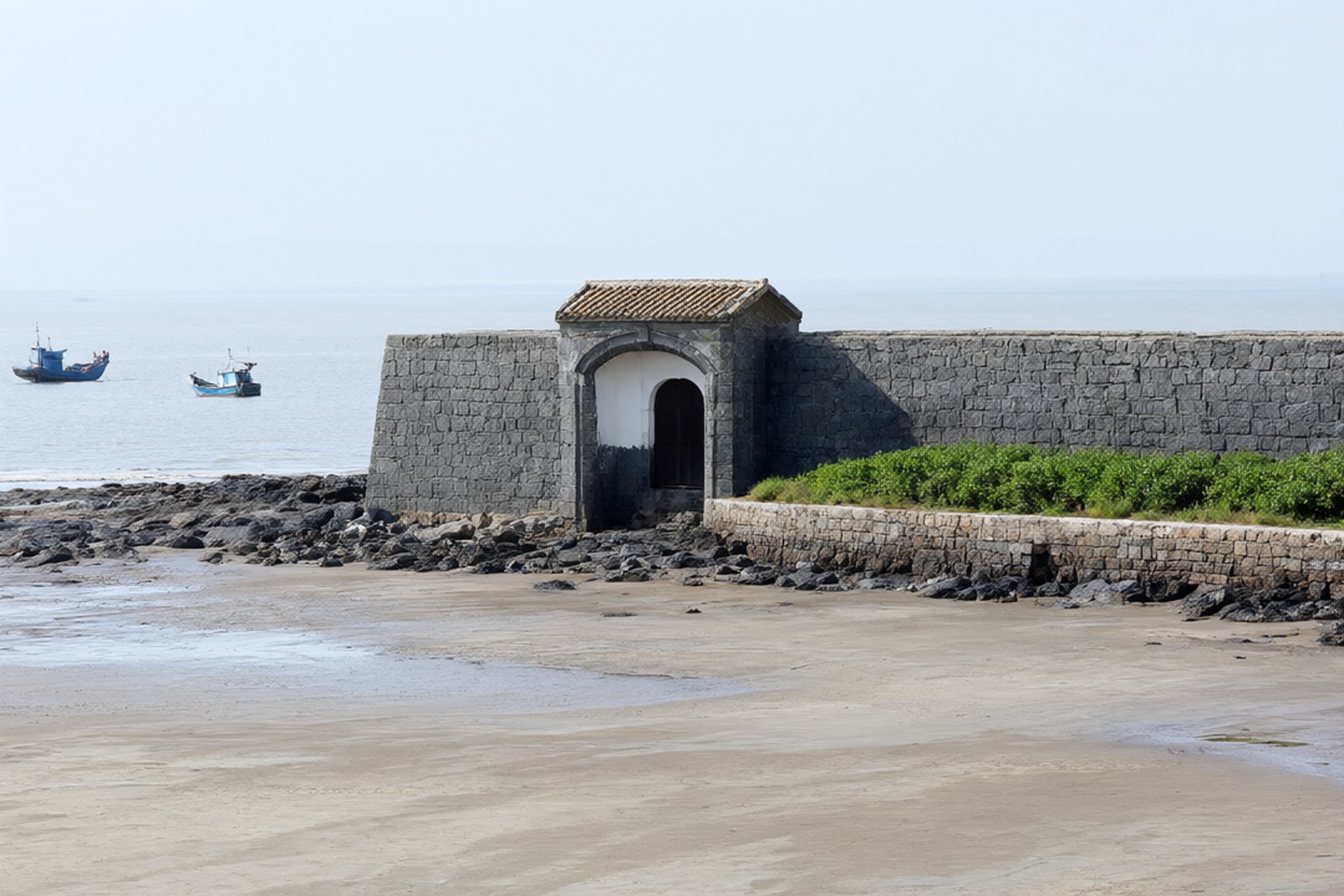
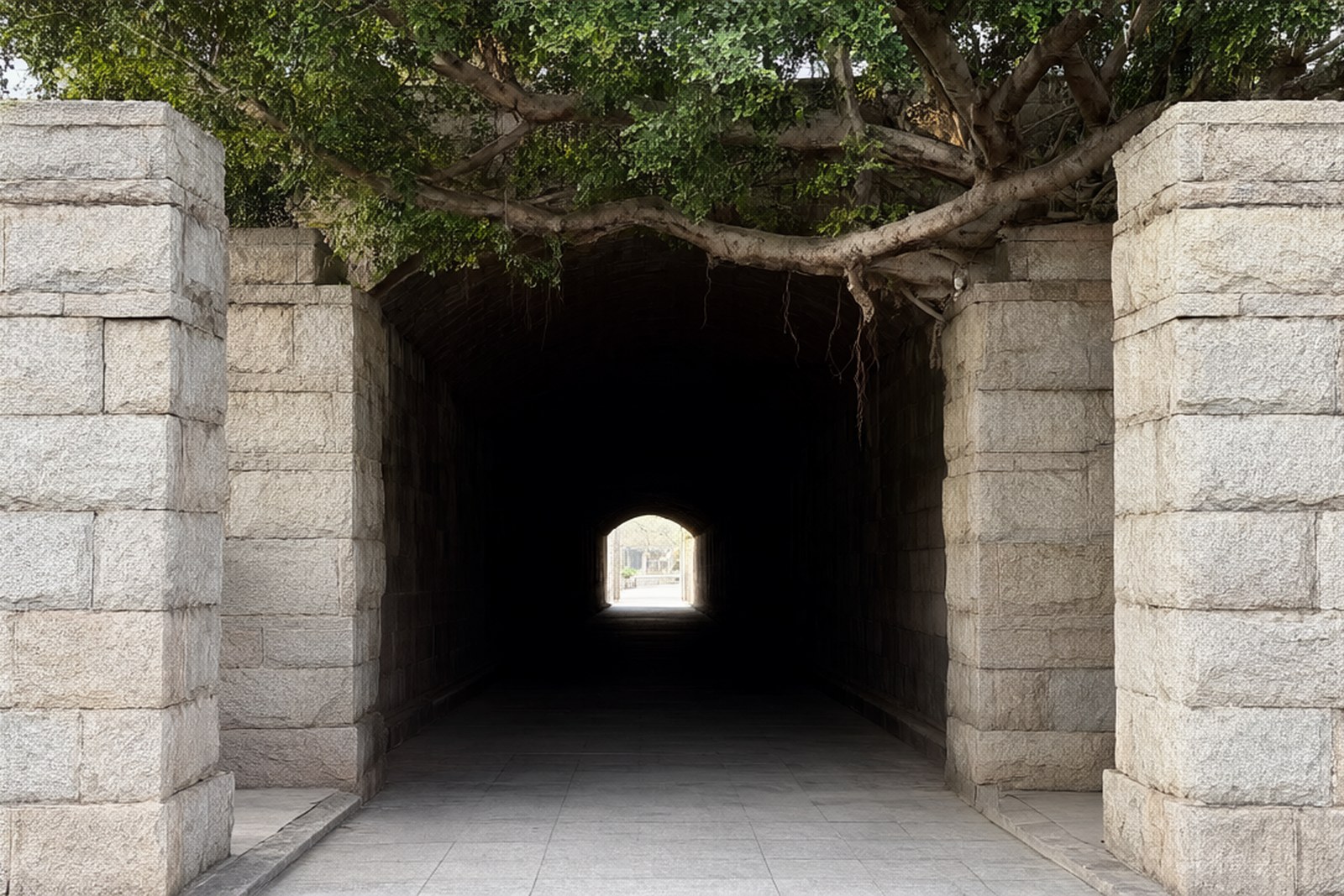
The military history is precise. In the twenty-seventh year of 洪武 Hóng wǔ, 1369, the court set up guard and battalion stations at the points on the coast it wanted held, and the Guangdong regional military commission placed a 千户守御所 qiān hù shǒu yù suǒ, a thousand-household defence post, here under the 潮州卫 Cháo zhōu wèi, the Chaozhou guard, with a 千户 qiān hù commanding and cannon emplacements on the headland; the place was named 靖海千户守御所, or 靖海所 for short. The walled town itself came later and took longer than anybody planned: in the spring of 1548 the local authorities petitioned for it, in 1549 the order came back to build it, and it took thirteen years to finish. It was repaired in 1699 in the 康熙 Kāng xī reign and again in 1727 in the 雍正 Yōng zhèng reign. The dimensions are recorded in the old units: 501 丈 zhàng round the outside, which is about 1,600 metres, and a wall 1 丈 4 尺 high, about 4.5 metres, built of dressed stone laid on both faces with rammed lime earth between them. Three gates and nearly 600 metres of wall still stand – the east, west and north – with battlements along the top, sighting holes cut through the merlons, and a 跑马道 pǎo mǎ dào, a horse road, running along the wall head behind the parapet, wide enough for a rider. The four gates carried their own boards: the east 表海胜概 biǎo hǎi shèng gài, the west 靖海安澜 jìng hǎi ān lán, the south 化洽趋虞 huà qià qū yú, the north 莱钥永固 lái yuè yǒng gù.
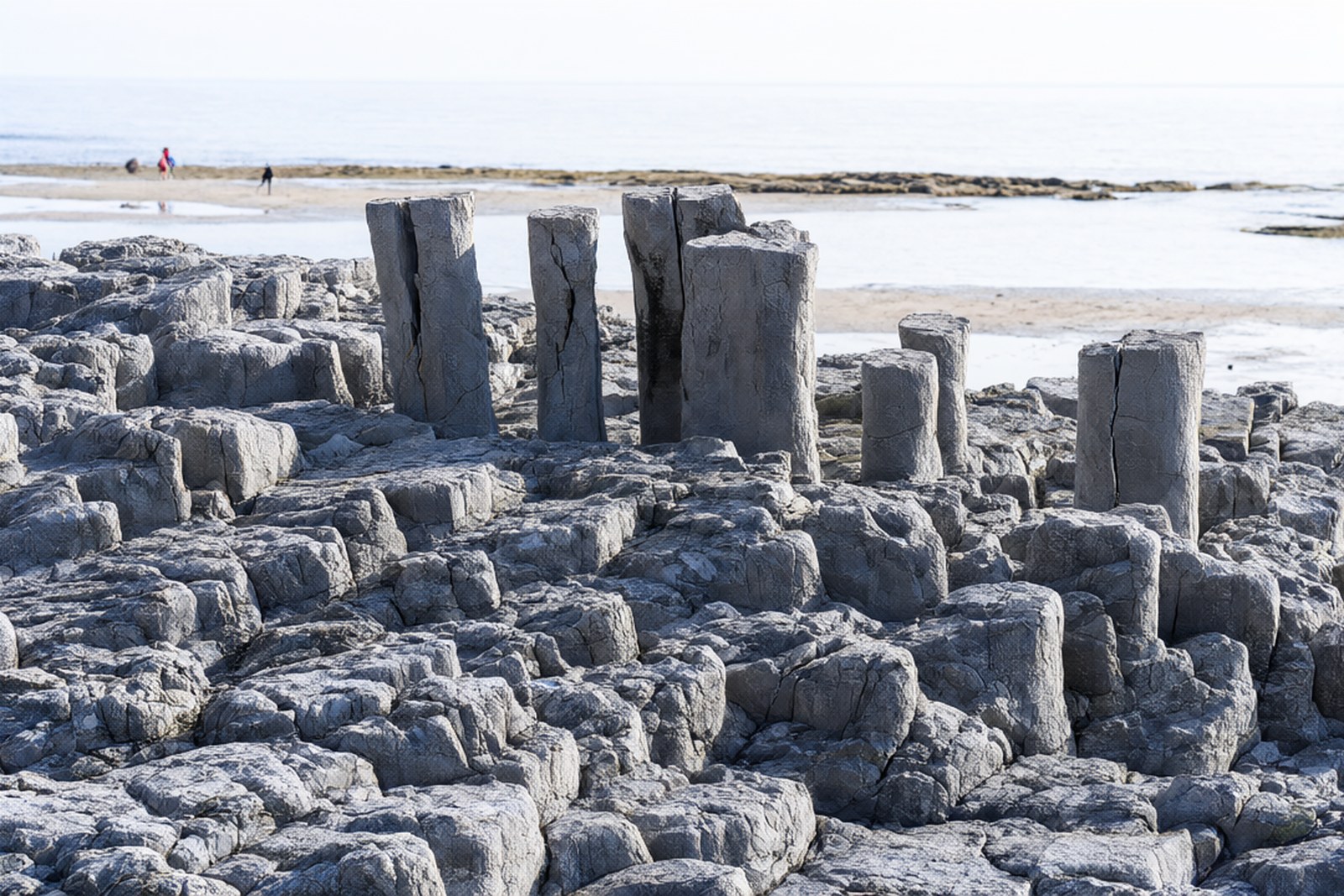
Inside the wall the plan is unusually legible, because the town was built to a drawing rather than grown. Four stone-paved streets – 西仁街 xī rén jiē, 大中街 dà zhōng jiē, 东大街 dōng dà jiē and 北大街 běi dà jiē – cross in a 十字 shí zì, a cross, with each arm running to a gate, and the ground between them rises in the middle and falls away to the four sides like an upturned cauldron, which is what the local phrase 貌似覆鼎 mào sì fù dǐng describes. The garrison was manned by soldiers sent from all over the country, and the consequence is still visible 600 years later in the surname list: more than sixty family names are recorded among the town’s residents, and the ancestral halls they built sit along the streets in a density you would not find in a farming village. The houses are the traditional 潮汕 Cháo shàn types kept in their old form – 下山虎 xià shān hǔ, the downhill tiger plan, and 四点金 sì diǎn jīn, the four gold dots – and the halls carry gold-lacquer wood carving and 嵌瓷 qiàn cí porcelain mosaic. Two of the gates have shrines on the wall head rather than inside the town: 大峰祖师 Dà fēng zǔ shī, the monk 大峰, is worshipped on the north gate tower, and 李老仙师 Lǐ lǎo xiān shī on the east. And in the middle of the town there is a 周王二公祠 Zhōu wáng èr gōng cí, the shrine of the two lords Zhou and Wang, put up in the last years of the 康熙 reign by the people of 靖海 in thanks to two Qing officials, 周有德 Zhōu Yǒu dé and 王来任 Wáng Lái rèn, who petitioned the throne to lift the coastal evacuation and let the population come back to the shore; it is still worshipped twice a year, in spring and in autumn. The coast either side of the town is the other half of any visit here, and both halves are military or maritime rather than scenic. The 靖海港 jìng hǎi gǎng had cannon batteries and beacon towers on it in the Ming and Qing to hold off Japanese raiders and pirates, and the county gazetteer gives the establishment in detail: the 靖海港炮台 north of the harbour, five kilometres from the 资深炮台, the two of them commanding the approach to the port and known together as the 南北炮台, mounting 8 cannon with 18 barrack rooms and a garrison of one 千总 qiān zǒng and 47 soldiers; and the 资深炮台, also called the 石碑澳炮台, with 6 cannon, 18 barrack rooms and one officer and 18 men. In the nineteenth year of 道光 Dào guāng, 1839, 林则徐 Lín Zé xú destroyed more than twenty thousand jin of opium on this coast – the consignment forwarded from 潮州 towards the provincial capital and burned here at 资深炮台 rather than sent on. A century later the same ground served another purpose: in 1927 the 东江纵队 dōng jiāng zòng duì, the East River column, was active in this district, and 古大存 Gǔ Dà cún and others hid in the 元氏在乐公祠 yuán shì zài lè gōng cí inside the old town, which stands on the highest point of the walled enclosure and was chosen for that reason. And out on the water to the south-east there is 客鸟尾 kè niǎo wěi, a 海蚀石林 hǎi shí shí lín, a sea-eroded stone forest, about 2.2 kilometres from the old town, where a few hundred mu of low hill have been cut by wind and wave into hundreds of standing pillars of rock; it is one of the larger formations of its kind in eastern Guangdong, visitors call it the province’s own little Iceland, and at low tide people go out onto the flats to gather shellfish. The 石碑山灯塔 shí bēi shān dēng tǎ, the lighthouse on 石碑山 shí bēi shān, is the other landmark, south-west of the harbour and long the mark by which boats have found their way home; local accounts call it the first lighthouse in Asia, which is a claim made in the social posts rather than in any gazetteer, so it is safer to say what is not in doubt – that it is the landmark of 惠来 and one of the navigation marks on 揭阳’s stretch of the Maritime Silk Road. Beside it, at 石碑山角, there is a theme park at the territorial-sea base point where the marker for 鸡椒礁 jī jiāo jiāo stands on the shore, the one such point in the country visible to the naked eye from the mainland.
And out on the water to the south-east there is 客鸟尾 kè niǎo wěi, a 海蚀石林 hǎi shí shí lín, a sea-eroded stone forest, about 2.2 kilometres from the old town, where a few hundred mu of low hill have been cut by wind and wave into hundreds of standing pillars of rock; it is one of the larger formations of its kind in eastern Guangdong, visitors call it the province’s own little Iceland, and at low tide people go out onto the flats to gather shellfish. The 石碑山灯塔 shí bēi shān dēng tǎ, the lighthouse on 石碑山 shí bēi shān, is the other landmark, south-west of the harbour and long the mark by which boats have found their way home; local accounts call it the first lighthouse in Asia, which is a claim made in the social posts rather than in any gazetteer, so it is safer to say what is not in doubt – that it is the landmark of 惠来 and one of the navigation marks on 揭阳’s stretch of the Maritime Silk Road. Beside it, at 石碑山角, there is a theme park at the territorial-sea base point where the marker for 鸡椒礁 jī jiāo jiāo stands on the shore, the one such point in the country visible to the naked eye from the mainland.
Practicalities
Tickets. Free. There is no gate into 靖海镇 and nothing to pay to walk the streets, the surviving wall or the three gates; the shrines on the wall heads take incense rather than money, and the only costs are the 客鸟尾 stone forest, where a small local parking charge is sometimes collected, and whatever you eat in the town.
Opening hours. The town is lived in rather than visited, so its hours are its residents’ hours and there is nothing to close. The wall and the gates are best in the early morning, when the light comes in low off the sea and the gates face it, and again in the last hour; the 客鸟尾 stone forest is a tidal place and wants to be done at low water, so the tide table matters more than the clock when you plan a day here.
Getting there. 靖海镇 Jìng hǎi zhèn is in the south-east of 惠来县 Huì lái xiàn, on the coast road about twenty kilometres from 惠来县城 huì lái xiàn chéng and roughly two hours by road from 揭阳市 Jiē yáng shì through 惠来 on the 深汕 and 潮惠 expressways, with the 厦深 Xià shēn high-speed line passing through the county and 揭阳潮汕国际机场 Jiē yáng cháo shàn guó jì jī chǎng about an hour and a half to the north-east. There is no station at the town, buses run from the county seat to 靖海镇, and the last few kilometres to 客鸟尾 and to the lighthouse are on narrow lanes that want a car.
Closing day. There is no closing day, since this is a working town with people living inside the wall. What has closed over the years is the wall itself, and the record is worth having: the south gate and the stretch of wall beside it were taken down in 1952, and the west gate and part of the north wall were demolished and built over with houses in the 1980s. What was left – three gates and about 600 metres – was listed in 2010 in the sixth batch of provincial protected units, and the town has since been restoring the four main street fronts, cleaning up the overhead cables and putting a lighting scheme on the wall to build an evening economy round it.
flowcloud would say that a town whose whole purpose was to be the last thing between the sea and the interior is a strange place to come and eat shellfish, and that the reason 靖海 is worth the drive is less the view from the wall than the fact that sixty surnames, two cannon batteries and one burned opium shipment are all still recorded in it, in a town the guidebooks have not yet decided what to do with.
Getting there: 靖海古城 is at 靖海镇 Jìng hǎi zhèn in the south-east of 惠来县 Huì lái xiàn, 揭阳市, about twenty kilometres from 惠来县城 huì lái xiàn chéng on the coast road and roughly two hours from the prefecture city by way of 惠来 on the 深汕 and 潮惠 expressways; the 厦深 Xià shēn high-speed line crosses the county and 揭阳潮汕国际机场 Jiē yáng cháo shàn guó jì jī chǎng is about an hour and a half north-east, with buses from the county seat to the town and a car needed for the last lanes out to the 客鸟尾 stone forest and the 石碑山 lighthouse.