
Jingshan Park: The Coal Hill Vista Over the Forbidden City Roofs in Xicheng District, Beijing
万春亭上望宫城,一片金瓦落晚晴。Wànchūn Tíng shàng wàng gōngchéng, yī piàn jīnwǎ luò wǎnqíng – From Wanchun Pavilion look down on the palace city; a spread of golden tiles falls into the clear evening.
景山公园 Jǐngshān Gōngyuán Jingshan Park is not a hill with a pagoda — it is, to be precise, an artificial ridge of earth and rock planted directly north of the Forbidden City, in 西城区 Xīchéng Qū Xicheng District, Beijing, thrown up from the soil dug to make the imperial moat and the palace’s foundations in the Ming. The name means “Prospect Hill,” and the Ming called it 万岁山 Wànsuì Shān Longevity Hill; locals still say 煤山 Méishān Coal Hill after the legend that the dynasty stored coal in its caves. Five cream-and-green pavilions crown its crest, and the central one — 万春亭 Wànchūn Tíng Wanchun Pavilion — stands on what is, by one definition, the geometric centre of old Beijing and the highest point you can legally climb for miles. What you actually visit is a forty-six-metre vantage that sells the single best panorama of the 紫禁城 Zǐjìnchéng Forbidden City’s golden roofs, and because it opens at first light and costs almost nothing, it is the obvious encore to a morning in the palace across the road.
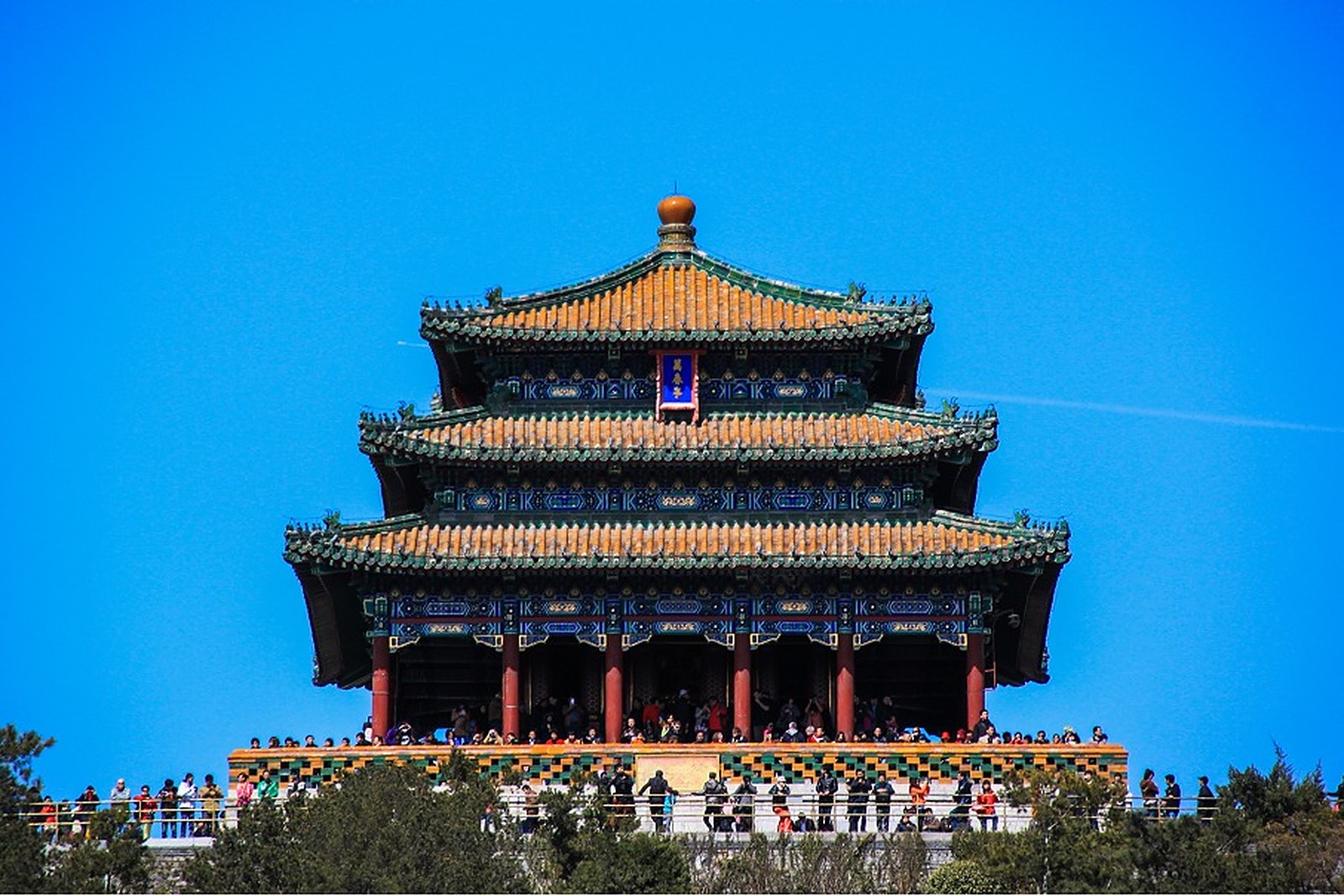
Call it honestly: the cheapest world-class view in the capital, and the one most ruined by the midday sun. Entry is ticketed and worth confirming the details — the gate fee is modest and the opening hours follow the light, not the clock, so check the current times before you set an alarm (worth confirming the details). The park has several gates; the south gate at 景山前街 Jǐngshān Qiánjiē Jingshan Front Street puts you straight under the palace wall and is the natural exit after a Forbidden City morning, while the east and west gates suit a hutong walk to 北海 Běihǎi Beihai or the 南锣鼓巷 Nánluōgǔxiàng lanes. The climb is short but real — a few minutes up shaded steps — and the crest gets crowded at sunset, so the move is to arrive an hour before the light you want and claim a rail. No boat, no shop, no gimmick; the whole place is a viewing platform with gardens attached, and the crowds are the only thing that can spoil it.
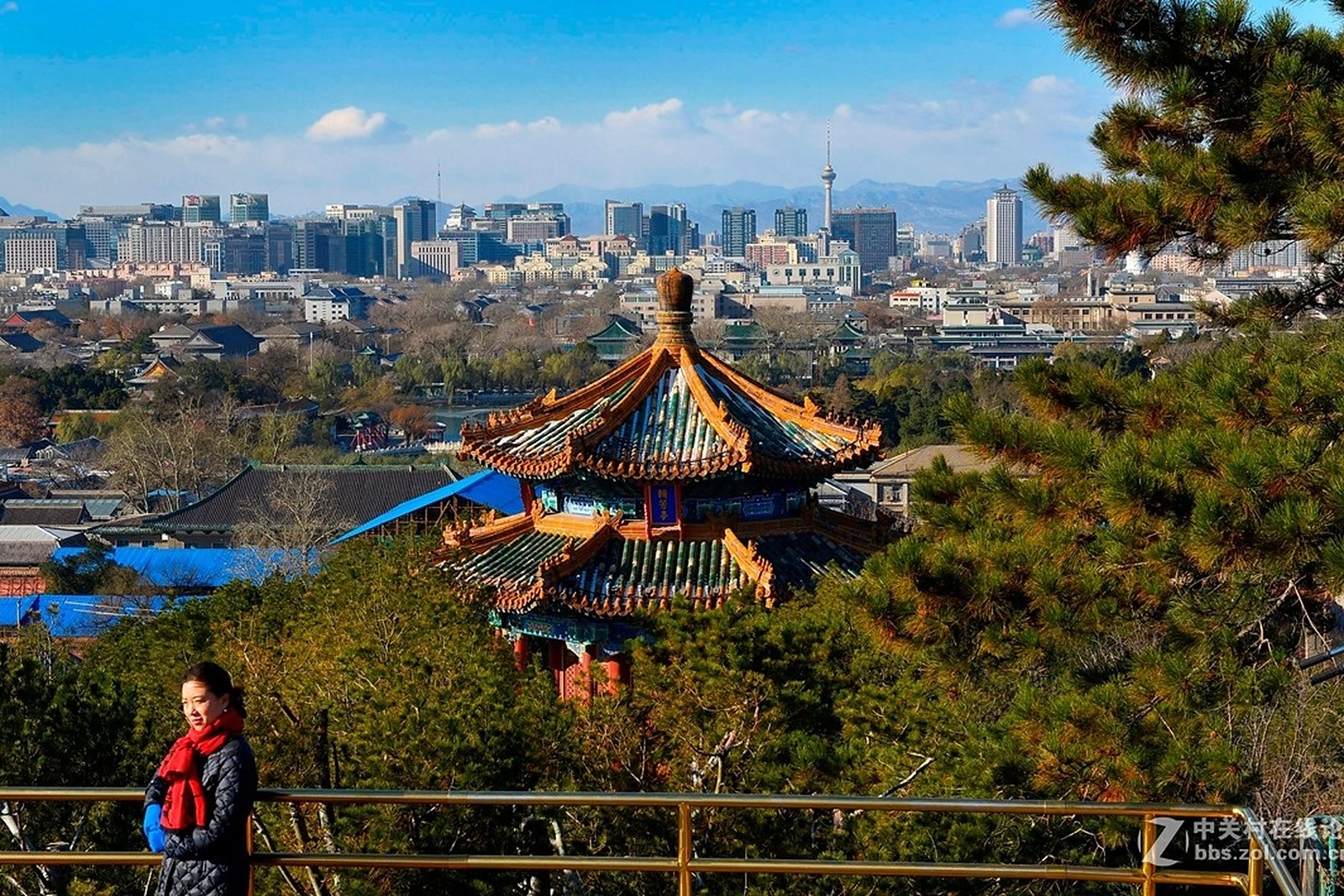
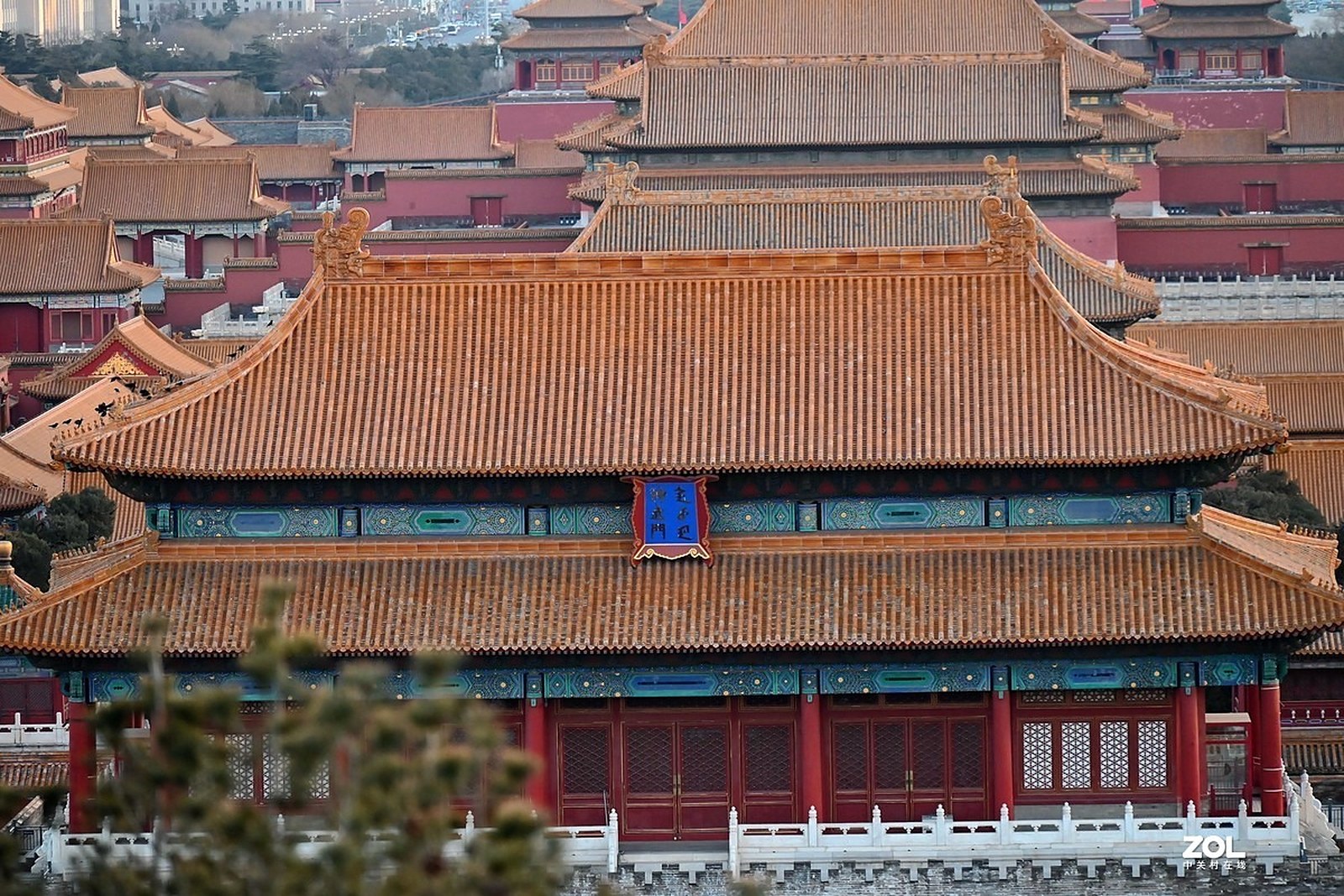
The honest star is the centre pavilion, not the approach to it. From 万春亭 Wànchūn Tíng the city opens north–south along the 北京中轴线 Běijīng zhōngzhóuxiàn Beijing central axis: the rectangular sea of 紫禁城 Zǐjìnchéng Forbidden City roofs marching south to 天安门 Tiān’ānmén, the Bell and Drum Towers poking up to the north, and on clear days the distant fold of the Western Hills. What gets oversold is the noon visit, when the tiles glare white and the rail is five deep; what repays the effort is the blue hour — late afternoon in winter, just before closing in summer — when the gold goes copper and the crowds thin to a few photographers. Down the hill’s north face stands the famous 老槐树 lǎo huáishù old locust, the tree from which the last Ming emperor, 崇祯 Chóngzhēn Chongzhen, is said to have hanged himself in 1644 as the rebels took the city — a sobering counterweight to the postcard above. The 寿皇殿 Shòuhuáng Diàn Shouhuang Hall at the northern foot, a restored imperial shrine, is the quiet half most visitors miss.
The self-aware postscript: I climbed once at noon, saw glare and selfie-sticks, and came back at five on a winter evening to find the roofs turned to copper and the only other soul a man sketching the ridge in a notebook. That is the visit in miniature. 景山公园 Jǐngshān Gōngyuán suits whoever times the light and reads the hill as a footnote to the palace below, and disappoints whoever expects a destination in itself. Go at opening after the Forbidden City, or at the blue hour for the panorama; then walk west to 北海 Běihǎi or east toward the lakes — all in the same Xicheng block the emperors walled off from the world, all a short stroll from one another.
Practicalities
- Rating: ★★★★☆ — the highest legal point in the old city and the one panorama over the Forbidden City roofs; timing the light is the whole trick.
- Tickets: Modest ticketed entry, worth confirming the details — the gate fee is small and the hours follow the light, so check current times before you set an alarm (worth confirming the details).
- Address: 景山公园 Jǐngshān Gōngyuán, 西城区 Xīchéng Qū Xicheng District, Beijing — directly north of the Forbidden City on 景山前街 Jǐngshān Qiánjiē Jingshan Front Street.
- Time needed: One to two hours for the climb and the crest view; add an hour to walk the gardens and the north-foot shrine.
Words and Names
景山公园 Jǐngshān Gōngyuán Jingshan Park · the artificial hill north of the Forbidden City in Xicheng 万春亭 Wànchūn Tíng Wanchun Pavilion · the central crest pavilion and highest view point 紫禁城 Zǐjìnchéng Forbidden City · the palace whose golden roofs the hill overlooks 老槐树 lǎo huáishù old locust · the tree where the last Ming emperor hanged in 1644 寿皇殿 Shòuhuáng Diàn Shouhuang Hall · the restored imperial shrine at the hill’s north foot 北京中轴线 Běijīng zhōngzhóuxiàn Beijing central axis · the line the hill closes from the north
flowcloud would say that 景山公园 Jǐngshān Gōngyuán is Xicheng’s artificial overlook — a Ming hill of earth north of the palace, crowned by 万春亭 Wànchūn Tíng on the old city’s centre, selling the one panorama over the 紫禁城 Zǐjìnchéng roofs and the 老槐树 lǎo huáishù where the last Ming emperor fell — and that the honest move is the blue hour with the gate time worth confirming the details (worth confirming the details), because the noon glare and the selfie crowds ruin the rail, the north-foot 寿皇殿 Shòuhuáng Diàn is the quiet half most miss, and the hill repays whoever times the light and reads it as a footnote to the palace below. All checked October 2026.
Getting there: Metro Line 1 to 天安门东 Tiān’ānmén Dōng Tiananmen East then north past the palace, or Lines 6/8 to 南锣鼓巷 Nánluōgǔxiàng then west; enter by the south gate on 景山前街 Jǐngshān Qiánjiē after a Forbidden City morning, or the east gate toward 北海 Běihǎi — all in central Xicheng (worth confirming the details for current opening hours). All checked October 2026.