
Jinhai Lake: The Largest Reservoir in Pinggu, a Mountain-Ringed Sheet of Blue Water and the 1990 Asian Games Regatta Course in Pinggu District, Beijing
金海波光衔远岫,一湖碧水映千峰。Jīnhǎi bōguāng xián yuǎn xiù, yī hú bìshuǐ yìng qiān fēng – The waves of the Golden Sea hold the far ridges in their light; a single lake of blue water mirrors a thousand peaks.
金海湖 Jīnhǎi Hú Jinhai Lake is not a city-park pond with paddle boats — it is, plainly put, the district’s great open water: Pinggu’s largest 水库 shuǐkù reservoir, a broad sheet of blue folded into the hills of 平谷区 Pínggǔ Qū Pinggu District in Beijing’s far northeast, with mountains closing it in on 三面环山 sānmiàn huán shān three sides and only the dam side open to the sky. Its claim is specific rather than grand: built as a working reservoir, it was chosen as the 赛艇 sàitǐng rowing and canoeing venue of the 1990 亚运会 Yàyùnhuì Asian Games, and the long, straight fingers of water that once held regatta lanes still read like a course drawn across the hills. Today the shoreline mixes marinas, water-sport piers and quiet coves, while the ridges behind it keep the city out of the frame. What you actually visit is a big, mountain-ringed lake you can cross by boat or skirt by shore, not a ticketed monument.
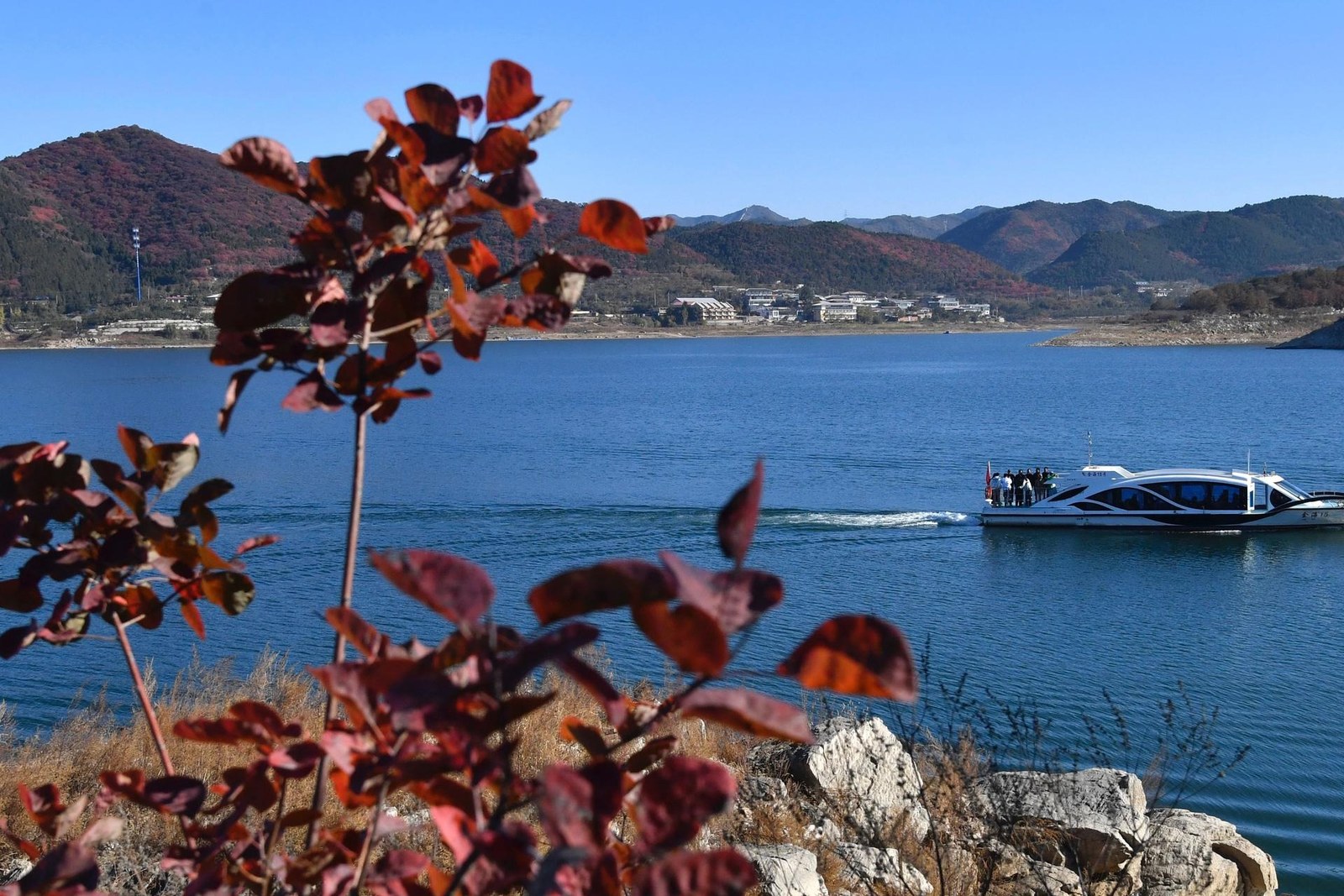
Call it honestly: the lake area charges a gate fee, with boat rides, 水上运动 shuǐshàng yùndòng water-sport rentals and any pier or island options costing extra, and hours that follow the daylight pattern with seasonal adjustments (worth confirming the details for current admission, boat fares and activity prices). The honest warning is season, not money — summer is the lake at full power, with the busiest piers and the strongest sun, while spring and autumn cool the water and thin the crowds, and winter quiets the whole shore down to the reeds. The best light comes late, when the sun drops behind the western ridge and the surface goes copper. Give it two to three hours for a boat loop and a shoreline walk, and bring sun protection for the open decks.
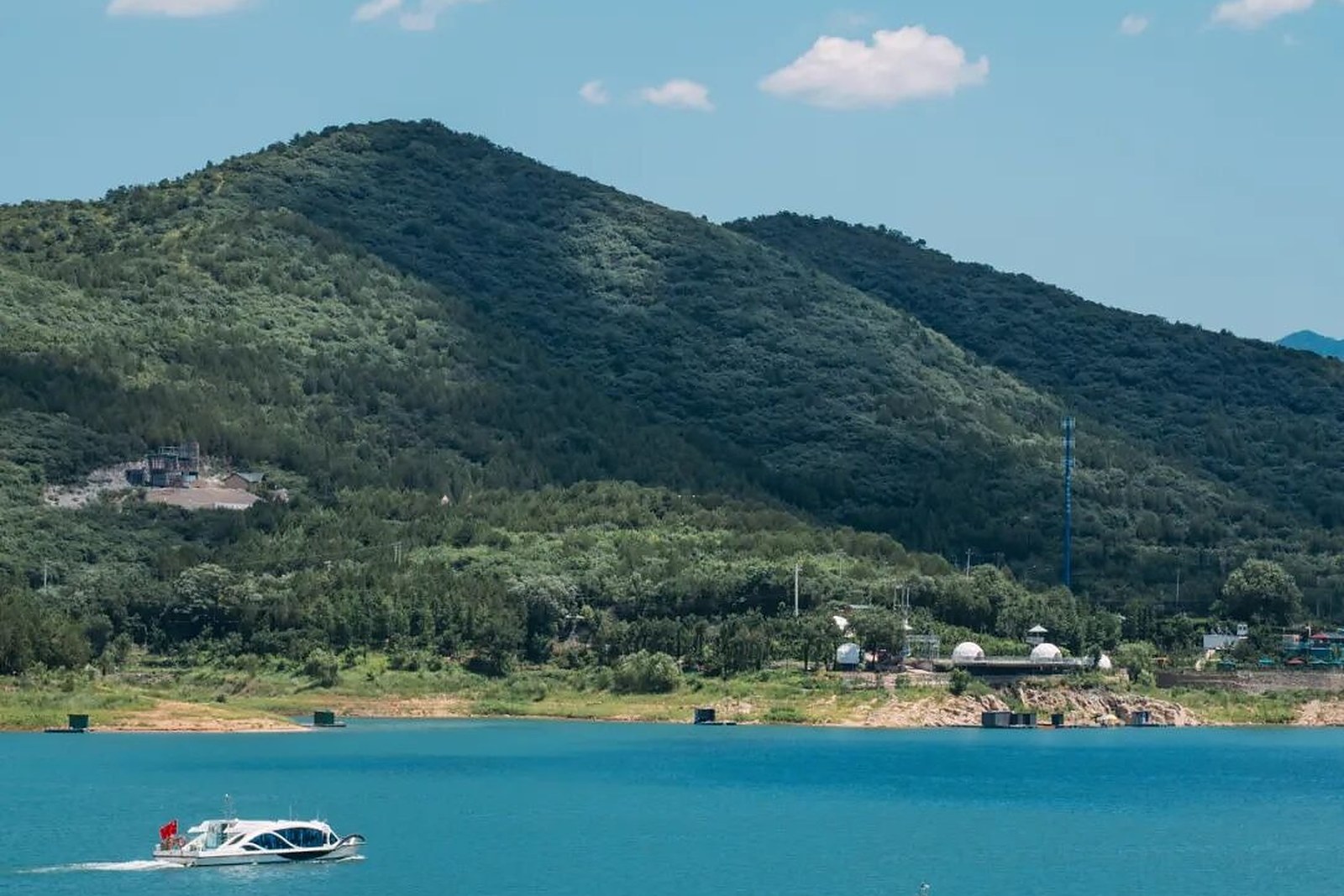
The honest star is the water against the mountains — the way the ridges fold straight down to the shore on three sides, the boat wake drawing a clean line across the old regatta lanes, the dam holding the whole sheet flat and calm (worth confirming the details for which piers and boat routes run on your day). What gets oversold is the word “lake” read as a wild alpine sea: this is a working reservoir turned playground, engineered and managed, its pleasure in the sheer scale of open water so close to Beijing rather than in remoteness. What repays the effort is the relief of big water in a dry region — a district of orchards and hills holding a sheet of blue that the Asian Games once raced on. Come for the layering of the place: shore, then water, then the ridge line beyond.
The self-aware postscript: I shared the bow of a boat with a man who said he had trained on this water in the nineties, and when I asked whether the lake had changed he said, “the lanes are still straight — it is only the boats that got newer”. That is the visit in miniature. 金海湖 Jīnhǎi Hú suits whoever treats it as a big-water escape first and a checklist of records second, and exhausts anyone expecting a wild, people-free alpine lake. Everything else on this Pinggu list lies within the same district: the waterfall gorge of 京东大峡谷 Jīngdōng Dà Xiágǔ Jingdong Grand Canyon, the stone pillars and glass walkway of 石林峡 Shílín Xiá Shilinxia, the Taoist twin peaks of 丫髻山 Yājì Shān Yaji Mountain and the stalactite chambers of 京东大溶洞 Jīngdōng Dà Róngdòng Jingdong Cave — all in the same 平谷区 Pínggǔ Qū that keeps the region’s biggest sheet of water folded into its hills.
Practicalities
- Rating: ★★★★☆ — the district’s largest reservoir and its summer water playground; the mountain ring and the open-water boat ride outrank the amusements; go early or go late for the light.
- Tickets: Gate fee, with boat rides and water-sport rentals costing extra, and daylight hours with seasonal adjustments (worth confirming the details for current admission, boat fares and activity prices).
- Address: 金海湖 Jīnhǎi Hú, 金海湖镇 Jīnhǎihú Zhèn Jinhaihu town, 平谷区 Pínggǔ Qū, Beijing — in the hills east of the district centre, mountains on three sides of the water.
- Time needed: Two to three hours for a boat loop and a shoreline walk; half a day adding the water sports and a rest stop.
Words and Names
金海湖 Jīnhǎi Hú Jinhai Lake · the district’s largest reservoir and water playground 水库 shuǐkù reservoir · the working dam behind the scenery 三面环山 sānmiàn huán shān mountains on three sides · the ring of ridges around the water 亚运会 Yàyùnhuì Asian Games · the 1990 regatta the lake hosted 赛艇 sàitǐng rowing · the sport that drew the lake’s straight lanes 水上运动 shuǐshàng yùndòng water sports · the boats, boards and piers of the shore
flowcloud would say that 金海湖 Jīnhǎi Hú is a working reservoir that became the district’s summer address — the largest sheet of water in 平谷区 Pínggǔ Qū, ringed by hills on three sides, once the 赛艇 sàitǐng rowing course of the 1990 亚运会 Yàyùnhuì and now a shore of marinas and piers — and that the honest move is an early or late visit when the surface goes copper and the crowds have not arrived, because admission, boat fares and which routes run all shift (worth confirming the details), the regatta-lake title is the poster half and the ridges folding down to still water are the real half, and the lake repays whoever lets the water set the pace. All checked October 2026.
Getting there: Metro Line 13 十三号线 Shísān hào xiàn or the 机场线 to 东直门 Dōngzhímén Dongzhimen, then the 852 bus 平谷线 Pínggǔ xiàn to 平谷汽车站 Pínggǔ qìchēzhàn Pinggu bus station, where a taxi or local minibus runs the last twenty-odd kilometres southeast to the lake gates (worth confirming the details for current bus numbers and weekend frequency); self-drive leaves the city on the 京平高速 Jīngpíng gāosù S32 and follows signed exits straight to the shoreline lots. All checked October 2026.