
Jinshan Peasant Painting Village: The China Peasant Painting Village at Zhonghong Village Where Farmer Painters Turn Stove Murals and Fearless Folk Colour into Signed Originals, with Open Studios and Hands-On Painting Sessions beside Fengjing in Jinshan District, Shanghai
灶头画里藏乡韵,丹青笔底出农家。Zàotóu huà lǐ cáng xiāng yùn, dānqīng bǐ dǐ chū nóngjiā – Inside the stove mural hides the countryside’s rhyme; from the tip of the brush walks out a farmer’s household.
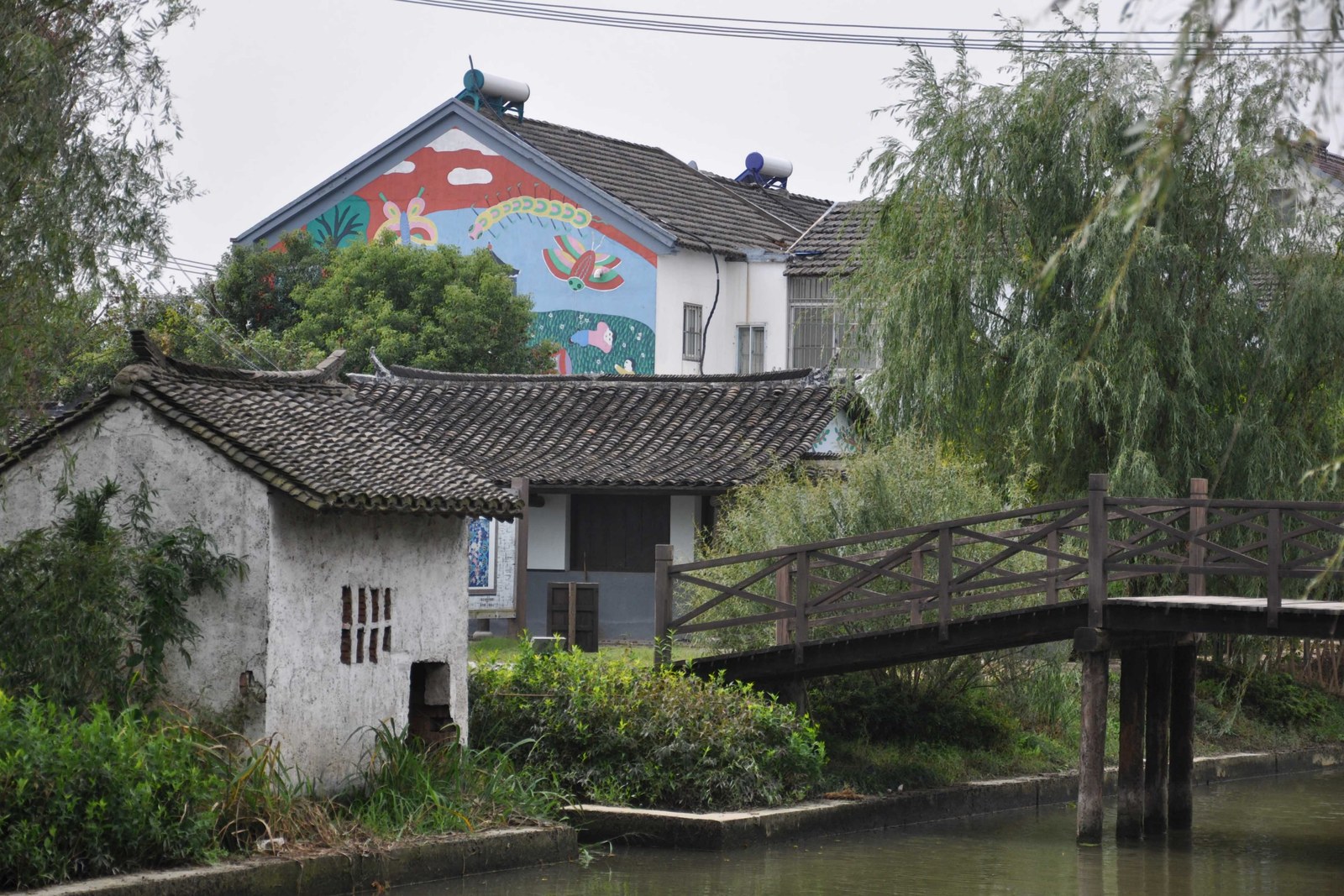
金山农民画村 Jīnshān Nóngmín Huàcūn Jinshan Peasant Painting Village is not a museum about folk art — it is, plainly put, the village where the folk art still lives upstairs: in 中洪村 Zhōnghóng Cūn Zhonghong Village on the northern edge of 枫泾 Fēngjīng Fengjing in 金山区 Jīnshān Qū Jinshan District, the farmers who founded 金山农民画 Jīnshān nóngmínhuà Jinshan peasant painting in the 1970s never stopped painting, and their whitewashed farmhouses now carry the official title 中国农民画村 Zhōngguó Nóngmín Huàcūn the China Peasant Painting Village. The style announces itself at first glance — flat, blazing, unafraid of any colour in the tin: harvest scenes, fish ponds, wedding processions and festival drums drawn with a folk confidence that began in 灶壁画 zàobìhuà stove murals, the lucky pictures country families once brushed around their kitchen stoves. What you actually visit is an art movement that never left the farmhouse.
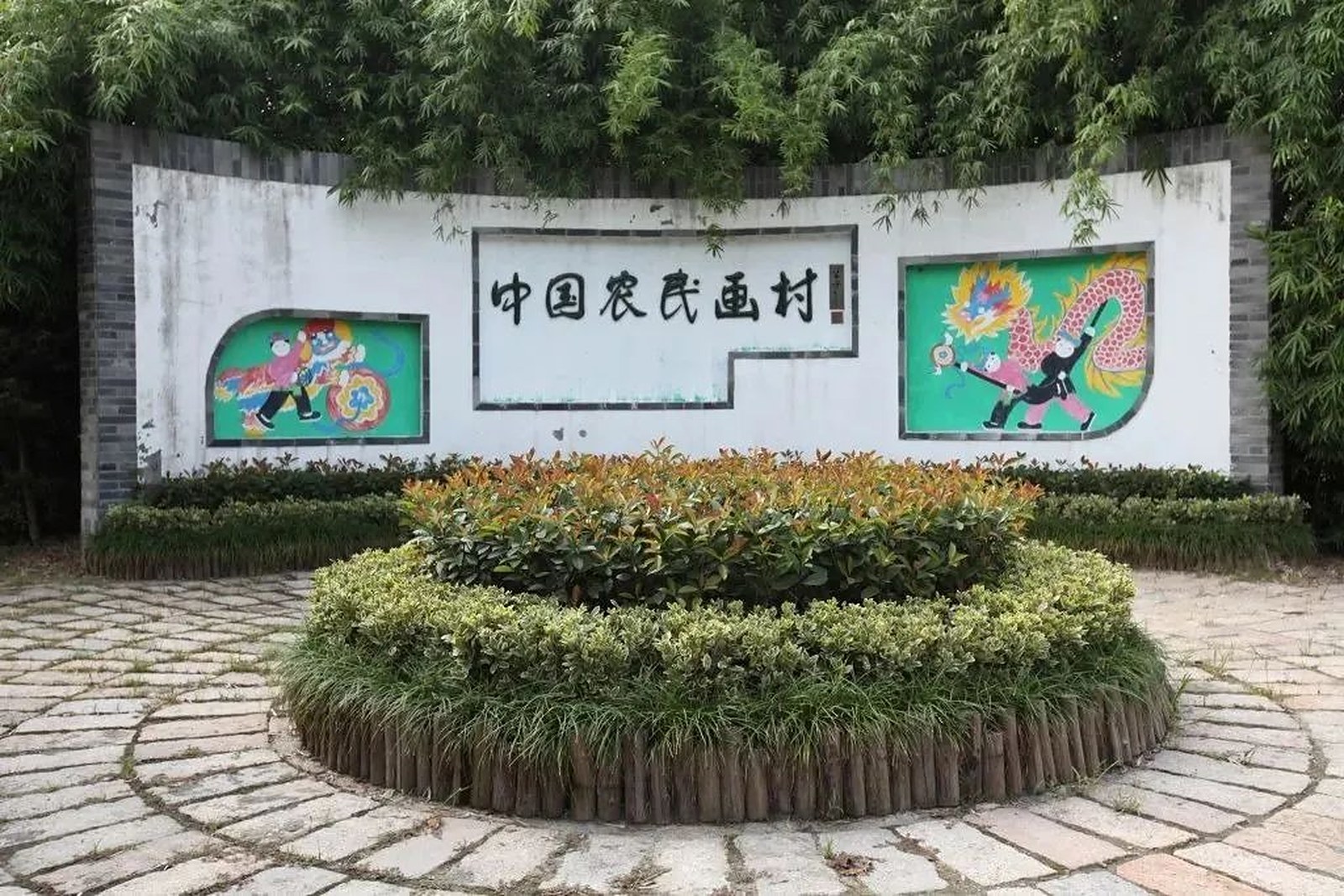
Call it honestly: the village keeps a modest entry ticket, and the studios sell original paintings at prices that undercut any city gallery (worth confirming the details for current entry prices, studio hours and whether hands-on workshops run on weekdays before you go), and it sits a short taxi or bus ride from 枫泾古镇 Fēngjīng Gǔzhèn Fengjing Ancient Town, so the two make one honest countryside day about ninety minutes from central Shanghai by car or bus. The honest warning is the rhythm: this is a working village, not a theme park — studios keep farmers’ hours, painters travel to exhibitions, and a rainy Tuesday can hand you the lanes, the cats and nobody else. Weekends bring workshop crowds and colour; weekdays bring the painters themselves. Give the village two hours with a painting session, half a day combined with Fengjing.
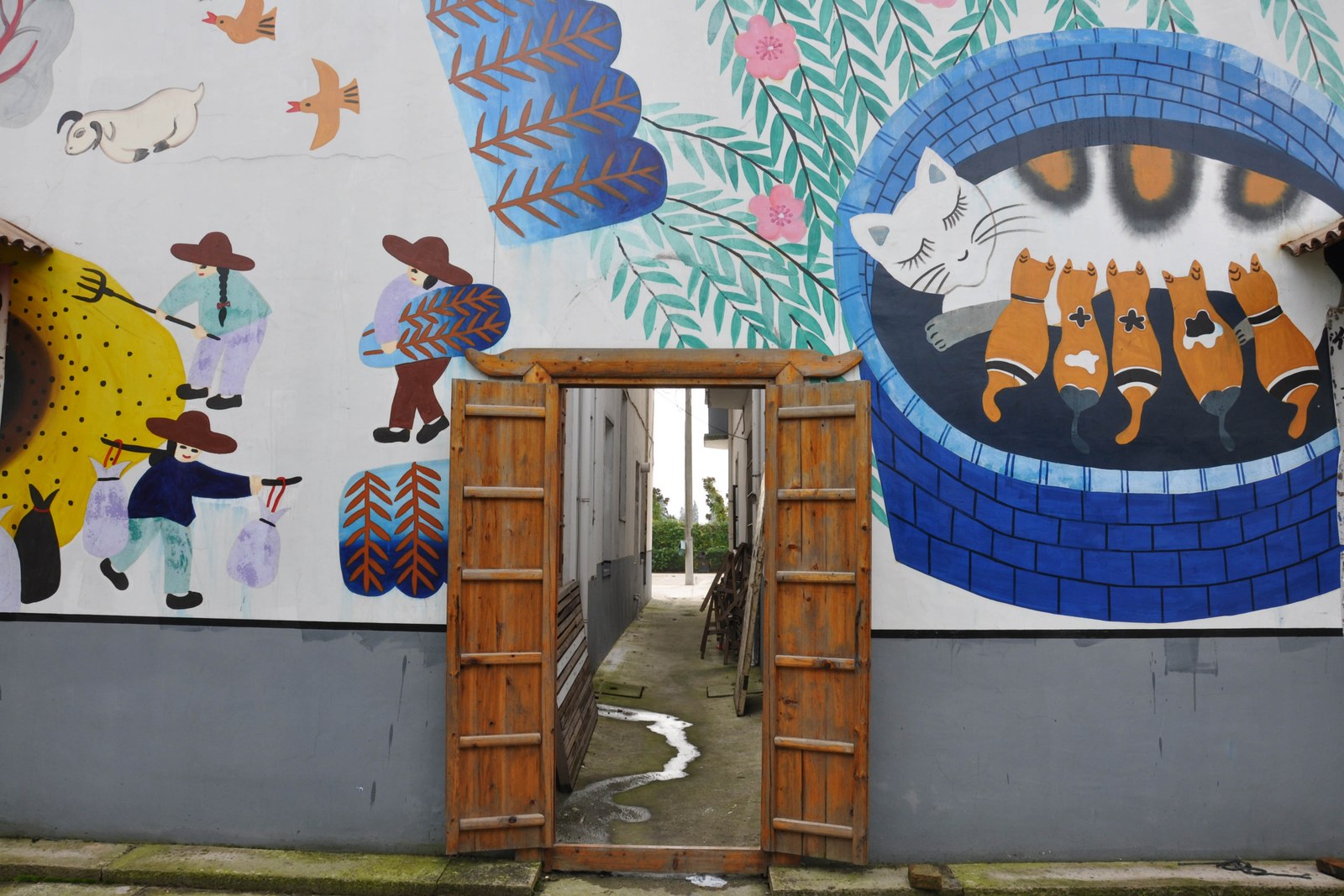
The honest star is the open studios of the 丹青人家 dānqīng rénjiā “painting households” — the farmhouse living rooms where recognised peasant painters lay out pigment, rice paper and a lifetime of harvest memory, and where a visitor can sit down, take up a brush and be corrected on a lotus petal by the same artist who painted the door gods on the doorframe outside. What gets oversold is the souvenir version: printed reproductions and fridge magnets crowd the gift counters, but the honest buy is a signed original whose flat fire-orange sky tells you exactly which decade of the countryside it remembers (worth confirming the details for which studios are painting on your day and what originals cost before you plan the shopping). What repays the effort is looking at the walls as well as the paper: doorways, well-heads and kitchen fronts carry the same bold colour, the village itself being half the gallery. Watch a painter first, then paint. Come for the layering of the place: wall, then paper, then your own hand.
The self-aware postscript: I was failing at a carp in a studio doorway one autumn morning when the painter — a broad-shouldered woman in a padded jacket who signs her work with a farm address — volunteered the local view. “City people ask where we studied colour,” she said, mixing pink from red and white without looking up, “we studied the stove. My mother painted the kitchen god’s wall before every New Year, and the colours had to survive steam and smoke, so they had to be loud”. That is the visit in miniature. From the village lane at noon, looking past drying rice stalks into a doorway hung edge to edge with blazing harvest scenes, the village holds its whole argument in one frame — an art school that grew out of a kitchen. 金山农民画村 Jīnshān Nóngmín Huàcūn suits whoever treats it as a living studio village with a hands-on painting hour first and a folk-art shopping stop second, and disappoints anyone expecting a formal museum with captions and climate control. The rest of this Jinshan list circles it closely: the bridge lanes of 枫泾古镇 Fēngjīng Gǔzhèn Fengjing Ancient Town lie at the village’s back door, the sea front of 金山城市沙滩 Jīnshān Chéngshì Shātān Jinshan City Beach waits to the southeast, and the incense of 东林寺 Dōnglín Sì Donglin Temple and the fields of 廊下郊野公园 Lángxià Jiāoyě Gōngyuán Langxia Country Park sit inland — all inside the same 金山区 Jīnshān Qū Jinshan District whose loudest colours this village keeps.
Practicalities
- Rating: ★★★★☆ — a working village of farmer painters with open studios, stove-mural colour on every wall and a hands-on painting hour; watch first, paint after.
- Tickets: Modest entry ticket; original paintings sold at studio prices (worth confirming the details for current entry prices and studio hours).
- Address: 中洪村 Zhōnghóng Cūn Zhonghong Village, 枫泾镇 Fēngjīng Zhèn Fengjing Town, 金山区 Jīnshān Qū Jinshan District, Shanghai — a short taxi or bus ride from Fengjing Ancient Town.
- Time needed: Two hours with a painting session; half a day combined with Fengjing Ancient Town.
Words and Names
金山农民画村 Jīnshān Nóngmín Huàcūn Jinshan Peasant Painting Village · 中国农民画村 Zhōngguó Nóngmín Huàcūn the China Peasant Painting Village, the village’s official title · 金山农民画 Jīnshān nóngmínhuà Jinshan peasant painting, founded by farmers in the 1970s · 中洪村 Zhōnghóng Cūn Zhonghong Village, the painting village itself · 丹青人家 dānqīng rénjiā the “painting households” with open studios · 灶壁画 zàobìhuà stove murals, the folk source of the colour · 枫泾古镇 Fēngjīng Gǔzhèn Fengjing Ancient Town, the neighbouring water town · 金山区 Jīnshān Qū Jinshan District
flowcloud would say that 金山农民画村 Jīnshān Nóngmín Huàcūn is what happens when an art movement refuses to move out of the farmhouse — a whitewashed lane village at 中洪村 Zhōnghóng Cūn Zhonghong Village near 枫泾 Fēngjīng Fengjing in 金山区 Jīnshān Qū Jinshan District, titled 中国农民画村 Zhōngguó Nóngmín Huàcūn the China Peasant Painting Village, where the 丹青人家 dānqīng rénjiā painting households keep open studios of flat blazing harvest colour descended from 灶壁画 zàobìhuà stove murals, where originals sell at studio prices and the visitor’s brush is corrected by the painter across the table (worth confirming the details for entry prices and which studios paint on weekdays before you go) — and that the honest move is a weekday morning paired with 枫泾古镇 Fēngjīng Gǔzhèn Fengjing Ancient Town next door, because the folk-museum expectation is the poster half and the steam-stained kitchen wall, the pink mixed without looking up and the signed original with a farm address are the real half, and the village repays whoever lets the countryside keep authorship. All checked October 2026.
Getting there: Buses from 枫泾 Fēngjīng old town run north to 中洪村 Zhōnghóng Cūn Zhonghong village, where the painting workshops line the entrance lane (worth confirming the details for workshop opening hours, which vary by studio); pairs well with a Fengjing morning. All checked October 2026.