
The Temple That Wraps the Hill: Jinshan Scenic Area in Zhenjiang
金山寺裹山,塔影入湖来 Jīnshān sì guǒ shān, tǎyǐng rù hú lái – The temple wraps the hill of Jinshan; the pagoda’s shadow slides into the lake
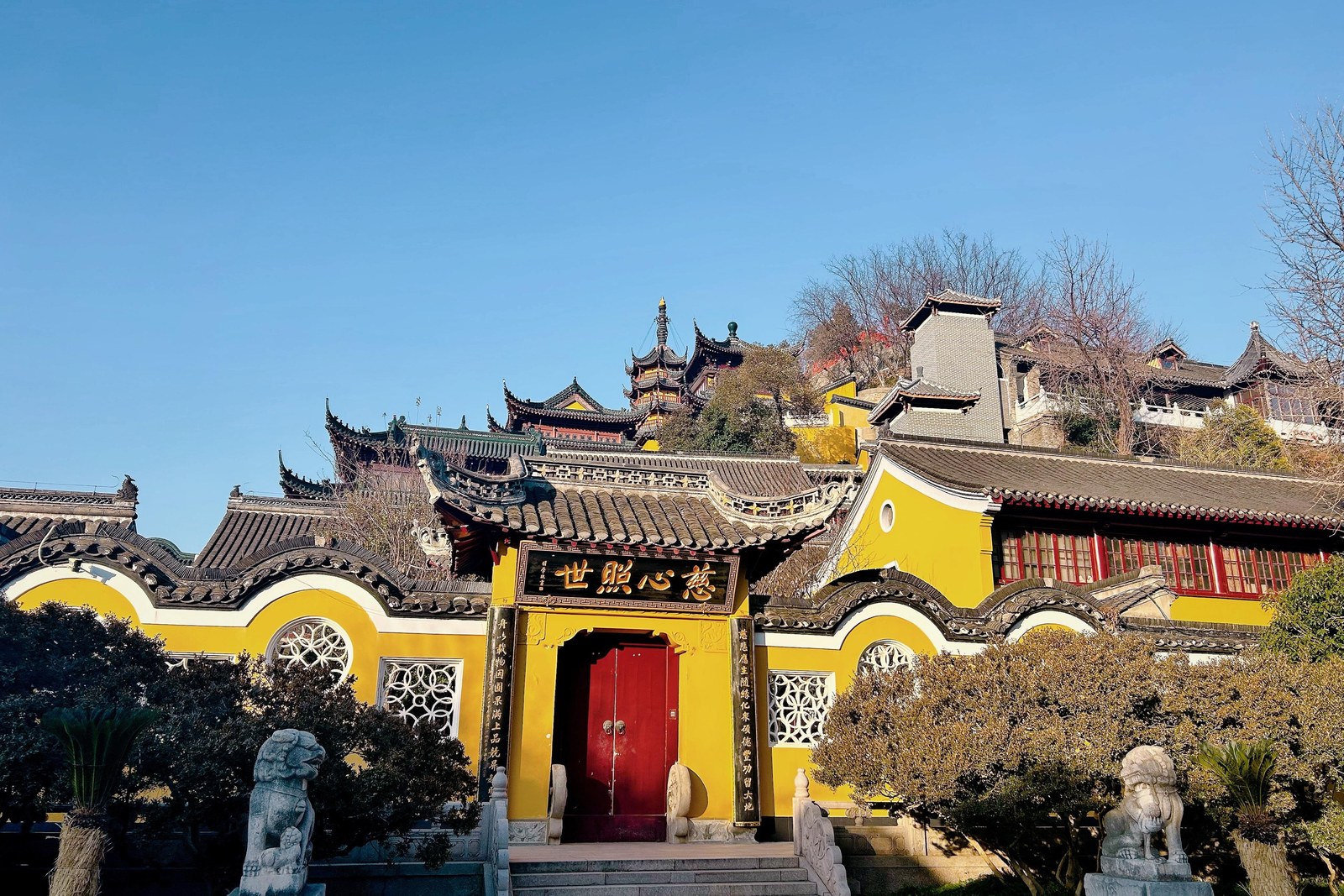
正文:金山风景区 Jīnshān Fēngjǐngqū Jinshan Scenic Area is the postcard of 镇江市 Zhènjiāng Shì Zhenjiang City: a hill on the northwest edge of town entirely wrapped in golden-walled temple buildings, with the slender Cishou Pagoda rising from the summit where the whole pile meets the sky. Unlike most Chinese temple hills, where the halls sit in the mountain’s folds, Jinshan’s architecture climbs and clings until the buildings themselves become the mountain – the local saying “the temple wraps the hill” describes exactly what you see from the lakeshore. The monastery here, 江天禅寺 Jiāngtiān Chánsì Jiangtian Chan Temple, has stood on this spot since the Eastern Jin dynasty, and its fame runs through Chinese legend: this is the temple of the White Snake legend, where the monk Fahai battled the serpent spirit and “flooded Jinshan” entered the language. The lake at the hill’s foot, dredged and landscaped into 镇江金山湖 Jīnshān Hú Jinshan Lake, hands the composition back doubled on calm days.
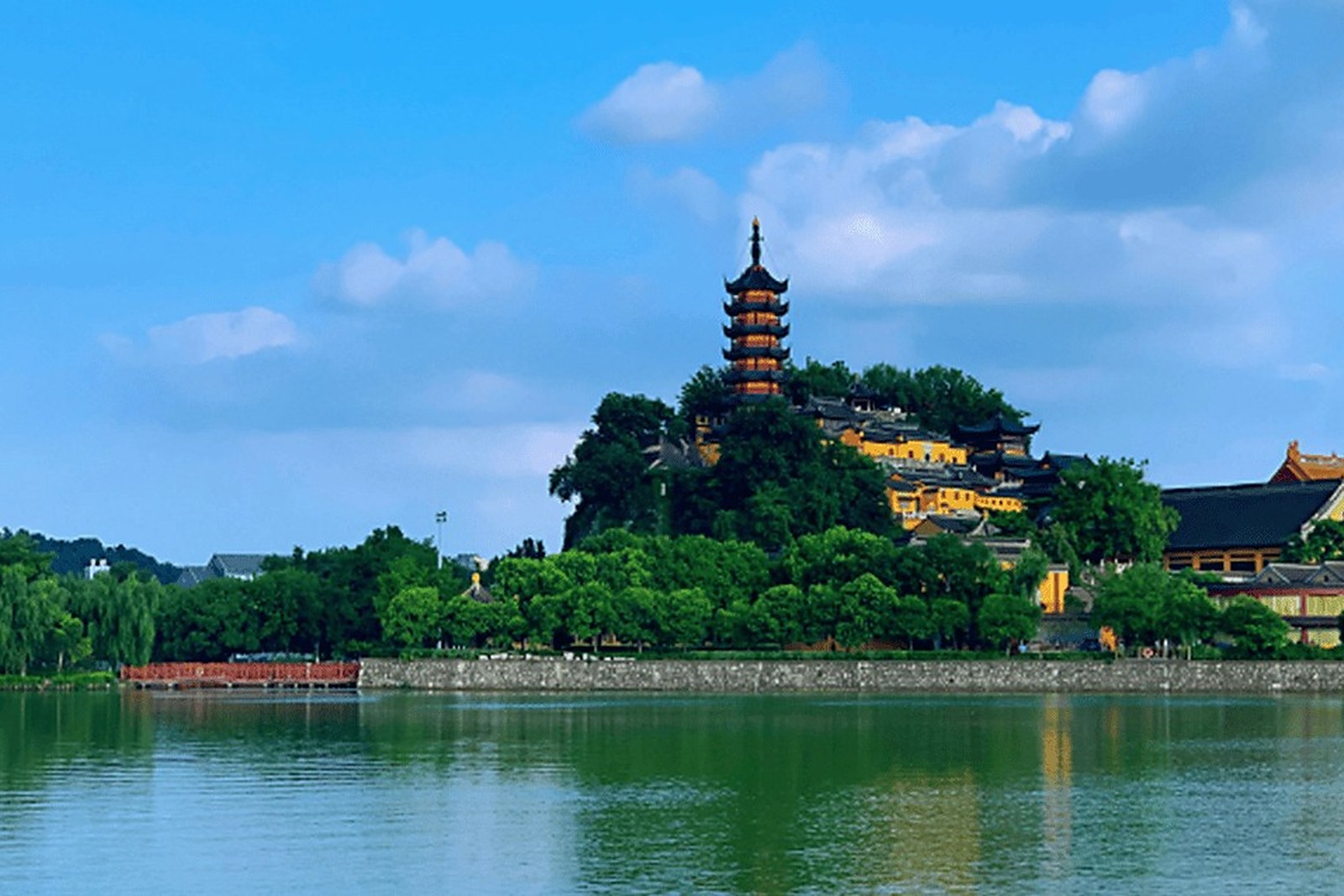
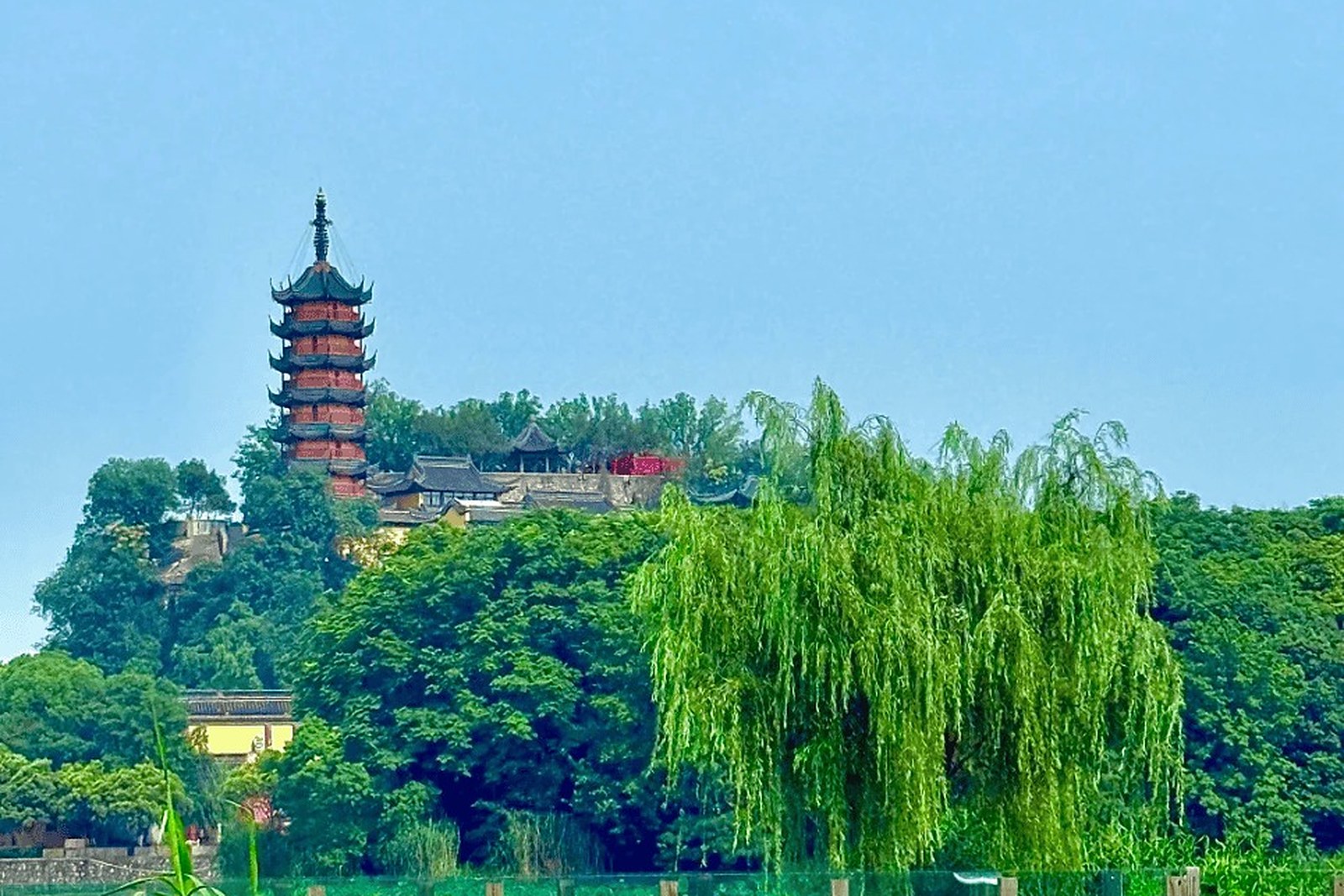
The Cishou Pagoda is the object everyone climbs for. Rebuilt in its present form in the Qing dynasty on foundations a millennium older, the seven-storey tower stands on the highest terrace, and the stairways threading the temple’s vertical maze – through the Cishou Hall, up beside the Liuyun Terrace, past the cave said to hold Fahai’s meditation chamber – deliver you to terraces where the Yangtze shows itself to the north and the city grids away to the south. The golden walls photograph best in the last hours of the day, when the low sun turns them properly gold.
The compound rewards slow walking as much as climbing. Below the main halls, the Miaogao Terrace juts over the water where Liang Hongyu is said to have drummed the Song fleets to battle; the mountain’s back slopes hold lotus ponds and quiet courts where the crowds thin; and the lakeside promenade outside the gate gives the classic full-frontal view of the wrapped hill with its pagoda. On weekends the temple draws pilgrims as much as tourists, and the incense in the great hall has not paused in seventeen centuries.
Give the hill half a day: the temple circuit, the pagoda climb and a slow walk back along the lake. Coming in autumn, the curved causeways of the lake turn gold at the edges, and the view from the water – hill, pagoda, reflection – is the one picture of Zhenjiang that every temple postcard has been tracing for a hundred years.
Practicalities
Beyond the wrapped hill, the same 镇江市 Zhènjiāng Shì Zhenjiang City keeps more places worth the detour: 北固山 Běigù Shān Beigu Mountain on its river crag, 焦山 Jiāoshān Jiaoshan the island monastery, 西津渡 Xījīndù Xijindu the ancient ferry street, or 茅山 Máoshān Maoshan the Taoist peak in Jurong – four more doors into the same 镇江市 Zhènjiāng Shì Zhenjiang City. Once the pagoda is climbed, our Zhenjiang food map fills the table.
Practicalities
Words and Names
flowcloud would say Jinshan is Zhenjiang’s whole argument in one building: a hill that became a temple, a temple that became a legend, and a lake that agreed to hold the reflection. All checked November 2026.
Getting there: The scenic area stands on the northwest edge of the city beside Jinshan Lake – fifteen minutes by taxi from the Dashi-kou centre, city buses stop at the gate, entry is ticketed, and the temple halls, the Cishou Pagoda climb and the lakeside circuit fill a relaxed half-day. Late afternoon light is best on the golden walls. All checked November 2026.