
金山寺 jīn shān sì, the Golden Mountain Temple, is the thing you see first when you come into 金江镇 jīn jiāng zhèn, the county town of 澄迈县 Chéng mài xiàn: a temple on rising ground with a pagoda above it that is visible from most of the town and, at night, from the expressway. The pagoda is the reason to make the trip. It is 88.79 metres tall and sixteen storeys, thirteen of them above ground and three below, and it is the tallest pagoda on 海南岛 Hǎi nán dǎo – a claim that surprises people who have seen the island’s other temples, and one the county states flatly. It was finished and consecrated in 2014 and named the 万福长寿药师佛塔 wàn fú cháng shòu yào shī fó tǎ, the Ten-Thousand Blessings Longevity Medicine Buddha Pagoda.
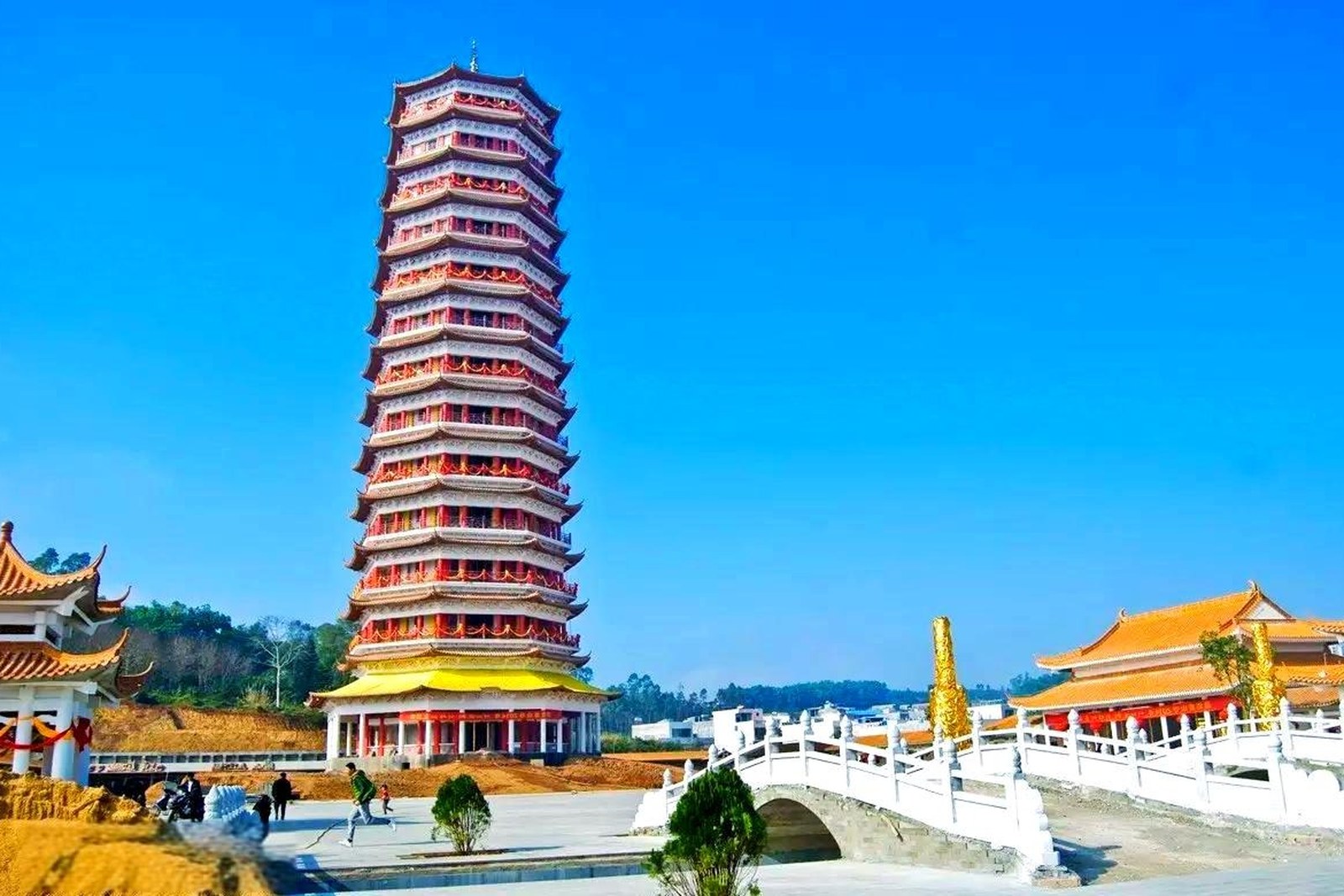
The temple under it is old and has had a bad time. 金山寺 was founded in the 洪武 Hóng wǔ era of the Ming, which makes it a fourteenth-century foundation, and it was wrecked in the fighting just before 1949; what stands now was rebuilt from 1993 and expanded since, and the completed compound runs to a hundred-odd mu, which makes it one of the larger Buddhist properties on the island. The rebuilding took a particular direction, and the pagoda is the expression of it: the temple was dedicated as a 药师佛 yào shī fó centre, a Medicine Buddha 道场 dào chǎng, a place of practice rather than a tourist temple, and the tall pagoda was built principally to house a relic of 本焕长老 Běn huàn zhǎng lǎo, one of the most respected monks of twentieth-century Chinese Buddhism. That combination – a Ming site, a modern tower and a 药师佛 orientation in a county that markets itself as a 世界长寿之乡, a world township of longevity, on the strength of its centenarian count – is a piece of local logic that is hard to argue with, and the temple has leaned into it deliberately: the pagoda’s name pairs blessings with long life, and the county’s health-and-longevity branding and the temple’s devotional line are, in this one building, the same sentence.
Visiting it is a matter of an hour in the late afternoon. The compound is a working temple with resident monks, so the halls are quiet and the courtyards are swept, and the pagoda is climbed or looked at depending on which floors are open on the day – a sixteen-storey tower with a relic hall in it does not keep a tourist’s hours, and the practice is to ask at the gate rather than assume. From the upper galleries the view is the whole county town, the 南渡江 Nán dù jiāng running north-east through it, and the flat farming country on three sides. The town below is where the county eats: the 白莲鹅 bái lián é poached-goose stalls set up in the streets from about four in the afternoon, the pickled mustard of 大茂酸菜 dà mào suān cài arrives as the cold dish at every meal, and 金江粿卷 jīn jiāng guǒ juǎn, the town’s own steamed rice roll, is the breakfast. A temple visit that ends with a walk down into the town for the goose is the correct order of events.
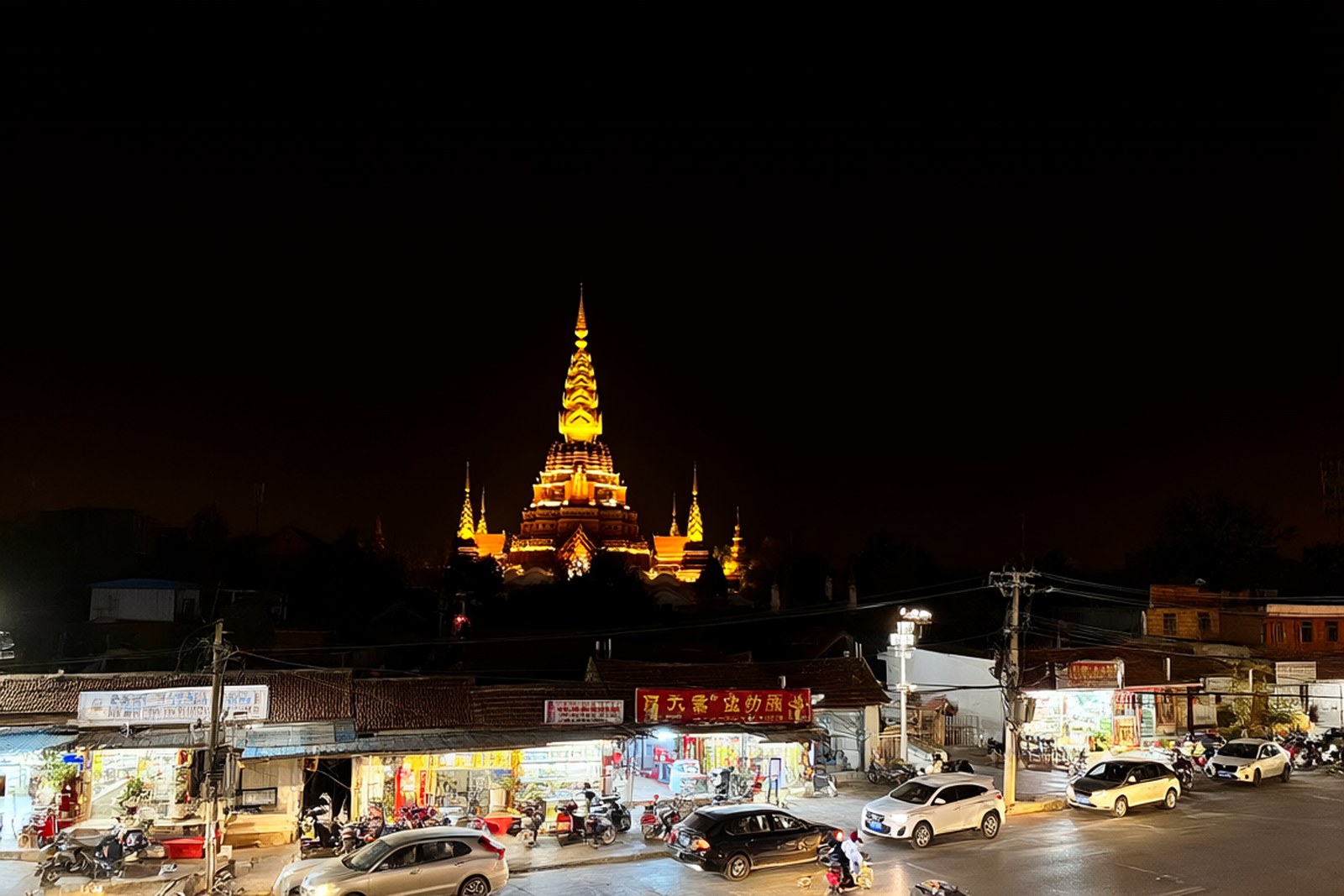
The temple is on the edge of the expressway corridor and on the county’s main internal road, which makes it unusually easy to reach for a religious site in the middle of an island. It is also the one place in 澄迈 that a driver from 海口 can find without directions, because the pagoda is visible from the road; that combination means it draws a steady trickle of visitors who did not plan to stop, which is roughly the right way to see it. Two hours in the town and one at the temple is enough, and the pair together are the most useful half-day in the county’s interior.
Practicalities
Tickets. The compound is a working temple rather than a ticketed attraction and there is no charge for walking the courtyards and the halls; gifts go into the 功德箱 gōng dé xiāng, the merit box, in the ordinary way. The pagoda and the relic chamber are the parts that may or may not be open on a given day, and any charge attached to them is a temple matter rather than a ticket office’s – ask at the gate.
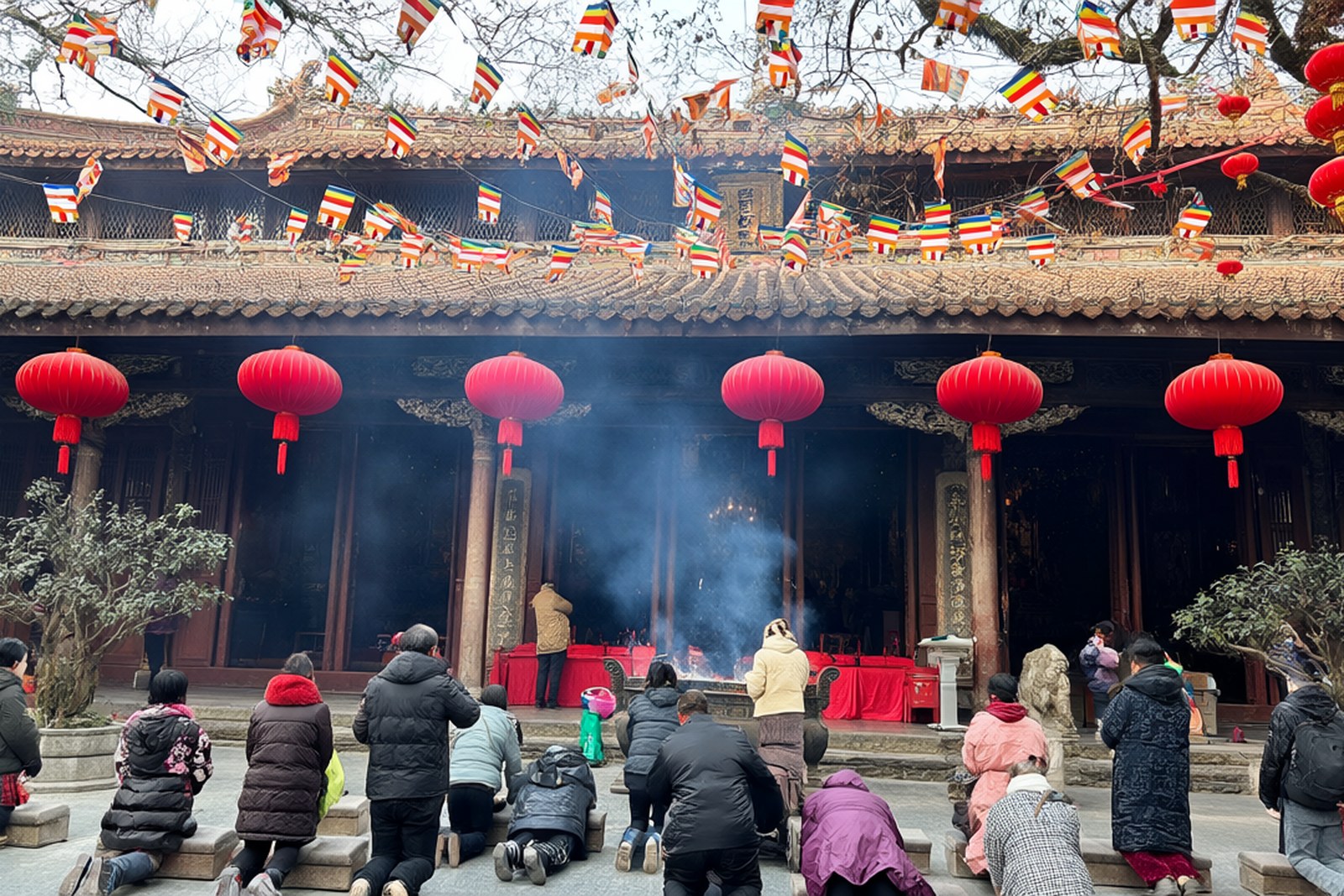
Opening hours. The temple follows monastic hours and is open through the day until the late afternoon. The pagoda looks best in the last hour of light, when the sun comes in across the town, and at night, when it is lit and can be seen from the road; the lunar first and fifteenth bring the county’s own households in force, which is the busiest and the most interesting time to go.
Getting there. The temple is in 金江镇 jīn jiāng zhèn, the county town of 澄迈县, on the 金马大道 jīn mǎ dà dào link off the 西线高速 Xī xiàn gāo sù; the town is about an hour from 海口市 Hǎi kǒu shì and from 海口美兰国际机场 by road, and the island’s west-ring high-speed railway does not come inland to it, its two 澄迈 stations being down on the coast at 老城镇 and 福山镇. The temple is within the town, a short taxi ride from the bus station and the markets, and the pagoda is visible from the moment you enter the built-up area.
Closing day. There is no weekly closing day; the temple keeps religious hours and closes early on the days of major observances. It is worth avoiding the Spring Festival week if you want the courtyards to yourself, and worth going on the lunar first or fifteenth if you would rather see the place as the county uses it.
flowcloud would say that the tallest pagoda on the island stands in a county town, over a Ming foundation that had to be rebuilt from nothing, in a county that sells longevity by the box – and that the local logic of naming a tower for blessings and long life in the middle of an old people’s county is so obvious it is a wonder nobody thought of it sooner.
Getting there: 金山寺 is in 金江镇 jīn jiāng zhèn, the county town of 澄迈县, on the 金马大道 link road off the 西线高速 Xī xiàn gāo sù, about an hour from 海口市 by road; the west-ring high-speed railway’s 澄迈 stations are on the coast at 老城镇 and 福山镇 rather than in the town, so the last leg is by taxi or bus. The pagoda is visible from the town’s edge, and the poached-goose stalls of the streets below open from about four in the afternoon.