
Jinze Ancient Town: The First Bridge Town of Jiangnan, Its Song Dynasty Purple-Stone Puji Bridge, the Temple River and the Ginkgo Courtyards of Qingpu District, Shanghai
一乡七桥卧宋元,古杏庭前阅水声。Yī xiāng qī qiáo wò Sòng-Yuán, gǔ xìng tíng qián yuè shuǐ shēng – Seven bridges lie through Song and Yuan in one township; before the old ginkgo courtyard the water’s sound is read.
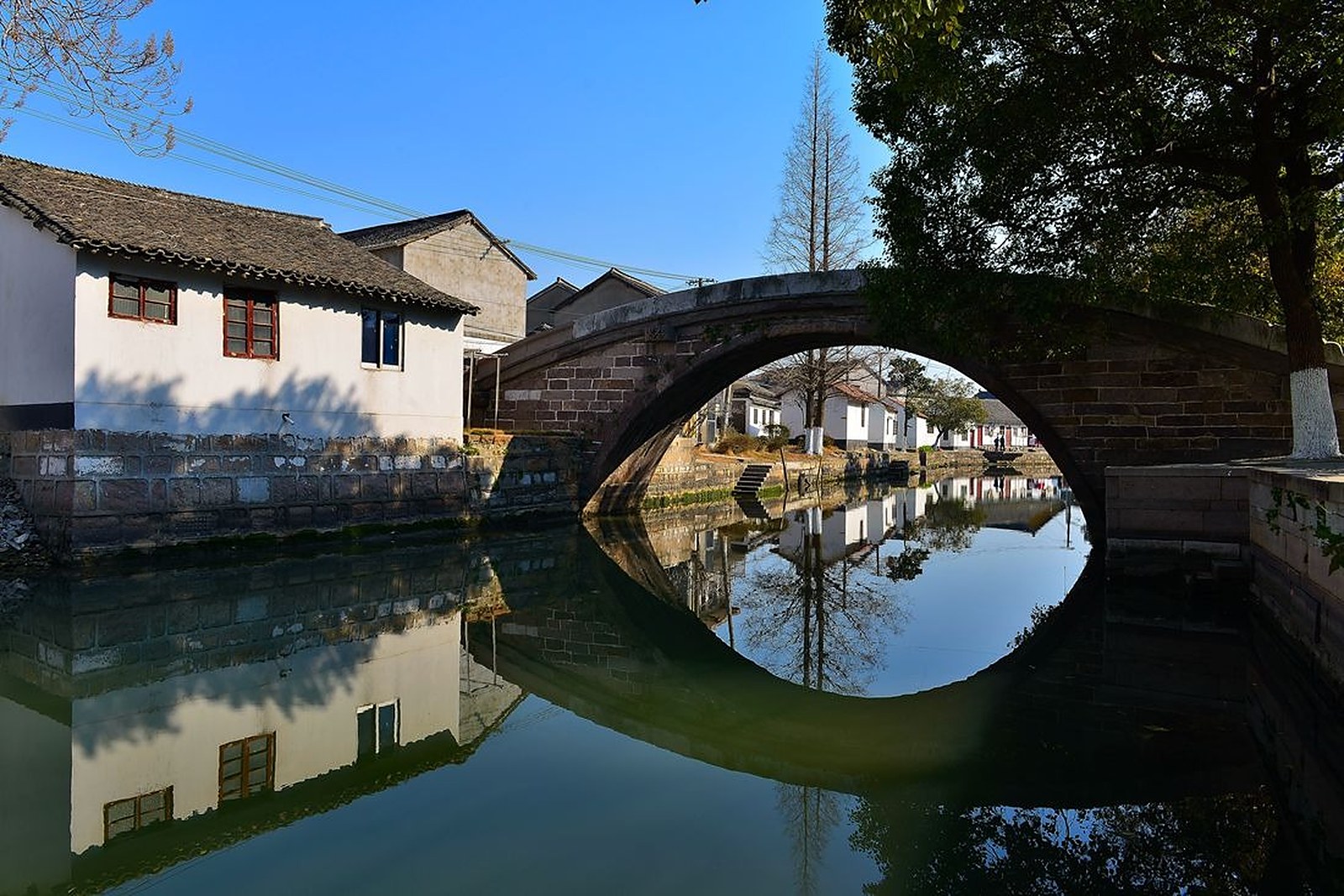
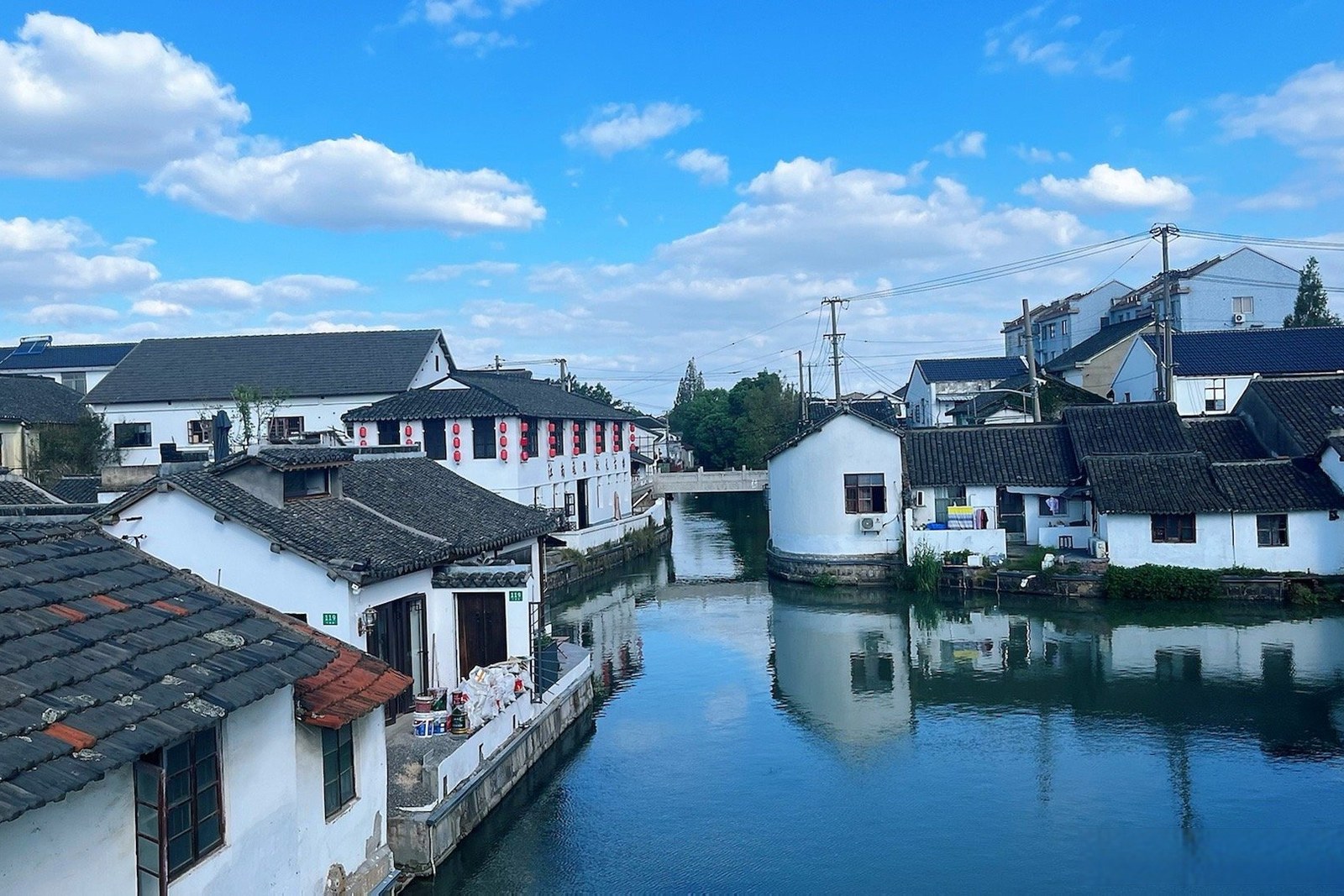
金泽古镇 Jīnzé Gǔzhèn Jinze Ancient Town is the quiet bridge capital of the Jiangnan water country, at the far western rim of 青浦区 Qīngpǔ Qū Qingpu District, Shanghai, hard against the Jiangsu border – a temple river town where seven ancient spans cross one short waterway within a few hundred metres, ledgered from the Song through the Ming and Qing. The centrepiece is 普济桥 Pǔjì Qiáo Puji Bridge, a Song-dynasty single-arch bridge of purple wukang stone whose low, unhurried curve has carried the town since the thirteenth century – among the oldest standing bridges in the Shanghai region – with the Yuan-era 迎祥桥 Yíngxiáng Qiáo Yingxiang Bridge and its Ming-Qing neighbours stepping down the river like a museum run of masonry. The town around them is almost off-duty: whitewashed houses, a temple courtyard with a great old ginkgo of the 颐浩禅寺 Yíhào Chánsì Yihao Temple precinct, and water that reflects the arches rather than the crowds.
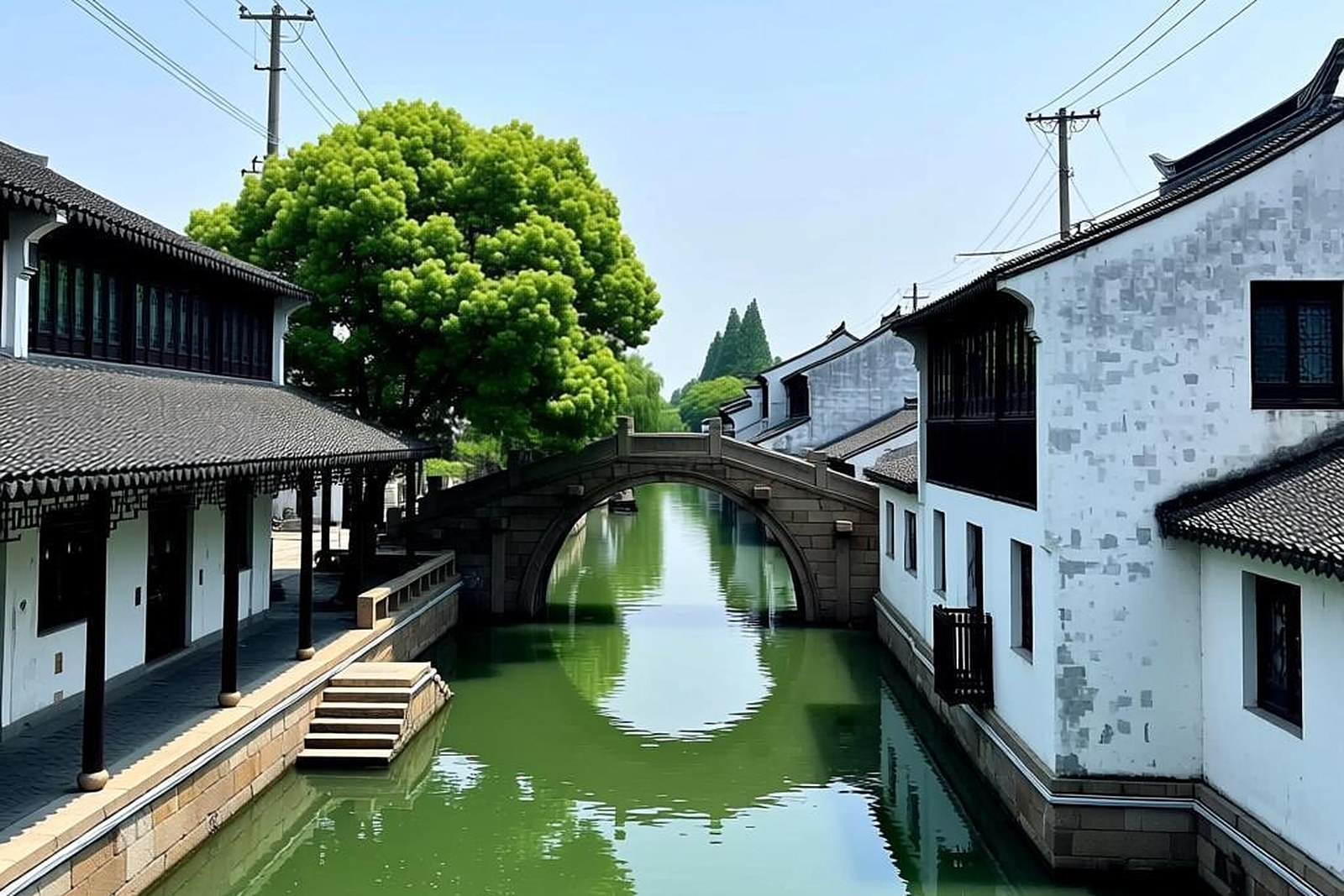
Two visitors keep the banks soft: architecture and history pilgrims – bridge enthusiasts, photographers, students of Jiangnan masonry – who price the Song stone above any amenity, and slow-weekend Shanghai escapees who want a water town with the volume turned down after the famous lanes (worth confirming the details for village kitchen hours, the town’s counters running village-time rather than tourist-time).
Call it honestly: there is almost nothing here to do, and that is the point and the risk. No ticket gate, no show street, no boat fleet – a visitor arrives for bridges and finds bridges, some lanes, and long tea-slow afternoons (worth confirming your lunch plan if the day runs late, the village kitchens folding by mid-afternoon on quiet weekdays). What the map repays is authenticity’s dividend: the purple stone of Puji Bridge under a palm, reflections that arrive unarranged, and a temple ginkgo whose autumn gold lands on whitewash instead of ticket booths. Against that: the town is free, the photographers’ light is honest, and pairing the morning bridges with a lakeside lunch at 淀山湖 Diànshānhú Dianshan Lake completes the west-reach day. The honest verdict: Jinze is for the second and third water town, not the first – come when Zhujiajiao’s crowds are known quantities, and the quiet will feel earned.
Practicalities
Nearly everything else on this Qingpu list trades a different mood on the same map: choose 朱家角古镇 Zhūjiājiǎo Gǔzhèn Zhujiajiao Ancient Town for the canal lanes, 淀山湖 Diànshānhú Dianshan Lake for the open water, 东方绿舟 Dōngfāng Lǜzhōu Oriental Land for the camp lawns and 上海大观园 Shànghǎi Dàguānyuán the Grand View Garden for the novel’s courtyards – four more doors into the same 青浦区 Qīngpǔ Qū Qingpu District. Once the day is planned, our Qingpu food map fills the eating hours.
Practicalities
Words and Names
flowcloud would say that a Jinze day is bought for the seven bridges and the silence – Song-stone pilgrimage to village-tea afternoon in the October 2026 snapshot, all worth confirming the details – and that the honest move is to come second, not first, because the town’s whole gift is what the famous lanes no longer have, keep the 普济桥 Pǔjì Qiáo morning and the ginkgo courtyard as the plan, and let the lake road carry the return. All checked October 2026.
Getting there: Metro Line 17 to 金泽站 Jīnzé Zhàn Jinze station area buses or a short taxi ride to the temple-river bridges (worth confirming the details for the connecting bus frequency, which runs sparser than the metro); the 普济桥 Pǔjì Qiáo Song-dynasty stone bridge is the town’s centrepiece. All checked October 2026.