
The lake was a valley until the 1950s and the hills that were in it are now islands, which gives the whole place an accidental, half-finished beauty: several dozen wooded humps rising out of green water, with rice paddies visible in the shallower arms at low water and herons standing in them. 酒埠江 Jiǔbùjiāng is a reservoir in 攸县 Yōuxiàn, in the south of 株洲市 Zhūzhōushì, and around it is a national geological park of low limestone hills, caves and gorges that covers a couple of hundred square kilometres and receives a fraction of the visitors that Hunan’s better-known landscapes do.
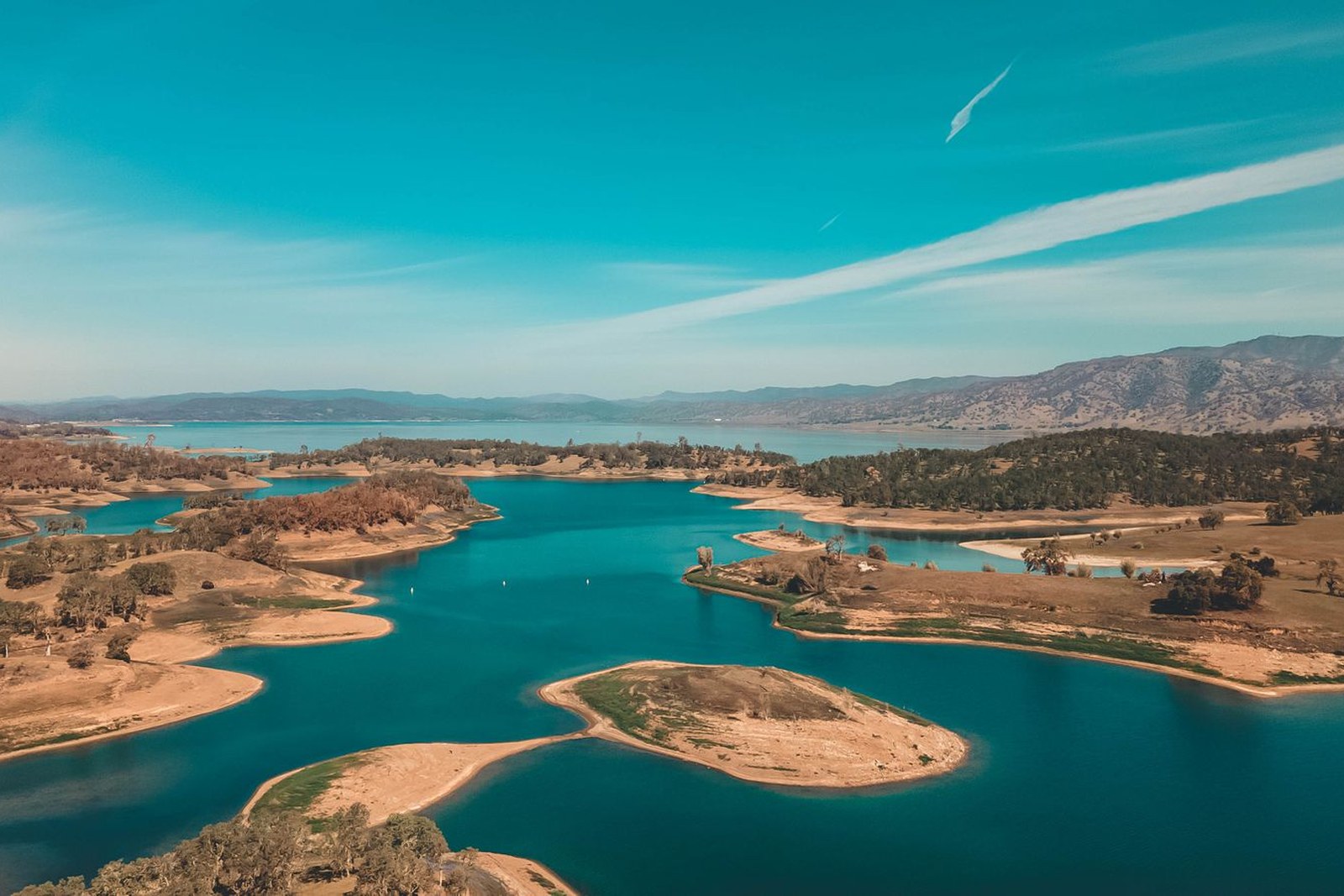
酒仙湖 Jiǔxiān Hú, the Lake of the Wine Immortal, is the reservoir itself — about eleven square kilometres of water at full level, roughly fifteen kilometres long, with a shoreline so convoluted that the boat trip takes an hour and a half and passes villages, an old temple site and several islands with nothing on them. Boats can be hired at the main landing for around ¥80–200 depending on duration and whether you go by the scheduled service, and the local operators will take you out early in the morning, which is much the better option because the fog sits on the water until about nine.
The caves are the park’s other asset. 白龙洞 Báilóng Dòng, the White Dragon Cave, is the developed one: a long show cave with stalactites, a stream and a lighting installation, about an hour’s walk through and genuinely large, entered from the hills above the lake. Beyond it the park contains natural stone arches at 仙人桥 Xiānrén Qiáo, several other caves of varying accessibility, and a geology that is unusually legible — this is karst country, and the relationship between the sinking streams, the dry valleys and the caves is explained on the information boards at the main sites. The park holds national geological park status and is listed as a national water park for the reservoir.
Practicalities
Tickets. The park as a whole has no single entrance fee; the individual sites are ticketed, with the cave around ¥60–90 and the boat around ¥80–200. Combination tickets are sold at the main gate and are usually better value if you are doing the cave and the lake on the same day.
Opening hours. Site hours vary, broadly 08:00–17:30 for the cave and daylight hours for the lake and the boats. The boat service stops earlier than the cave closes.
Closing day. No closing day for the outdoor areas; the cave occasionally closes for maintenance without much notice, so it is worth checking at the gate first.
Getting there. About two hours by car from 株洲 Zhūzhōu city and 40 minutes from 攸县 Yōuxiàn county town, taxi ¥60–100. The high-speed station 攸县南站 Yōuxiàn Nán Zhàn is about 30 minutes from the lake. Public buses run from the county town in the morning.
What People Get Wrong
They try to do it in an afternoon. The lake needs a morning and the cave needs two hours, and the road between them is slow; the people who enjoy it stay overnight and spread it over two half-days, with dinner of lake fish and 攸县香干 Yōuxiàn xiānggān in between.
Getting there
By car or taxi from 攸县 Yōuxiàn; it combines with 云阳山 Yúnyáng Shān in 茶陵 Chálíng an hour away and with 炎陵 Yánlíng two hours east, making a good three-day loop of the south-east of the prefecture. One night on the shore is the minimum, two is better.
flowcloud would say that the best thing about a reservoir is that nobody designed the scenery — the hills were just hills, the water arrived, and the islands happened, and the result is a landscape with no intention behind it at all, which is why it looks the way it does.
Getting there: 酒埠江 (Jiǔbùjiāng) national geological park, 攸县 (Yōuxiàn), 株洲市 (Zhūzhōushì), 湖南 (Húnán). Cave ¥60–90, boat ¥80–200; no closing day, boat service stops earlier than the cave. About 30 minutes by taxi from 攸县南站 (Yōuxiàn Nán Zhàn). Take a boat early for the mist, do the cave in the afternoon, and stay overnight.