
Where China’s First Railway Left the City
There is a place in Chongqing where the ground is flat, and it is worth knowing how rare that is. Along the Yangtze at 九龙坡 Jiǔlóngpō, the river’s flood plain spreads out in silt and gravel wide enough to stand a freight yard on, and the city stacks itself upward everywhere else. On a still morning you can see the trains from a long way off because nothing stands in the way. This is where the first railway the new republic built came down to the water: 九龙坡站 Jiǔlóngpō Zhàn, Jiulongpo Station, on the flood plain in 九龙坡区 Jiǔlóngpō Qū, Jiulongpo District, Chongqing, a municipality of southwest China. For nine years it was the city’s only railway station, and for longer its busiest freight yard, and the reason a district of factories grew up west of the river at all.
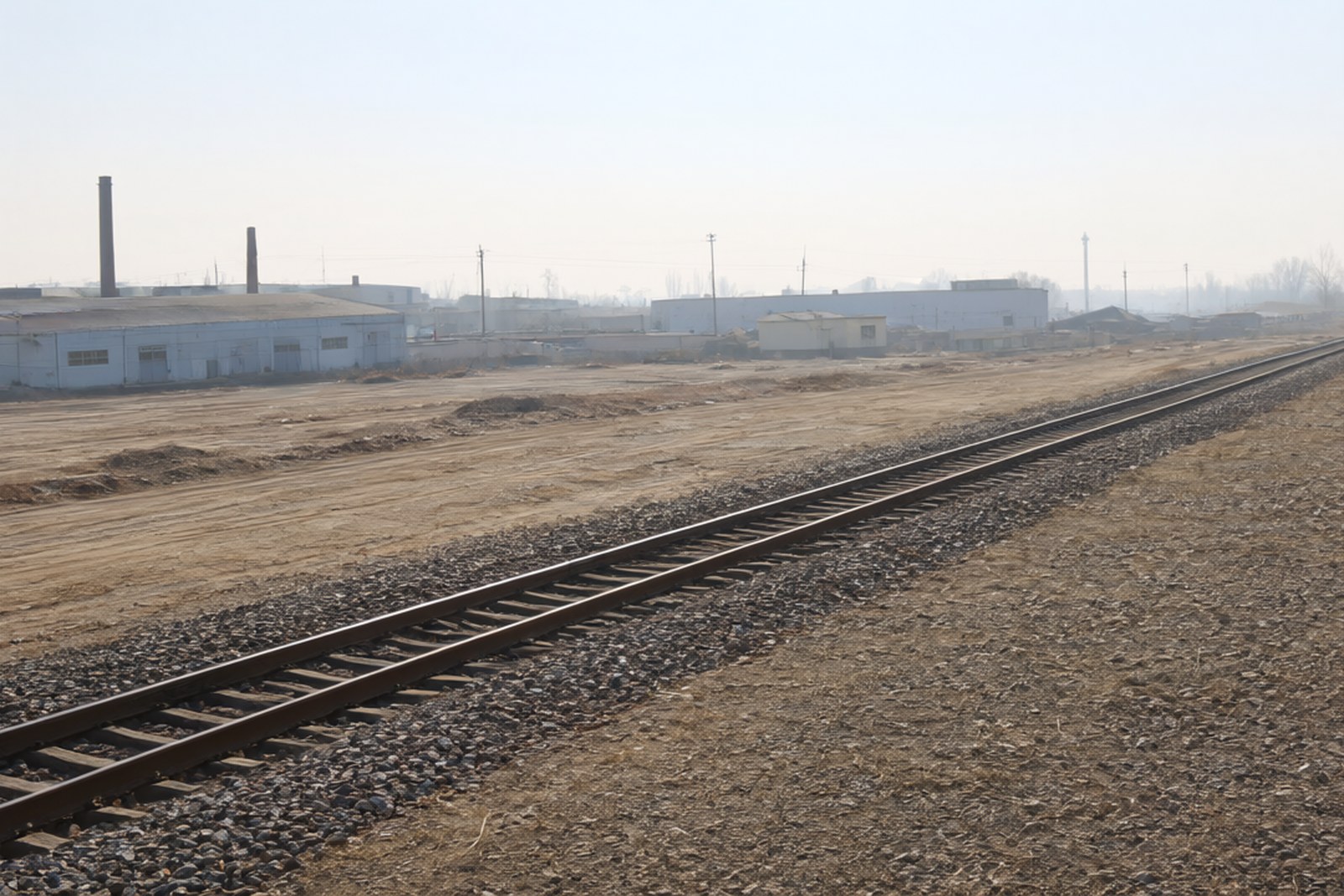
The railway came the way the capital came: from the west, on foot at first. On 15 June 1950 the groundbreaking ceremony for the Chengdu-Chongqing line was held in Chengdu, and the builders there were handed a banner – 开路先锋 Kāilù Xiānfēng, the pioneer of the road – which went straight on to Jiulongpo. Track laying ran east from 大渡口 Dàdùkǒu, Daduokou, through the summer and reached this ground in August 1950, where the first steam locomotive on the line was fired up. It is a plain piece of ground for a plain piece of history: the line was laid to reach the river at a point where the wharves could take the cargo off the trains and put it on boats without a second unloading.
The rest came fast. On 1 July 1952 the whole line was done – 505 kilometres from Chengdu to the river – and the first train to leave Chongqing departed from this platform. Until 菜园坝 Càiyuánbà, Caiyuanba, opened in 1959 the station was the city’s only one and the hinge of its whole freight economy, sitting on a wharf where goods moved between boat and rail in a single transfer; that double handling is the whole reason the site was chosen, and the reason the district’s steel, aluminium and machine-tool plants all grew up behind it. In 1988 the station was renamed 重庆南站 Chóngqìng Nán Zhàn, Chongqing South. Passenger service stopped on 15 June 2024, when the line south of it began rebuilding.
Under all of that is an older layer. The ground was the wartime 九龙坡机场 Jiǔlóngpō Jīchǎng, the Jiulongpo airfield: the railway embankment was leased in 1938 to build it, work started in March 1939, the runway measured 1,125 by 45 metres, flying began in 1940, and the field was extended in 1942. The reasoning was practical rather than scenic – the older city aerodrome downstream flooded in the rainy season and sat close in, while this ground was out of the way and could not be flooded – and the field is where the 1945 Chongqing negotiations began. The runway is under the rails now, which is one reason this piece of ground reads so plainly: two infrastructures, twenty years apart, both choosing the same flat silt for the same reason.
Practicalities
Tickets. Nothing is sold here and nothing needs to be. Jiulongpo station stopped passenger service on 15 June 2024, so there is no ticket, no platform to buy one on and no train to board; the riverside ground around the former station is open public land, walked by residents and by people who come to look at the junction where the airfield runway is now buried under the ballast. The railway’s own premises are not a visitor site and this page does not describe access to them – the honest summary is that there is no attraction to pay for and no interior to enter.
Opening hours. There are no visiting hours, and none are printed, because this is not a venue with gates. The public ground along the river is walked at any hour, the way any riverside in this city is; the station buildings and the railway’s working land are railway property and are closed to the public by the railway’s own rules rather than by a published visitor schedule. If you are here for the history, the ground tells it; if you are here for a building, you will not get in, and nothing on this page suggests otherwise.
Closing day. There is no fixed closing day here, and saying otherwise would invent one: the flat ground is public and open, the railway side is not open to visitors at all, which is a different arrangement rather than a weekly rest day. If you are joining the history to the museum side of the district, the usual caution applies – the sites that do keep hours keep them, and the riverside walk keeps none.
Getting there. Metro Line 2 serves the district’s riverfront side at 袁家岗 Yuánjiāgǎng, Yuanjiagang, and 杨家坪 Yángjiāpíng, Yangjiaping, both within a short bus or taxi ride of the old station ground on the wharf road; from either stop the approach is a bus down to the riverside and a walk on flat ground. The former station is not a rail arrival any more, since passenger service there ended in June 2024, so the rail connection is the city’s other stations and the metro rather than this one. Cyclists come down the riverside road from the west-bank embankment, which is the pleasantest approach of all and needs no planning.
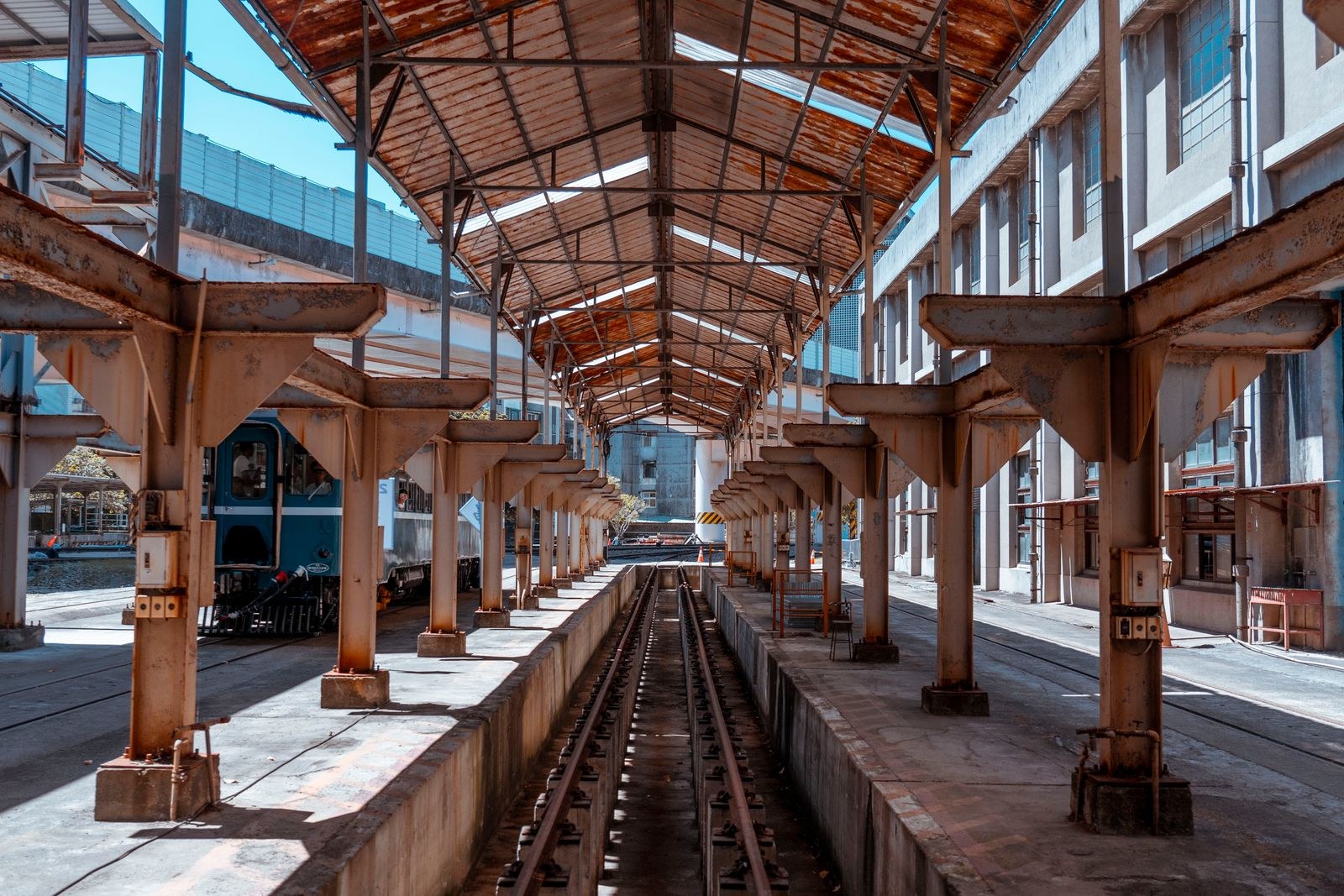
flowcloud would say that Jiulongpo station is the place where the twentieth century’s two ways of moving through Chongqing overlap on the same flat silt – a runway leased off an embankment in 1938 and a railway station finished on it in 1952 – and that the most telling fact about it is how little there is to see, because the whole point of the site was always transshipment.
Getting there: the site of the former Jiulongpo Station, 九龙坡站 Jiǔlóngpō Zhàn, sits on the Yangtze flood plain in 九龙坡区 Jiǔlóngpō Qū, Jiulongpo District, Chongqing, a municipality of southwest China, on the wharf road below the railway embankment west of Caiyuanba. It was where the first train out of Chongqing left on 1 July 1952 on the country’s first new railway, was renamed Chongqing South in 1988, and stopped passenger service on 15 June 2024; the ground beneath it held the wartime Jiulongpo airfield from 1940. There is no ticket and no gate, the public riverside ground can be walked at any hour, and the railway’s own premises are not open to visitors – this page describes nothing about the site’s use after the 2024 closure. Metro Line 2’s Yuanjiagang and Yangjiaping stops are the nearest, with buses down to the wharf road and the riverside cycle route the pleasantest approach (checked October 2026, subject to change).