
The Heart of the City: Jokhang Temple
觉沃佛前灯不熄,千年叩首起尘埃 Juéwò Fó qián dēng bù xī, qiānnián kòushǒu qǐ chén’āi – Before the Jowo Buddha the lamps never go out; a thousand years of prostrations raise the dust
大昭寺 Dàzhāo Sì stands at the living center of 西藏自治区拉萨市 Xīzàng Zìzhìqū Lāsà Shì Lhasa – founded in the seventh century in the reign of Songtsen Gampo and grown ever since into the holiest working temple of Tibetan Buddhism. Its chapel of the Jowo Shakyamuni holds the statue tradition says was brought by the Tang princess Wencheng, a Buddha as a twelve-year-old prince, and everything about the building points at that room: the gold roofs, the deer-and-wheel crest, the queues of pilgrims who have traveled weeks to stand before it.
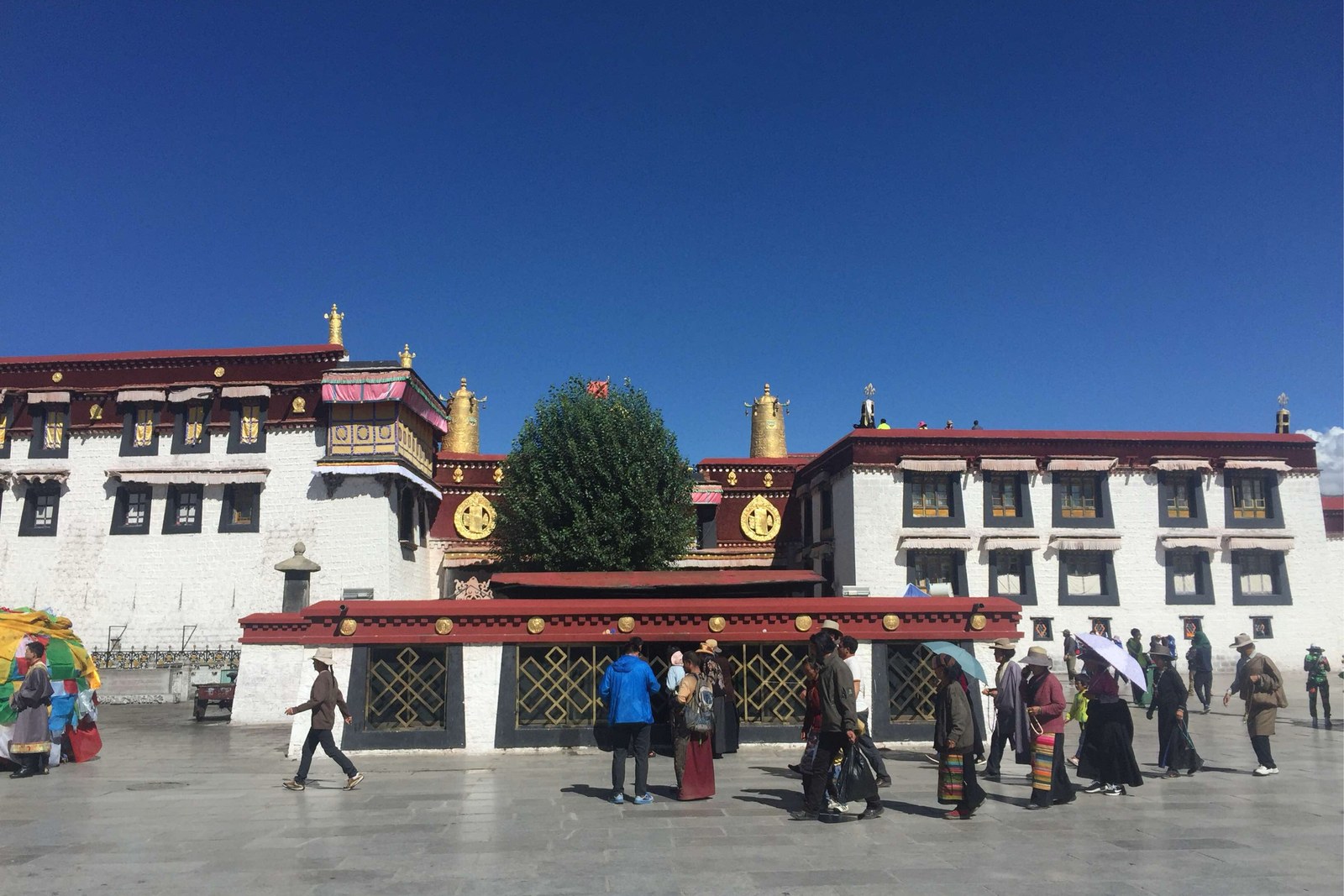
The building itself is a seventh-century frame with a thousand years of fittings. The dark central corridor runs past chapels of every school –Songtsen Gampo’s throne room, protector chapels, the roof shrines – under roof timbers black with age and butter smoke. The rooftop terrace is the payoff: gilded ridge lines up close, the Potala on its hill to the north, the old town’s whitewashed roofs below, and the kora roads visibly bending around the temple like iron filings around a magnet.
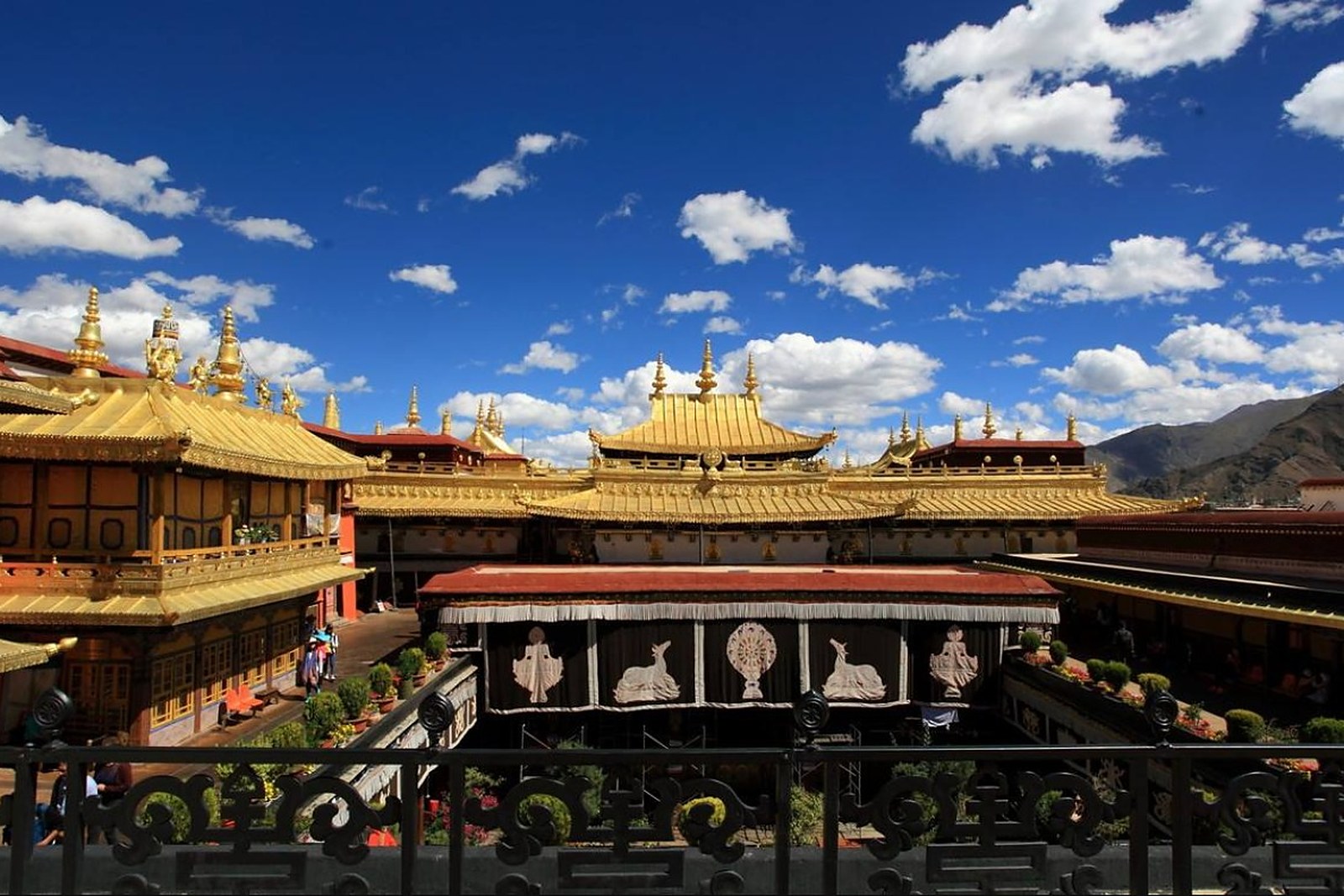
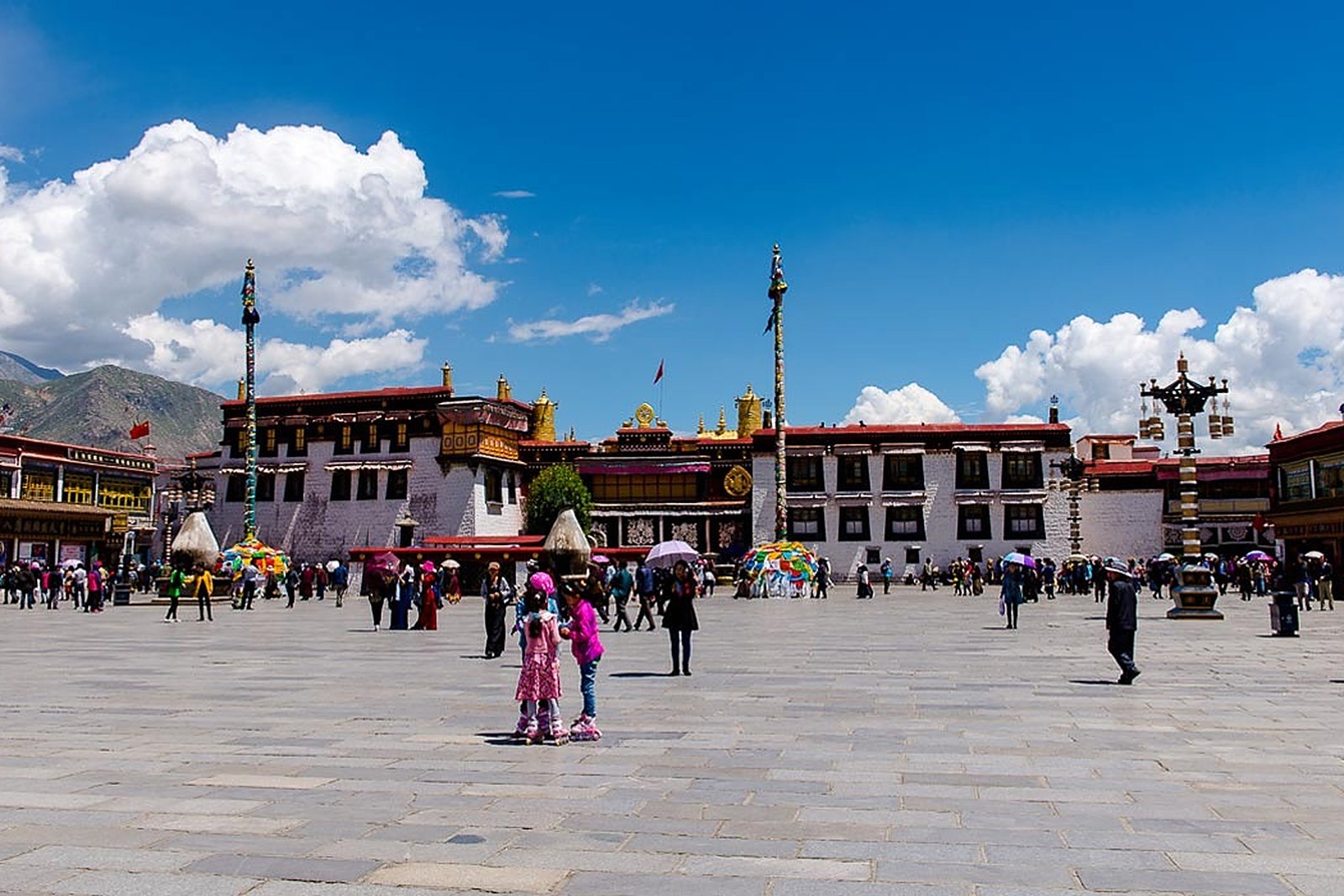
Around the temple the devotion never stops. From before dawn the pilgrims prostrate on the flagstones of the square, circle the roof of the world circuit in the street outside, and file through the inner kora with butter lamps in hand; the air in the chapels stays thick with lamp smoke and the floor is polished to glass by a millennium of foreheads. Come at any hour and the building is working – this is not a museum with opening hours of quiet, it is a machine of prayer that runs all day.
The temple anchors Tibetan religious geography so completely that its listing came first: among the very first national heritage sites named in 1961, and the reason Lhasa’s old town is a world-heritage landscape at all. For a visitor the honest plan is simple – morning for the pilgrim tide, mid-morning for the roof, and one slow circuit of the kora street outside before you claim to have seen Lhasa at all.
Practicalities
- The temple opens to tourists mid-morning after the pilgrim hours; buy the ticket at the door and join the one-way visitor route through roof and chapels.
- Photography is restricted inside the chapels – the rooftop terrace is the photographer’s floor.
- Carry your ID; the square’s security check applies to everyone entering the old-town core.
- Dawn and dusk belong to the pilgrims: watch the prostrations from the square instead of photographing faces close up.
Words and Names
大昭寺 Dàzhāo Sì Jokhang, “the great cathedral”; 觉沃佛 Juéwò Fó the Jowo Shakyamuni statue; 文成公主 Wénchéng Gōngzhǔ Princess Wencheng, who brought it; 金顶 jīndǐng the gilded roofs; 转经 zhuànjīng the prayer circuit; 磕长头 kē chángtóu the full prostration. Beyond the temple, the same 西藏自治区拉萨市 Xīzàng Zìzhìqū Lāsà Shì Lhasa keeps more places worth the detour: 布达拉宫 Bùdálā Gōng the palace on the Red Hill, 八廓街 Bākuò Jiē the circuit street outside its door, 罗布林卡 Luóbùlínkǎ the summer gardens, or 色拉寺 Sèlā Sì the debating courts – four more doors into the same Lhasa. With the temple behind you, our Lhasa food map fills the table.
flowcloud would say Jokhang is Lhasa’s engine room: the statue is the city’s reason, the kora its gearbox, and an hour on the roof explains the whole town better than any museum. All checked November 2026.
Getting there: The temple fronts Jokhang square at the center of the old town – walk in from any Barkhor side lane, clear security at the square, and buy the entrance ticket at the door; roof and chapels take about an hour, photography inside the chapels is restricted, and the pilgrim surge is heaviest early morning and at dusk. All checked November 2026.