
The Colour-Changing Lake: Kanas and Its Three Bends in the Far North of Xinjiang
一湖碧水绕三湾,云杉雪峰照客颜 Yī hú bìshuǐ rào sān wān, yúnshān xuěfēng zhào kè yán – One jade lake winds through three bends; spruce and snow peaks mirror every visitor’s face.
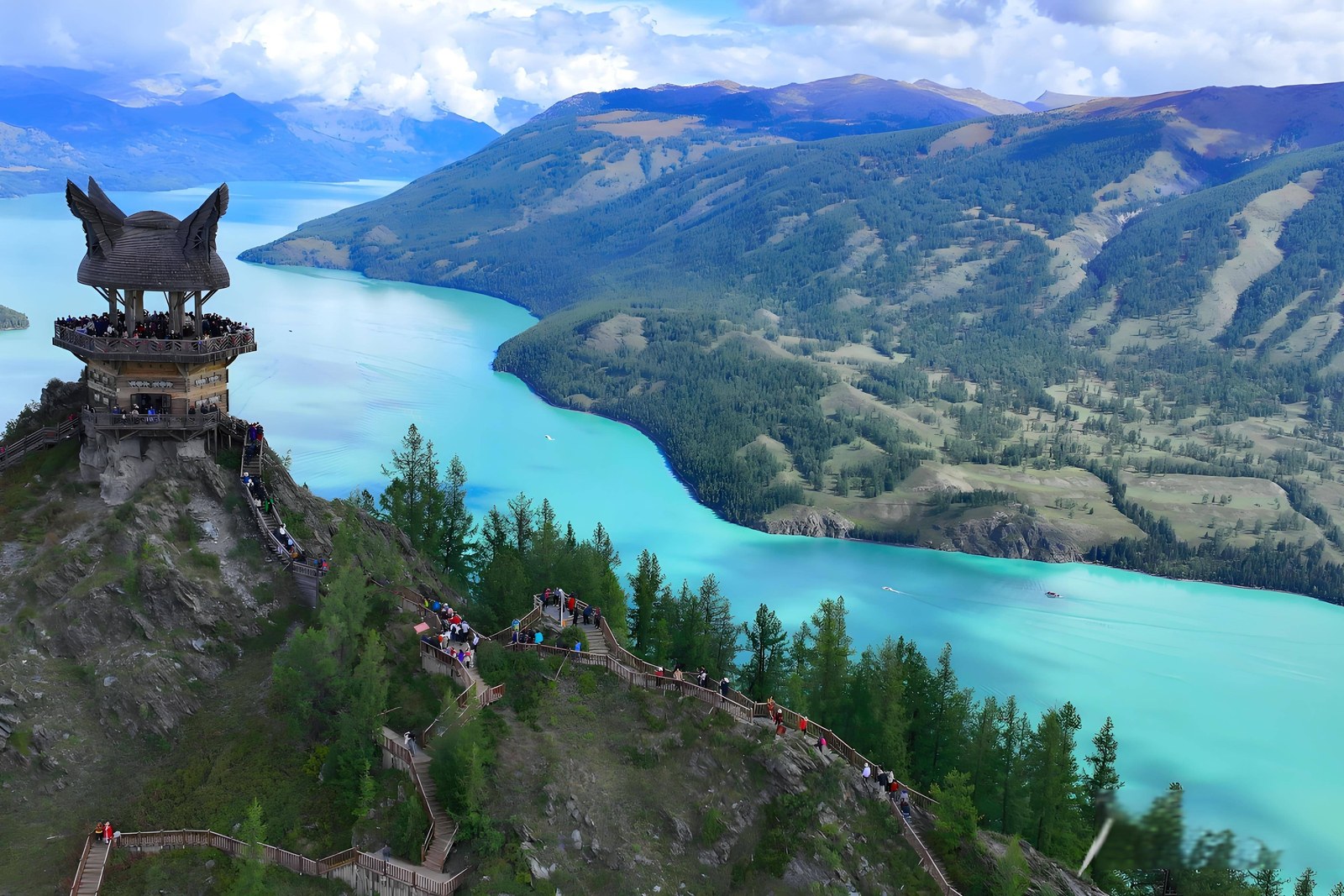
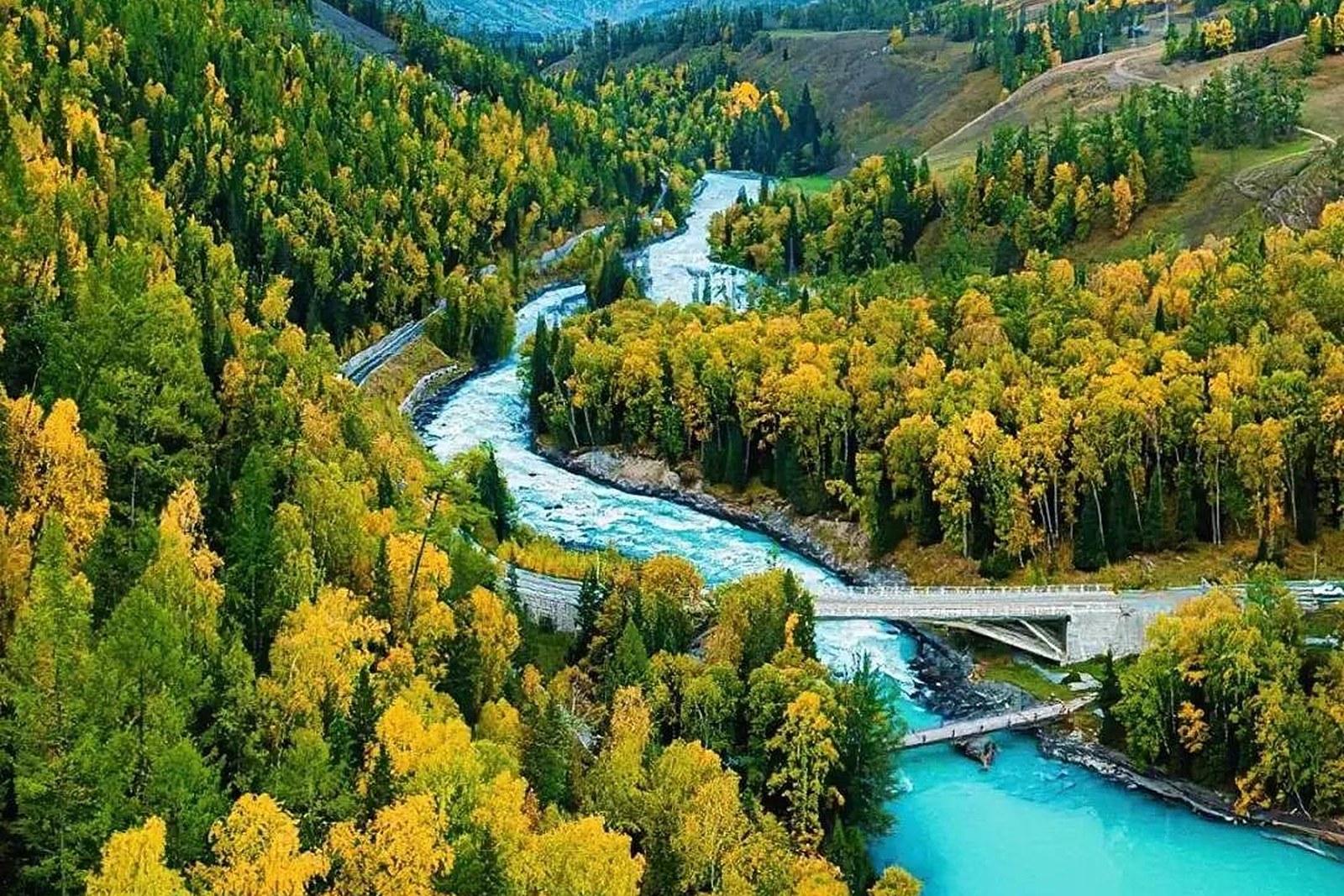
喀纳斯 Kānàsī Kanas fills a glacial trough on the northern edge of Burqin county, close enough to the Kazakhstan, Russia and Mongolia borders that mobile phones roam between time zones – a narrow alpine lake whose water changes costume with the seasons, from grey-blue after thaw to milky green by late summer and a deep jade in September (worth confirming the details for the shuttle system, since private cars stop at Jiadengyu and the park buses alone serve the lake and the three bends). The legend swims in the lake itself: the giant fish – a sturgeon relative, locals say – that draws watchers to the Guanyu platform, up a long stairway above the forest line. Around the shore the Tuva villages keep log cabins and grazing horses, and the larch-and-spruce forest climbs until the snowfields take over. The lake is the headline, but the three bends are the show: Immortal Bay with its morning fog pillow, Moon Bay with its crescent sandbars, Sleeping-Dragon Bay with its islet shaped like a resting saurian.
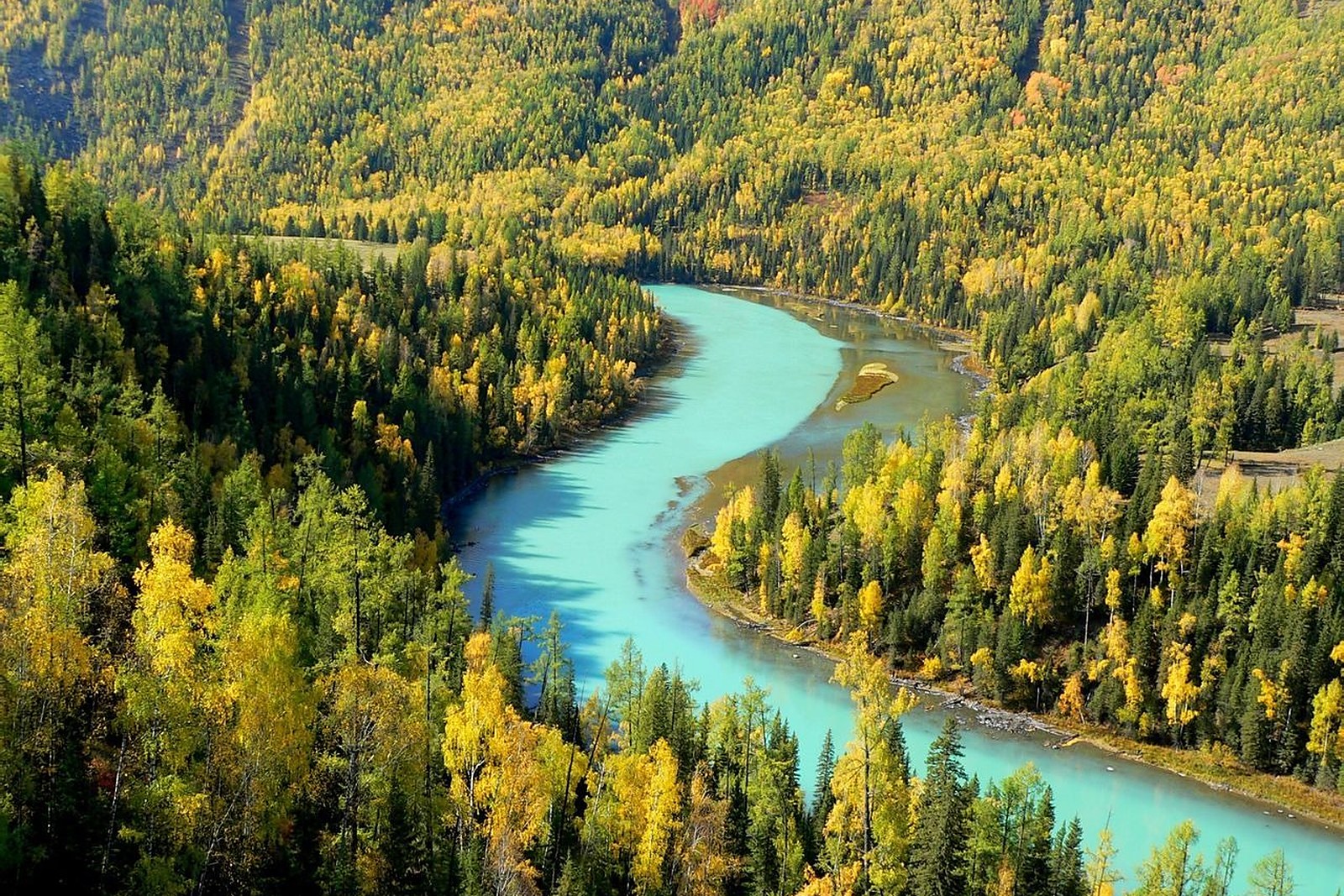
Two plans cover the water. The first is the standard loop: park bus from the Jiadengyu transfer centre to the lake, boardwalk walk along the shore, shuttle hop down the three bends with photo stops at each platform. The second is the slow version – sleep in the Tuva guesthouses inside the park, walk the birch forest paths before the first bus, and let the lake’s morning mirror belong to you alone. The stock answer in kind: ride the shuttle straight to the top bend at dawn, walk down the boardwalk from Immortal Bay to Moon Bay, and save the Guanyu platform climb for the clear afternoon, when the whole lake shows its colour from above.
Call it honestly: Kanas is the most managed landscape in Altay, and the July-to-August peak packs every platform with tour groups (worth confirming the details for the autumn window, when the larch turns gold, the fog returns, and the crowds thin to photographers). What survives the coaches is the scale – the walkways keep you above the shoreline, the forest walls block every road sound, and on a still morning the lake doubles the peaks so completely that the boat traffic looks like it floats on air. Come in the last week of September for the gold larch season, book beds weeks ahead, and give the three bends a full unhurried day.
Practicalities
Nearly everything else on this Altay list trades a different mood on the same prefecture: choose 禾木村 Hémù cūn the Hemu village for the morning fog and log cabins, 白哈巴村 Báihābā cūn the Baihaba village for the border-line forests, 五彩滩 Wǔcǎitān the Wucaitan rainbow banks for sunset colour, or 可可托海 Kěkětuōhǎi Koktokay for the granite gorge – four more doors into the same 阿勒泰地区 Ālètài Dìqū Altay Prefecture. Once the day is planned, our Altay food map fills the eating hours.
Practicalities
Words and Names
flowcloud would say Kanas is the prefecture’s cathedral: the lake is the nave, the fog is the incense, and every visitor leaves speaking more quietly than they arrived. All checked November 2026.
Getting there: The park’s shuttle hub sits at Jiadengyu, about 150 kilometres north of Altay city by paved road; buses and shared vans run from Burqin and Altay, private cars stop at the hub, and the park shuttle alone serves the lake and the three bends – hold your ticket for the last return car. All checked November 2026.