
The Granite Gorge and the Number-Three Pit: Koktokay in the Altai Foothills, Xinjiang
石钟山立峡谷口,额河源头上游人 Shízhōng shān lì xiágǔ kǒu, éhé yuán tóu shàng yóurén – Bell Rock stands at the gorge mouth; travellers walk upstream toward the Irtysh source.
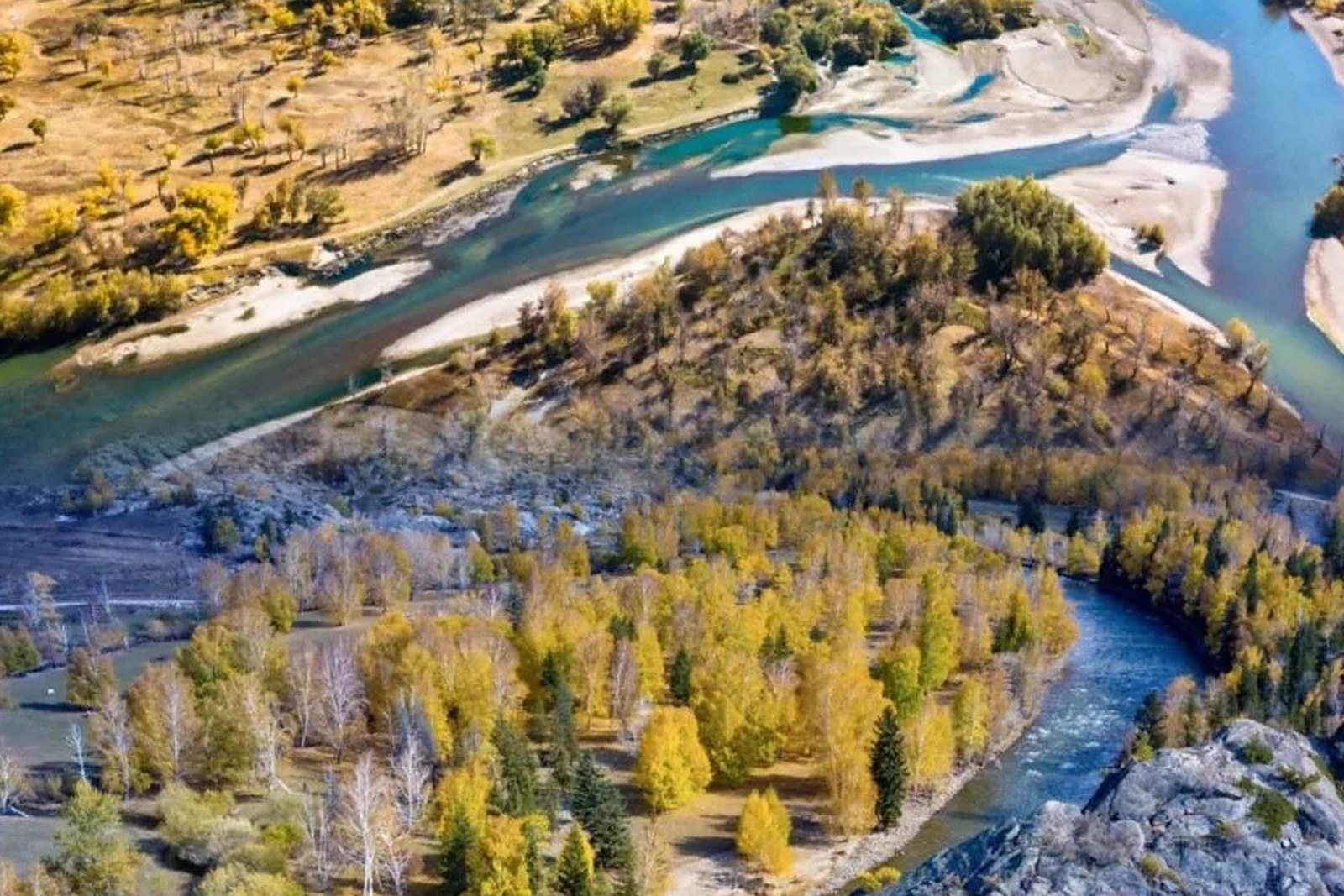
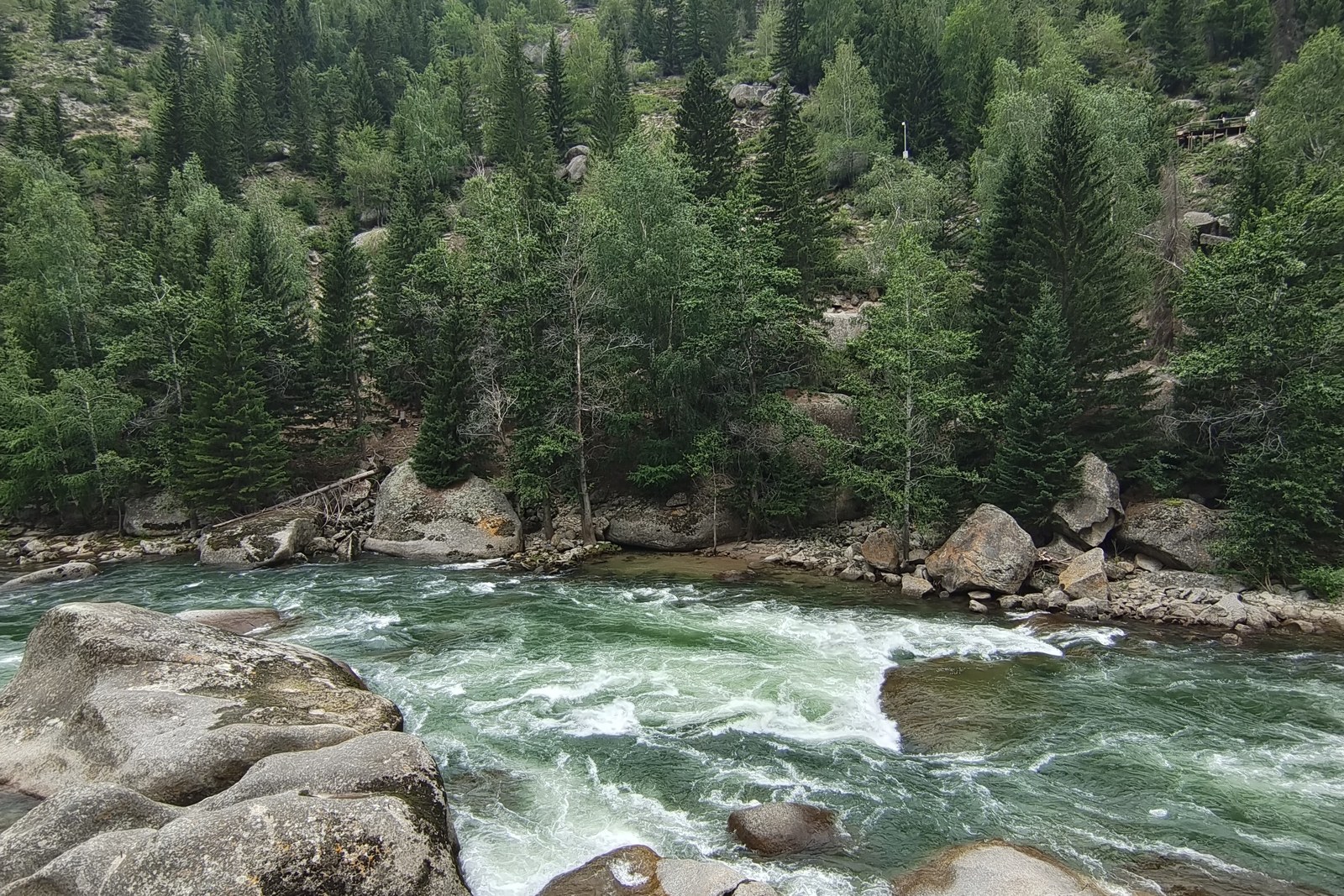
可可托海 Kěkětuǒhǎi Koktokay folds two landscapes into one park south-east of Altay city – the 额尔齐斯大峡谷 é’ěrqísī dàxiágǔ Irtysh Grand Canyon, where grey granite walls narrow around the young river, and the mining town that made the area famous: the Number Three pit, a spiralling open cut that supplied beryllium, tantalum and the rare metals behind the republic’s first bomb and first satellite (worth confirming the details for the museum hours, since the mine story and the gorge ride sell as separate tickets). The gorge’s icon is Bell Rock – a free-standing granite bell over two hundred metres tall that the river polished while the valley around it eroded away – and the birch forest along the upper road turns gold with the larch in late September.
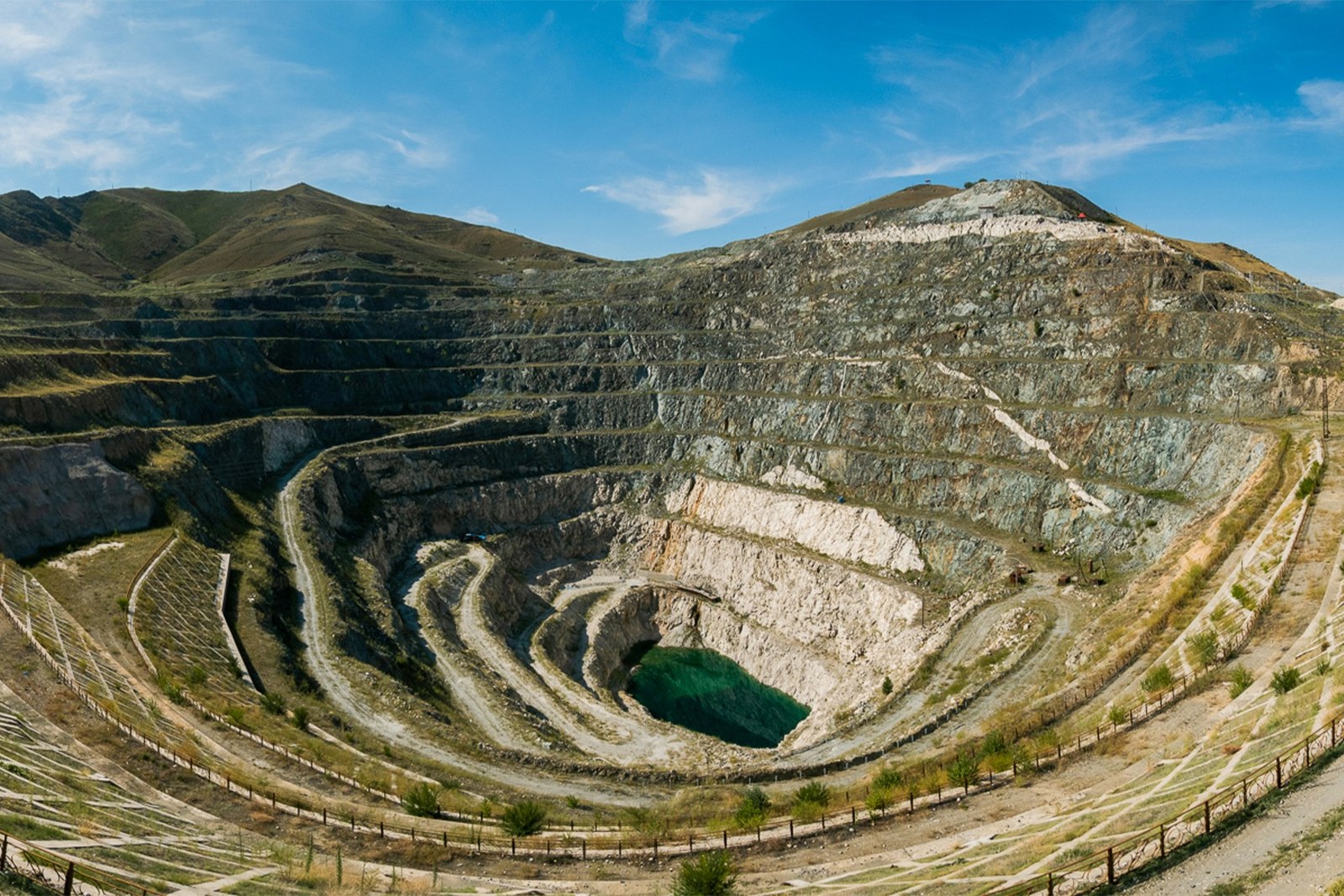
Two itineraries split the day. The first is the geology version: museum, pit rim, and the memorial town, all walkable in a morning of industrial awe. The second is the gorge version – park bus up the valley to Bell Rock, boardwalks along the water, and the source plateau where the Irtysh still looks like a creek with ideas. The stock answer in kind: take the gorge first while the air is clear, keep the pit for the afternoon light, and let the birch walk between the two be the palette cleanser – few parks anywhere pair a granite gorge with a cold-war mine and a river that eventually reaches the Arctic Ocean.
Call it honestly: Koktokay’s two halves split visitors (worth confirming the details for the through-ticket, since riding both loops in one day makes for a long shuttle rhythm). What holds either crowd is the scale: the gorge walls close in until conversation drops, Bell Rock looks engineered, and the pit – flooded now, terraced now grey and green – reads as the region’s memory in negative. Come in the last week of September for the birch gold against grey granite, wear real shoes for the gorge boardwalks, and do not skip the museum: the town’s story is the strange half of the landscape.
Practicalities
Nearly everything else on this Altay list trades a different mood on the same prefecture: choose 喀纳斯湖 Kānàsī hú the Kanas lake for the deep water, 禾木村 Hémù cūn the Hemu village for the fog sunrise, 白哈巴村 Báihābā cūn the Baihaba village for the border valley, or 五彩滩 Wǔcǎitān the Wucaitan banks for the sunset stone – four more doors into the same 阿勒泰地区 Ālètài Dìqū Altay Prefecture. Once the day is planned, our Altay food map fills the eating hours.
Practicalities
Words and Names
flowcloud would say Koktokay is the prefecture’s geology lecture hall: one gorge explains the mountains, one pit explains the republic, and the river explains the rest of the continent. All checked November 2026.
Getting there: The park gates sit about fifty kilometres from Fuyun county town on a paved mountain road; buses and shared vans run from Altay city and Fuyun, and internal shuttles serve the gorge and the mining-town loops on separate routes – two tickets, two rhythms, one valley. All checked November 2026.