
Where the Brush Floated: The Orchid Pavilion
曲水流觞一序传,鹅池墨韵越千年 Qūshuǐ liúshāng yī xù chuán, ét chí mò yùn yuè qiānnián – One cup drifting down the winding stream became a Preface for the ages; the ink spirit of the Goose Pond crosses a thousand years
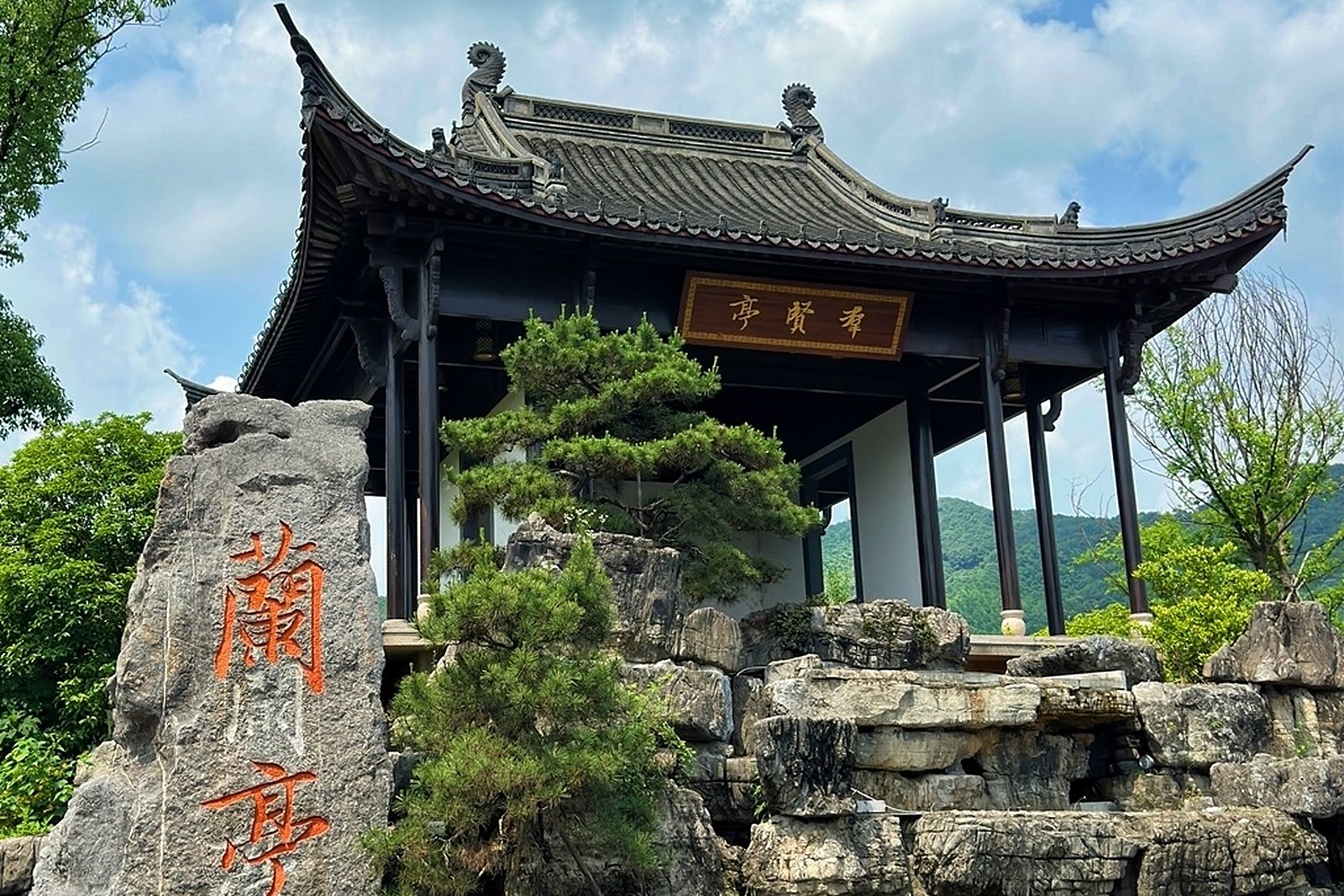
兰亭 Lántíng the Orchid Pavilion, at the foot of 兰渚山 Lánzhǔ Shān Lanzhu Mountain south of Shaoxing, is the birthplace of the most copied piece of writing in Chinese history: in 353 AD the calligrapher 王羲之 Wáng Xīzhī Wang Xizhi gathered forty-one friends for the spring purification rite, floated wine cups down a winding stream, and at each landing the drinker composed a poem – or drank a penalty cup. The collected poems he prefaced with three hundred words of such perfect running script that 《兰亭集序》 Lántíng Jíxù the Lanting Preface became the model every brush-hand has copied for sixteen centuries.
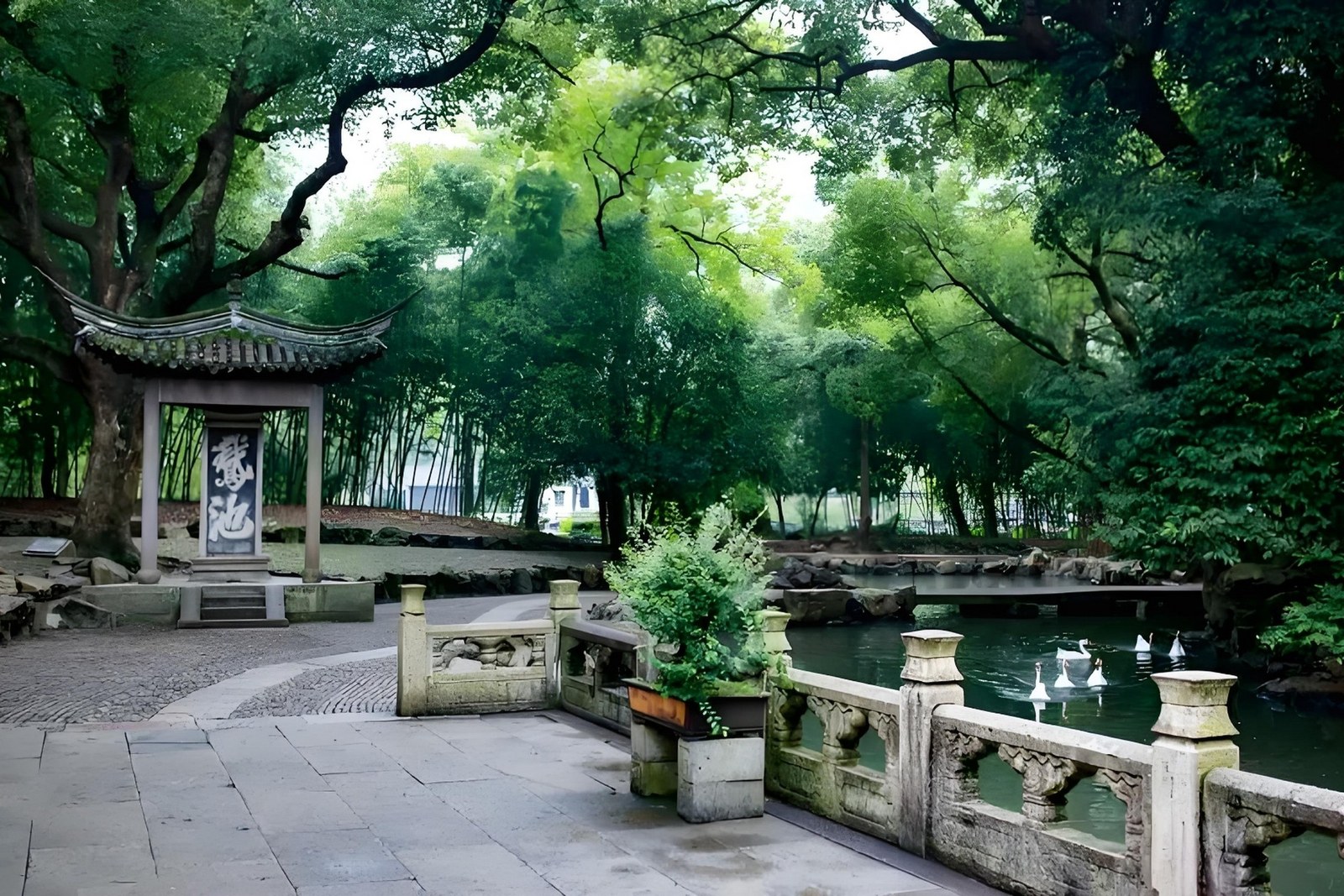
The garden keeps the rite’s geography: the 鹅池 Ét Chí Goose Pond under its two-generation stele (father’s characters on one side, his son’s on the other, the legend of a goose-startled pause in between), the triangle-roofed pavilion beside it, and white geese still patrolling the water – the master loved geese for the way their necks taught the brush turn.
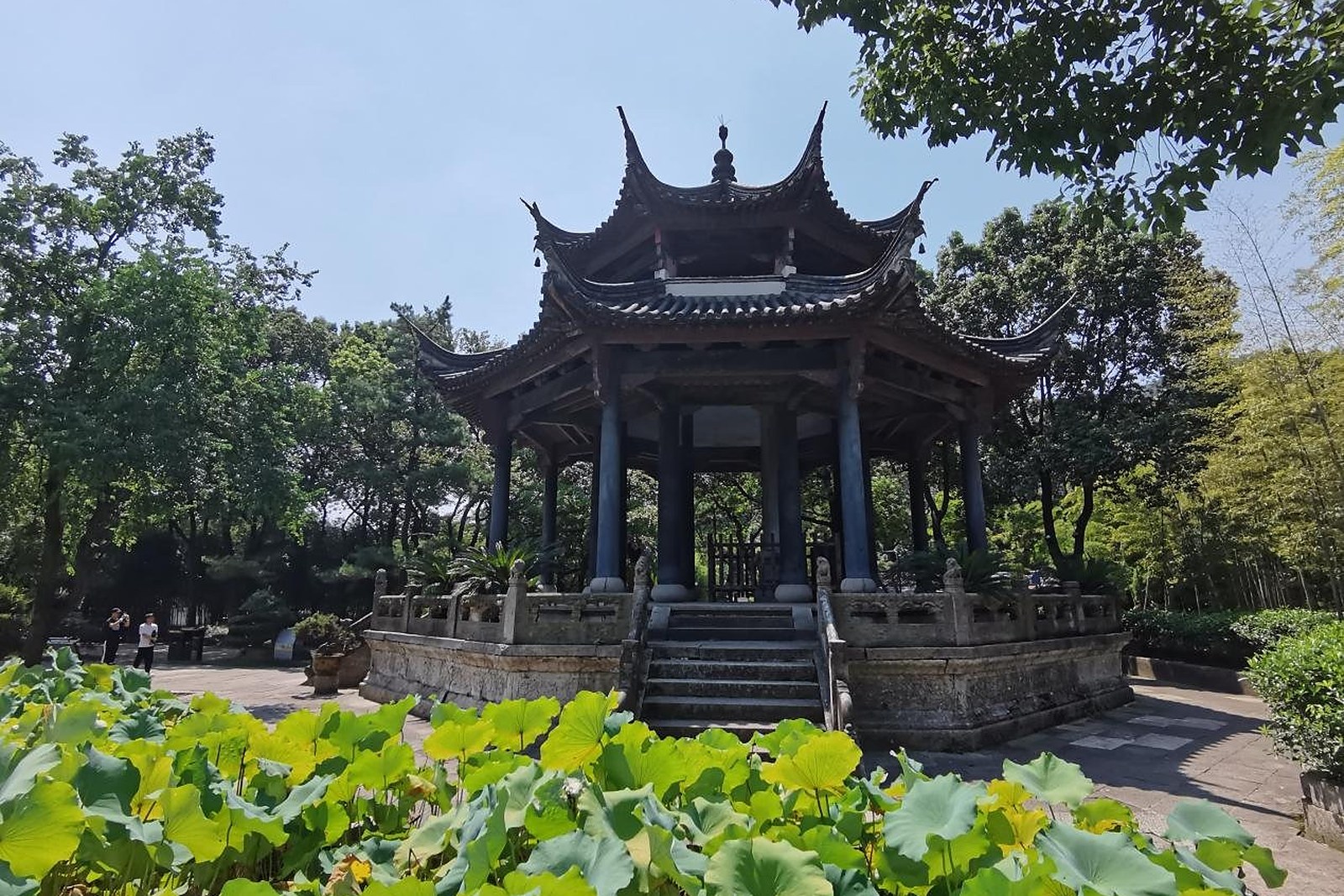
The 御碑亭 YùbēiTíng Imperial Stele Pavilion holds the Qianlong emperor’s copy of the Preface on a giant stone, and the park rebuilt the 曲水流觞 qūshuǐ liúshāng winding-stream channel itself – a shallow rill between stone banks where the cups floated, now the site of spring calligraphy festivals where schoolchildren float their own cups and copy the master’s strokes on the banks.
The calligraphy museum completes the pilgrimage: rubbing galleries, the story of the Emperor Taizong’s obsession that buried the original in his tomb, and every dynasty’s copies arguing over what the lost original really looked like. Two hours cover the garden; a whole morning if you bring a brush.
Practicalities
- The site ticket covers the garden and museum; the stream channel sits behind the main pavilion – follow the flags to the rite grounds.
- Spring festival days (around the third lunar month) stage the cup-floating rite with actors and open-copying sessions.
- The Goose Pond stele shows two hands – read the inscription panels to tell father from son before you photograph.
- Buses from downtown Shaoxing run forty minutes; the drive from the old town is twenty-five, and the garden gate has ample parking.
Words and Names
兰亭 Lántíng the Orchid Pavilion, the 353 gathering site; 王羲之 Wáng Xīzhī Wang Xizhi, the Sage of Calligraphy; 兰亭集序 Lántíng Jíxù the Lanting Preface, the most-copied brushwork in China; 曲水流觞 qūshuǐ liúshāng floating wine cups down the winding stream; 鹅池 Ét Chí the Goose Pond, where geese taught the brush turn. Beyond the pavilion of brushes, the same 绍兴市 Shàoxīng Shì Shaoxing City keeps more places worth the detour: 鲁迅故里 Lǔxùn Gùlǐ the writer’s quarter, 沈园 Shèn Yuán the Phoenix-Hairpin garden, 五泄瀑布 Wǔxiè Pùbù the five-tier falls of Zhuji, or 天姥山 Tiānmǔ Shān the dream mountain of Xinchang – four more doors into the same 绍兴市 Shàoxīng Shì Shaoxing City. Once the stream has had its cups, our Shaoxing food map fills the table.
flowcloud would say Lanting is a garden that filing-cabinets the human hand: a pond of geese still teaching turns, a stream channel where the cups once stalled, and a museum of copies arguing over an original no one has seen since the seventh century. All checked November 2026.
Getting there: Lanting lies fifteen kilometers southwest of downtown Shaoxing – buses from the city run forty minutes, taxis take twenty-five, and the site pairs naturally with the Lanting calligraphy museum inside the same ticket. All checked November 2026.