
Blue Rows on the 44th Parallel: June in the Fourth Division Lavender Farms
紫海连天际,风来香满川 Zǐhǎi lián tiānjì, fēng lái xiāng mǎn chuān – A purple sea meets the sky; when the wind comes, the whole valley wears the scent
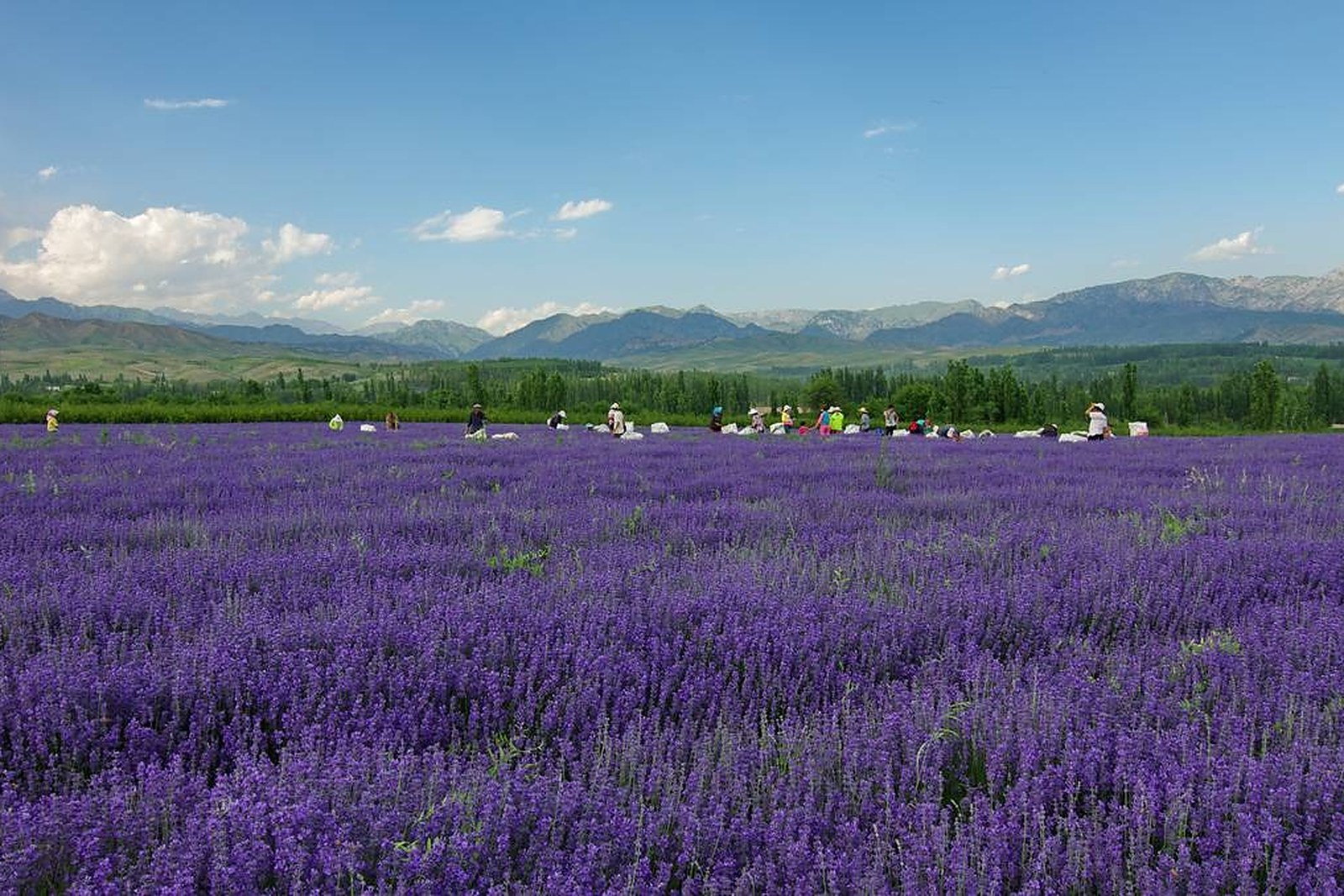
正文:薰衣草田 Xūnyīcǎo Tián the lavender fields of the Fourth Division farms stretch along the valley roads south of 可克达拉市 Kěkèdálā Shì Keketokala City, on the same latitude as Provence and with the same opinion about June: for roughly three weeks the regiment farmland turns a blue-purple that reads from a mile away, and the whole valley economy tilts toward the bloom. This is one of the few places on earth where lavender grows at commercial scale outside the Mediterranean, and the reason is arithmetic – long summer light, sharp winters that kill the fungus, and irrigation water from the same Yili system that feeds the city’s poplars.
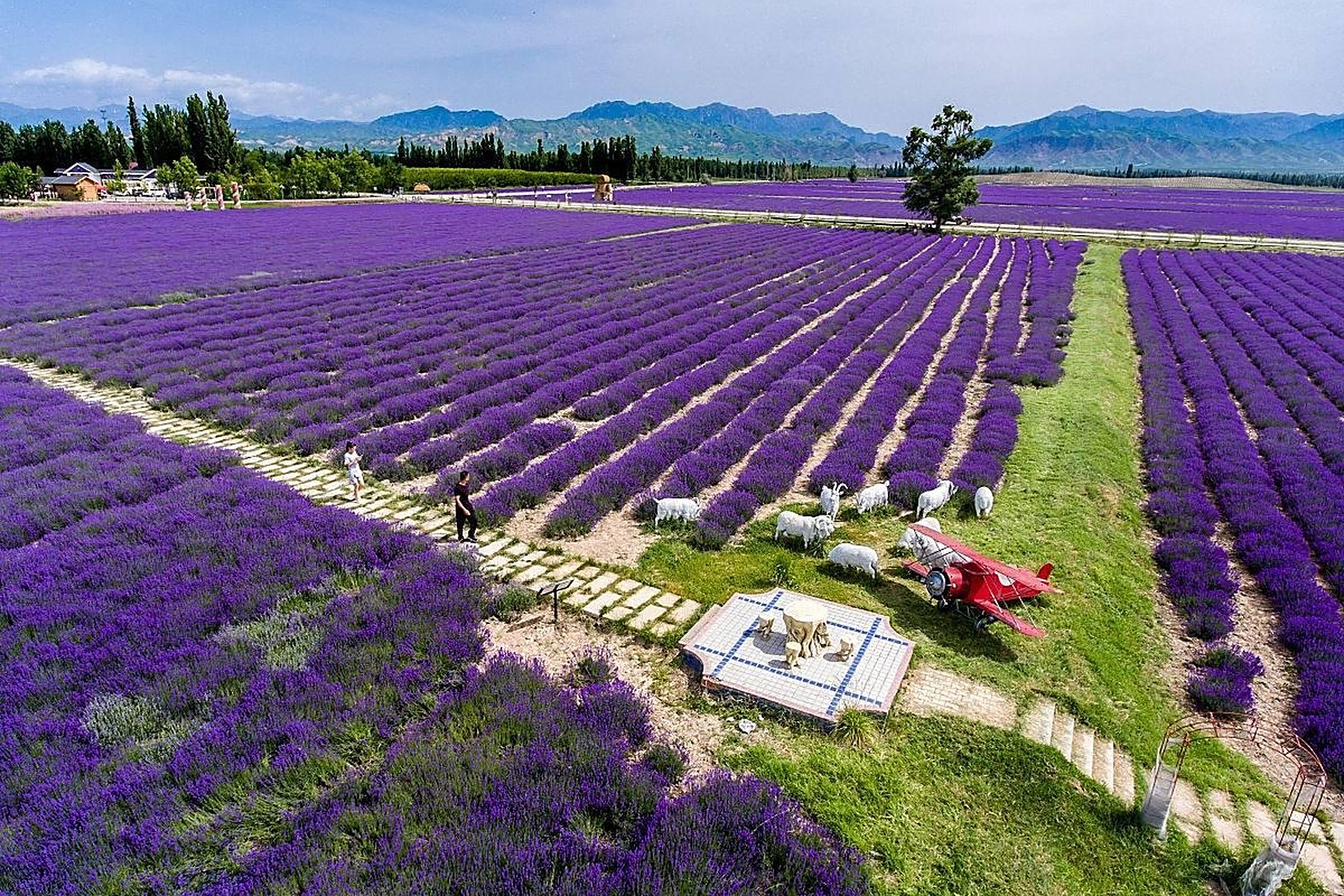
The rows are the drawing. Planted on the contoured strips the regiment farms use for everything, the lavender runs in disciplined bands up and down the low rises – aerial views turn the fields into corduroy, and ground level turns them into corridors of bee-hum that you hear before you smell. Walk the headlands between blocks and the scent shifts with the hour: green and sharp at morning, honeyed and heavy by late afternoon, and always threaded with the dust of the valley road.
The farms work the flower twice. The June cutting goes to the distilleries – small copper-still operations that turn the bloom into the oil the valley sells across China – while the later, lighter cut feeds the honey boxes parked at every field edge. Farm shops along the road sell the results in unglamorous bottles and jars: essential oil, sachets, a lavender honey that tastes like the breeze over the rows. Nothing here is a theme park; it is an agricultural crop that happens to be one of the most photogenic plants on earth.
Beyond the rows, the same 可克达拉市 Kěkèdálā Shì Keketokala City keeps more valley pleasures: 草原之夜纪念馆 Cǎoyuán zhī Yè Jìniànguǎn the Grassland Night memorial, 伊犁河畔 Yīlí Hé Pàn the river banks and their bridge light, 滨河公园 Bīnhé Gōngyuán the riverside park, and the bird-rich 伊犁河湿地 Yīlí Hé Shīdì the Yili wetlands – four more doors into the same 可克达拉市 Kěkèdálā Shì Keketokala City. With the lavender walked, our Keketokala food map fills the day.
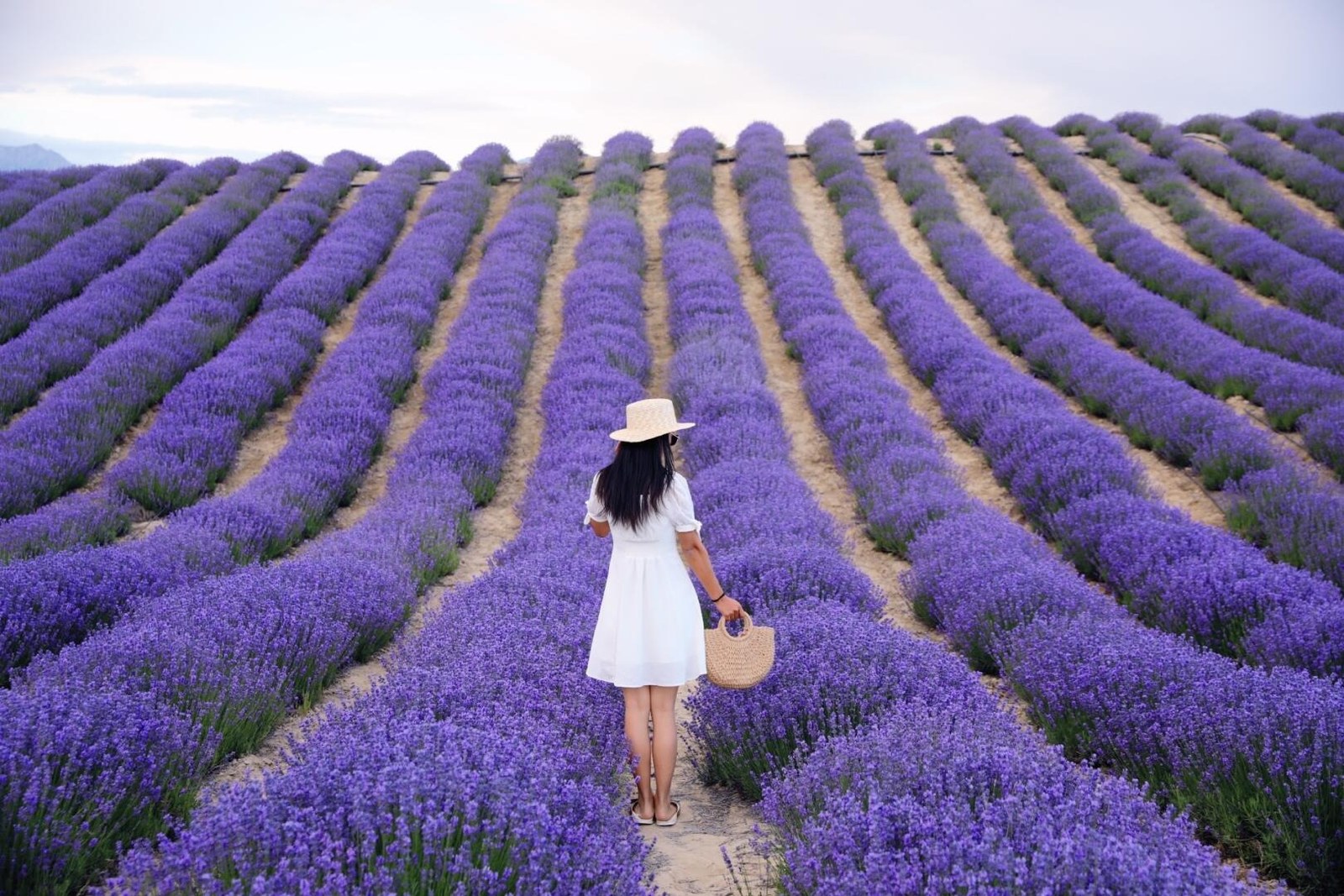
Practicalities first. The farms lie along the valley roads toward the regiment farms – hire a car or join a June flower-season tour, since the strips are scattered and the signs are for locals. Go morning for calm air and long shadows; midday flattens the color, and the tour buses arrive by ten. Wear closed shoes (the headland paths are dust), ask before flying a drone over someone’s crop, and buy the honey at the farm shop rather than the highway stand – the difference is one cutting, and you can taste it.
What stays with you is the discipline under the romance. The bloom looks like poetry and runs like a harvest schedule: cut too early and the oil is thin, too late and the color goes to straw. The farms that survive are the ones that read the weather better than the tourists do – and in June, briefly, the whole valley gets to watch them be right.
Practicalities
Practicalities
Words and Names
flowcloud would say the lavender fields are the valley’s once-a-year flex: regiment-plot discipline dressed in Provence colors, cut on schedule, distilled by August, and remembered all winter in a spoonful of honey. All checked November 2026.
Getting there: The lavender farms lie along the valley roads toward the Fourth Division regiment farms; hire a car or join a June flower-season tour, and go morning for calm air and long shadows. All checked November 2026.