
雷州市 Léizhōu shì is the old prefecture town of the 雷州半岛 Léizhōu bàndǎo, an hour south of 湛江, and the only county-level 国家历史文化名城 guó jiā lì shǐ wén huà míng chéng in Guangdong, a title the State Council gave it in January 1994. It has been a seat of government since the Han, when the port here was one of the places from which the Han embassies to the southern seas sailed, and it was renamed 雷州 in 634, the eighth year of the 贞观 reign of the Tang. For most of a thousand years afterwards it was the administrative centre, the trading port and the place of exile for the whole peninsula. Six kilometres and more of arcaded 骑楼 qí lóu streets survive inside and outside the line of the old wall, and the monuments sit unusually close together even by the standards of a Chinese old town.
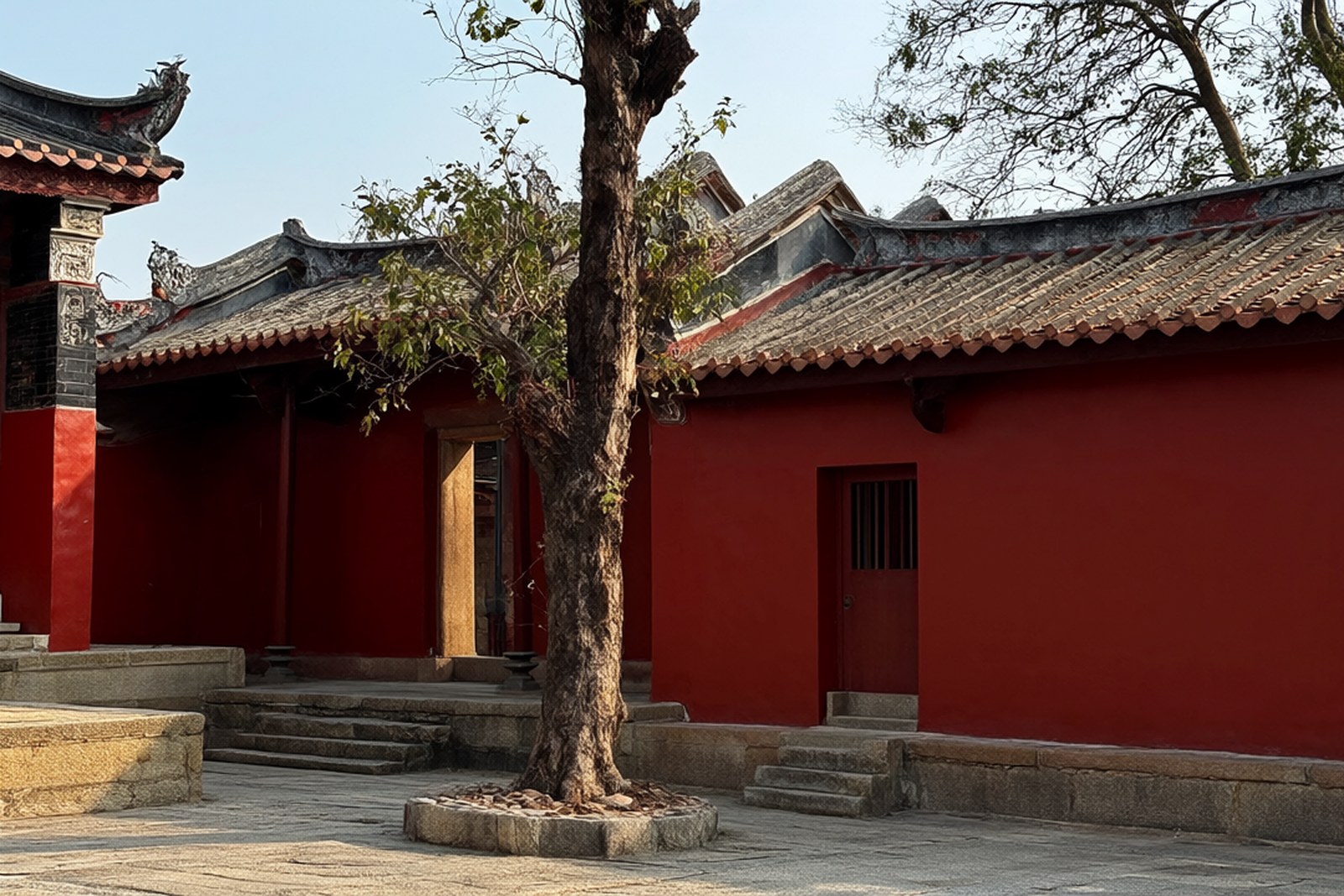
What stamped the character of the town is exile. 雷州 was the end of the road for officials the court wanted out of the way, and ten of them are remembered together in the 十贤祠 Shí xián cí, the shrine of the ten worthies: 寇准 Kòu Zhǔn, the Song chancellor, sent here as a junior officer in 1022 and dead in the town the following year; 苏轼 and 苏辙, both exiled south in the 1090s, both of whom left writing about the place; and 秦观, 李纲, 赵鼎, 李光, 王岩叟, 任伯雨 and 胡铨. Their presence is why a small prefecture at the end of a peninsula has a literary tradition out of all proportion to its size. The older temple is the more important locally: the 雷祖祠 Léi zǔ cí, founded in 642, the sixteenth year of the 贞观 reign, which makes it the only Tang ancestral hall in the west of Guangdong and the seat of the cult of 雷祖, the Thunder Ancestor, the deified 陈文玉 Chén Wényù, credited with founding the prefecture. It is on the national protected list; 苏轼 wrote an account of the god, 李纲 left a stele, an emperor of the Qing sent a tablet; and the 雷州换鼓 Léizhōu huàn gǔ, the drum-changing ceremony held there, was counted among the four great spectacles of the old south.
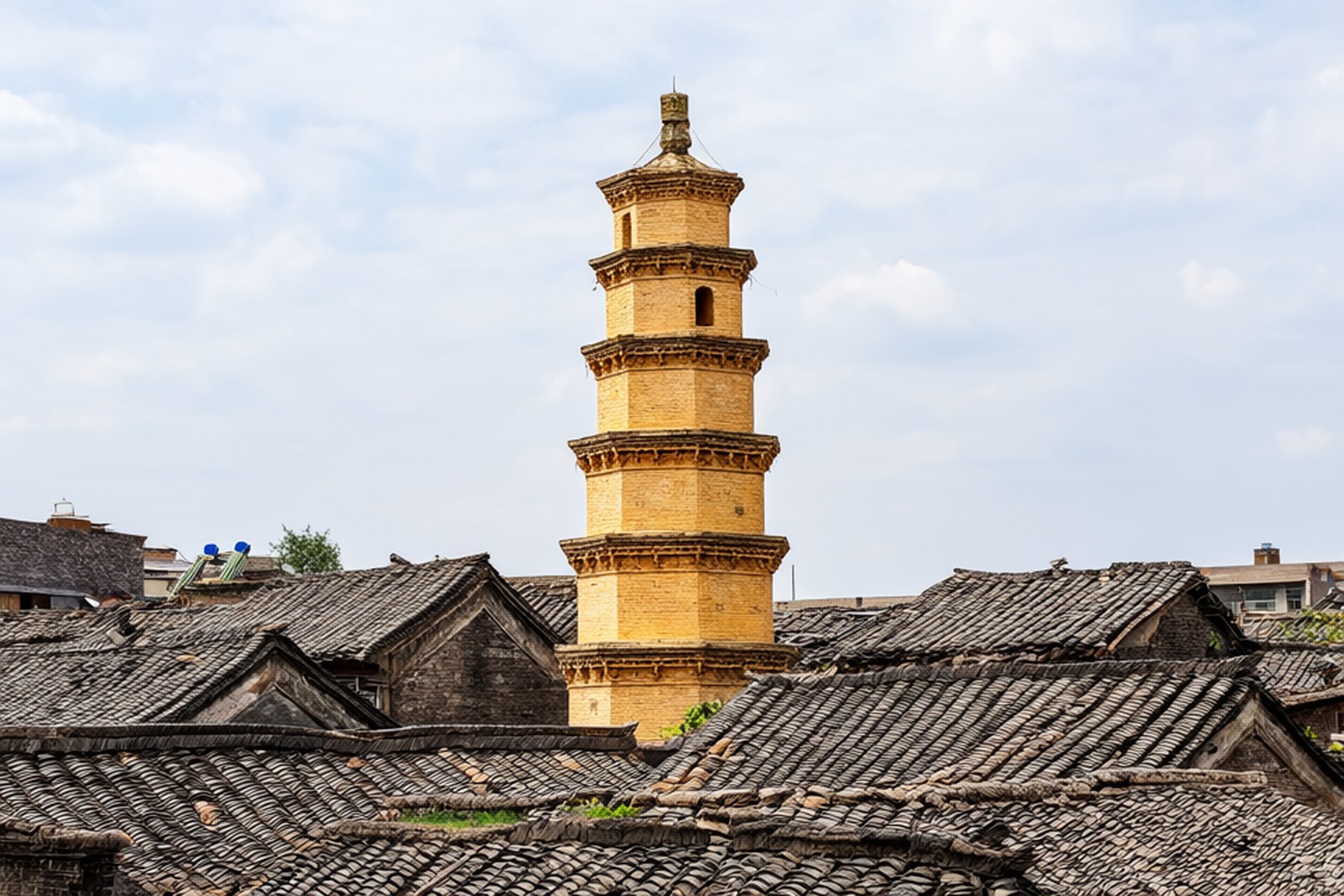
The 三元塔 Sān yuán tǎ stands in the south of the town, raised in the 万历 years of the Ming, fifty-seven metres high and nine storeys over an eight-sided plan, and it has two claims on the attention. The first is its name: the dig for the foundations is said to have turned up three snake eggs, which was read as an omen of 三元及第 sān yuán jí dì, first place at all three levels of the imperial examination, and the tower was renamed for the omen. The second is its brickwork, fired from a clay that has kept its colour and its sharp edges while everything around it weathered, which has earned it the tag 只新不旧 zhǐ xīn bù jiù, only new, never old, and a place on the informal lists of the odd towers of China. Nearby is the 雷州西湖 Léizhōu xī hú, not the Hangzhou lake but a small Song one laid out in the eleventh century, which 苏轼 and his brother 苏辙 visited together in 1097 and which has a 苏公亭 Sū gōng tíng and a memorial hall on it. The 天宁禅寺 Tiān níng chán sì in the town centre is older than either, founded in the Tang, and the plaque over it reading 万山第一 wàn shān dì yī, first among ten thousand mountains, is the line everyone quotes about it.
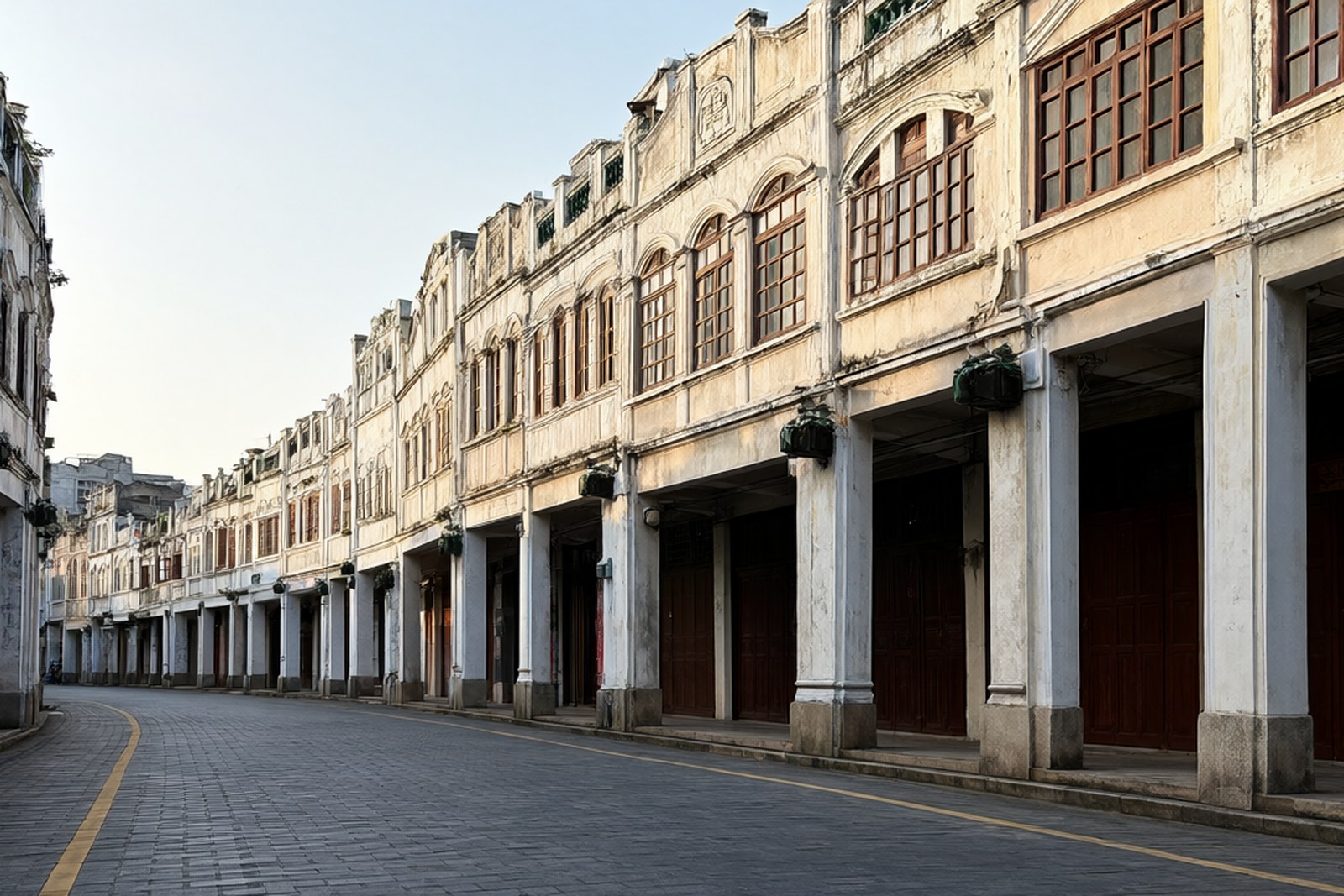
The streets are the exhibit. The 骑楼 arcades run for kilometres through the old commercial quarters, and 邦塘古民居 Bāng táng gǔ mín jū, outside the town, is a village of Qing courtyard houses in carved stone and grey brick that families still live in. The 雷州石狗 Léizhōu shí gǒu, the stone dogs, are the oddest inheritance of the lot: hundreds of carved dogs from the length of a hand to taller than a person, which stood at village gates, crossroads and bridges as guardians, and which are now on the national intangible heritage list along with the 雷歌 Léi gē songs and the 雷剧 Léi jù opera, both performed in the local dialect; the county counts a hundred and eighty-odd items of intangible heritage altogether. The town eats plainly and well: 白切狗 bái qiē gǒu in the market restaurants around the old streets, the 树叶夹 shù yè jiā, glutinous rice steamed inside a 菠萝蜜 bō luó mì leaf with a sweet or a savoury filling, which is the town’s own festival cake, and the seafood of the coast at 乌石 an hour away.
Practicalities
Tickets. The 雷祖祠 charges about ¥20 and the 三元塔 about ¥10; the 西湖, the 天宁禅寺, the 十贤祠 and the 骑楼 streets are free or nearly so. Budget ¥30 to ¥50 for the ticketed sites and nothing else.
Opening hours. The temples and the tower keep roughly 08:00 to 17:30 and close earlier in winter. The 雷祖祠 is about six kilometres north of the town and needs a taxi or a three-wheeler; the streets and the arcades are open all day and are at their best in the early morning and again after five. One full day covers the town and the temple, two days covers it properly with one of them on the coast at 乌石.
Getting there. 雷州站 Léizhōu zhàn on the 深湛 high-speed line is a few kilometres outside the town. 湛江市 is about an hour north on the 沈海 expressway and 徐闻 about an hour south. The monuments are inside a couple of kilometres of one another on flat ground, so walking and short taxi rides do most of it, with a car needed for the 雷祖祠 and 邦塘.
Closing day. There is no closing day for the streets. The 雷祖祠 and the 三元塔 are open every day of the year; the 雷剧 and the 雷歌 performances are seasonal and cluster around the festivals; and the 雷州换鼓 is staged at the 雷祖祠 on the Thunder Ancestor’s own festival dates rather than daily.
flowcloud would say that a town which was the end of the road for ten of the most cultivated men of their centuries, and which has kept their shrines, their poems and its own stone dogs in the same few streets, has been running a very long argument that a place is remembered for who was sent there rather than for what was built.
Getting there: the old town of 雷州市 is a few kilometres from 雷州站 on the 深湛 high-speed line, about an hour south of 湛江市 on the 沈海 expressway and an hour north of 徐闻; the 骑楼 streets, the 西湖 and the 三元塔 are all inside a twenty-minute walk of one another, and the 雷祖祠 is a short taxi ride north.