
花石古寨 (Huāshí Gǔzhài), the Huashi ancient fort, sits where the terrain of Liángpíng District turns dramatic — a restored Ming-dynasty military stronghold fixed to the lip of a forested 峡谷 xiágǔ, its basalt walls and stone watchtower thrust out over the void. Unlike the temples and fields that define most of the district, this is a place built to be seen from afar and to see from above, and the first impression is of a structure that refuses to belong to the ground it stands on.
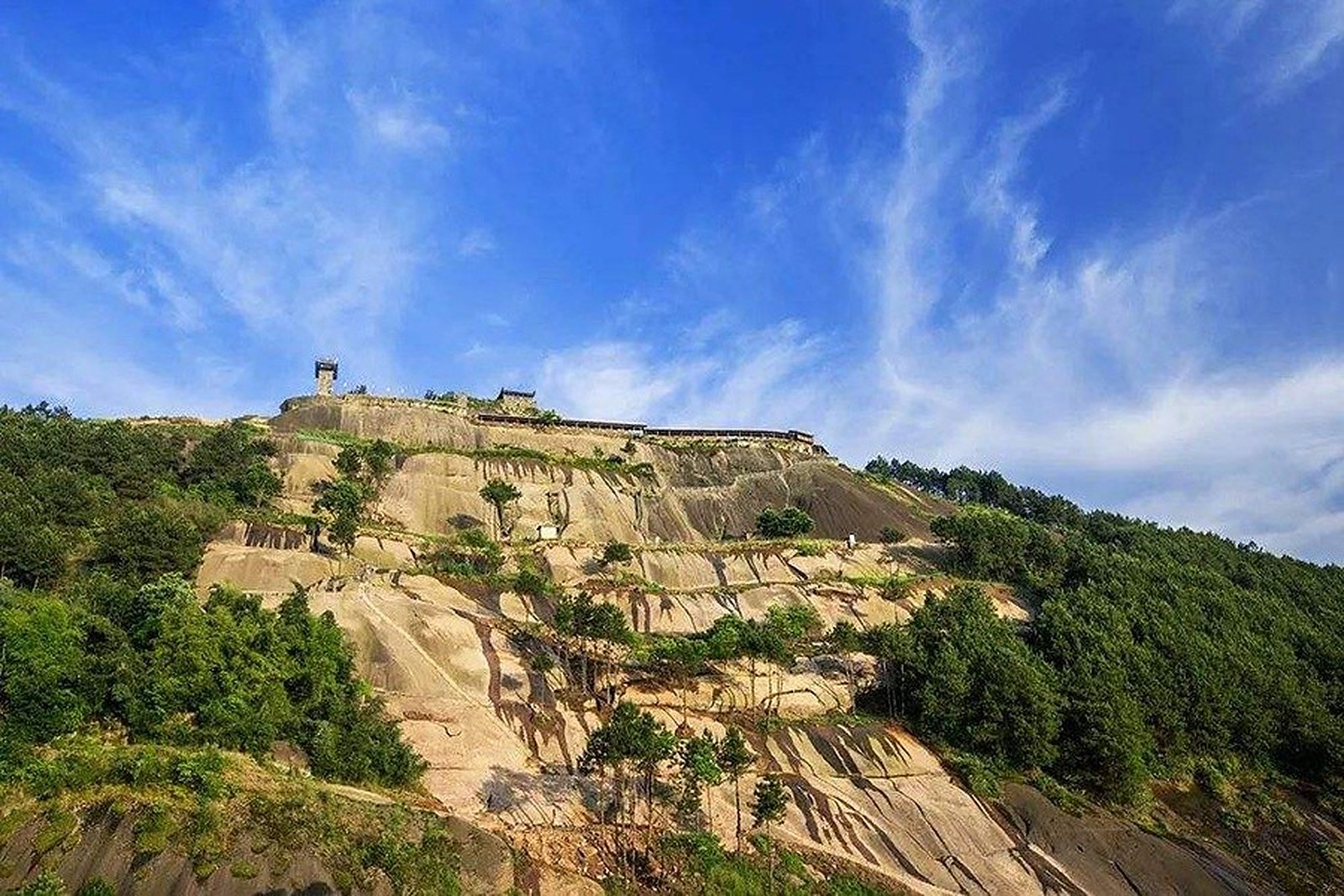
The restorers kept the logic of the original 寨堡 zhàibǎo: rough basalt blocks laid without mortar in places, walls thick enough to stop an arrow and a climbing party alike, and a watchtower (瞭望塔 liàowàngtǎ) whose upper window frames the whole canyon. The path up is steep and partly cut into the rock, and at the top the floor narrows so that you stand with forest on one side and a long drop on the other. It is easy to understand why a garrison chose it — there is simply nowhere to approach unseen.
What gives Huashi its drama is the setting rather than the stone. The 玄武岩 xuánwǔyán basalt is dark and cold to the touch, and against the green of the gorge it reads almost as a wound in the hillside. From the tower the eye follows the canyon as it folds into deeper shadow, the river a silver thread far below, the opposite wall a wall of trees. On a clear morning the light comes up through the gap and turns the whole ravine gold; on a wet day the clouds pour over the rim and the fort seems to float.
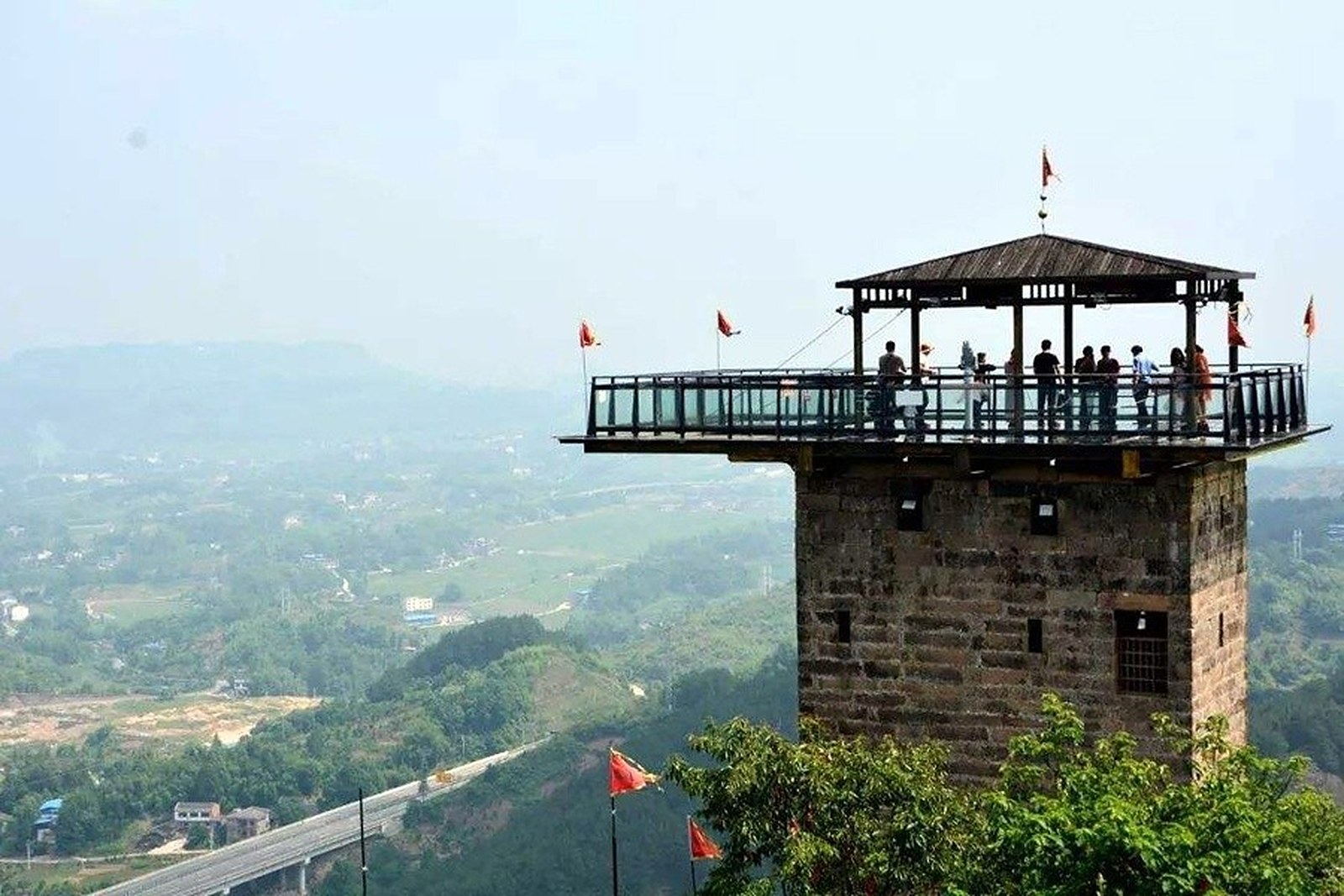
The fort is one of the more theatrical viewpoints in all of Liángpíng, and that is precisely its draw. It asks little of the visitor — no ritual, no history lesson handed at the gate — and gives back a large, wordless spectacle of rock and forest and distance. Walk the wall, lean at the tower window, and the usual flatness of the district falls away; here the land is vertical, ancient, and quietly indifferent. Few sites in the area make the case for Liangping’s wild edge as plainly as this one.
Words and Names
花石古寨 Huāshí Gǔzhài — Huashi Ancient Fort 峡谷 xiágǔ — the forested canyon the fort overlooks 寨堡 zhàibǎo — walled mountain stronghold 瞭望塔 liàowàngtǎ — stone watchtower for surveying the gorge 玄武岩 xuánwǔyán — basalt, the dark stone of the walls