
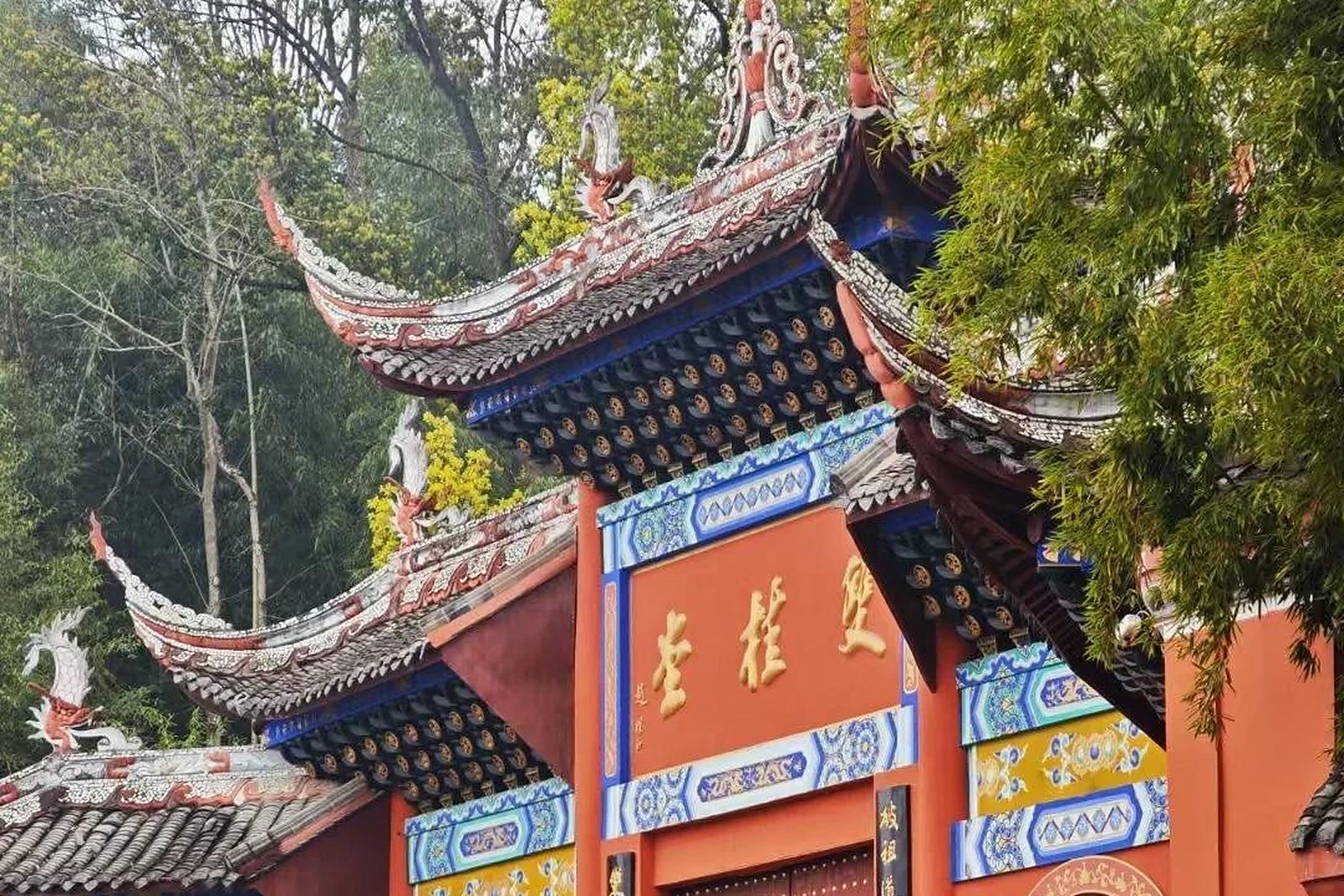
双桂堂 (Shuāngguì Táng), set among the flat fields of Liángpíng District in Chóngqìng, has answered to the honorific “天下第一禅院” (the foremost Zen courtyard under heaven) for more than three centuries. The monastery was founded in the early years of the Qing dynasty by Patriarch Pozhan (破山祖师), a monk whose teaching line would spread across the southwest, and it has been called the ancestral court — the beating heart — of Southwest Zen ever since. Pilgrims and travellers still arrive along the same village lanes, and the first thing they meet is not a hall but the pair of osmanthus trees that gave the temple its name.
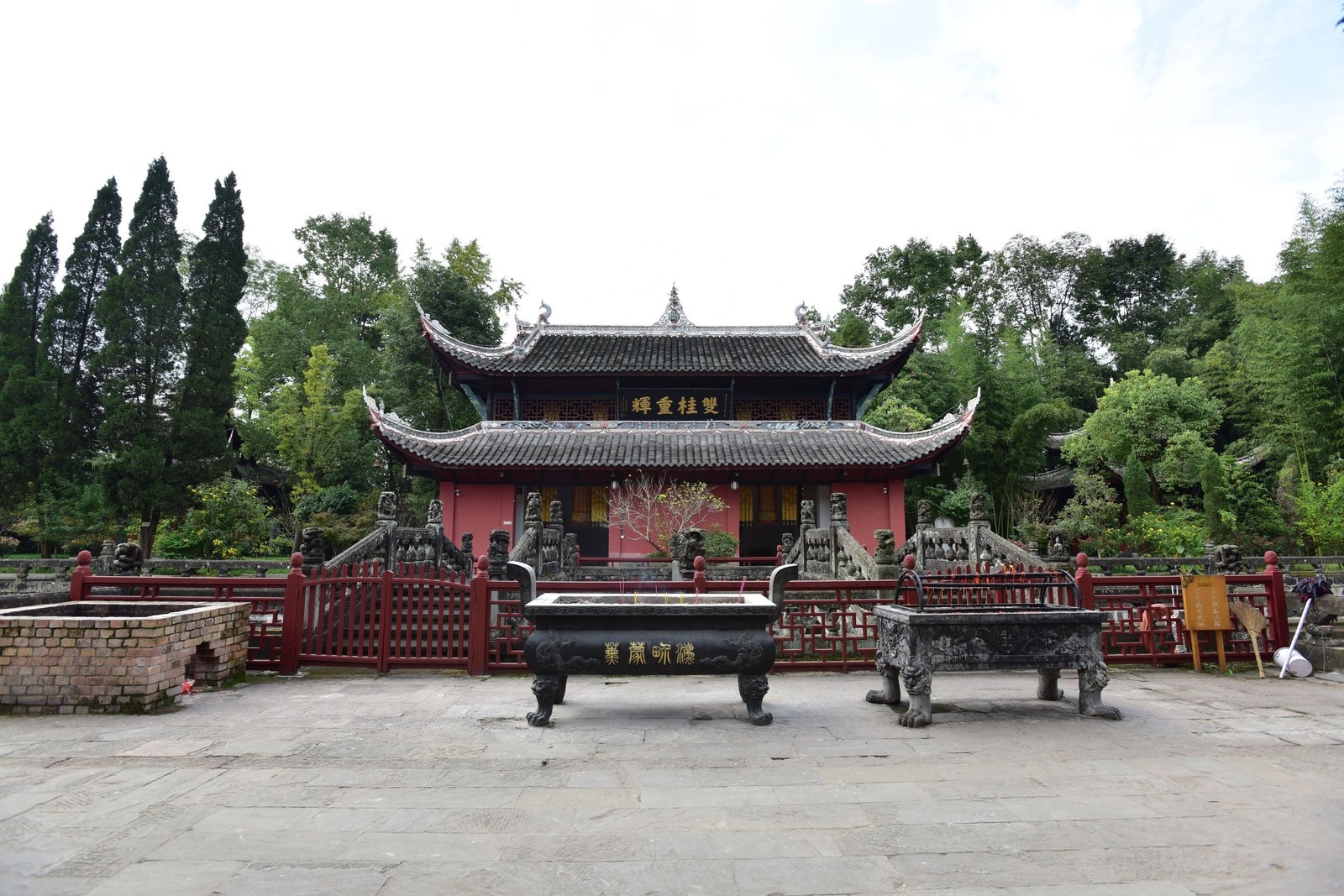
Inside the gate the layout unfolds as a long axis of timber halls, each roof heavy with grey tile and tiers of eaves, each courtyard quieter than the last. The building craft is unmistakably Qing: massive cypress beams fitted without nails, lacquered columns, and lattice that filters the light into soft grids on the stone floor. Monks move through the morning with little ceremony, and the air carries the smell of incense and damp wood. What strikes most visitors is the scale — this is no village shrine but a great Zen institution, its halls sized for assembly and its walls sized for silence.
Behind the main hall stands the tree that outlives every dynasty: a 古银杏 gǔ yínxìng, a ginkgo said to be more than seven hundred years old, its trunk wide enough for several people to circle and its canopy throwing shade across half the courtyard. In late autumn the fan-shaped leaves turn the colour of old gold and fall in a slow, continuous rain, and the groundsweepers let them lie. The tree is treated less as scenery than as a resident of the temple — older than the present buildings, witness to every abbot who has walked the stones.
Pozhan’s inheritance is the reason the temple matters beyond Liángpíng. From this 禅院 chányuàn his disciples carried the Linji transmission into Sìchuān, Guìzhōu and Yúnnán, and the modest plaque claiming 天下第一 tiānxià dìyī is less boast than a map of influence. Today the working monastery keeps its routines — chanting at dawn, gardening at dusk — and receives visitors who come as much for the continuity as for the architecture. Standing under the ginkgo, it is easy to read the place as the locals do: not a museum of Buddhism but a living one, its roots sunk deeper than any of the walls that shelter it.
Words and Names
双桂堂 Shuāngguì Táng — the Twin Osmanthus Temple, “foremost Zen courtyard under heaven” 破山祖师 Pòshān Zǔshī — Patriarch Pozhan, founder of the temple and a pillar of Southwest Zen 古银杏 gǔ yínxìng — ancient ginkgo, a 700-year-old tree in the grounds 禅院 chányuàn — Zen courtyard / monastery 天下第一 tiānxià dìyī — “number one under heaven”