
欧家梯田 Ōujiā tī tián is the terraced rice country of 连山壮族瑶族自治县 Liánshān Zhuàngzú Yáozú Zìzhìxiàn, the mountain county at the north-western end of 清远市 Qīngyuǎn shì, and it is the largest and best known of the county’s terraces. 梯田 tī tián are fields cut as steps into a hillside, each one held up by a low stone or earth wall, and the 欧家 terraces climb a whole slope in long green curves, fed by the streams of the mountain above and worked by the villages at the foot. It is a landscape made by hand over generations, and the beauty of it is the beauty of that work.
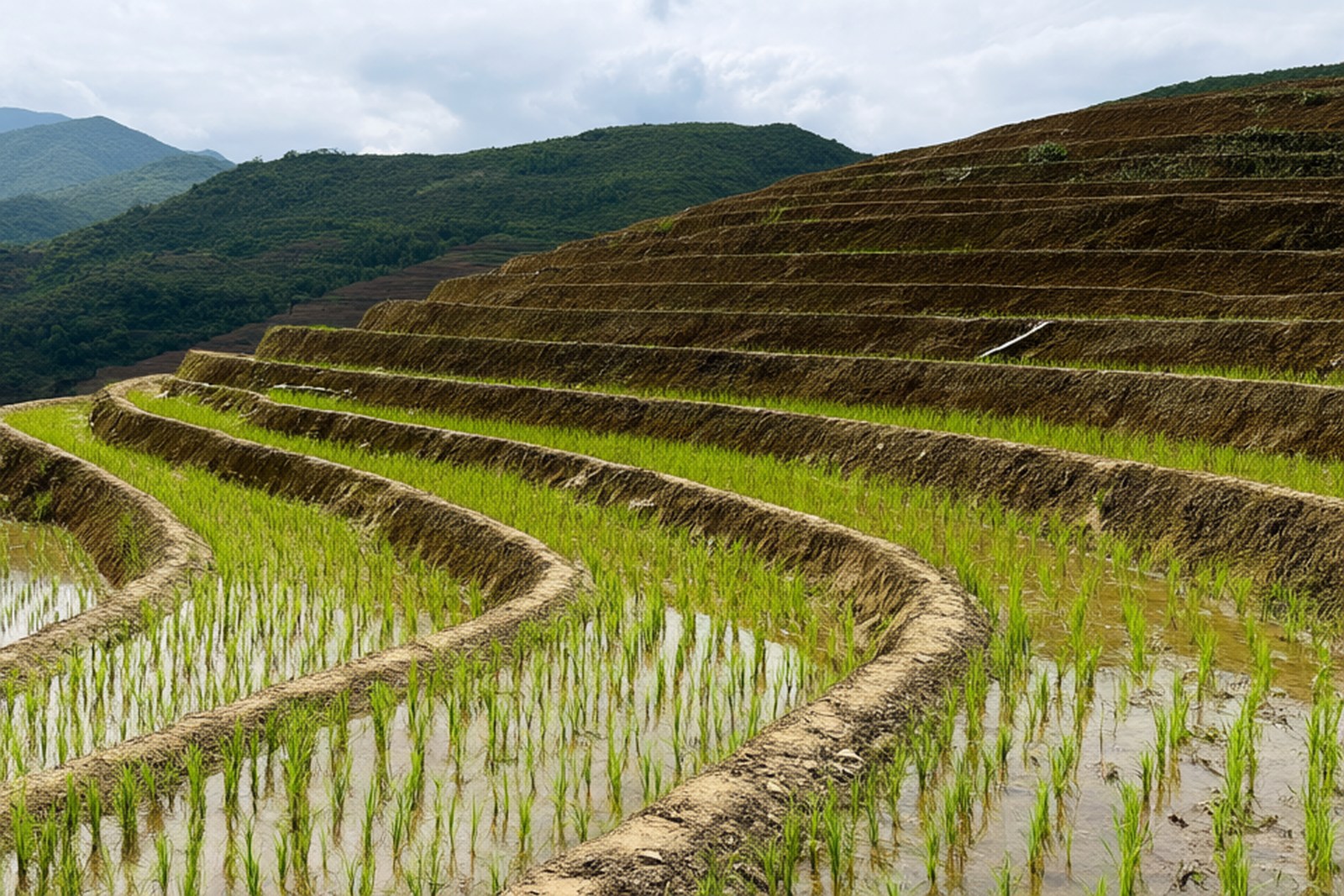
The terrace is a farming system as much as a view. On a steep, wet mountain slope there is no flat land to plough, so the farmers cut the hill into steps, walled each step to hold the soil and the water, and led the streams from above down through the fields in a controlled flood. The result is a slope that is entirely farmed, with each terrace holding a few inches of water and a crop of rice, and the whole hillside turning from the grey of bare earth to the green of the growing rice and then to the gold of the harvest. The walls, the water channels and the paths between the fields are all part of the same system, and they have been repaired and rebuilt by the same families for a very long time.
The terraces change character with the season, and each is worth seeing. In the spring the fields are flooded and bare, and the whole hillside becomes a set of mirrors reflecting the sky, which is the sight photographers come for; in the early summer the rice comes up green and the steps turn into a green staircase; in the late summer the crop heads and the colour deepens; and at the harvest, in the autumn, the terraces turn gold and the villages cut and thresh the rice on the walls between the fields. The mountain mist, which sits on the ridge on most mornings, adds the other half of the picture.
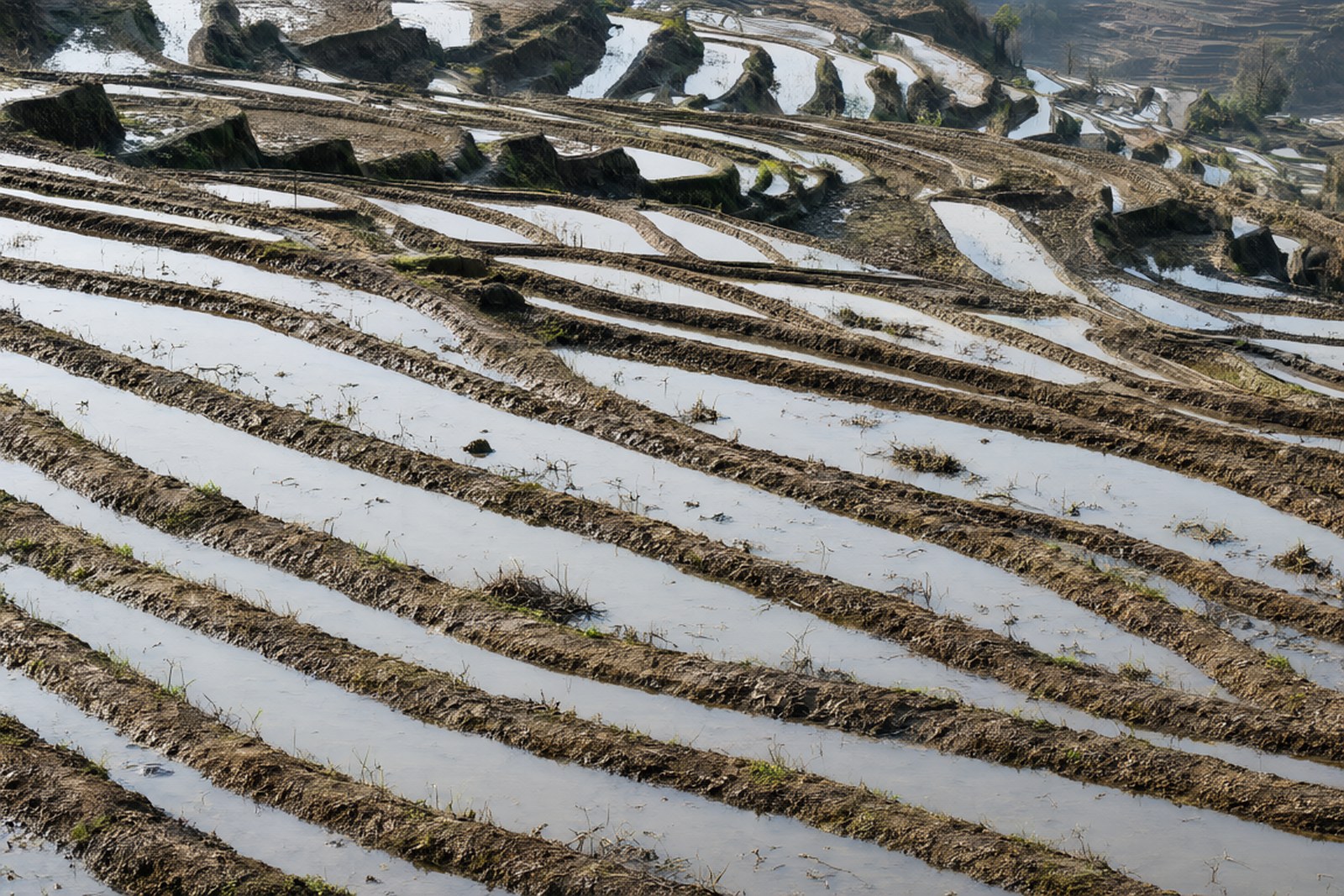
What makes the 欧家 terraces worth the drive is that they are a working landscape rather than a preserved one. The villages at the foot of the slope still farm them, the paths are dirt tracks, and the people you pass are going to and from the fields; there is a small charge for access and a few farmhouses that cook for visitors, but the terraces have not been turned into a stage. It is a landscape to walk in, slowly, along the walls and up the ridge, and to sit and watch as the light moves across the steps. Come in the spring for the water and the autumn for the gold, and come early, because the mist is the best part of the morning.
Practicalities
Tickets. The terraces charge a modest entrance, in the region of ¥40 to ¥70, which covers access to the paths and the viewpoints. The farmhouse restaurants at the foot of the slope are separate, and a guide to the upper terraces can be arranged locally.
Opening hours. The terraces are open roughly 07:00 to 18:00, and the light is best early in the morning, when the mist lies on the ridge, and in the late afternoon, when it rakes across the steps. The flooded season in the spring and the harvest in the autumn are the peaks.
Getting there. 欧家梯田 is in the hills of 连山壮族瑶族自治县, reached by road from 连山 town in about an hour and from 清远市 in about three hours. The nearest rail stop is 连州站 Liánzhōu zhàn, from which you hire a car or a taxi.
Closing day. The terraces are open every day of the year with no weekly closing day. Access to the upper paths may be restricted during heavy rain, when the tracks are muddy and the walls are slick, and the fields are closed to visitors while the rice is being cut.
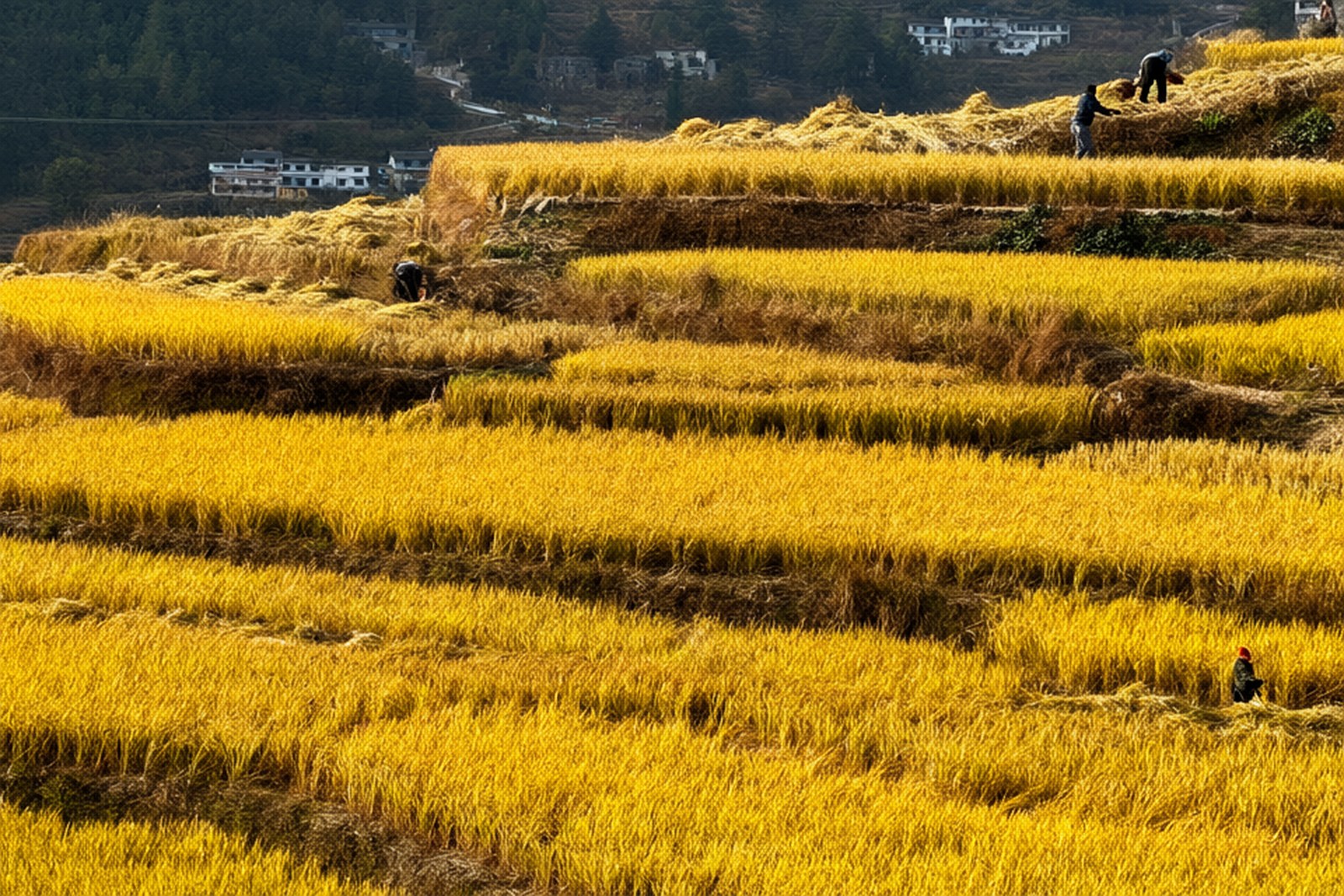
flowcloud would say that a hillside cut into steps by hand over generations, watered by its own streams and farmed down to the last inch of slope, is a monument built by people who never expected anyone to look at it, and that the most beautiful landscapes are so often the ones that were only ever trying to grow food.
Getting there: 连山 town is the base, about an hour by road, and 连州站 Liánzhōu zhàn is the nearest rail gateway; from there a car or a taxi up to the terraces in the hills is the way in.