
连州地下河 Liánzhōu dìxià hé is the underground river of 连州市 Liánzhōu shì, in the far north of 清远市 Qīngyuǎn shì, and it is one of the largest cave systems open to visitors in southern China. The name means exactly what it says: a limestone cavern with a river running through its lower levels, so large that the main chamber is a hall you could stand a house in, and so long that you cross it twice – once on foot along the upper walkways, once by boat along the water below. It is the county’s great sight, and the scale of it is the point.
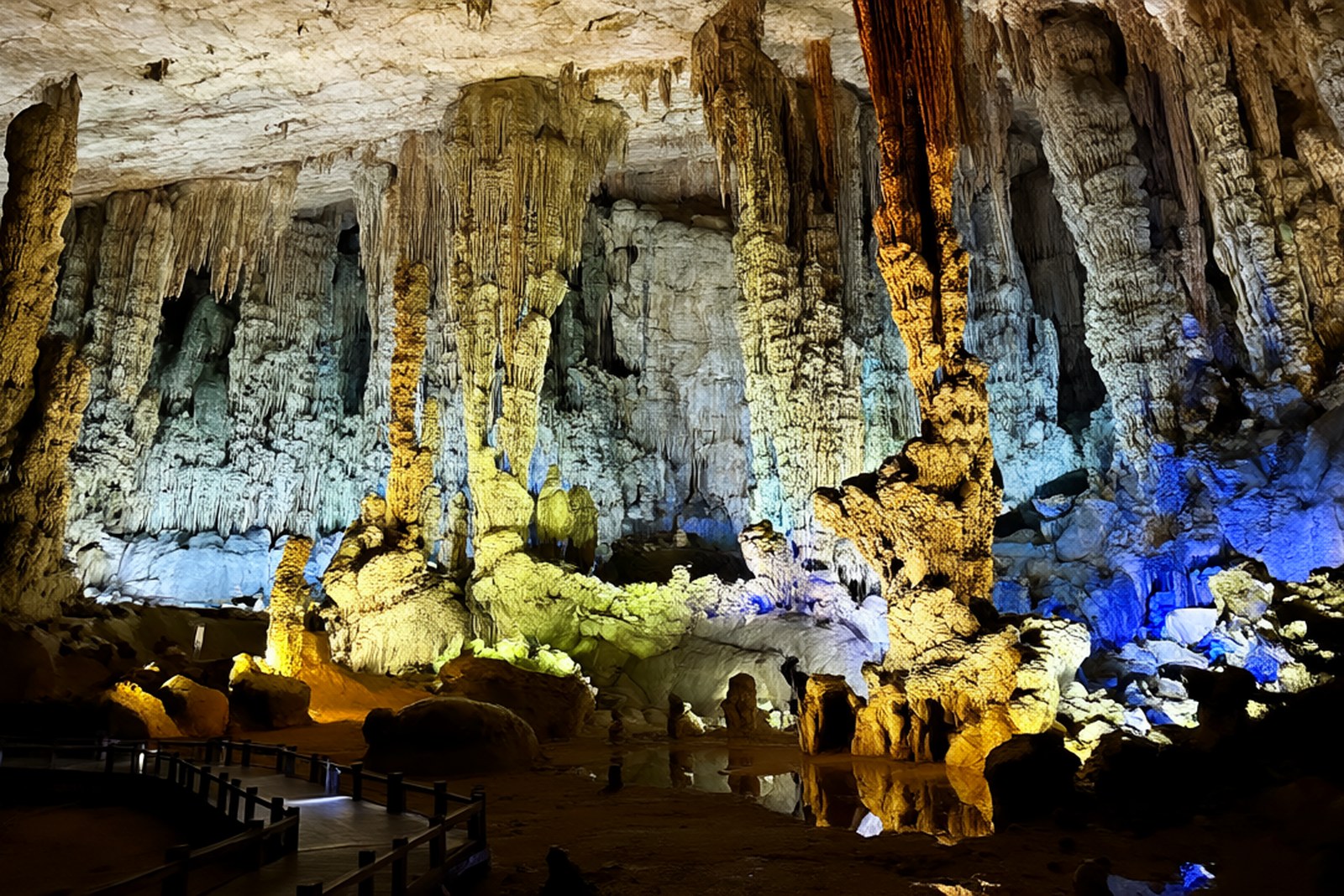
The cave is karst, the same limestone country that gives the whole north of Guangdong its peaks and caverns, hollowed out over a geological span by the water that still runs through it. The upper level is a series of vast chambers and galleries, with columns and curtains of flowstone that rise from the floor to a ceiling lost in the dark, and a walkway and a stair that wind through the best of it, lit so that the stone glows in warm golds and cold blues. The formations are numbered and named – the county has been showing the cave to visitors for a long time – and the effect in the largest chamber is of a cathedral built by water.
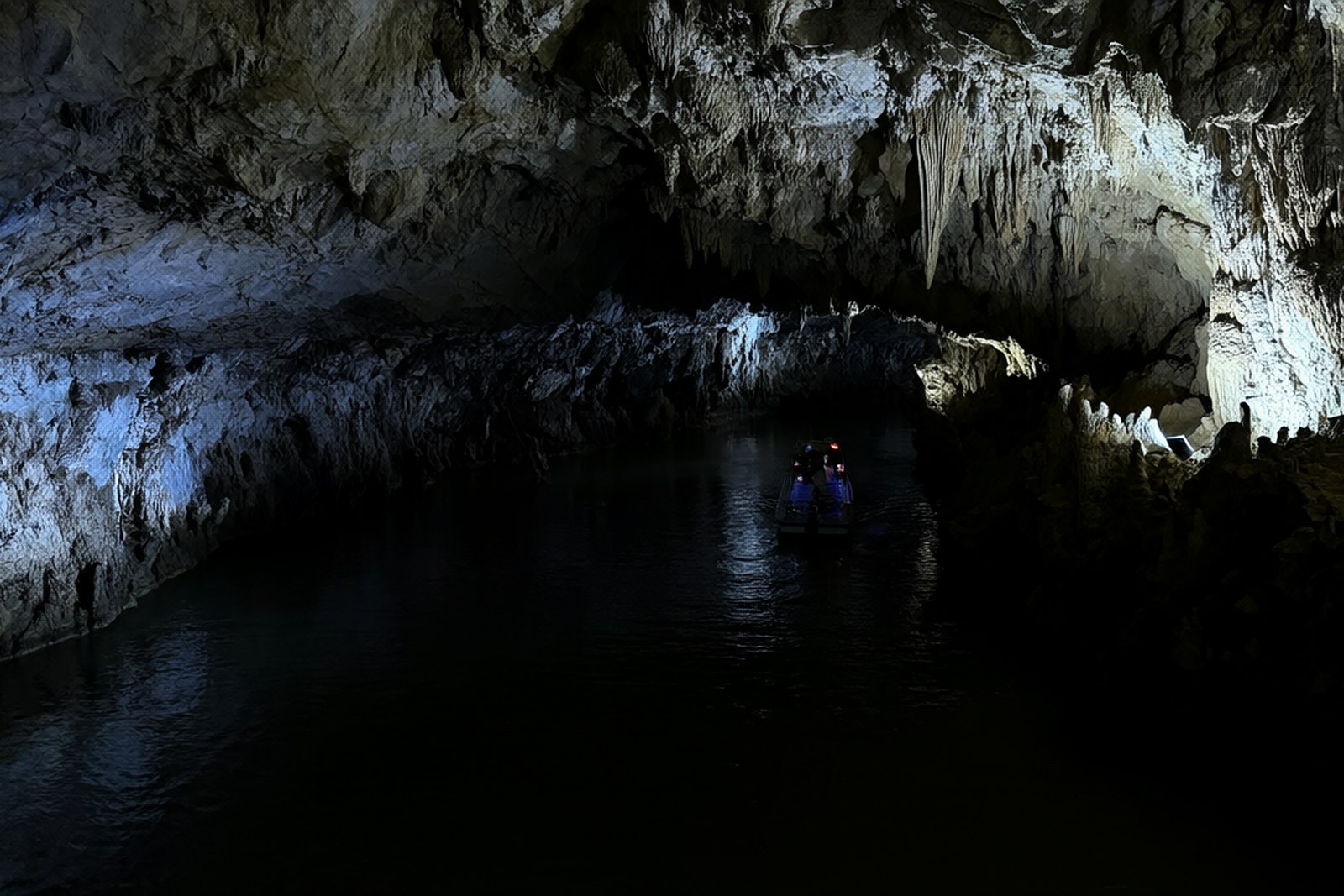
The river is what makes it different from an ordinary show cave. Below the walkways, the underground river runs dark and still through the lower passages, and visitors take a boat along it, with the roof low overhead and the lit rock rising on both sides and the water holding the reflections. The boat takes you out of the main hall and into the narrower reaches of the system, and the second half of the visit is spent underground on water rather than on foot. Between the two, you see the cave from above and from the river, which is the only honest way to take in a cavern this size.
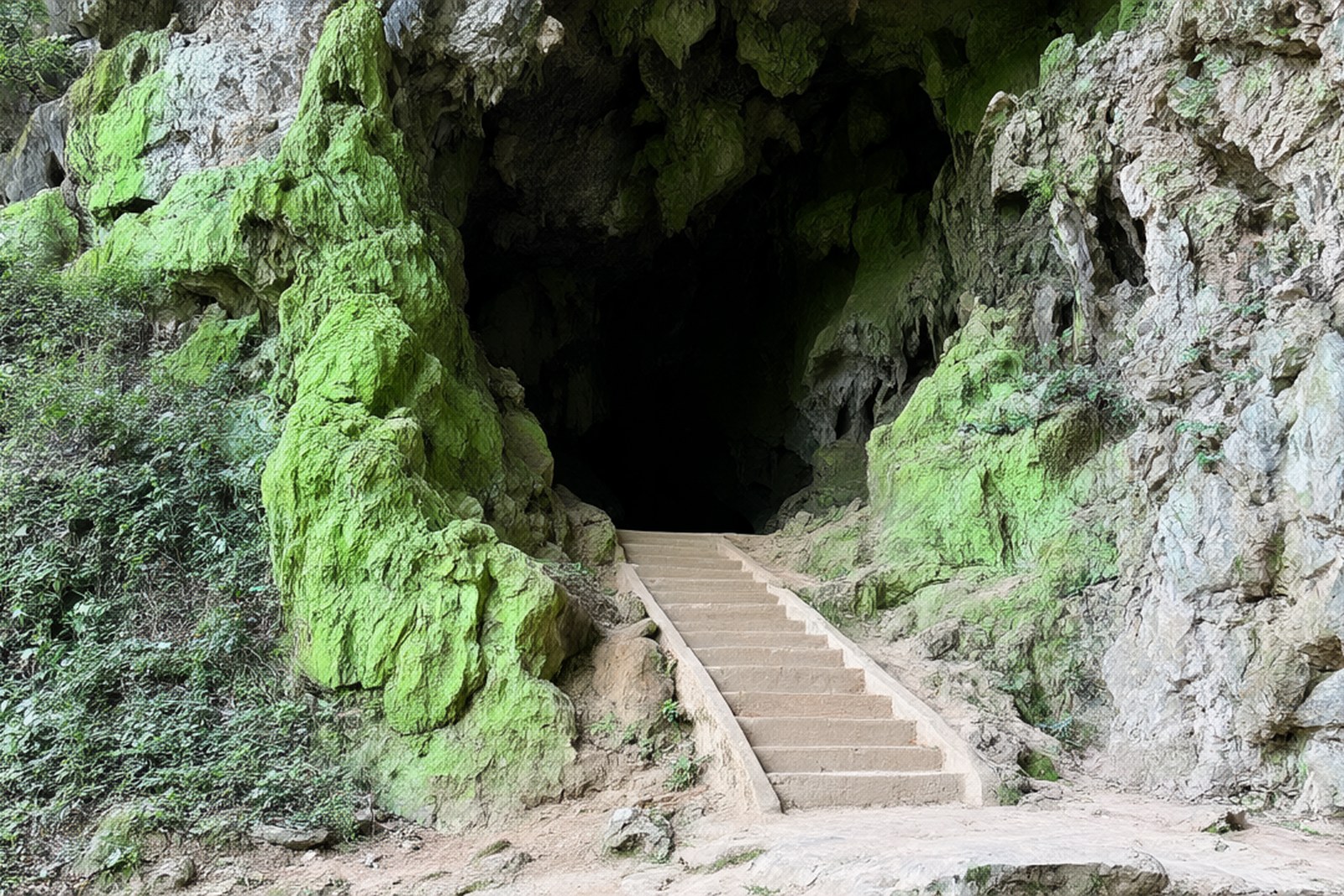
The cave lies in the hills a little way out of 连州 town, and the drive there is through the same limestone country, so the visit is as much about the landscape as the cavern. The surrounding hills have paths and viewpoints, and the town itself, with its old quarter and its markets, makes the day. It is a half-day out, best done in the morning before the coaches arrive, and best combined with the 湟川三峡, which is a short drive away. Bring a jacket, because a cave this size is genuinely cold, and expect a lot of stairs.
Practicalities
Tickets. The cave charges an entrance ticket, in the region of ¥80 to ¥120, which covers the walkways and the underground boat ride. There may be a small extra for a guide or a shuttle to the far end on a busy day.
Opening hours. The cave is open roughly 08:30 to 17:30, with the last entry in the mid-afternoon because a full visit takes a couple of hours. It is quietest in the morning, and the lighting inside is constant whatever the weather.
Getting there. 连州地下河 is in the hills of 连州市, reached by road from 连州 town in about half an hour and from 清远市 in about two hours. 连州市 is on the rail line at 连州站 Liánzhōu zhàn, from which you hire a car or a taxi.
Closing day. The cave is open every day of the year with no weekly closing day. The underground boat may be suspended when the water is high after heavy rain, when the lower passages flood.
flowcloud would say that a river which spent hundreds of thousands of years hollowing a cathedral out of the limestone, and then stayed in it, has left behind the only kind of monument that improves with age, and that to cross it on foot above and by boat below is to see the sculptor and the sculpture at once.
Getting there: 连州 town is the base, about half an hour by road, and 连州站 Liánzhōu zhàn is the rail gateway; from there a car or a taxi out to the cave in the hills is the way in.