
A Ming Magistrate’s Garden of Goodness: Liaofan Park
了凡善训传六百年,满园荷风颂宝坻 Liǎofán shànxùn chuán liùbǎi nián, mǎn yuán hé fēng sòng Bǎodǐ – Liaofan’s lessons of goodness run six hundred years; lotus wind praises Baodi through the garden
了凡公园 Liǎofán Gōngyuán honors Yuan Huang – the Ming-dynasty magistrate of Baodi whose family lessons, the Liaofan Six Chapters, turned “goodness” into a self-improvement creed still printed and gifted across East Asia. The park spreads over 260 mu beside the old town of 天津市宝坻区 Tiānjīn Shì Bǎodǐ Qū Baodi District, its central axis running through lotus ponds, study halls and steles that recite the magistrate’s maxims in stone. It is the district’s study in virtue done as landscape design – part park, part open-air classroom.
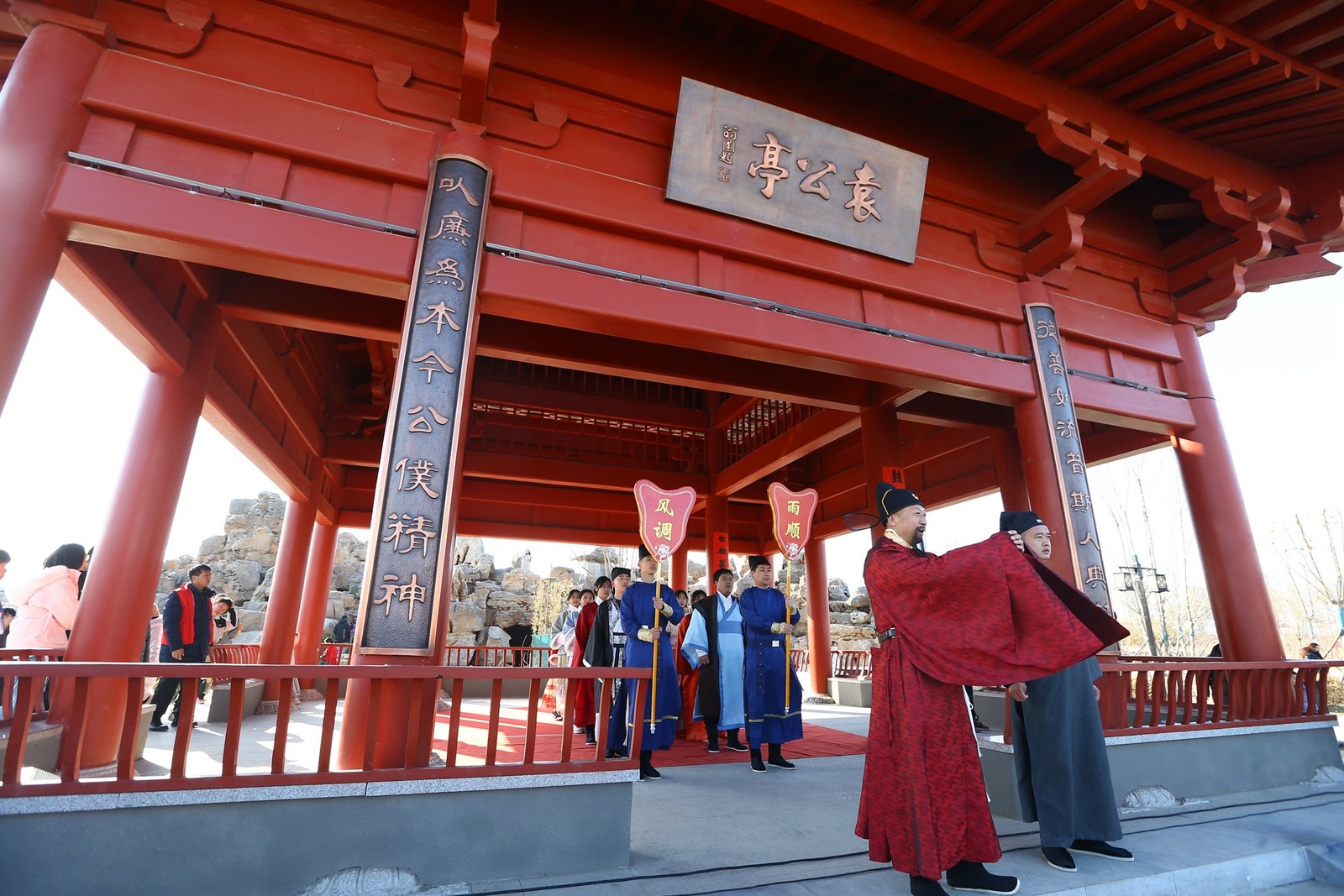
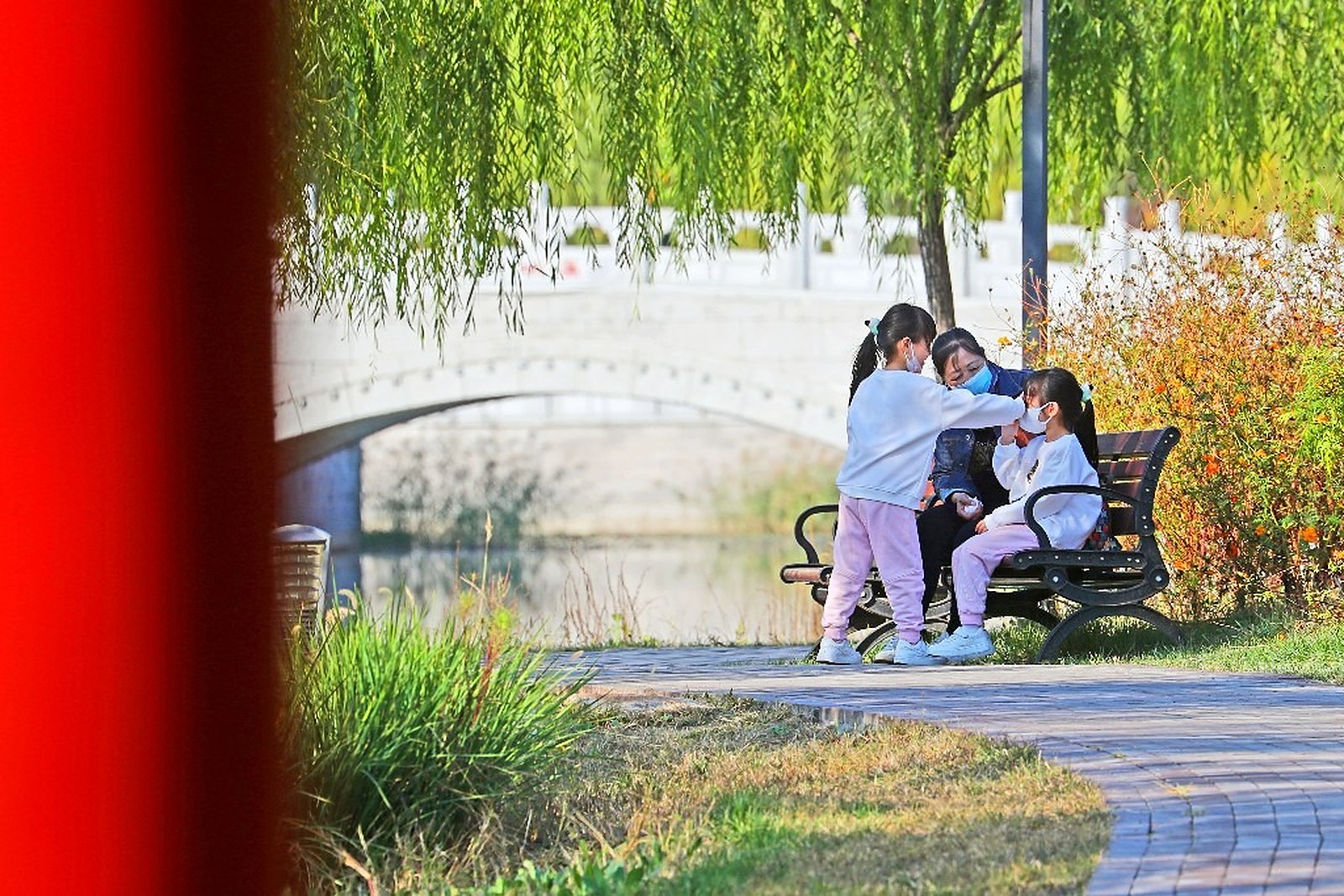
The water half of the garden carries the stroll. Lotus ponds bridge and meander under willows, koi school under the stone spans, and pavilions give the calligraphy clubs and choir circles their morning stages. In high summer the lotus bloom turns the main pond into the district’s most patient photography queue – tripods by seven, blooms by eight, gone by noon.
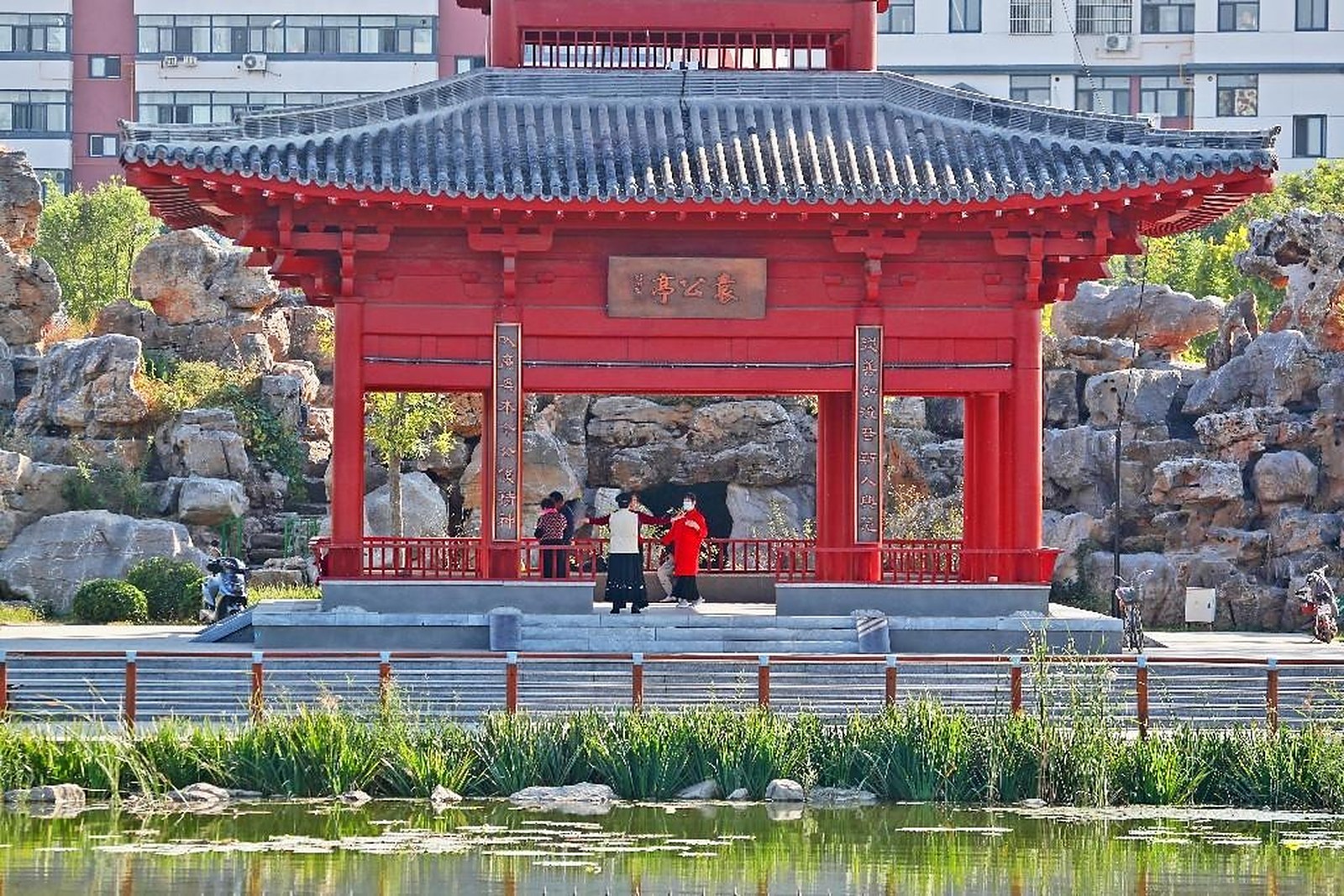
The teaching half carries the memory. Stone walls and stele courts lay out the Liaofan chapters – destiny, remorse, goodness, humility – in carved panels that school groups copy into workbooks, and the statue courts draw the readers who came to the lessons rather than the flowers. Docent boards tell the magistrate’s granary reforms and flood-relief works that earned him the county’s three-century gratitude.
Locals use the park as their front parlor. Chess under the cypress, ribbon dancing on the east plaza, and the evening square-dance flash-mob that claims the axis at dusk. Out-of-towners come for the lessons; the neighborhood comes for the shade – and both leave with the same four maxims ringing, which is exactly what the designers intended.
Practicalities
- The park is free and gated open from dawn – morning is the photographers’ window on the lotus pond.
- Read the stone panels in order along the axis; the four-chapter sequence is the whole point.
- Summer shade is thin at noon; the pavilions and the west tree rows are the cool lanes.
- Pair it with the old-town sights – the temple and the stone pillar sit within a fifteen-minute walk.
Words and Names
了凡 Liǎofán Yuan Huang’s literary name, “the one who understands fate”; 善 shàn goodness, the lessons’ core; 袁黄 Yuán Huáng the magistrate’s name; 四训 sì xùn the four family lessons; 善廉文化 shànlián wénhuà the goodness-and-integrity culture the park preaches. Beyond the garden, the same 天津市宝坻区 Tiānjīn Shì Bǎodǐ Qū Baodi District keeps more places worth the detour: 潮白河国家湿地公园 Cháobái Hé Guójiā Shīdì Gōngyuán the Chaobai River Wetland Park, 广济寺 Guǎngjì Sì the Guangji Temple, 晶宝温泉农庄 Jīngbǎo Wēnquán Nóngzhuāng the Jingbao Hot Spring Farm, or 小辛码头村 Xiǎoxīn Mǎtóu Cūn the Xiaoxin Matou wharf village – four more doors into the same Baodi District. After the lessons, our Baodi food map fills the table.
flowcloud would say Liaofan Park is a self-help book planted as a garden: lotus water, stone maxims and three centuries of local gratitude, all free at the gate. All checked November 2026.
Getting there: The park sits off Xiguan Street by the old town – a ten-minute walk from the central crossroads, with street parking and bus stops on the west approach. All checked November 2026.