
The Oriental Wall Street: Liberation North Road
银行大道石为骨,百年金融一街收 Yínháng dàdào shí wéi gǔ, bǎinián jīnróng yī jiē shōu – Granite bones for the avenue of banks; a hundred years of finance gathered in one street
解放北路 Jiěfàng Běilù Liberation North Road was the financial spine of the concessions, the street foreign papers called the Oriental Wall Street. Neoclassical banks lined up one after another from the 1880s onward – HSBC, Yokohama Specie, Citibank – behind granite columns and bronze doors, each facade a declaration of which empire’s money moved inside.
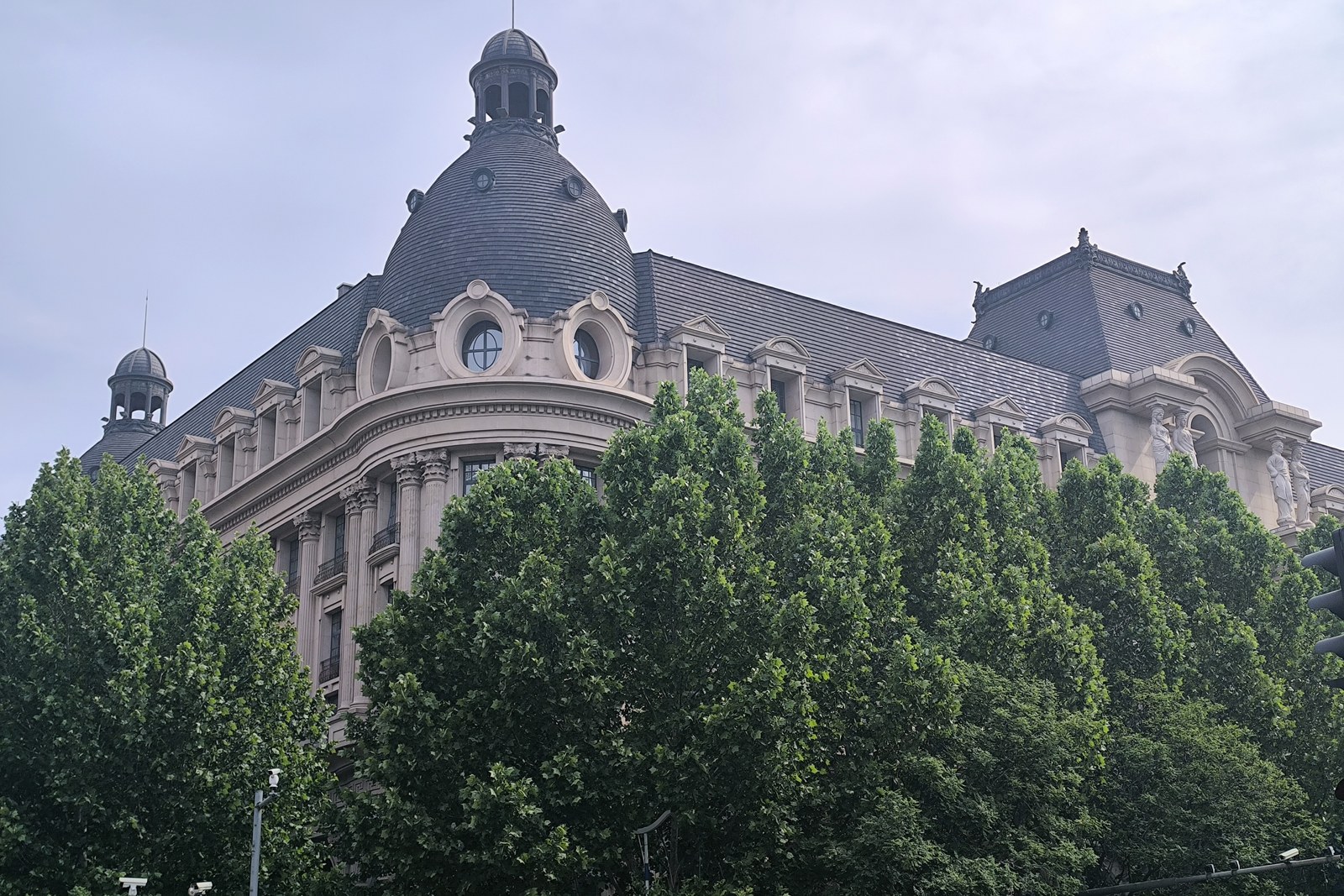
The survival rate is the marvel. Wars, floods and recessions came and went; the bank facades stayed, and many buildings still work as bank branches, which means the marble halls are open to anyone with an account to check or a camera to raise. Walk the road slowly – the cornices alone are a course in classical order, and the corner sites read like a map of prewar global finance.
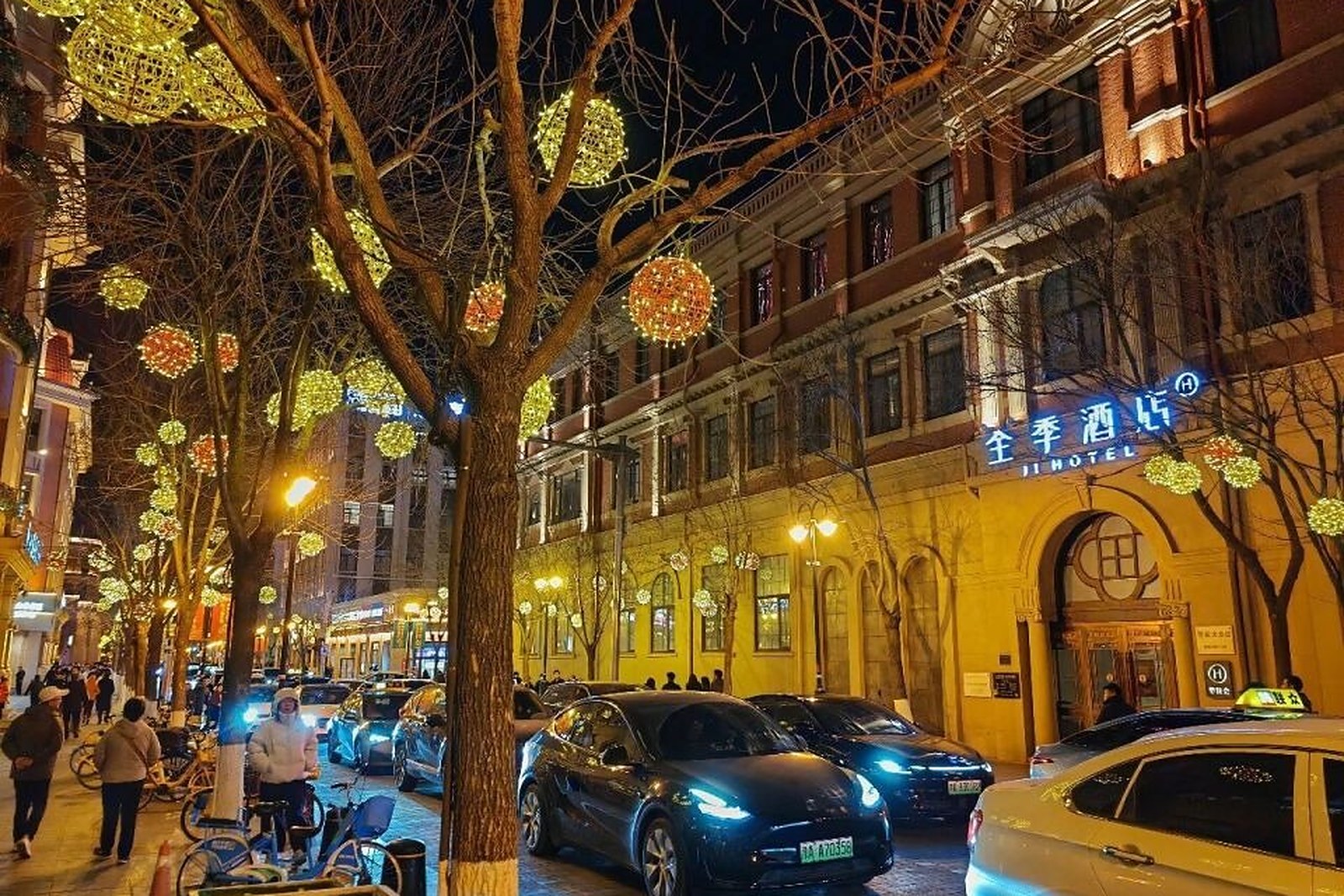
The road runs from the river down through the quarter, and its anchor is the 利顺德大饭店 Lìshùndé Dà Fàndiàn Astor Hotel, hosting guests since 1863 at the northern end. From there the facades line up southward – domes, porticos, the Beaux-Arts pile and the red-brick corner block – for a straight half-hour walk that historians could spend a week on.
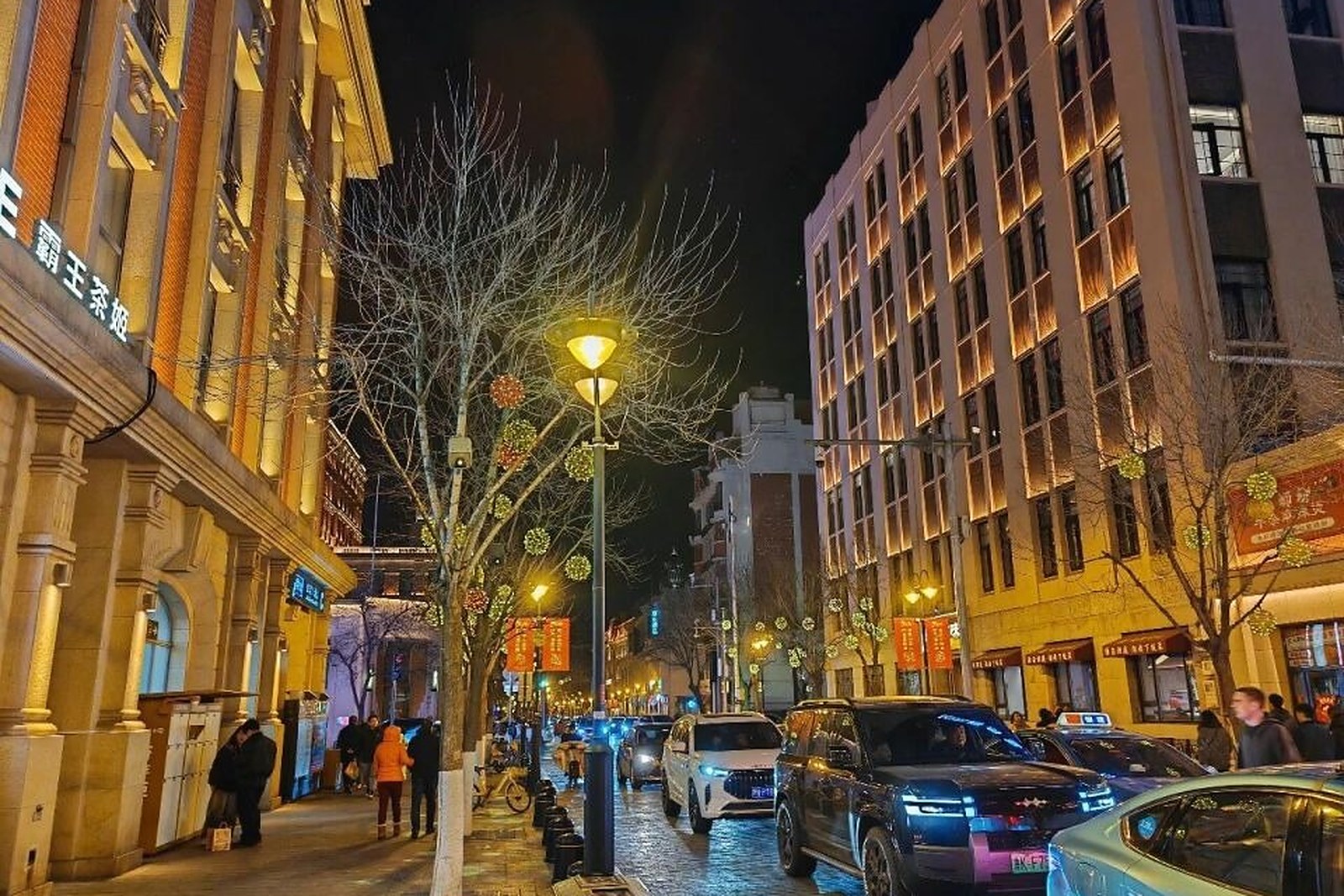
Come at dusk. The floodlights come on bank by bank, the traffic thins, and the granite takes on the warm gray of an old photograph – the street that moved the nation’s money keeps its best light for the hour when the counting is done.
Practicalities
- The street is free to walk; a few lobby interiors welcome visitors during banking hours – be unobtrusive.
- Metro Line 3 to 津湾广场 Jīnwān Guǎngchǎng Jinwan Plaza station lands at the road’s northern end by the river.
- Chain the walk with the Porcelain House on Chifeng Road, two blocks east.
- Dusk gives the best light; the floodlights run until about ten.
Words and Names
解放北路 Jiěfàng Běilù Liberation North Road, the Oriental Wall Street; 利顺德大饭店 Lìshùndé Dà Fàndiàn the Astor Hotel, resident since 1863; 津湾广场 Jīnwān Guǎngchǎng Jinwan Plaza, the riverside terminus; 横滨正金银行 Hénghbīn Zhèngjīn Yínháng the Yokohama Specie Bank building; 汇丰银行 Huìfēng Yínháng HSBC, whose Tianjin branch fronts the avenue. Beyond the banks, the same 天津市和平区 Tiānjīn Shì Hépíng Qū Heping District keeps more places worth the detour: 五大道 Wǔ dà dào Wudadao, 民园广场 Mínyuán Guǎngchǎng Minyuan Square, 西开教堂 Xīkāi Jiàotáng Xikai Cathedral, or 瓷房子 Cífángzi the Porcelain House – four more doors into the same Heping District. Once the avenue has had its dusk, our Heping food map fills the table.
flowcloud would say Liberation North Road is finance turned architecture: every empire that ever moved money in North China built its confidence in granite here, and the street still settles the argument by simply standing there. All checked November 2026.
Getting there: Liberation North Road runs from the river down the old bank quarter – Metro Line 3 to Jinwan Plaza station lands at the road’s northern end, and the neoclassical facades line up southward for a straight half-hour walk. All checked November 2026.