
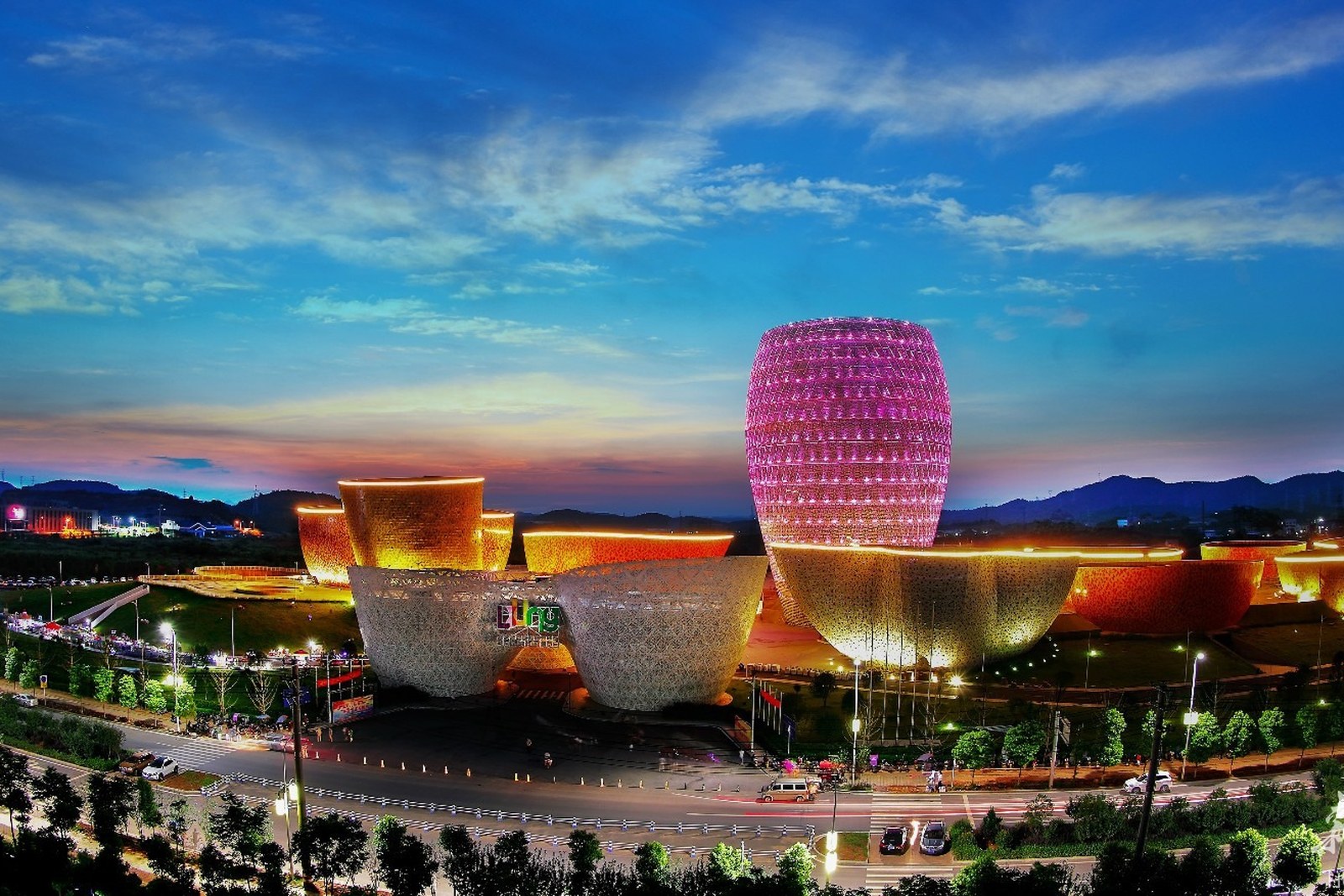
A town where everything is made of the thing the town makes. 醴陵瓷谷 Lǐlíng Cígǔ, the Porcelain Valley, is a complex of buildings on the north edge of 醴陵市 Lǐlíng shì designed by an Italian practice in the shape of vessels — a great bowl, vases, plates, all tiled and glazed — and inside it are a ceramics museum, workshops, shops and a hotel. It is the most photogenic industrial town centre in Hunan, and it is also a working statement: 醴陵 Lǐlíng has been firing pottery for something like two thousand years, and 釉下五彩瓷 yòuxià wǔcǎi cí, the underglaze five-colour technique developed here in the early twentieth century, is one of the technical high points of Chinese ceramics.
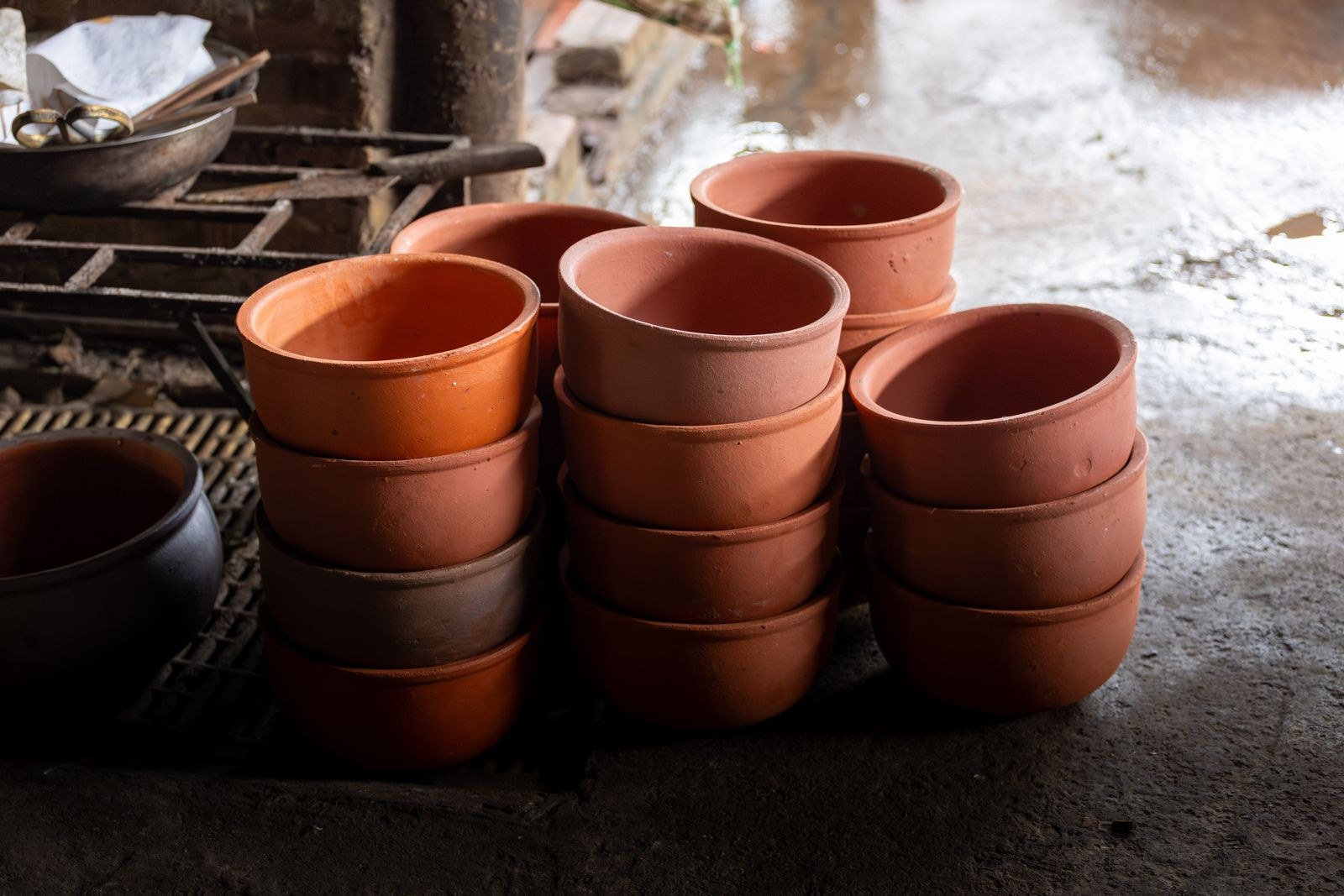
The technique is the reason to come. In overglaze decoration — the ordinary way — enamel colours are painted on top of a fired glaze and set in a second, lower firing, which is easy and produces bright colours that sit on the surface and can wear, fade or leach. In underglaze work, the pigment is painted onto the raw or biscuit-fired body, and then a transparent glaze is applied over it and the whole piece is fired once at high temperature. The colour is inside the glass. It cannot be scratched off, it does not fade, and it is safe on tableware; the difficulty is that most pigments burn out or shift at porcelain temperatures, which is why the technique took so long to develop and why the palette is limited. 醴陵 Lǐlíng worked it out at the beginning of the twentieth century, and a vase in the technique took a gold medal at the 1915 Panama-Pacific Exposition in San Francisco. 醴陵瓷器 Lǐlíng cíqì is a protected geographical product, 釉下五彩瓷烧制技艺 yòuxià wǔcǎi cí shāozhì jìyì is on the national intangible heritage list, and the 醴陵窑 Lǐlíng Yáo kiln sites at 沩山 Wéishān, half an hour away, are a national heritage site with remains going back to the Song.
Practicalities
Tickets. The 醴陵瓷谷 Lǐlíng Cígǔ complex and the streets around it are free to enter; the ceramics museum charges a small ticket, generally ¥30–60, and some special exhibitions are separate. Workshops charging for painting sessions are ¥80–250.
Opening hours. Roughly 09:00–17:30 for the museum and the complex, with shops staying open later in the evening. Many businesses close one day a week; Monday is the common choice, so check if the museum is your main reason for coming.
Closing day. The complex has no fixed closing day; individual museums and workshops within it vary, and the 沩山 Wéishān kiln site is a working archaeological site with limited and irregular access.
Getting there. 醴陵东站 Lǐlíng Dōng Zhàn on the high-speed line is about 15 minutes and ¥25–40 by taxi; 醴陵站 Lǐlíng Zhàn on the ordinary line is closer still. From 长沙 Chángshā it is about 40 minutes by high-speed rail and from 株洲 Zhūzhōu about 30.
What People Get Wrong
They treat it as a shopping stop and buy the first vase they like at the museum shop. The town is full of ceramics businesses, many with factory outlets, and the same plate is a third of the museum price two streets away. Also, most visitors see the buildings and skip the museum, which is the only place that explains why any of it matters.
Getting there
By high-speed rail from 长沙 Chángshā or 株洲 Zhūzhōu; it is an easy day trip from either or a night in the 瓷谷 Cígǔ hotel. Pair it with the night-market 炒粉 chǎofěn and, if you are serious about ceramics, with a drive out to 沩山 Wéishān.
flowcloud would say that a town whose entire skyline is a display case for its own product has done something that most industrial cities never attempt — it has admitted what it is and made the admission beautiful, which is a more honest use of architecture than a glass tower.
Getting there: 醴陵瓷谷 (Lǐlíng Cígǔ), 醴陵市 (Lǐlíng shì), 株洲市 (Zhūzhōushì), 湖南 (Húnán). Complex free; museum ¥30–60; painting workshop ¥80–250. About 15 minutes and ¥25–40 by taxi from 醴陵东站 (Lǐlíng Dōng Zhàn), 40 minutes by high-speed rail from 长沙 (Chángshā). Do the museum first, then buy from the factory outlets.