
黎母山 Lí mǔ shān fills the northern horizon of 琼中黎族苗族自治县 Qióngzhōng, and it is two protected places at once: a national forest park approved by the state forestry administration in 2002, and, since the Hainan government’s 2004 order, a provincial nature reserve of the forest-ecosystem kind – two founding papers, two systems, kept separate on purpose. Both now sit inside the Hainan Tropical Rainforest National Park, whose Limu Mountain branch keeps 755,200 mu of forest under watch. The park entrance lies about 50 kilometres from Yinggen by the official mileage and the town of Limushan about 38, so call the drive 40 to 50 kilometres depending on which door you count from.
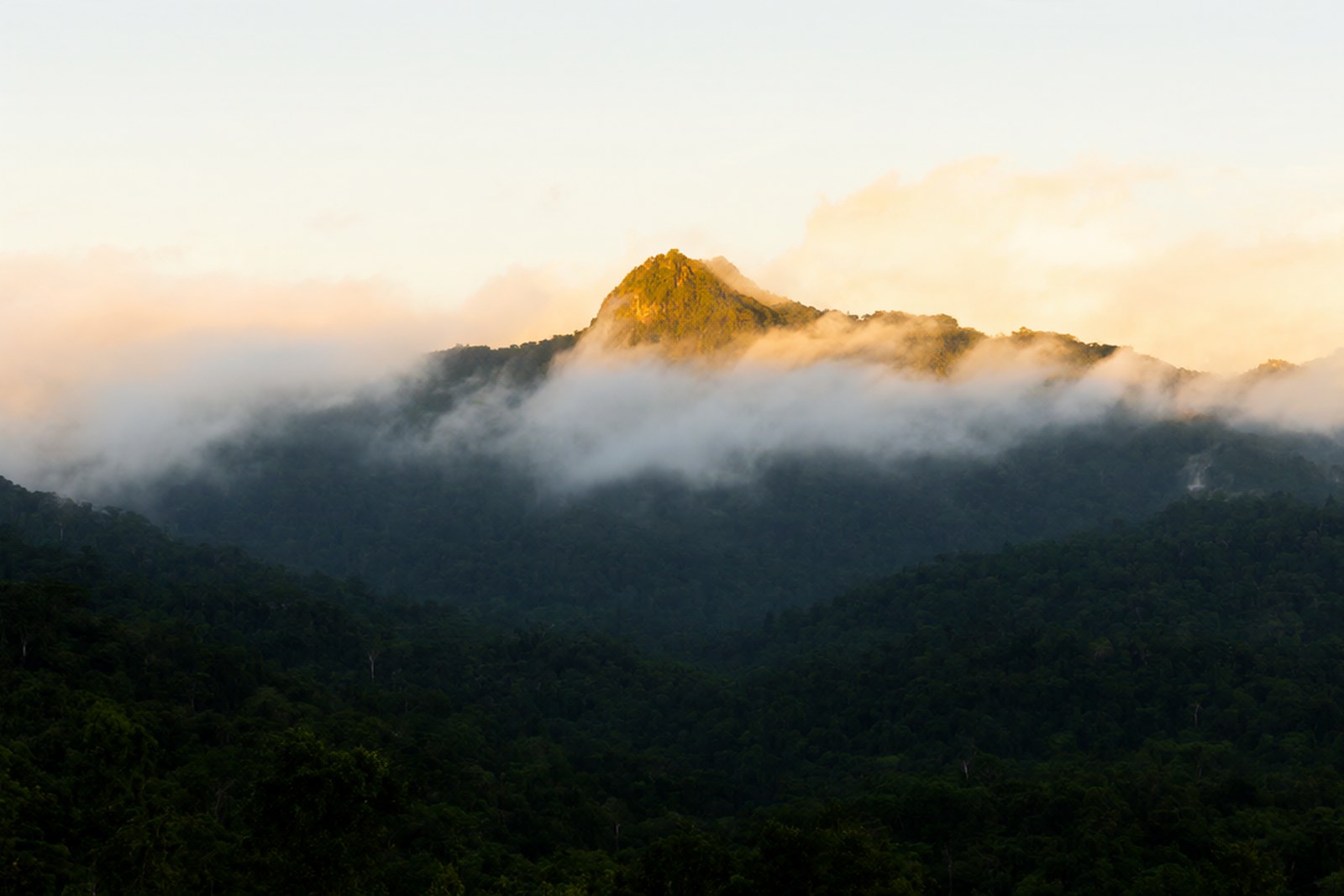
The mountain itself is the longest unbroken massif on the island – some 80 kilometres long by 13 wide, with 鹦哥岭 Yīnggē lǐng as its main body – and its summit, 黎母岭 Lí mǔ lǐng, stands 1,411.7 metres above the sea, the figure the county government, the encyclopedias and the 2024 press all print; an older wire story’s 1,141.17 metres was a decimal slip and is not to be trusted. Three of Hainan’s great rivers rise here: the 南渡江 Nándù jiāng, the island’s first river, the 万泉河 Wànquán hé of the east, and the 昌化江 Chānghuà jiāng of the west. The national park’s own website crowns the mountain with four names – ancestor of the Li people, heart of the island, source of three rivers, crown of the agarwood – and none of them is marketing fluff, because the water in all three rivers starts as this rain.
The sacred-mountain story is the older one, and it is written in the county’s own gazetteer pages: lightning struck a snake’s egg on this mountain, the egg hatched a girl who ate mountain fruit and nested in the grasses, and the tribes who settled around her foothills took her as 黎母 Lí mǔ, the mother of the Li, and her mountain as theirs. Old astronomy agreed in its own way – the peak was anciently 黎婺山 Líwù shān, matched in the sky to the Wu constellation, the maiden star. Her birthday, the fifteenth day of the third lunar month, and the San Yue San festival three days earlier still pull worshippers up the road from across Hainan and beyond, a deep-forest gathering the gazetteer calls rare. The cult’s two stations stand halfway up the southeast line: a natural boulder about twenty metres long and five high whose weathered face reads as an old woman’s – the Limu stone likeness – and, beside it, the Limu temple the faithful built themselves in brick and timber, subscription by subscription, once the stone face was found.
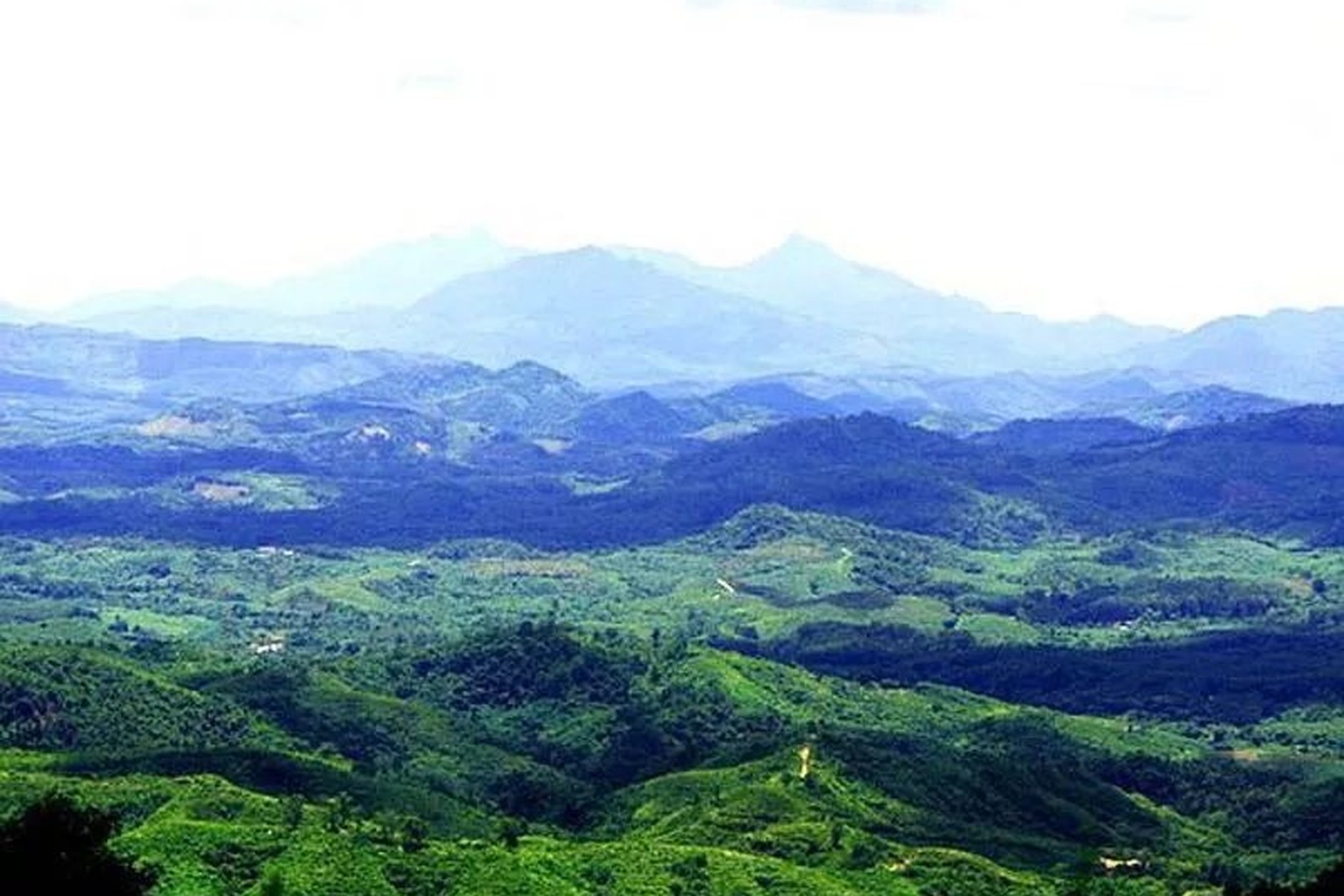
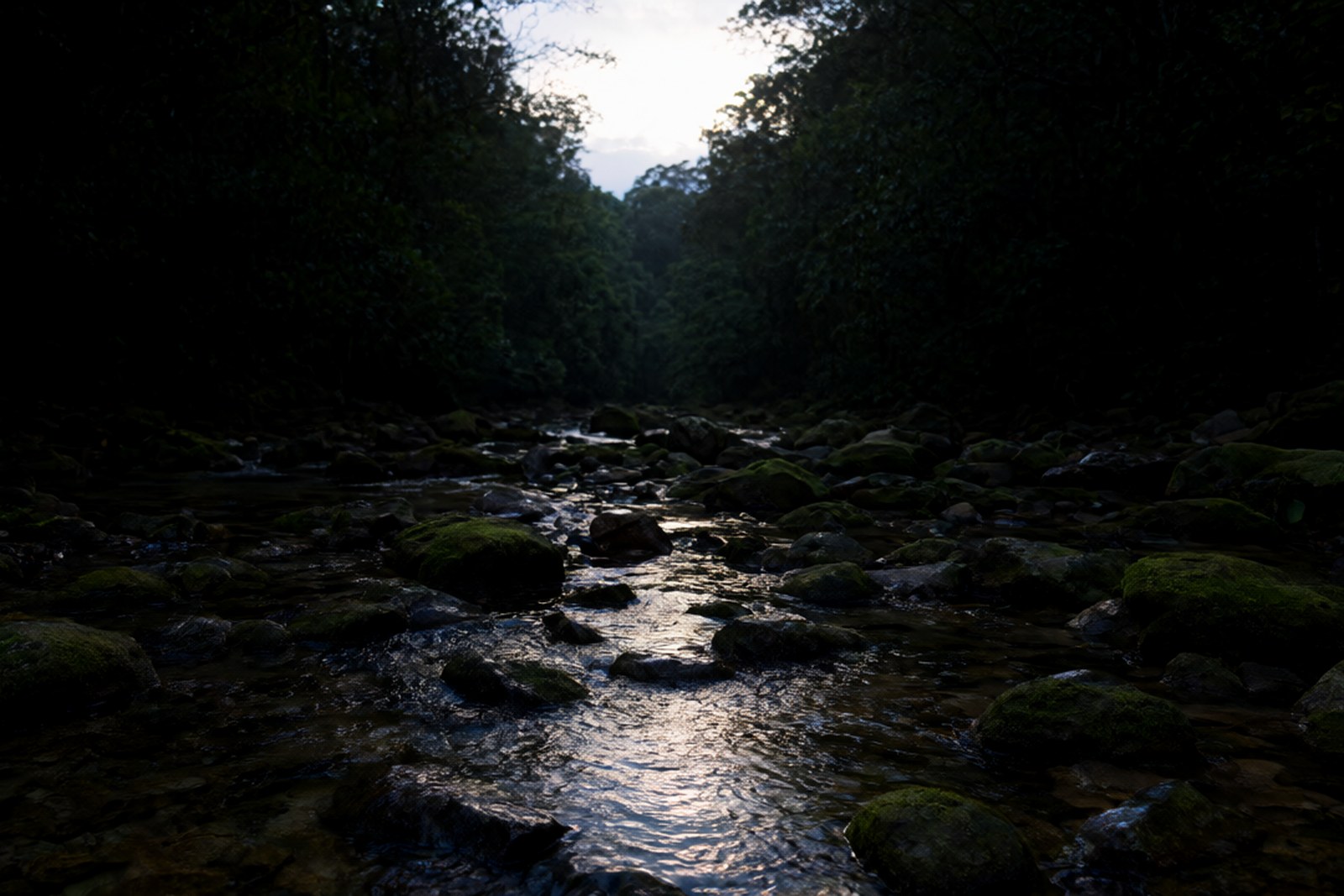
The forest park divides into five scenic quarters – Yingge Ridge, Jinxiu Valley, the Tianhe falls, Diaodeng Ridge and the Limu Stone – with the official sight list adding carved steles, a fairy-scattering rock, the immortal’s cave, the golden turtle watching the moon and the old-growth grove of Qu Ling. More than 4,300 species of plant and animal are recorded on the current national-park count, with stands of the tree fern 桫椤 suōluó in the gullies, and three forest boardwalks – Quling Valley, the Stone Mortars and the Wanquan headwater – put the deep woods on planks; the easy round of the Binglang Lake takes about an hour. History is here too: the Ming garrison town of 水会所 Shuǐhuì suǒ, a fort of the Wanli years begun in 1600 and county-protected since 2008, sits in the town below, and the coffee of 母山 Mǔshān has grown on the mountain’s feet since the 1950s. One rule outranks the sights: this is national-park management territory, and core zones and closed areas are strictly off-limits.
Logistics are mountain logistics. A minibus leaves the Qiongzhong county bus station for the park at 16:30 daily – the one scheduled bus this column can cite – and everyone else drives: from Haikou, the Wushi interchange onto the Yangpu-Wanning expressway, off at the Limushan interchange, then 15 kilometres of climbing tourist road to the park centre, itself still 9 kilometres and twenty minutes below the Limu temple and stone. The roads are narrow and single-track in places, which local reviewers say plainly. Stay at 学而山房 Xué’ér shānfáng, a former forestry school turned bookish mountain lodge, or the family guesthouses by the gate; eat the small yellow cattle, five-toe pig and mountain chicken of the long-table banquet.
Practicalities
Tickets. RMB 20 per person – the figure printed on the national park’s own website and matched by recent press and visitor reviews, with over-70s free. Ignore the odd 30-yuan figure that circulates on second-rate guide sites. Checked September 2026, subject to change.
Opening hours. Sources split: the platform listing says 08:00 to 18:30 with ticket sales stopping at 17:30, while the county’s 2024 tourism write-up says 09:00 to 17:00. Either way arrive by mid-morning; the deep-mountain road eats hours.
Closing day. No published closing day. The mountain’s own calendar is the thing to plan around – in the rainy season, roughly May to October, mornings run clear and afternoons rain, and the national park’s advice is to come prepared and to bring a sweater in winter.
Getting there. Self-driving is the practical way: Haikou to the Wushi interchange, the Yangpu-Wanning expressway to the Limushan interchange, then the 15-kilometre park road. The scheduled alternative is the 16:30 minibus from Qiongzhong county bus station. Inside, the park centre is a 30-minute drive up from the foot of the mountain, the Limu temple and stone likeness a further 9 kilometres beyond it, and the stone-mortar quarter 10.8 kilometres – narrow road throughout, so drive it only if you drive it well.
flowcloud would say that Limu Mountain is the rare sacred mountain still doing its original job – a grandmother’s face in the rock, a temple raised by the believers rather than the bureau, a festival that climbs the road every spring – and that a park which also happens to feed three rivers holds the best claim a mountain can make: it is worshipped, and it works.
Getting there: 黎母山 Lí mǔ shān national forest park lies in 黎母山镇 Límǔshān zhèn, northern Qiongzhong, Hainan, about 40 to 50 kilometres from the county seat Yinggen by the Wushi and Yangpu-Wanning expressway route with a 15-kilometre park road at the end; entry is RMB 20 with hours printed as either 08:00-18:30 or 09:00-17:00 depending on source (checked September 2026, subject to change), no closing day is published, and the one scheduled bus leaves Qiongzhong county station at 16:30 daily; core zones of the national park are closed to visitors.