
林寨古村 Línzhài gǔ cūn, the old village of Linzhai, stands on the 浰江 Lì jiāng in 和平县 Hépíng xiàn, in the north-west of 河源市 Héyuán shì, and it holds the largest surviving group of 四角楼 sì jiǎo lóu in the country: around two hundred and eighty old houses of which twenty-four are the great square compounds the name refers to, four of them standing in a cluster on the river flats with their corner towers up against the sky. It is a 中国历史文化名村, a national historic-cultural village, and it has the enormous advantage of being barely commercialised, which means it is quiet, free of the usual souvenir lanes, and in places genuinely dilapidated.
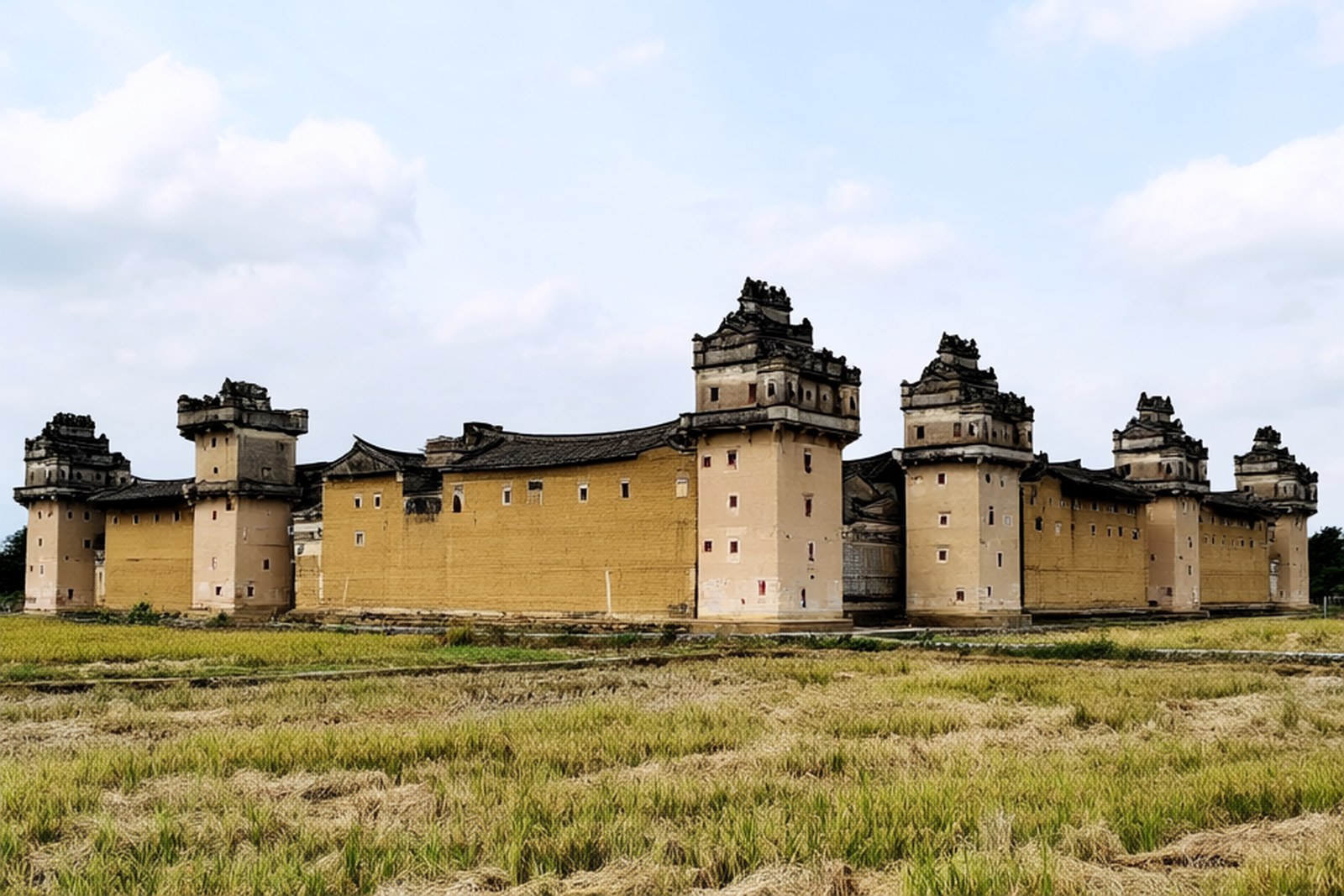
A 四角楼 is a defensive house type rather than a picturesque one, and it was built for two enemies at once. Each compound is a square of rammed earth or brick walling a thousand to three thousand square metres in area, with a tower at each corner rising eight to ten metres, and inside it a three-hall courtyard plan with the family rooms around. The towers are for bandits, and the height is for floods: 林寨 sits on low ground beside the 浰江, which rises, and the houses are built to be lived in on the upper floors when the river is over the fields. The 陈 Chén family has been here since the Yuan, having come from Fujian by way of the 浰江’s navigation, and by the late Ming they had both the land and the river trade and began putting up the houses that survive.
The names of the houses are worth knowing, because they are how people direct you. 谦光楼 Qiān guāng lóu is the largest single house and the most decorated, ten halls and eleven skywells and more than two hundred rooms, with gilt wood carving that mixes 客家, 潮汕, 广府 and western details; 永贞楼 Yǒng zhēn lóu is the tallest and the earliest of the great ones, and the one that 石达开 Shí Dákāi’s Taiping troops failed to take when they camped here in the 1850s; 颍川旧家 Yǐng chuān jiù jiā was the home of 陈襄廷 Chén Xiāngtíng, an adviser to the Guangdong military government, and its plaque is in the hand of 谭延闿 Tán Yánkǎi; 司马第 Sī mǎ dì was built in the 嘉庆 period by 陈鸿铭 Chén Hóngmíng and is now fitted out as a farming museum; and 薰南楼 Xūn nán lóu was the village bank in the 光绪 years, which tells you how much money the river trade had brought up here.
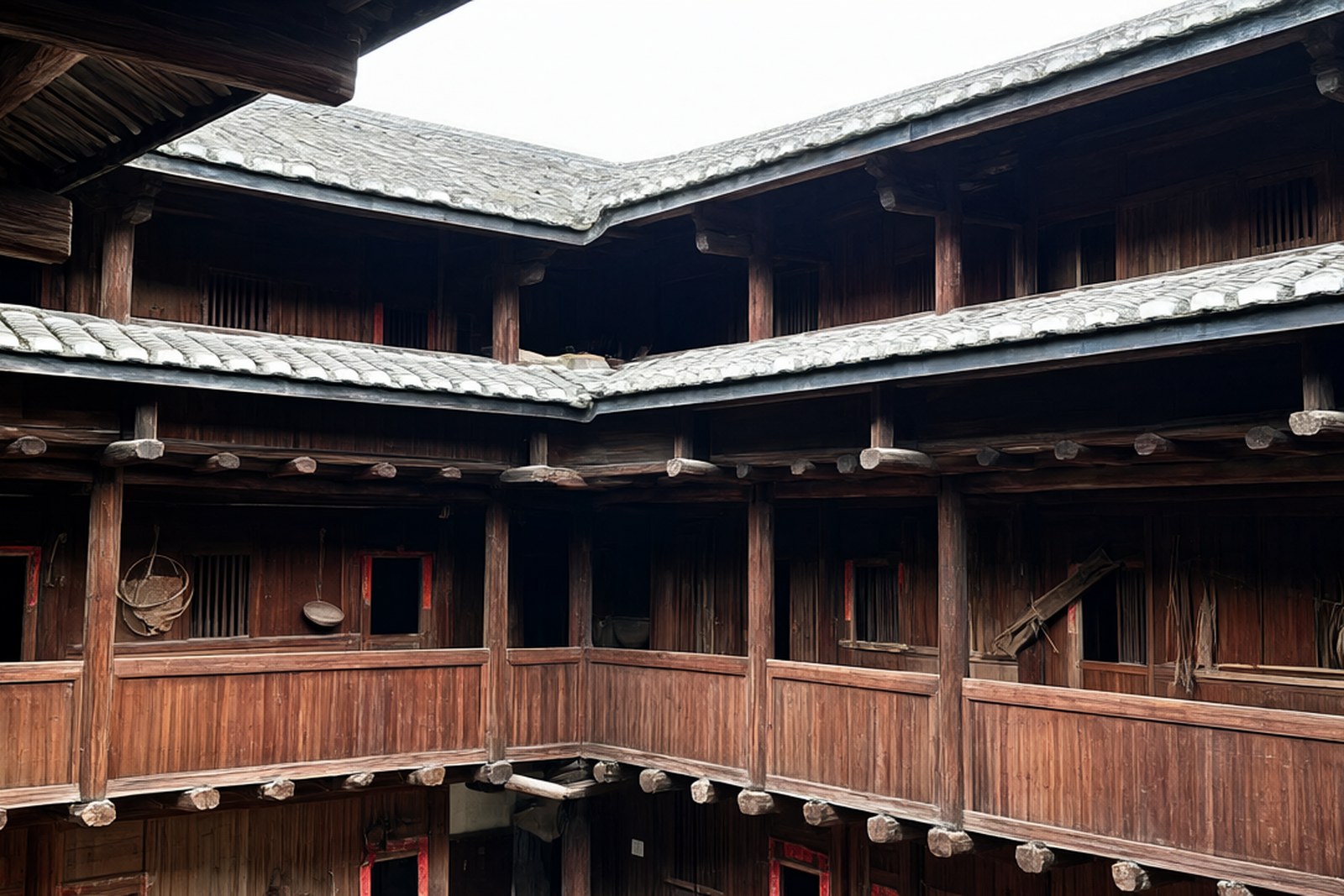
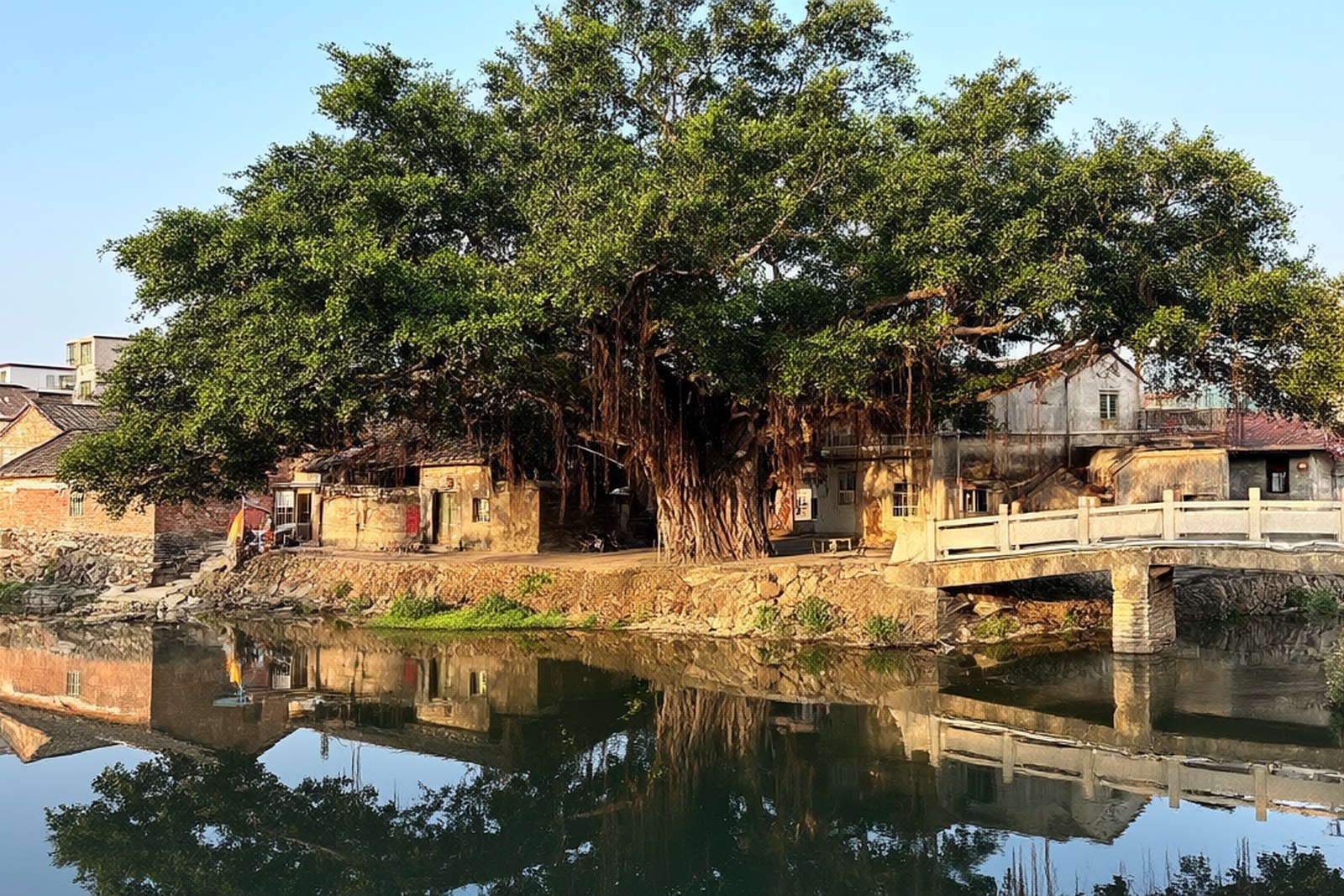
What makes 林寨 more than a set of buildings is the ordinary life still going on among them. Around sixty people live in the old houses, in the middle of the day you will find washing on the lines and vegetables drying on the doorsteps, and the village keeps its 老八古, its eight old things: lanes, wells, walls, roads, a temple, a pavilion, a bridge and trees. There is also an odd local list of customs recorded as the 古村八奇, eight curiosities, of which the most quoted are the boats that are said to have been carried up the steps and the rule that the village has never flooded, a claim that sits interestingly beside the fact that every house here is built tall to keep above the water. Outside, the setting does the rest: the 浰江 in front of the houses, the great banyans on the bank, lotus ponds filling the low ground in June and the first rice going gold in July. Come for two or three hours, or for a slow afternoon, and bring a torch if you intend to go into the houses that are not restored, because not all of them are safe.
Practicalities
Tickets. The village charges a modest admission, generally around ¥30, with children under a metre free; during some promotional periods the gate has been opened free of charge, so it is worth asking locally. There is no separate charge for the individual houses that are open.
Opening hours. The village is open roughly 08:00 to 18:00 every day, and the gates are not policed closely, but the useful hours are the two ends of the day, when the light is on the walls and the residents are out in the lanes rather than indoors.
Getting there. 林寨古村 is in 林寨镇 Línzhài zhèn, 和平县, 河源市, about an hour and a half by road from the centre of 河源 and roughly three hours from 广州. The nearest high-speed rail stop is 和平北站 Hépíng běi zhàn on the 赣深 line, from which the drive is about half an hour; 龙川西站 is also within an hour.
Closing day. There is no closing day, since the village is lived in rather than operated. The best months are the dry ones from October to April; June brings the lotus ponds into flower and July the early rice, and both are worth the heat. Heavy rain will leave the lanes and the river flats muddy.
flowcloud would say that a family which spent three hundred years turning the profits of a river trade into twenty-four defended courtyards, and which then simply went on living in them, has left the rest of us a rare thing: an architecture of fear that has aged into an architecture of habit.
Getting there: 林寨镇, 和平县, 河源市 is the destination, about an hour and a half by road from 河源 and roughly three hours from 广州, or half an hour by car from 和平北站 on the 赣深 high-speed line; the village is signposted and there is parking at the edge of it.