
The Terracotta Ranks of Lion Hill: A Chu King’s Underground Army
一山埋尽楚宫阙,四千陶俑列阵深 Yī shān mái jìn Chǔ gōngquè, sìqiān táoyǒng lièzhèn shēn – One hill buries a Chu palace entire; four thousand clay soldiers stand in deep formation
正文:狮子山楚王陵 Shīzǐshān Chǔwánglíng the Lion Hill Mausoleum is the underground palace of a Chu prince that swallowed his afterlife army whole – then vanished from memory until quarry workers stumbled onto its terracotta guard in 1984. The finds rewrote Han archaeology: more than four thousand figurines in the pits, jade burial suits, gold belt ornaments and weapons, all from a tomb cut deep into the hill itself – a mausoleum left unfinished, scholars think, because its prince died suddenly mid-construction.
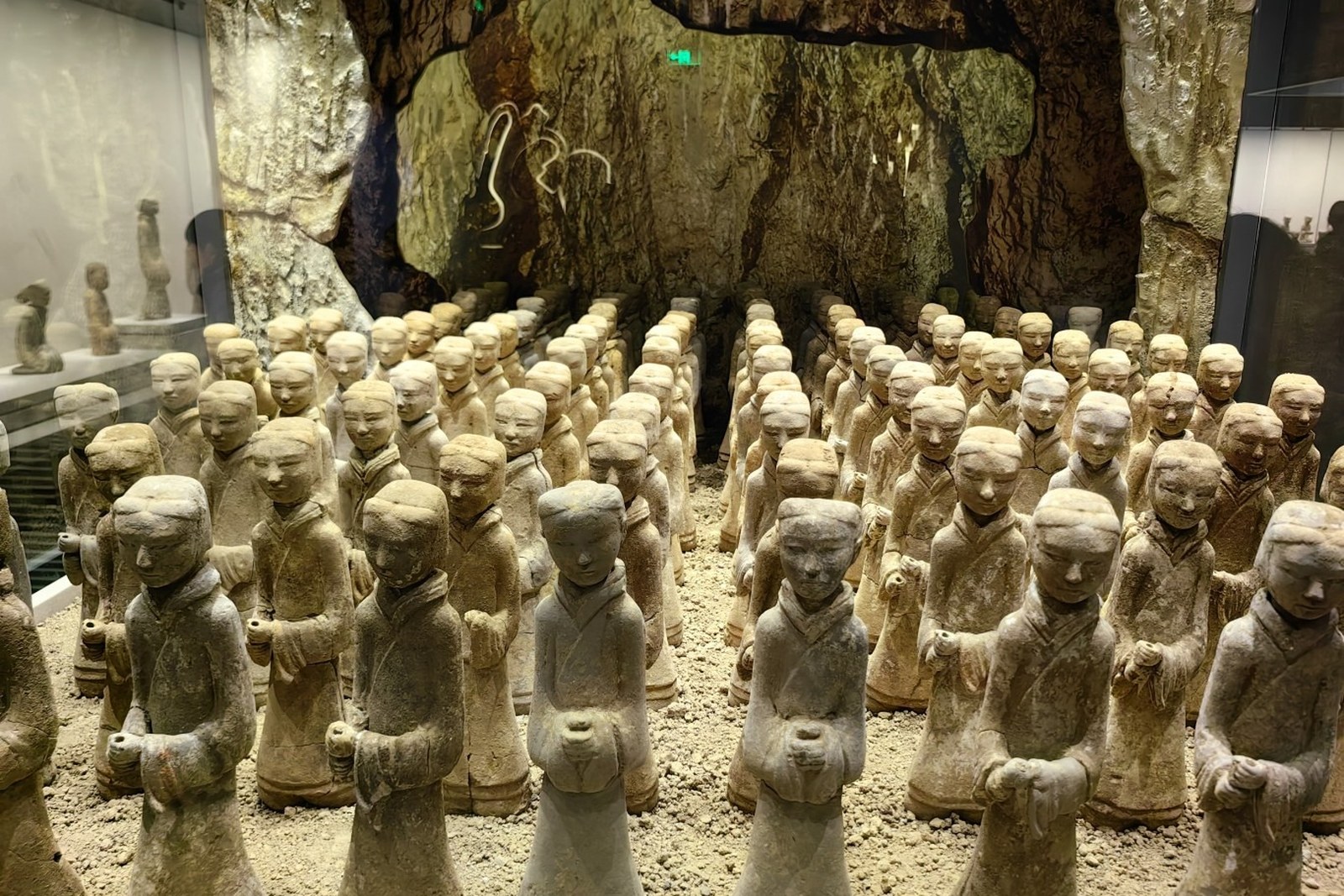
The terracotta pit is the heart. Under the exhibition hall’s roof, ranks of small figurines – soldiers, charioteers, cavalry and officials, none much taller than a forearm – stand in formation as they were buried, their paint gone but their postures intact. The displays explain the array: a Han army in miniature, ordered exactly as it would have marched.
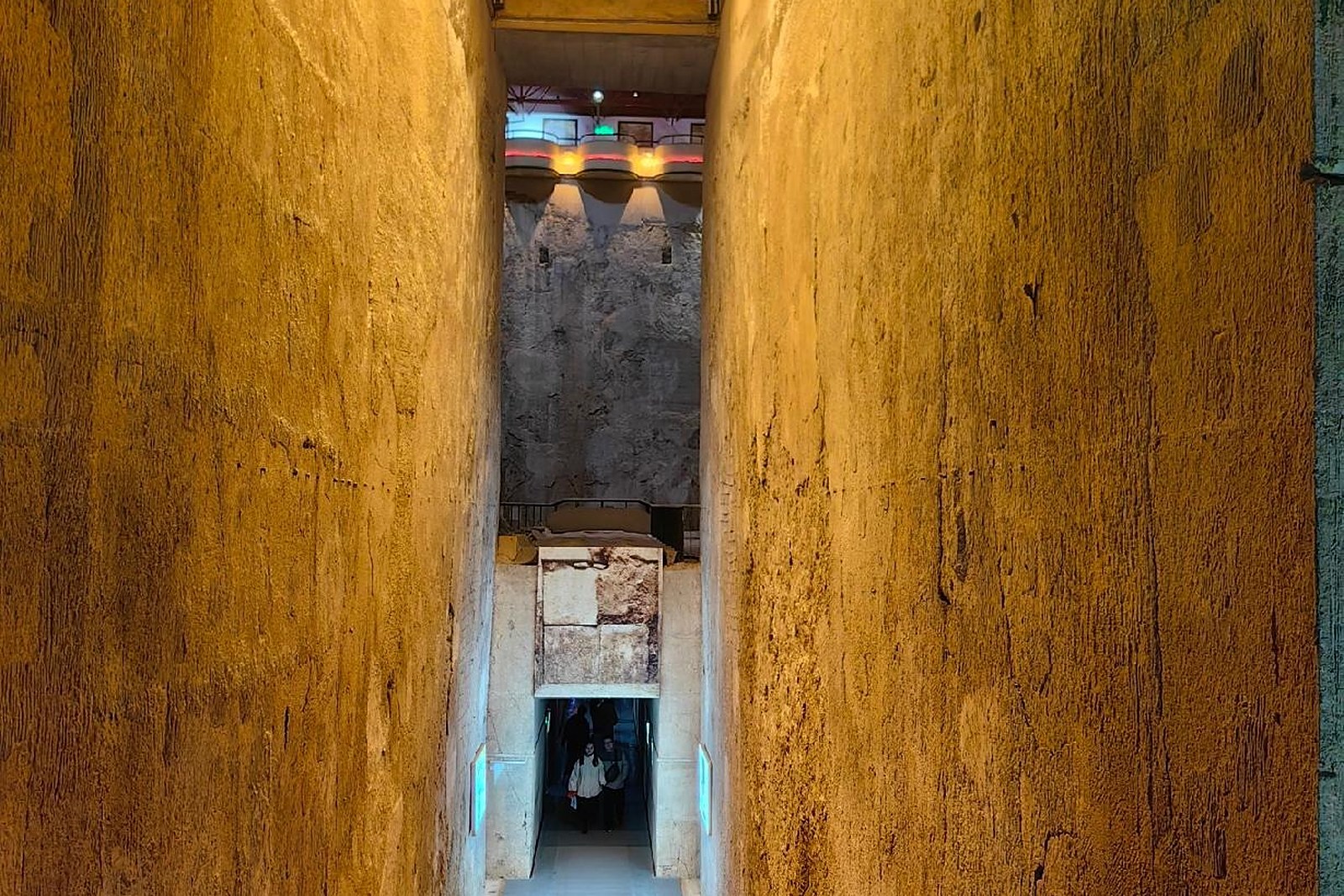
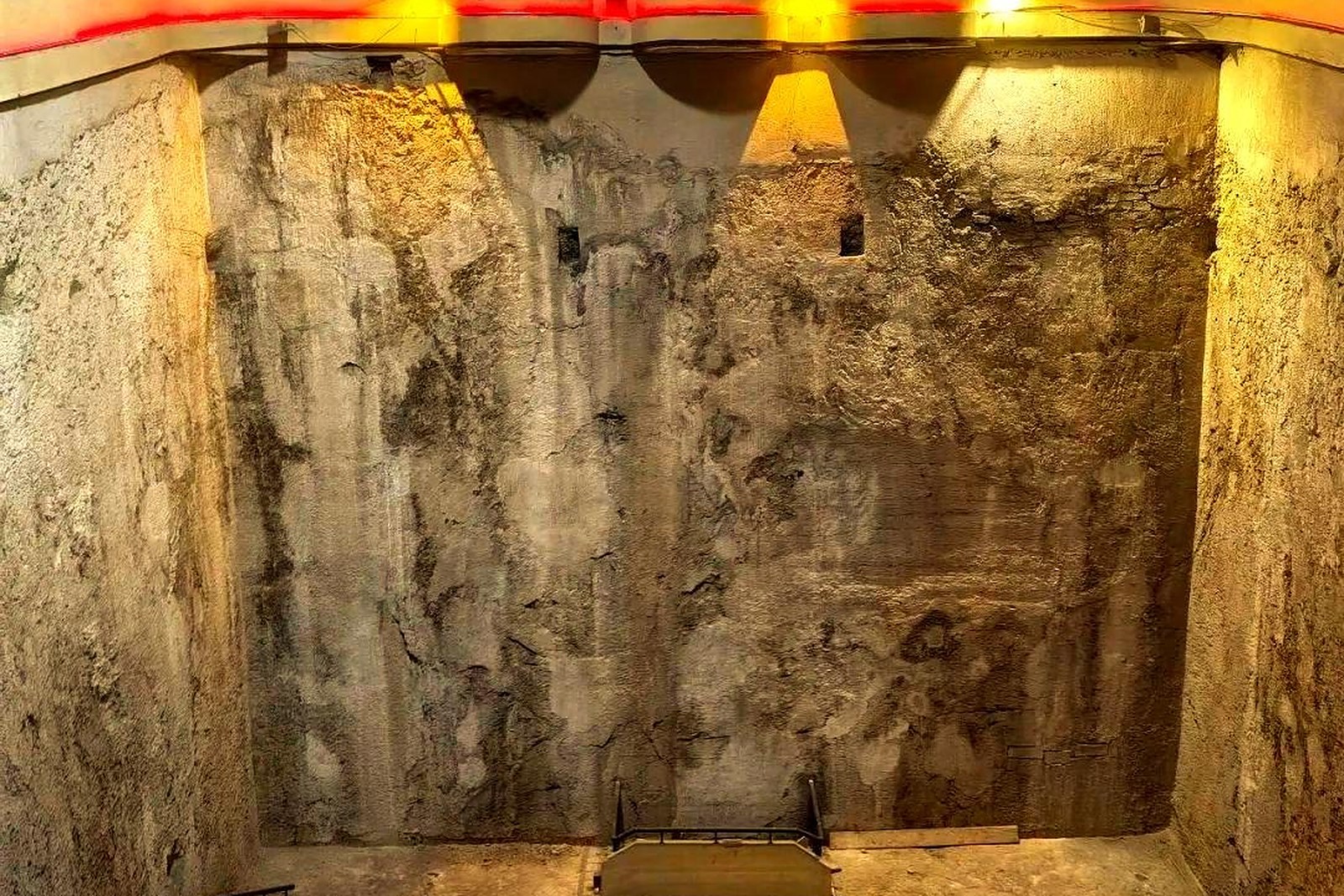
The tomb itself lies inside the hill: a corridor system of seal-walls, side chambers and the coffin hall, partly cut and never finished – one chamber abandoned mid-carve. Walking it reads like entering a project interrupted two thousand years ago, and the jade suits and gold work displayed along the route carry the rank of the man the hill was meant to hold.
Half a day covers the complex: the terracotta hall, the tomb route and the Han Culture Park around it, where reconstructed gates and ritual spaces scale the site back to its original ambition. Pair it with the Guishan tomb across town for the two extremes of Han burial – one finished in granite, one abandoned mid-cut – and the era lands whole.
Practicalities
Beyond the mausoleum, the same 徐州市 Xúzhōu Shì Xuzhou City keeps more places worth the detour: 龟山汉墓 Guīshān Hànmù the Guishan Han Tomb for the granite corridors, 云龙湖 Yúnlóng Hú Yunlong Lake for the shore strolls, 云龙山 Yúnlóng Shān Yunlong Mountain for the pavilion hill, or 户部山 Hùbù Shān Hubushan for the merchant courtyards – four more doors into the same 徐州市 Xúzhōu Shì Xuzhou City. Once the ranks are reviewed, our Xuzhou food map fills the day.
Practicalities
Words and Names
flowcloud would say Lion Hill is a dynasty’s shadow army: four thousand clay soldiers that never marched, a tomb abandoned mid-carve, and jade that outlasted the prince it wrapped. All checked November 2026.
Getting there: The Lion Hill site stands in the eastern Han Culture scenic area of Xuzhou, twenty minutes from downtown by bus or taxi; a combined ticket covers the terracotta hall, the tomb and the park, and the halls stay cool in summer – mornings are calmest before the tour coaches. All checked November 2026.