
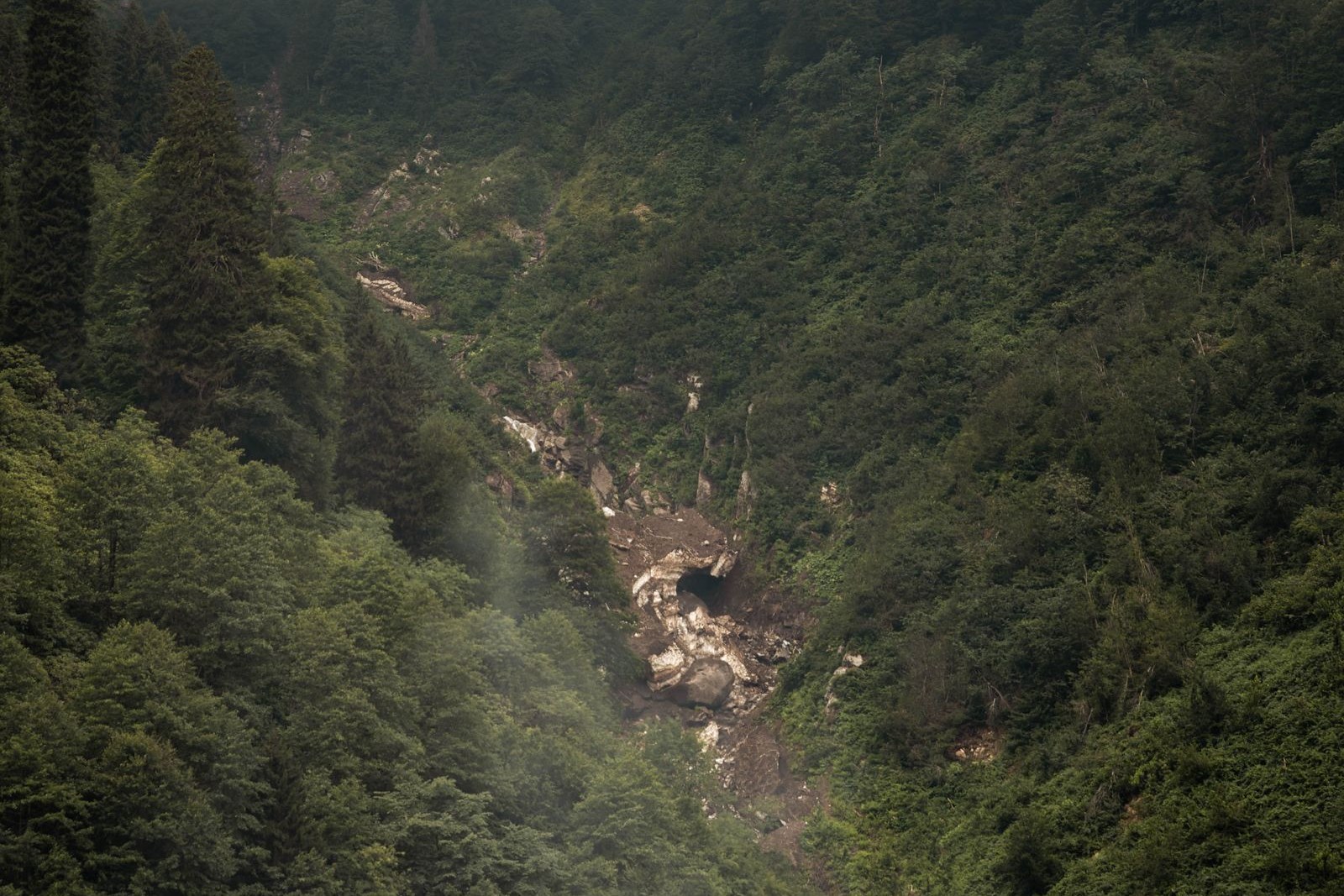
The path goes up through forest so dense and so wet that the light arrives in fragments, and every few hundred metres there is a cave mouth in the hillside with a low stone wall in front of it and a small sign in characters. Some of these caves were hospitals. Some were workshops where rifles and grenades were made and repaired. One of them, partway up, was where wounded men were carried when the fighting came close, and where they stayed for weeks at a time. You are standing in a rainforest in the tropics, two degrees north of the Tropic of Cancer, and what you are walking through is a fortified base that was never taken. 六连岭 Liùliánlǐng is not a conventional attraction and it is not on the standard 海南 Hǎinán circuit, and it is one of the most unusual half-days on the island.
Six Ridges Together
The name is descriptive. 六 liù is six and 连 lián means joined or continuous, so 六连岭 Liùliánlǐng is Six Joined Ridges — a mountain mass in the north of 万宁 Wànníng, on the east coast of 海南 Hǎinán, made up of six peaks of broadly similar height that run together into one block. The locals have names for each of them, most of which are shapes — the armchair, the three incense sticks, the stone dog’s mouth — and the highest, 太师椅 Tàishīyǐ, the Armchair, tops out a little under six hundred metres.
The massif is a spur of the great mountain system that runs down the middle of the island, and because it stands between the sea and the interior it catches the moisture coming off the ocean. The result is a genuinely wet tropical forest, with a registered area of well over eighteen thousand 亩 mǔ of woodland and a flora that includes the local ironwoods — 青皮 qīngpí, 母生 mǔshēng, 红绸 hóngchóu — that grow in the coastal and hill forests of Hainan and are now uncommon elsewhere. It is a provincial natural-protection area as well as a historical site, which is a combination worth noticing: the reason the forest is intact is the same reason the memorial is here.
Twenty-Three Years
The history is why people come, and it is worth understanding properly rather than walking past.
From 1927 to 1950 — twenty-three years, spanning the civil war, the Japanese occupation and the civil war again — this mountain was held by communist guerrillas as a base area. That continuity is the thing that made 六连岭 Liùliánlǐng famous in Hainan: through the years when organised resistance elsewhere on the island was broken up, suppressed, or driven underground, the force based on this mountain kept operating, kept recruiting, and kept its organisation intact. The phrase attached to it is 二十三年红旗不倒, the red flag that did not fall for twenty-three years, and it is one of the founding stories of modern Hainan. 朱德 Zhū Dé, one of the founders of the People’s Liberation Army, wrote a short poem about the mountain that is now quoted everywhere in the province, commemorating the long guerrilla war and the people who sustained it.
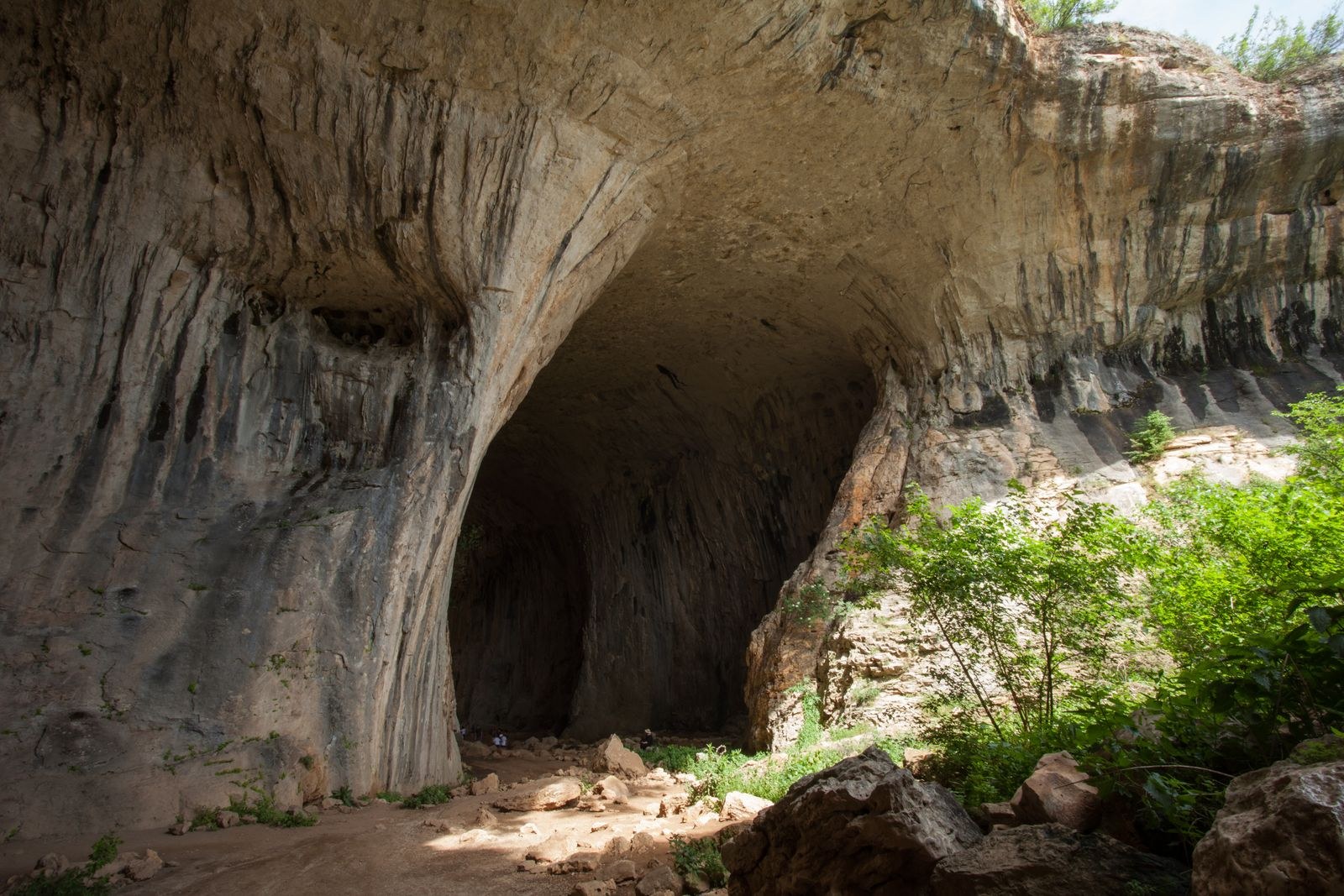
The mountain made it possible. Six ridges with steep flanks and deep valleys, a forest canopy that defeats observation from the air, and a great number of natural caves — the base needed little construction. The guerrillas built a hospital in the caves, a school, and workshops for the repair and manufacture of weapons, and the forest fed them. The structure survives in the landscape: 红军洞 Hóngjūn Dòng, the Red Army Cave, halfway up, is the site most visitors walk to, and the path to it is the one the memorial site has laid out as 重走红军路 chóng zǒu hóngjūn lù, “walking the Red Army road again”, a signposted route of about three kilometres up through the woods.
The Memorial Site
At the eastern foot of the mountain is the 六连岭烈士陵园 Liùliánlǐng Lièshì Língyuán, the martyrs’ cemetery and memorial park. A monument was first raised here in 1961 and the site was enlarged into a formal cemetery in 1976; it now covers some forty acres, with a stone obelisk, sculpture, and a 陈列馆 chénlièguǎn, an exhibition hall, whose collections reconstruct the hospital, the school and the workshops. The mountain was listed as a national classic red-tourism site in 2011, and in 2015 it was included among the second batch of national memorial sites for the war of resistance.
What this means for a visitor from outside China is worth being clear about. This is not a theme park and it is not kitsch. It is a functioning memorial, maintained by the state, used by school groups and work units for education days, and quietly visited by families. The exhibition hall is in Chinese only. The site asks for quiet. And the experience of walking a wet forest path that happens to be a battlefield, with cave mouths where a hospital was, is legible without any of the text.
Practicalities
Tickets: Free. Admission to the 六连岭烈士陵园 (Liùliánlǐng Lièshì Língyuán) and to the mountain paths costs nothing. Guided interpretation can be arranged in advance with the site office for group visits; there is no charge for it, but it is in Chinese.
Opening hours: The memorial park and exhibition hall are open through the day, roughly 08:00–17:00, with the hall keeping shorter hours than the grounds. The mountain paths are open all day.
Closing day: Open every day, including public holidays, which are the busiest times. There is no annual closure.
Getting there: 六连岭 (Liùliánlǐng) lies in the north of 万宁 (Wànníng), east 海南 (Hǎinán), reached from the 万宁 (Wànníng) exit of the G98 island ring expressway and then about 35 km by road — allow an hour from 万宁 (Wànníng) town or the high-speed rail station by car, and treat self-driving or a pre-arranged taxi as the only realistic option, since there is no useful public transport to the site. Take water, insect repellent and shoes that grip when wet, which in this forest is most of the time. flowcloud would say that a mountain which hid a hospital for twenty years is a better monument than any statue, and that the forest is doing the remembering for us, which is the most durable way to do it. Go in the morning while the cloud is still on the ridge, walk up to 红军洞 (Hóngjūn Dòng), and give the exhibition hall the twenty minutes it deserves.