
Six Streets to a Star: The Neighbourhood Maze of Liuxing in Yining, Xinjiang
六街辐射聚人家,手风琴里夕阳斜 Liùjiē fúshè jù rénjiā, shǒufēngqín lǐ xīyáng xié – Six streets radiate to gather the households; inside the accordion, the evening sun slants.
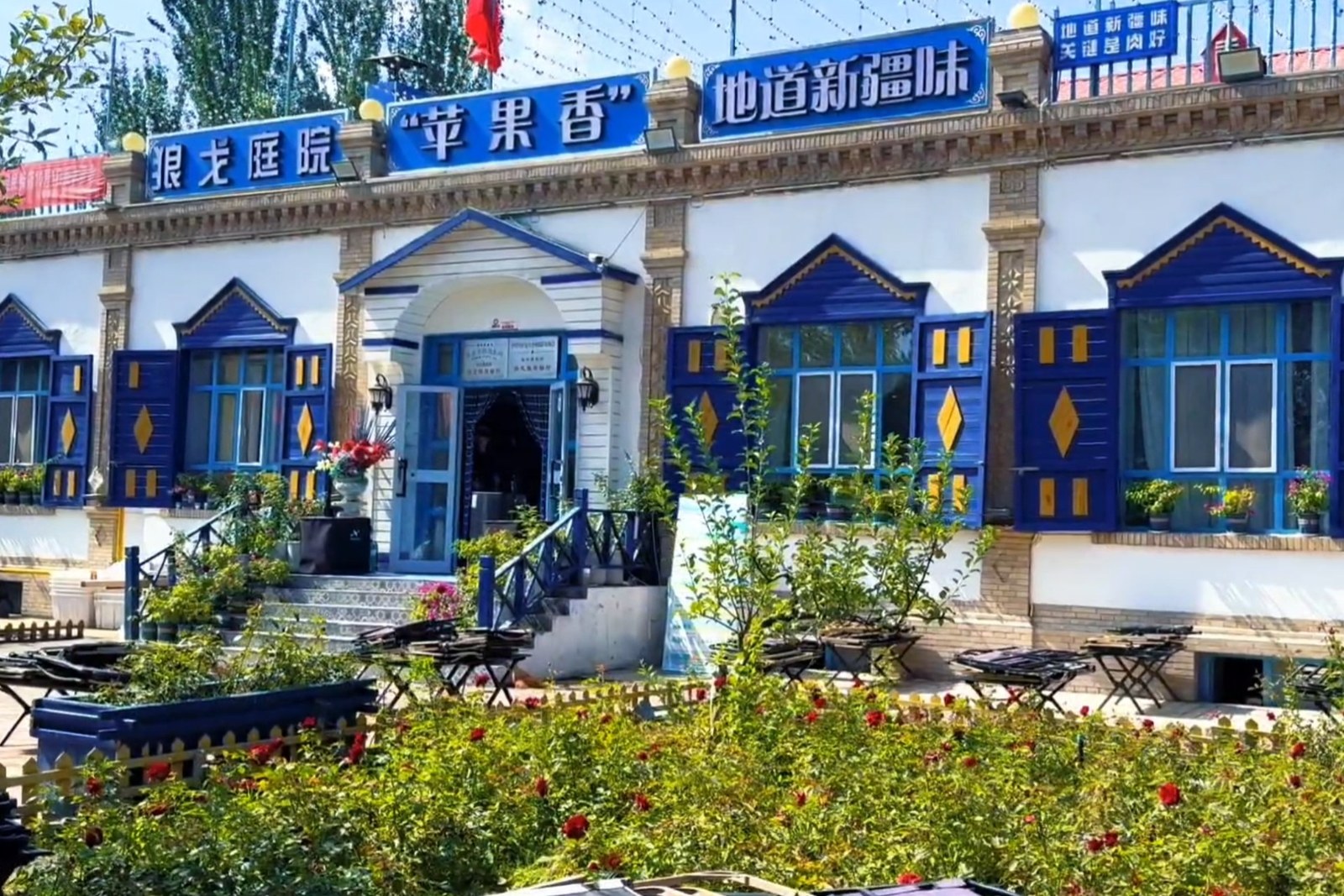
六星街 Liùxīngjiē the Liuxing streets were drawn in the 1930s as a star – six avenues radiating from a central round, ringed by a hexagon of cross streets, and the geometry still organises the neighbourhood today (worth confirming the details for which lanes allow cars at dusk, when the block turns pedestrian by habit). The district was built as a planned multi-ethnic quarter, and its houses still carry the evidence: Russian-style timber porches, Uzbek courtyard gates, Han shops and Uyghur bakeries sharing the same corners. At its centre sits the accordion museum – thousands of instruments collected by one man over forty years – and on summer evenings the courtyards answer it with accordions of their own, played on verandas with tea.
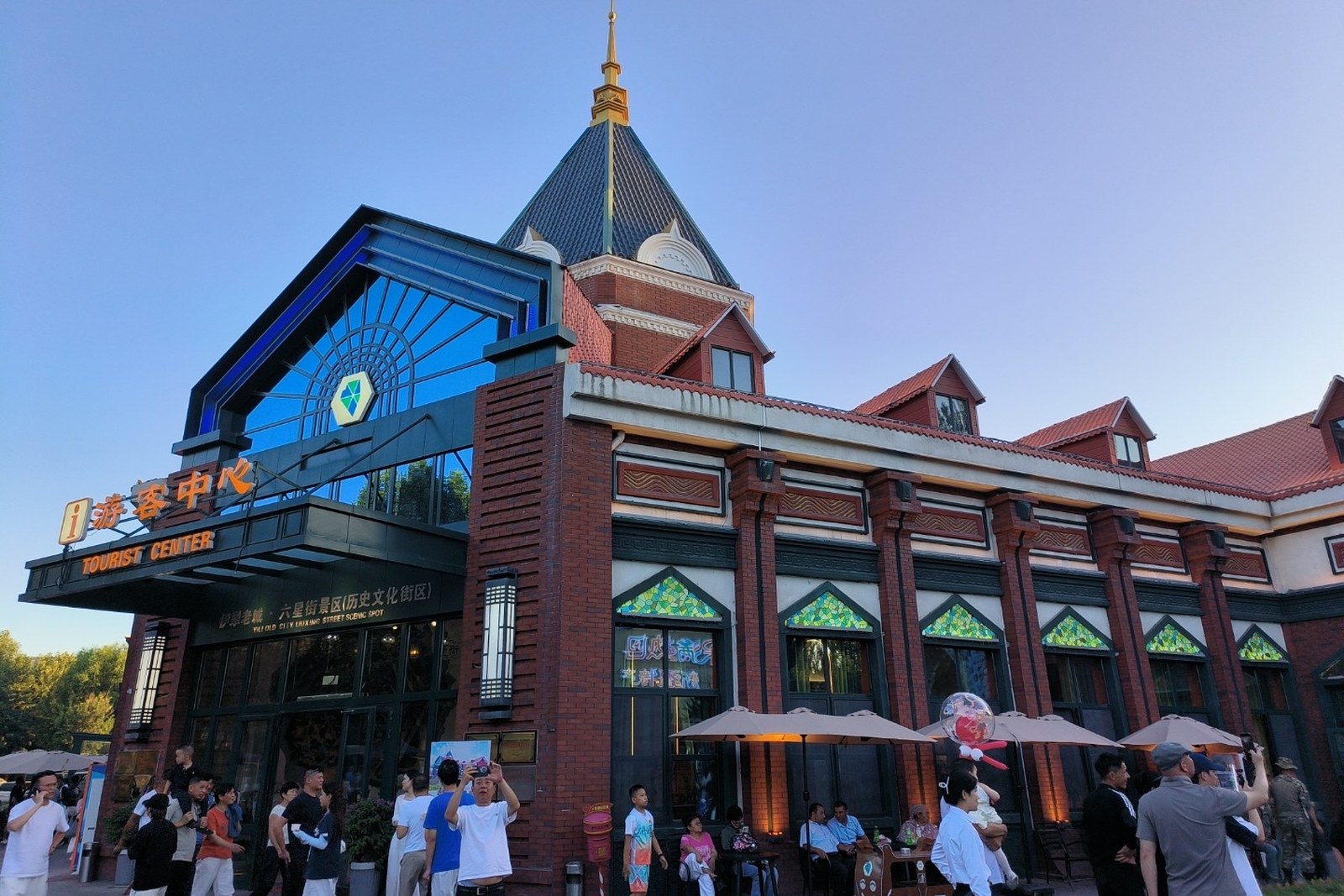
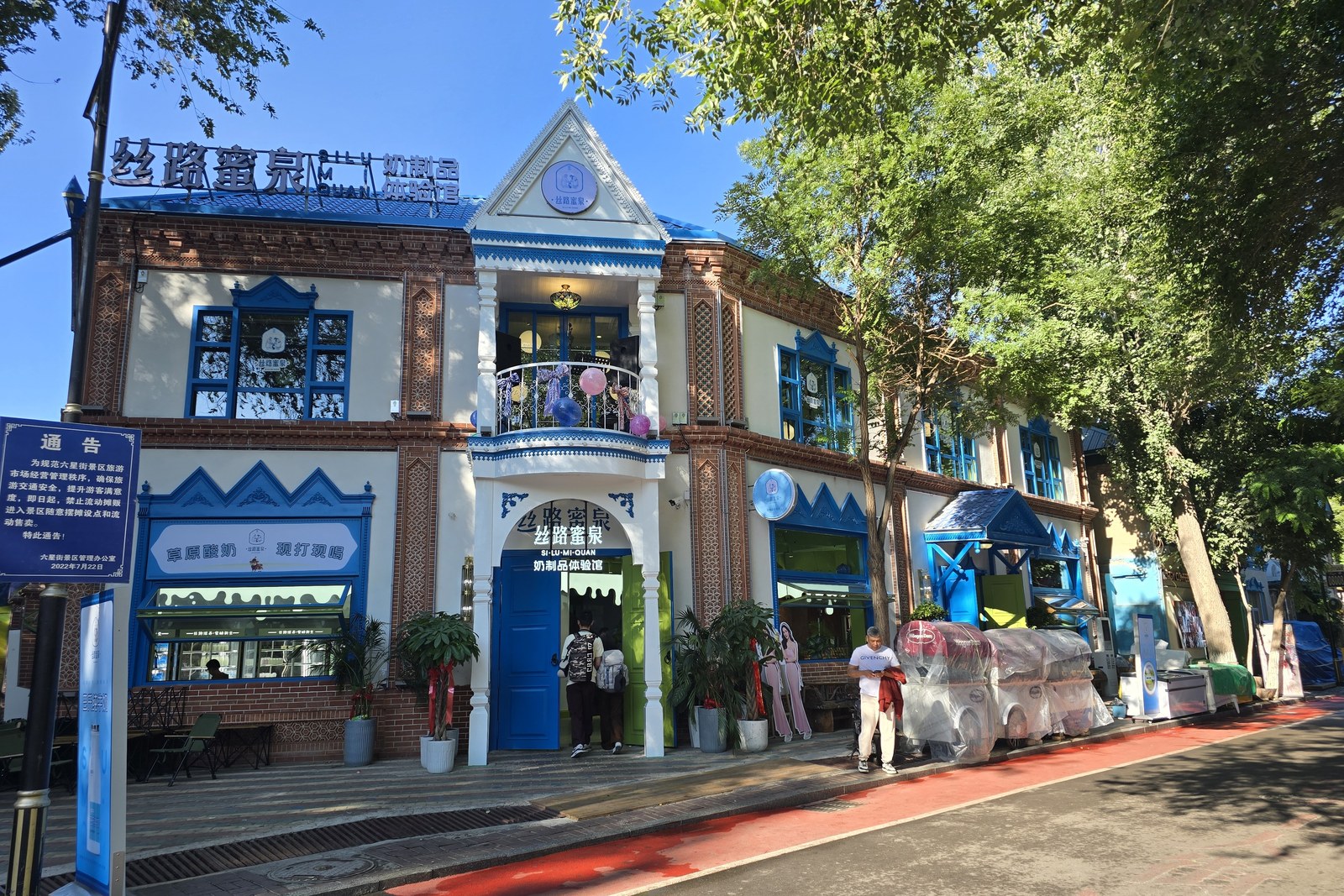
The street rewards walking without a plan. Ice-cream stands sell the Yining style of hand-churned cream in cones; bakeries turn Russian-style lepyoshka from yard ovens; the lanes run blue, yellow and brick-red in no order that a map explains. Two hours covers the star if you are efficient; two evenings cover it well. The stock answer in kind: come at dusk, when the residents bring out stools and the sound of two or three accordions overlaps down the same lane, and eat late – the street’s snack grills keep hours that the restaurants never learn.
Call it honestly: Liuxing is a living neighbourhood rather than a ticketed zone, and its charm depends on behaving like a guest (worth confirming the details for museum hours, since the accordion hall keeps irregular opening). What makes it different from the city’s other quarters is the plan – a 1930s star you can see from any rooftop – and the sound: in no other street of Xinjiang does the accordion function as public infrastructure. Come in the evening, park outside the ring, and let the hexagon decide your route.
Practicalities
Nearly everything else on this Ili list trades a different mood on the same prefecture: choose 喀拉峻草原 Kālājùn cǎoyuán the Kalajun grassland for ridge meadows, 那拉提草原 Nàlátí cǎoyuán the Nalati grassland for the high pasture, 霍城薰衣草田 Huòchéng xūnyīcǎotián the lavender fields for June scent, or 喀赞其民俗区 Kāzànqí mínsúqū the Kazanqi quarters for its blue lanes and horse carts – four more doors into the same 伊犁哈萨克自治州 Yīlí Hāsàkè Zìzhìzhōu Ili Kazakh Autonomous Prefecture. Once the streets are planned, our Ili food map fills the eating hours.
Practicalities
Words and Names
flowcloud would say Liuxing is the prefecture’s parlour music: a star drawn in 1930, still playing to anyone who sits down on the right veranda at dusk. All checked November 2026.
Getting there: The quarter sits on Yining’s west side inside a short ride of the centre; city buses circle the ring roads, the star’s lanes are walking-only by custom, and the accordion museum keeps hours that deserve a phone call first. All checked November 2026.