
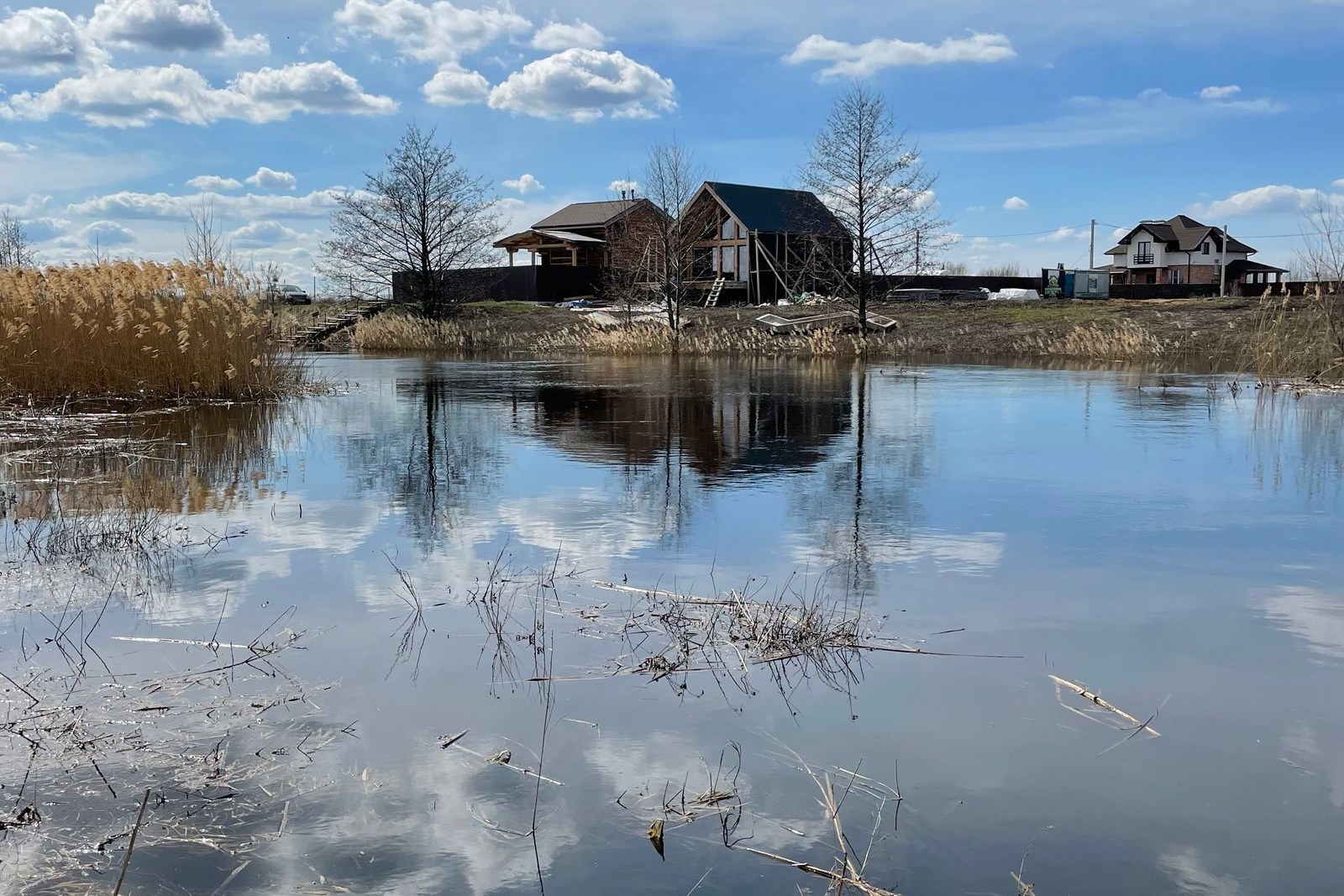
The name is a description: seen from above, the lake is long and tapers at one end like a willow leaf, and the willow trees along its shore are the other half of the joke. 柳叶湖 Liǔyè Hú occupies a little over twenty square kilometres on the northern edge of 常德 Chángdé and is the largest body of water inside any Chinese city of its size — the claim to be the biggest urban lake in the country is made here constantly and disputed elsewhere, but the scale is not in doubt. It is a working park rather than an attraction: a greenway runs the whole circumference, there are sand beaches, a rowing course, a cycle-hire network and a surprising amount of wind, and on a summer evening half the city appears to be out on the water’s edge.
The lake’s cultural anchor is on its southern shore. 司马楼 Sīmǎ Lóu, the Scribe’s Tower, commemorates 刘禹锡 Liú Yǔxī, the Tang poet and reformer who was exiled to Changde in 815 as a 司马 sīmǎ — a nominal military aide, the same empty post to which 柳宗元 Liǔ Zōngyuán was sent in Yongzhou in the same purge — and who spent nearly a decade in this region. It was here that he collected the local boatmen’s songs and turned them into the 竹枝词 zhúzhīcí, a form that used the plain language and the call-and-response of river people and became one of the most imitated styles in Chinese poetry. The tower is a modern reconstruction on the traditional site, which is the usual arrangement, and it is worth climbing for the view over the water rather than for anything inside it.
Two other things are worth knowing. The 沙滩公园 shātān gōngyuán, the beach park at the western end, has genuine imported sand and functions as a real beach in summer — unusual this far inland, and mobbed in July. And the ring road around the lake is a proper closed circuit used for marathon and cycling events; hiring a bicycle and riding the full loop takes two to three hours and is the single best thing to do in Changde on a warm morning.
Practicalities
Tickets. The lake, the greenway and the beaches are free. The 沙滩公园 shātān gōngyuán charges a small entry in summer, around ¥30–60, and hire of boats, pedalos and bicycles runs ¥30–80 an hour.
Opening hours. Open access at all hours; the beaches and the boat hire operate roughly 09:00–18:00 in season and shut entirely outside it.
Closing day. No closing day. The greenway is used by residents every day of the year, in all weather.
Getting there. About 20 minutes and ¥30–45 by taxi from 常德站 Chángdé Zhàn. The lakefront is a ten-minute walk north from the northern edge of the city centre; buses run along 柳叶大道 Liǔyè Dàdào.
What People Get Wrong
They treat it as a sight to be seen in an hour from a car. 柳叶湖 Liǔyè Hú is not spectacular in a photograph; it is a forty-kilometre shoreline that rewards being walked or cycled, and the best hours are before nine in the morning and after six in the evening, when the light is low and the wind is up.
Getting there
It is inside 常德 Chángdé city, so no trip is required — it is the thing you do in the late afternoon when the rest of the day is finished. Pair it with 常德河街 Chángdé Héjiē and the 诗墙 shīqiáng on the river side of the city for a full day, and with 桃花源 Táohuāyuán for a two-day stay.
flowcloud would say that the most convincing thing about Liuye Lake is how ordinary it is to the people who live beside it — a city that treats twenty square kilometres of water as a park rather than a spectacle has probably got its priorities straight.
Getting there: 柳叶湖 (Liǔyè Hú), 武陵区 (Wǔlíng Qū), 常德市 (Chángdéshì), 湖南 (Húnán). Free and open all hours; beach park ¥30–60 in season, boat and bicycle hire ¥30–80 per hour. About 20 minutes and ¥30–45 by taxi from 常德站 (Chángdé Zhàn). Cycle the full ring road, which takes two to three hours, starting before 09:00.