
Sunday’s Great Trade: Sheep, Camels and Hard Bargains at the Kashgar Livestock Bazaar
万羊尘土起,一价定乾坤 Wàn yáng chéntǔ qǐ, yī jià dìng qiánkūn – Ten thousand sheep raise the dust; one handshake settles the deal
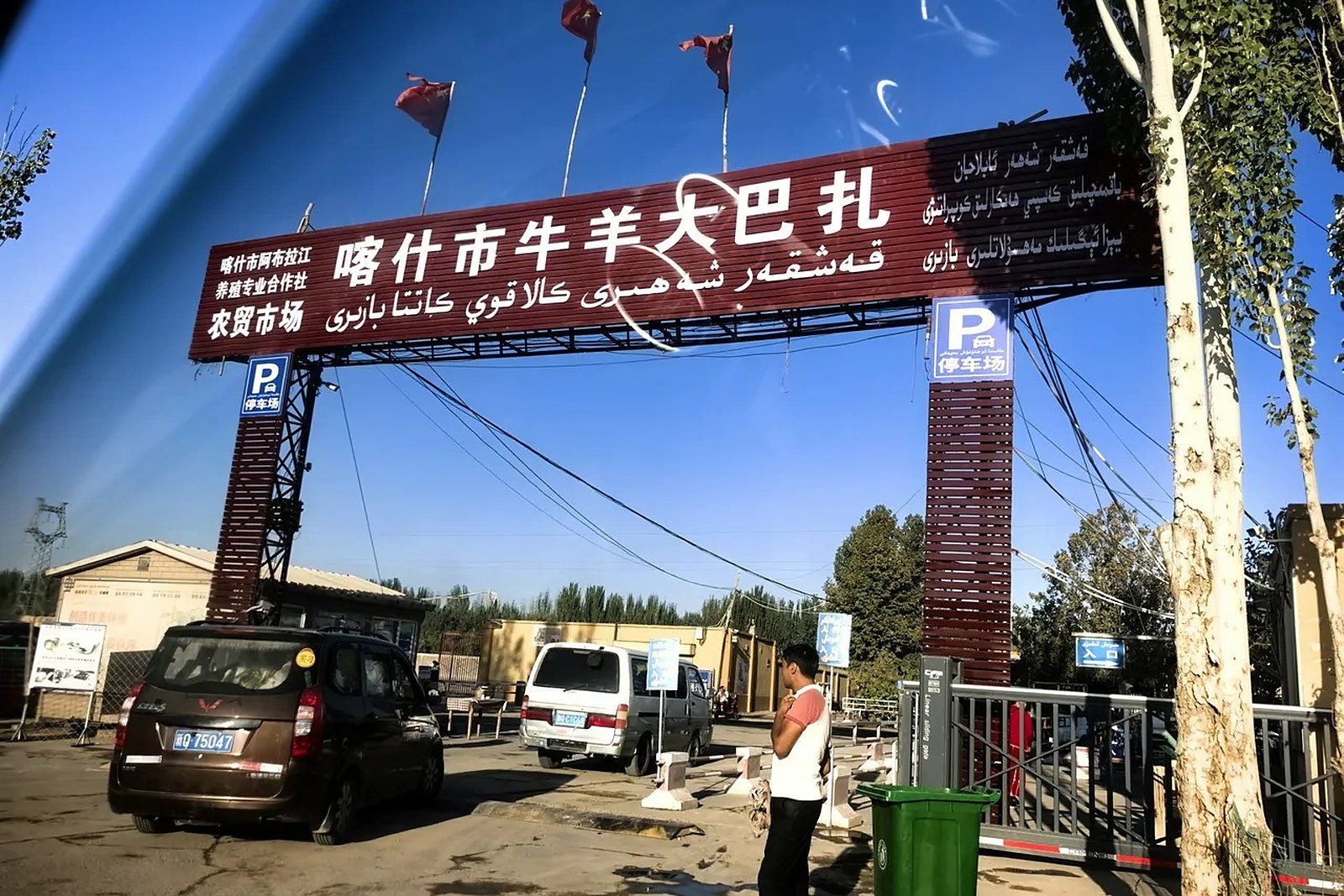
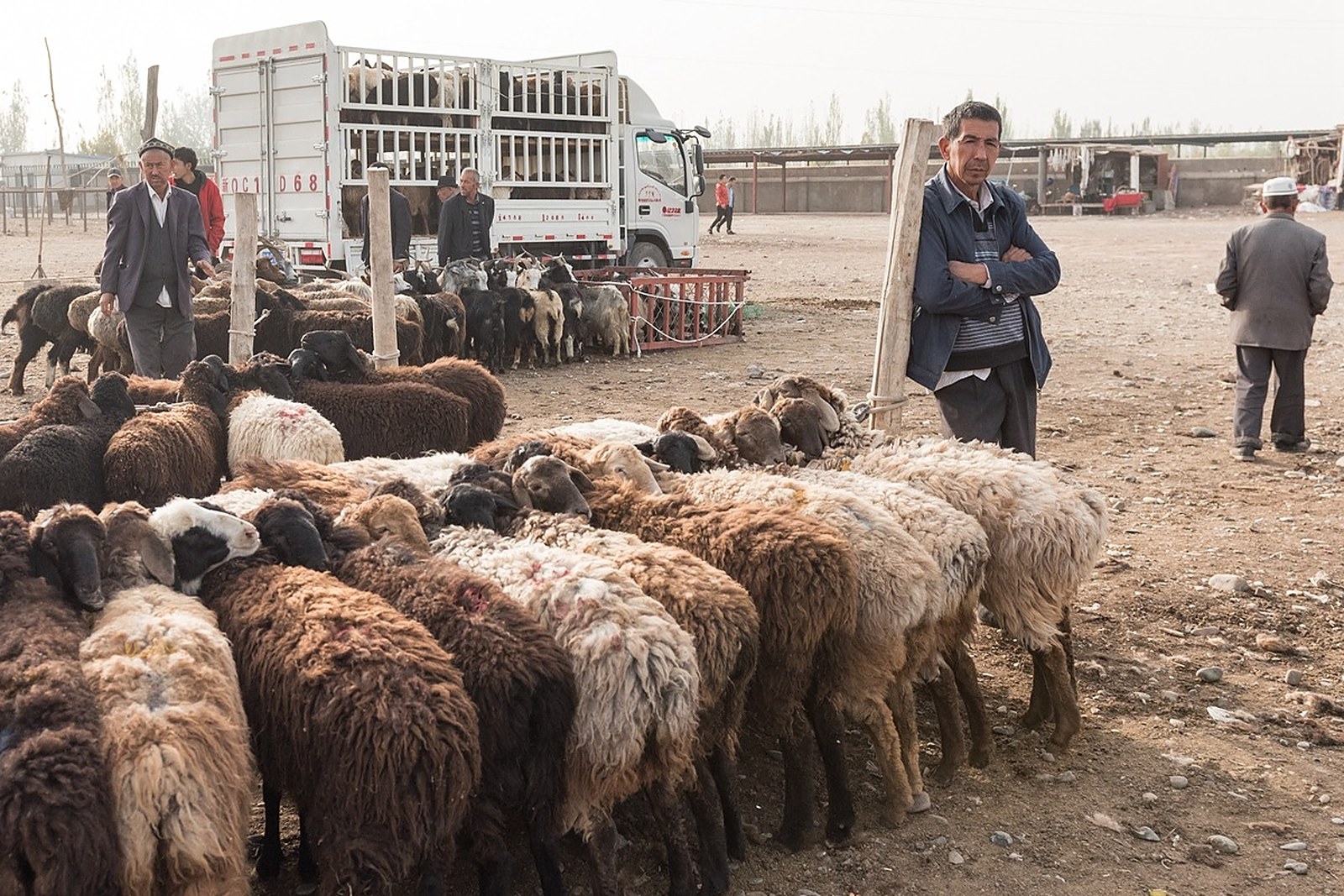
正文:牛羊大巴扎 Niúyáng Dàbāzhā the Livestock Bazaar assembles every Sunday morning on the dusty northeastern edge of 喀什地区 Kāshí Dìqū Kashgar Prefecture – the largest animal market in Central Asia, and one of the few places where the Silk Road’s oldest profession, trading livestock across languages and deserts, continues in something close to its original form. By nine the lots are full: sheep in hundreds, goats, yaks, donkeys, horses and the occasional camel, herded into dust clouds while owners in fur hats and matches negotiate with nothing more than whispers, hand-grasps and decades of mutual reputation.
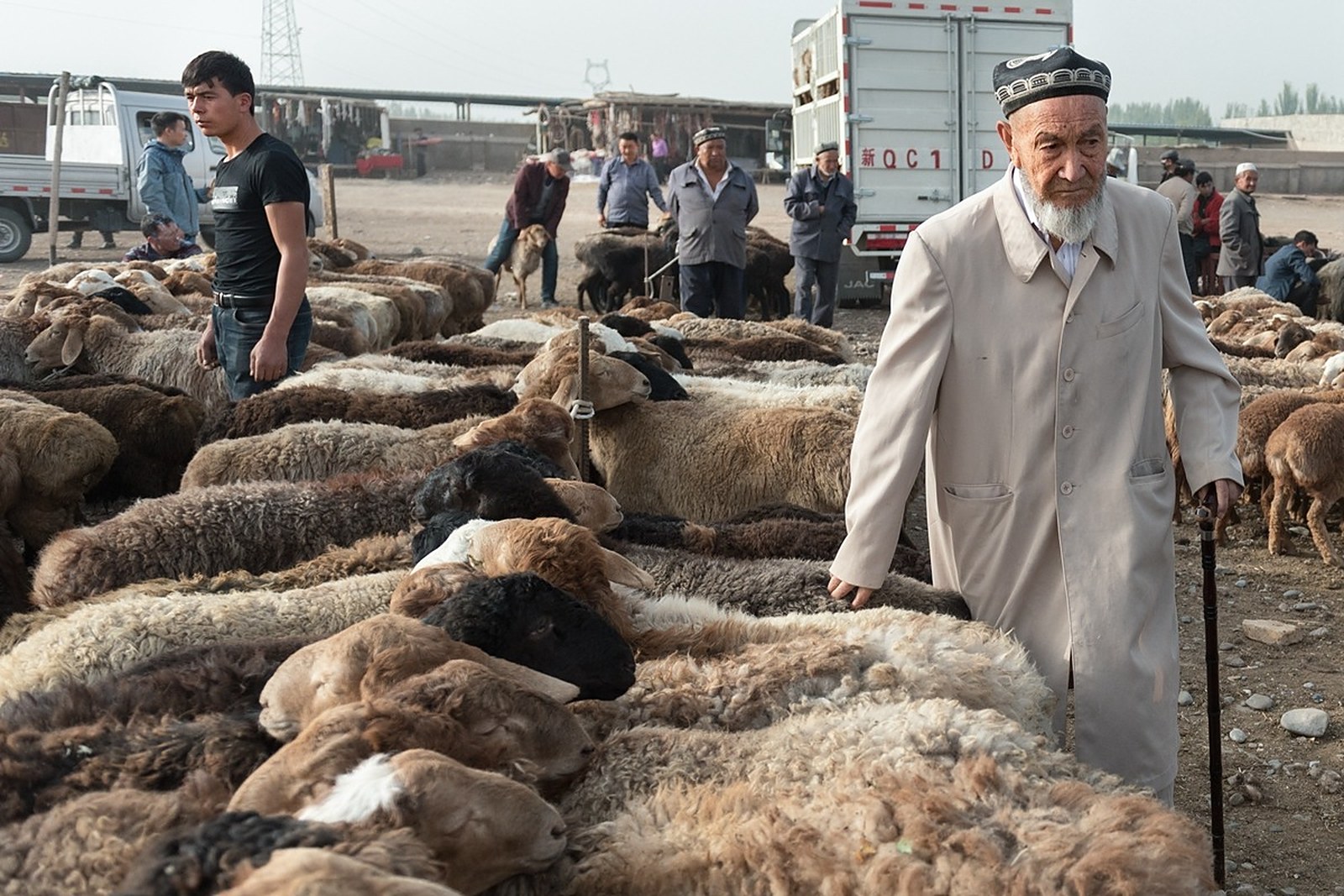
The mechanics of a deal are the show. Buyer and seller grasp hands inside a coat sleeve and signal prices finger by finger, faces blank, a circle of observers betting silently on the outcome; a deal closes with a slap, a shake and the immediate transfer of a halter. Banknotes change hands in wads. Middlemen work the rows for commission; the sheep are tested the old way – mouth checked, back pressed, walk judged – and the whole transaction rarely lasts longer than making tea. Nothing is written down, and almost nothing goes wrong.
Visitors walk the rows in a moving current of dust, wool and commerce. The sounds run from sheep bells to auction-style chants; the smells are honest ones – animal, straw, dust and the frying fish at the food stalls by the gate. Photography is welcome almost everywhere, the herders proud rather than shy, though the polite routine still holds: a nod before the camera, a smile after. The animals themselves are the cleanest-fed in the province – these are the fatted flocks of Eid, weighed and priced by the kilogram of future festival.
Around the livestock lots sits a market of its own: harness rows, felt saddles, rope by the metre, secondhand truck axles, and the knife stalls whose blades come from Yengisar up the road. The tool bazaar next door sells everything a farm needs, and the food court in the middle is the place to decompress – lamb kebabs over coals, pilaf from cauldrons, and the tea stalls where buyers and sellers retire to settle the day’s second round of business. Sunday lunch here is as much a part of the bazaar as the livestock.
The bazaar’s rhythm runs all morning and ends early. Serious trade peaks between ten and one; by three the lots are emptying, the dust settles, and the flocks walk home along the road shoulders in long single files that stop traffic and delight photographers. The market runs every Sunday of the year – winter included, when fur hats multiply and the trade goes on between snow flurries – and Ramadan’s schedule shifts everything by the clock, not the calendar.
Practicalities are simple. The bazaar lies about eight kilometres from the old town; taxis negotiate round trips with waiting time for a fair fare, hostels share minivans on Sunday mornings, and the No. 26 bus passes within a dusty walk. Bring cash in small notes, wear shoes that forgive mud and dust, and carry water – the morning is long. bargains are possible on the handicraft rows, but the livestock rows are for watching, not bidding.
Combine the morning at the bazaar with Sunday lunch at its food court and an afternoon in the old town’s craft streets, and the day lands complete: the market that feeds the festival, the tea that seals the bargain, and the lanes that have sold the goods for centuries. Few days anywhere pack so much working culture into six hours.
And the memory that lasts is the handshake: a whole economy running on grip, eye contact and honour – the Silk Road’s original technology, still fully operational, every Sunday before lunch.
Practicalities
Beyond the bazaar, the same 喀什地区 Kāshí Dìqū Kashgar Prefecture keeps more places worth the detour: 艾提尕尔清真寺 Ātígǎ’ěr Qīngzhēnsì the Id Kah Mosque in the centre, 喀什古城 Kāshí Gǔchéng Kashgar Old Town for the craft lanes, 香妃园 Xiāngfēi Yuán the Fragrant Concubine Garden for the green dome, or 喀拉库勒湖 Kālākùlè Hú Karakul Lake for the mountain mirror – four more doors into the same 喀什地区 Kāshí Dìqū Kashgar Prefecture. Once the bazaar is seen, our Kashgar food map fills the day.
Practicalities
Words and Names
flowcloud would say the Livestock Bazaar is the Silk Road’s Sunday encore: dust, wool and whispered prices settled by a handshake in a sleeve – go hungry, go early, and watch eight centuries of commerce keep working. All checked November 2026.
Getting there: The animal market runs Sunday mornings only, on the northeastern edge of the city about eight kilometres from the old town; taxis negotiate round trips for waiting visitors, and some hostels run shared minivans. Arrive before ten to see the serious trading, and wear shoes you do not mind dusting. All checked November 2026.