
The Forest That Grows Out of the Flood: Lizhong Water Forest, Xinghua
池杉立水鹭成行,一篙撑进绿烟乡 Chíshān lì shuǐ lù chéng háng, yī gāo chēng jìn lǜ yān xiāng – Pond cypress stands in the water, the egrets in ranks; one pole pushes the raft into a land of green haze
正文:李中水上森林 Lǐzhōng Shuǐshàng Sēnlín Lizhong Water Forest is the plantation that became a miracle – a thousand acres of pond cypress planted in straight ranks across flooded ground at 李中镇 Lǐzhōng Zhèn Lizhong Town, north of 兴化市 Xīnghuà Shì Xinghua City, where the trees grew so happily waist-deep in water that they made their own ecosystem. The rows were a forestry project; the water was the lowland’s own; and forty years on the result is the nearest thing Jiangsu has to an inland everglades: tens of thousands of cypress trunks standing mirror-still in channels, egrets and night herons nesting in the crowns in noisy thousands, and flat-bottomed rafts rowed down the flooded aisles between the trunks. In spring the neighbouring 垛田 duòtián raft-field country adds its rapeseed seas – the flower fields floating on their own islands of muck – and the two sights together have made the county a season-defining detour.
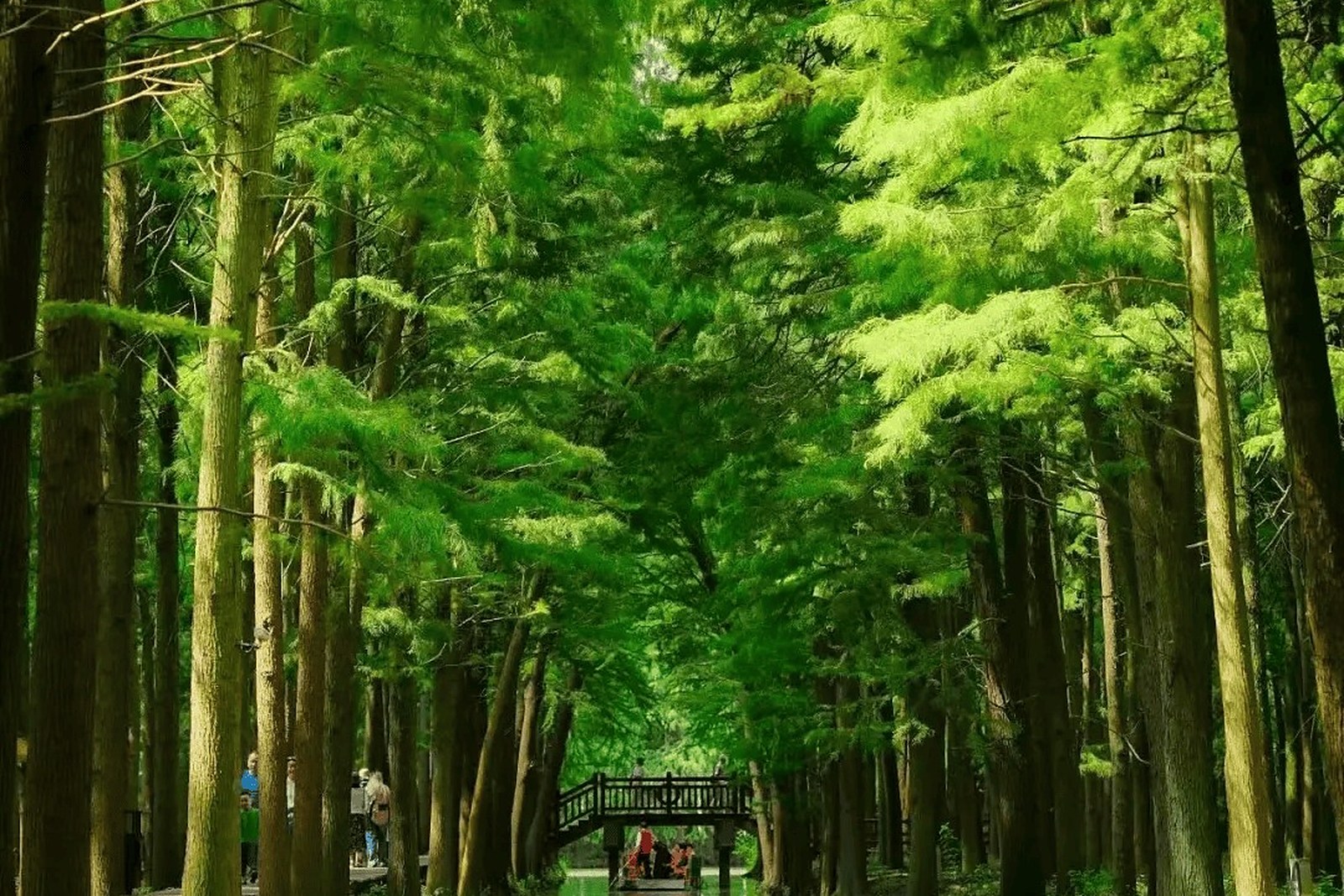
The rafts are the way in. Boardwalks and bamboo rafts work the flooded aisles, and the forest closes overhead in green vaults – trunks rising out of black water, roots knuckling through the surface, herons frozen at eye level between the stems. The tour rafts pole the main channels; the quiet hours belong to the boardwalk, where the only sound is the water moving under the rails.
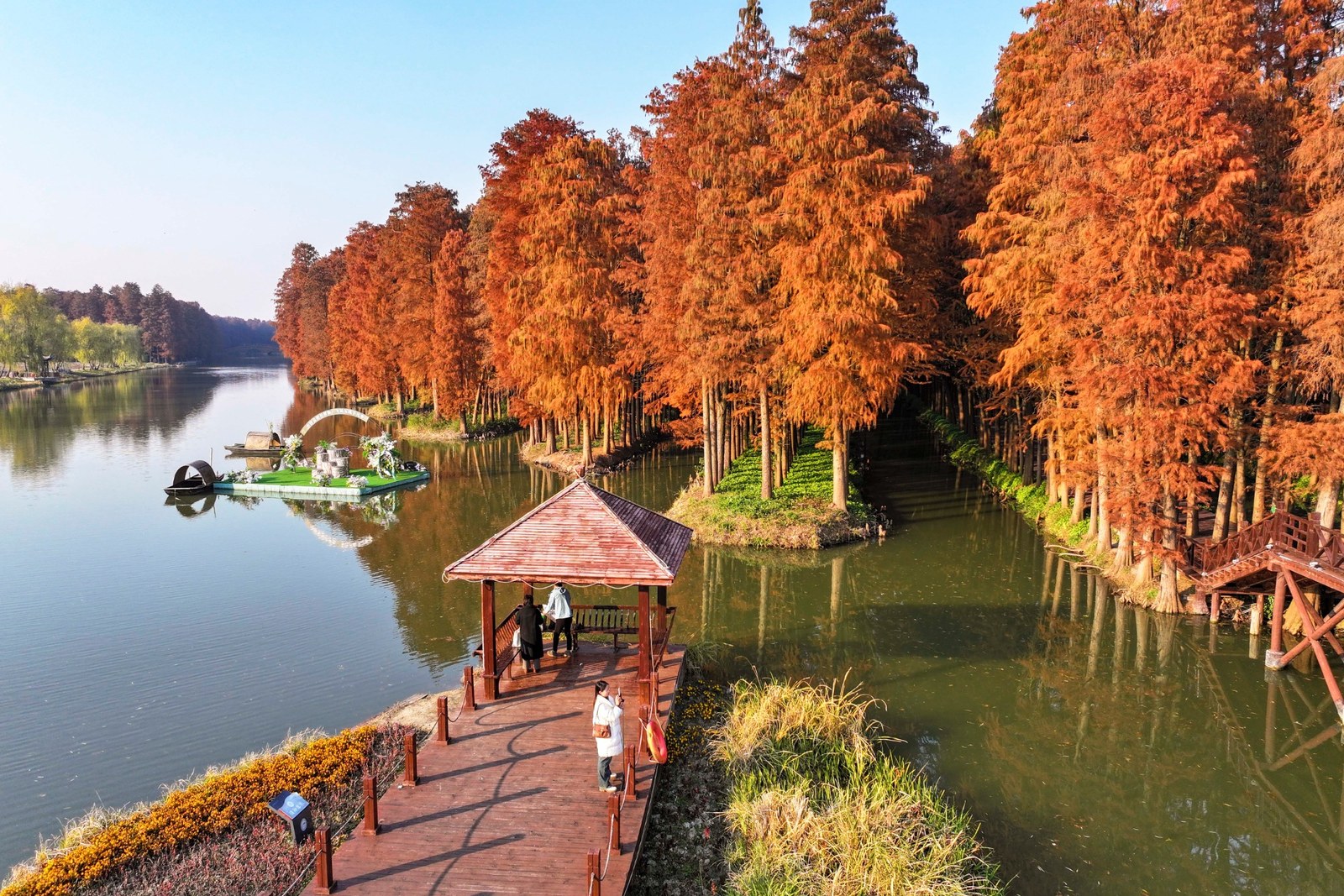
The bird colony is the forest’s second forest. From late spring the crowns fill with nests – egrets in white ranks, night herons hunched and grey – and the noise of a thousand birds arguing over the flooded real estate carries across the water. The boardwalk bridges cross the widest channels, the pavilions stand where the views open, and the autumn turns the cypress copper-red before the needles drop into the flood and stain the channels rust.
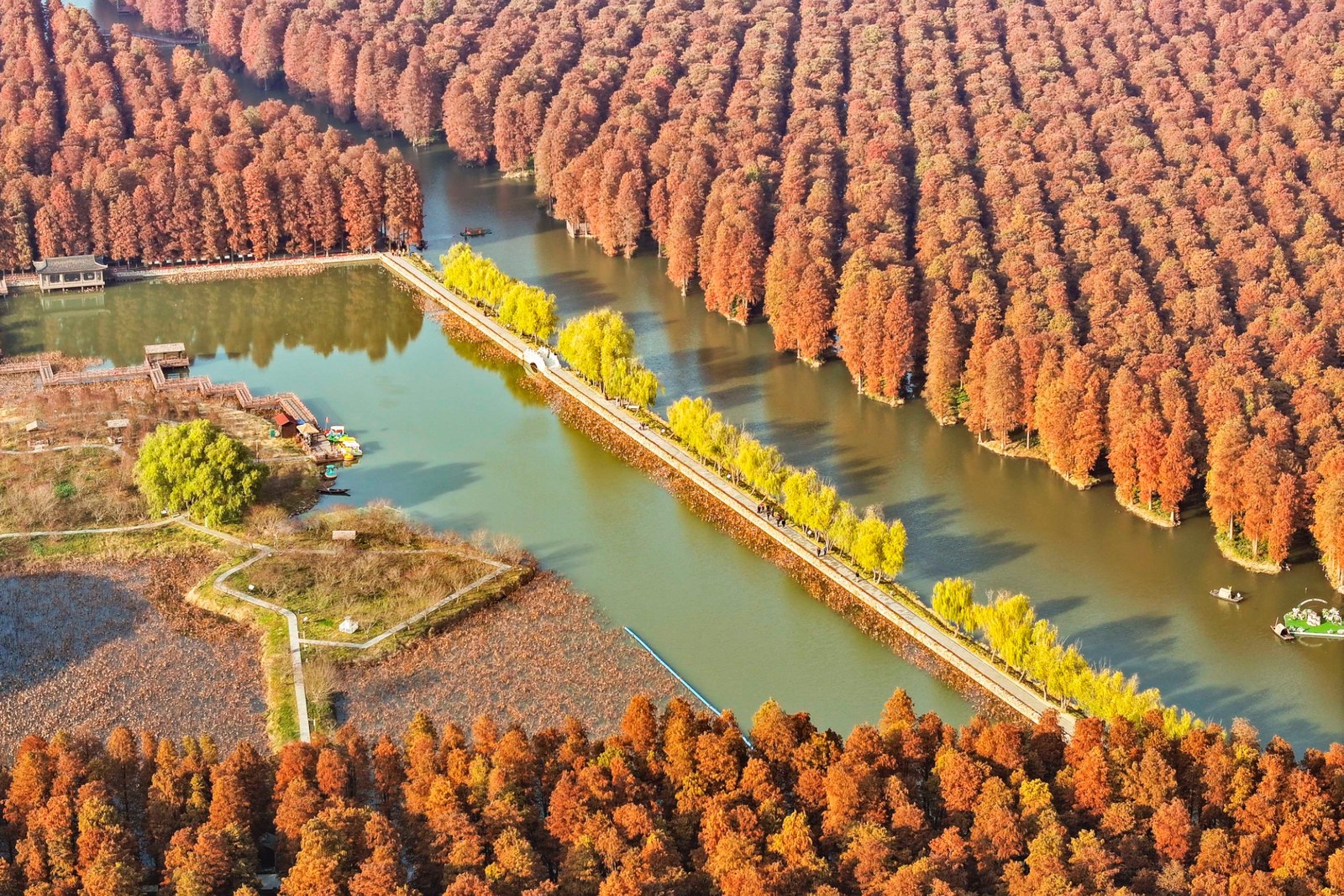
Aerial photographs tell the truth the ground level hides: the forest is a green lattice drawn on the floodplain, channels ruled between the ranks like garden beds at cathedral scale. Plan a full morning from Xinghua – the forest, the boardwalks, a raft circuit – and in April add the duotian flower seas next door, when the drowned fields go gold and the whole county smells of rapeseed and river water.
Practicalities
Beyond the flooded forest, the same 泰州市 Tàizhōu Shì Taizhou City keeps more doors on the itinerary: 溱湖 Qínhú Qinhu Wetland the reed-and-deer maze in Jiangyan, 凤城河 Fèngchéng Hé Fengcheng River the old-town moat, 溱潼古镇 Qíntóng Gǔzhèn Qintong Ancient Town the canal town, or 乔园 Qiáo Yuán Qiao Garden the Ming garden in the old town – four more doors into the same 泰州市 Tàizhōu Shì Taizhou City. Once the forest is rowed, our Taizhou food map fills the table.
Practicalities
Words and Names
flowcloud would say Lizhong is the happy accident of Chinese forestry: plant a swamp with cypress, wait forty years, and arrive at a wetland cathedral the planners never dared draw. All checked November 2026.
Getting there: The forest stands at Lizhong town north of Xinghua city, about an hour from central Taizhou by car or bus – entry plus the raft circuit is ticketed, boardwalks are flat, and morning light through the cypress trunks is the photographer’s hour; spring adds the rapeseed seas at nearby duotian country. All checked November 2026.