
龙湖古寨 Lónghú gǔ zhài is a walled village on the flat country a short drive from 潮州 Cháozhōu, and it is one of the best-preserved old villages of the region. It is not a single house or a temple; it is a whole settlement that has kept its layout since the Ming dynasty, enclosed by a ring of wall and moat, with its streets running in a grid, a great many ancestral halls, and a long history as a market and river port. Where the old town of 潮州 is a city that grew, 龙湖 is a village that was laid out deliberately and has largely been left, a quiet, atmospheric place to wander.
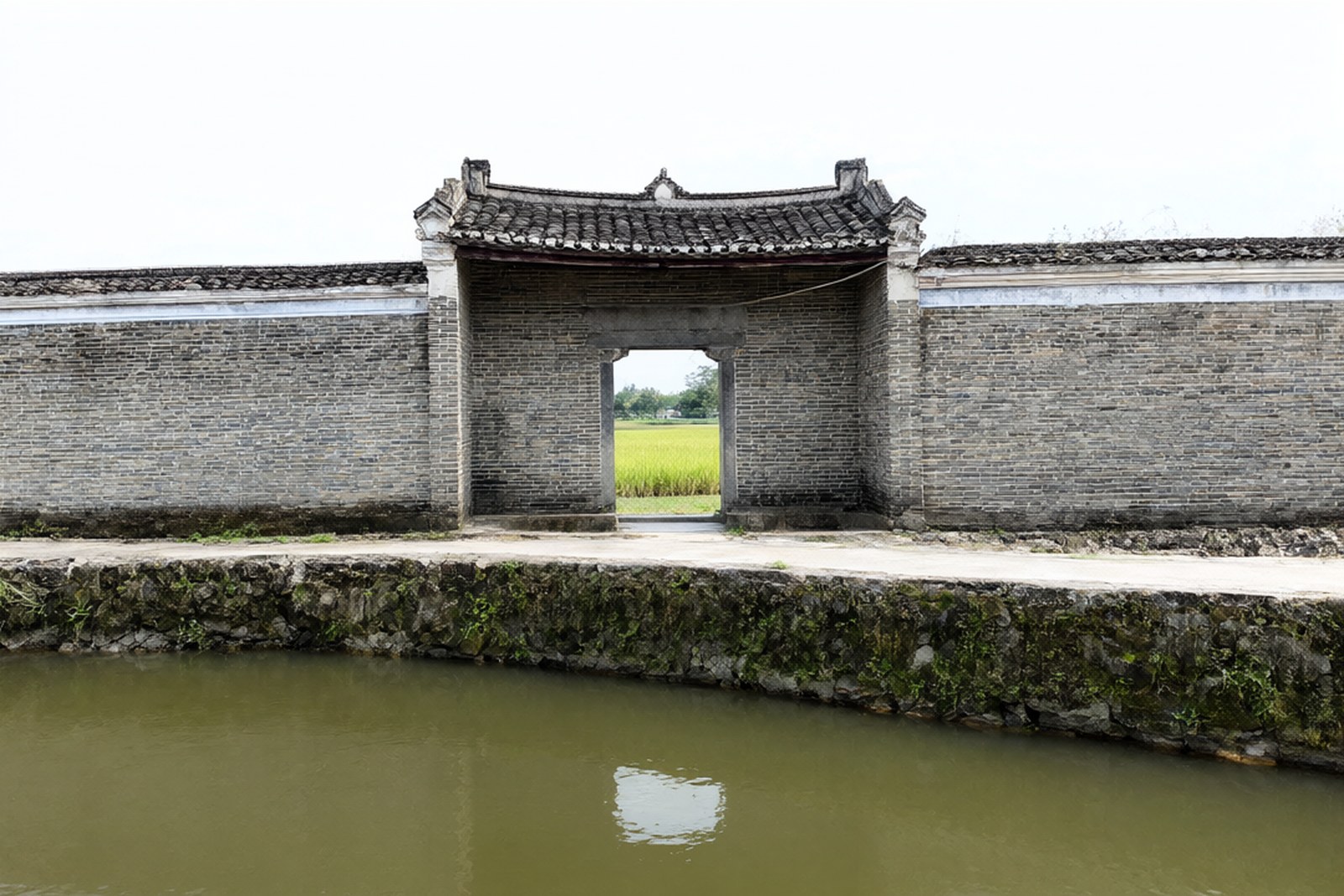
The village was built as a fortified settlement and a trading centre, and its wealth shows in its buildings. As you walk the lanes you pass ancestral halls with carved timber and stone, courtyards, and the old houses of merchant and gentry families, many with a surviving facade of carved brick and stone. The layout is a grid, so it is easy to wander without losing your bearings, and the density of old buildings is the point. It is a place where the village is the attraction rather than any single monument, and the pleasure of it is in the quiet streets, the old walls, and the sense of a working settlement that has been here for centuries.
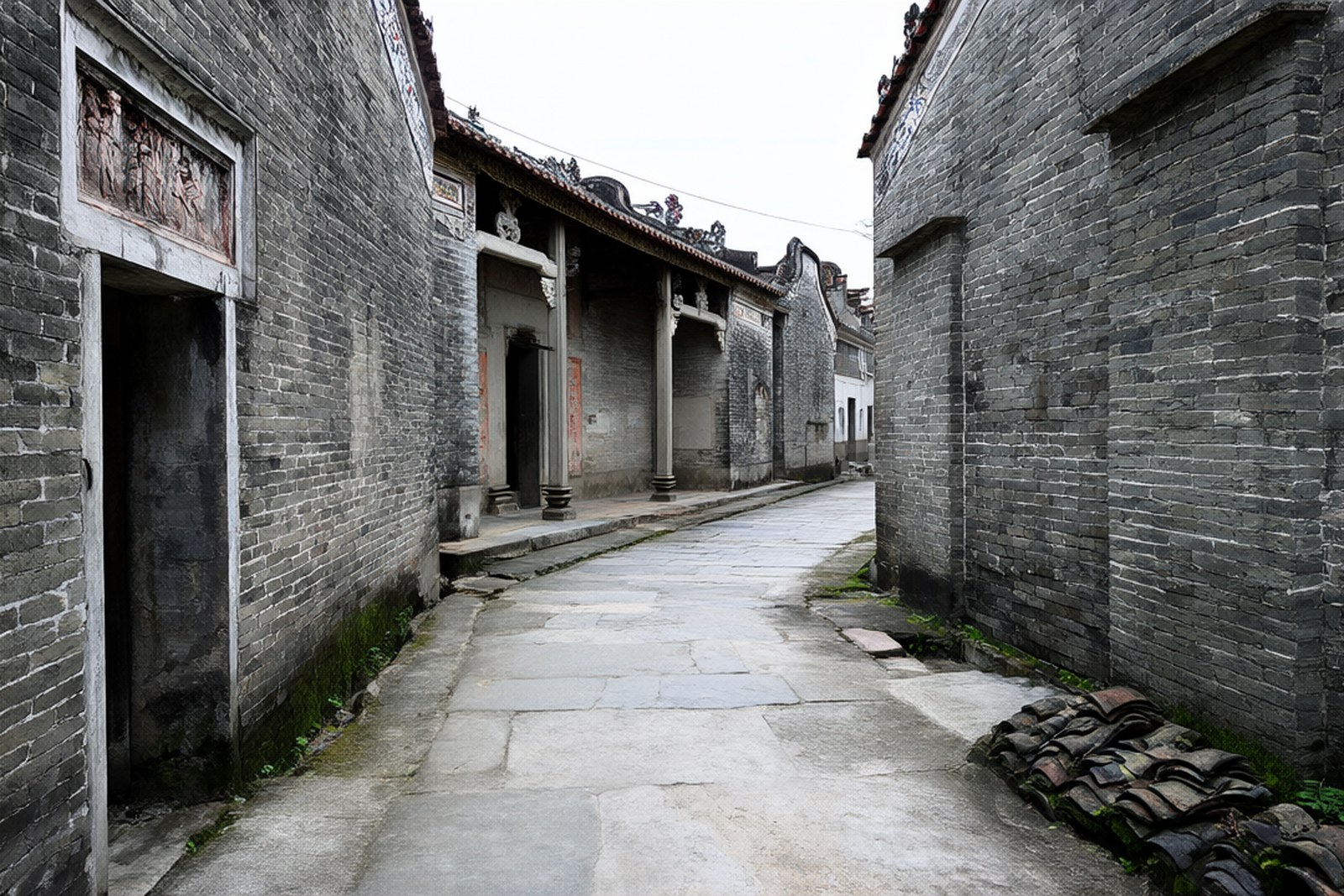
Unusually, 龙湖 is a village you can visit and feel you have seen it whole, because it is bounded by its wall and moat. You can walk the circuit of the wall, look out over the moat and the surrounding flat fields, and then dive back into the grid of lanes. The village is a short drive off the main road, quiet and rarely crowded, and it rewards an unhurried couple of hours. It is a good counterpoint to the busier old town of 潮州, and a way to see the region’s rural heritage running deeper than the city’s famous arches.
Practicalities
Tickets. The village charges an entrance ticket, in the region of ¥30 to ¥50, which covers the lanes, the ancestral halls and the circuit of the wall. Some of the individual halls may carry a small separate charge.
Opening hours. The village is open roughly 08:30 to 17:30, with the last entry in the mid-afternoon. It is quiet and at its best in the morning and late afternoon, when the light is soft and the crowds are fewest.
Getting there. 龙湖古寨 is in 潮安区 Cháo’ān qū of 潮州, a short drive off the main road between 潮州 and the wider region, about forty minutes from the old town by car. There is no rail station at the village; 潮汕站 Cháoshàn zhàn is the nearest, from which you hire a car or a taxi.
Closing day. The village is open every day of the year with no weekly closing day. The individual halls follow the same daily hours, and the quieter parts of the lanes are accessible on foot throughout the day.
Getting there: 潮州 is the base, about forty minutes by road, and 潮汕站 Cháoshàn zhàn on the high-speed line is the rail gateway; from there a car or taxi is the way in.
flowcloud would say that a village which laid itself out in a grid four hundred years ago, walled itself and moated itself, and then simply stayed there, is a place that decided to keep its own shape, and that the quiet of it is the most valuable thing it has.