
Longhua Temple: Shanghai’s Oldest Working Monastery with Its Seven-Storey Brick-and-Timber Pagoda by Longhua Road in Xuhui District, Shanghai
龙华塔立千秋影,晚钟声送一江烟。Lónghuá tǎ lì qiānqiū yǐng, wǎnzhōng shēng sòng yī jiāng yān – The Longhua Pagoda stands a thousand autumns in shadow; the evening bell sends its sound down a river of mist.
龙华寺 Lónghuá Sì Longhua Temple is not a monastery rebuilt for tourists last decade — it is, plainly put, one of the oldest continuously honoured Buddhist sites in Shanghai: tradition sets its founding in the 赤乌 Chìwū era of the third century, when the Wu kingdom held the Yangtze delta, and the temple at 龙华路 Lónghuá Lù Longhua Road 2853 in the south of 徐汇区 Xúhuì Qū Xuhui District still fills with incense and chanting on ordinary weekdays. You come in through the 山门 shānmén main gate, gilt characters above and red lanterns swinging, and the Jiangnan sequence unfolds behind it — yellow walls, dark tile roofs, eaves lifted at the corners, courtyard after courtyard running north. In front of the temple, against every habit of Chinese layout, stands its own pagoda: the 龙华塔 Lónghuá Tǎ Longhua Pagoda, octagonal, seven storeys, about forty metres of old brick body dressed in timber balconies and eaves.
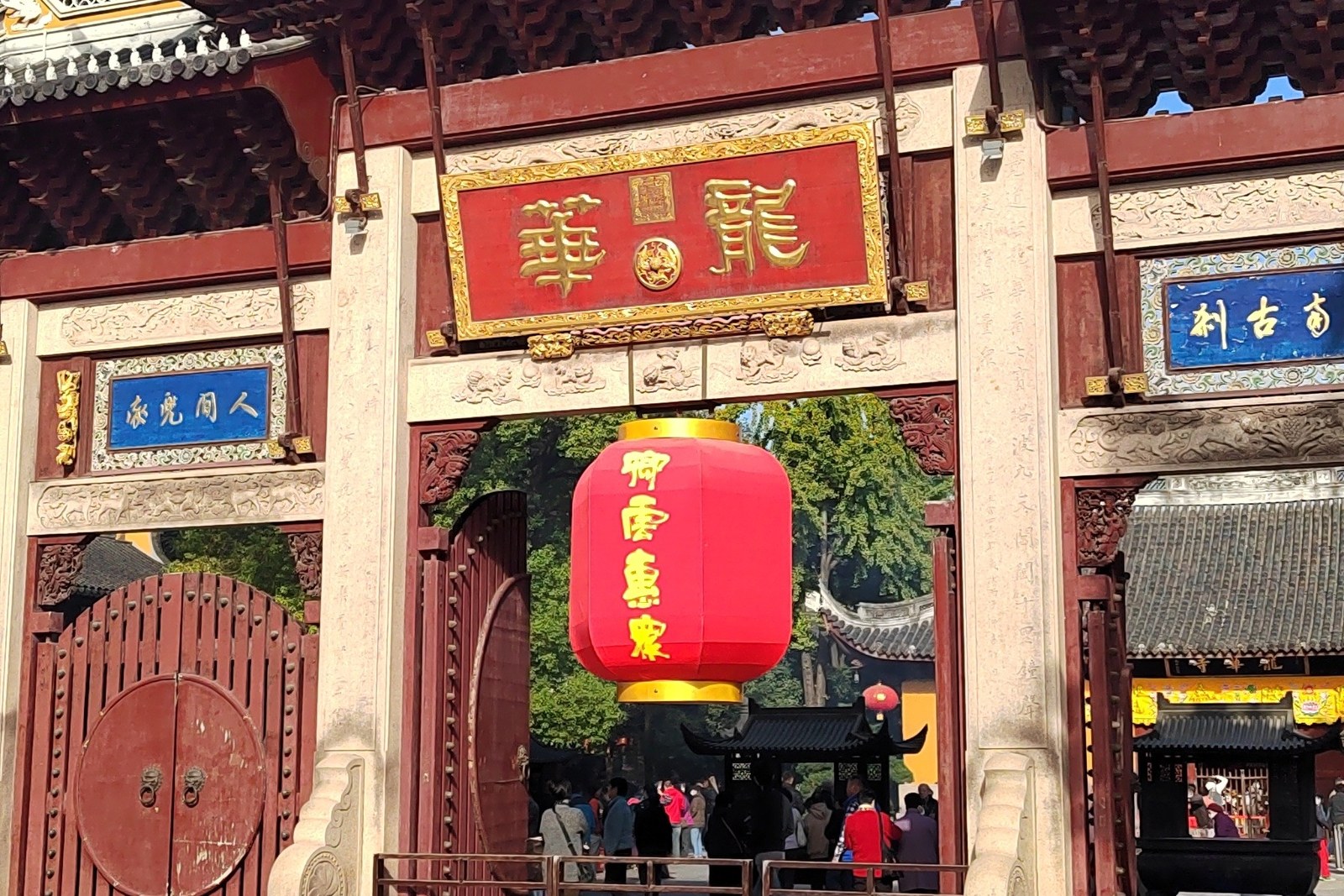
Call it honestly: the temple asks a modest admission at the gate, with a small supplement if you want to enter the pagoda’s base (worth confirming the details for current ticketing), and 龙华站 Lónghuá Zhàn Longhua station on Metro Lines 11 and 12 sets you down within sight of the walls. The honest warning is occasion: the New Year’s Eve bell-ringing and the spring temple fair pack the whole quarter — atmosphere, but at the price of elbows — so the calm version is a weekday morning, when the courtyards belong to pigeons and sweepers. Give it an hour to an hour and a half, longer if you stay for the vegetarian refectory, which draws its own following (a separate food article covers it properly).
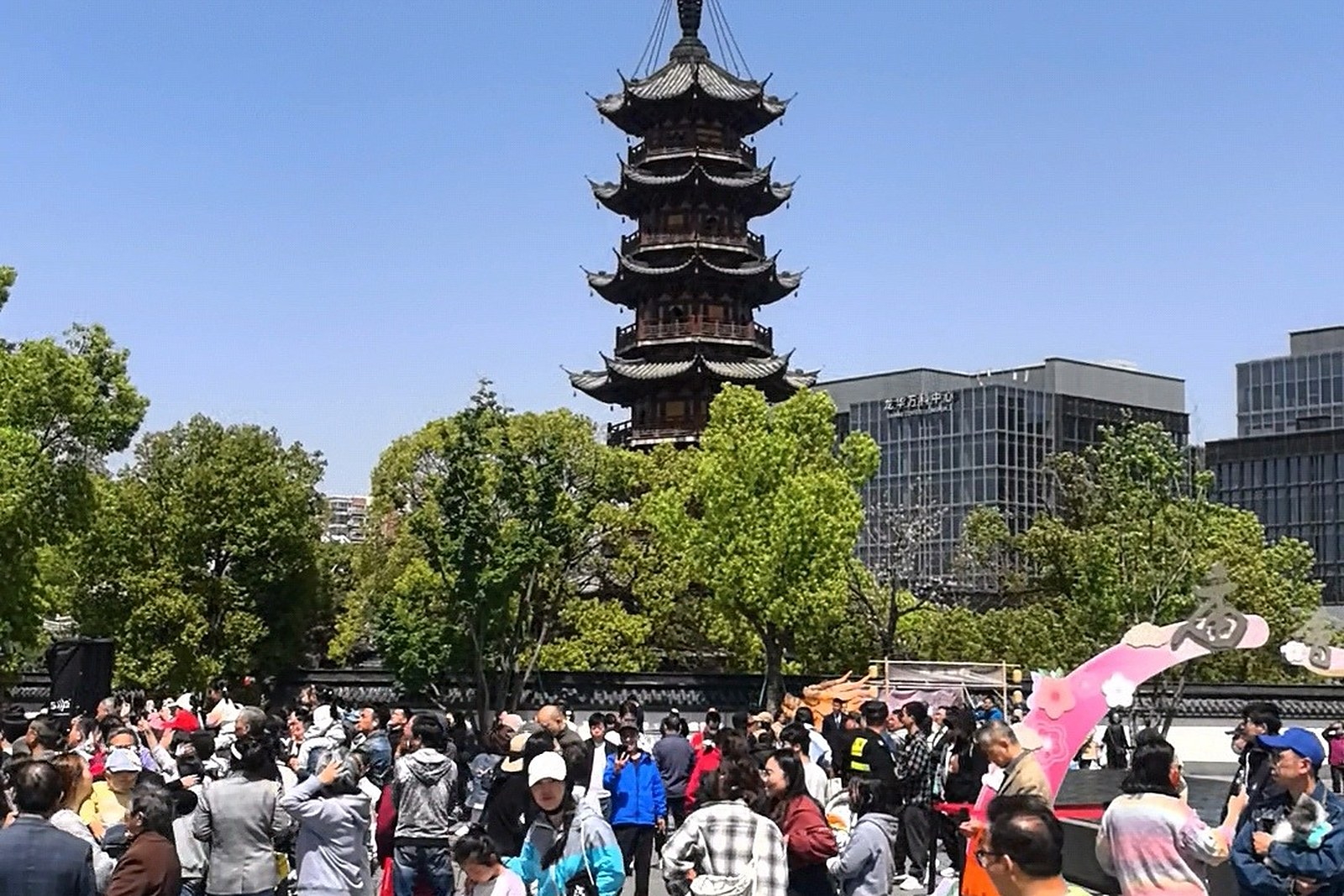
The honest star is the pagoda — stand in the forecourt while the fair crowd ebbs around it and the seven tiers of timber balconies read exactly as they did to the boatmen on the old Longhua waterway, which is why 「龙华晚钟」 the Longhua Evening Bell ranked among the eight famous views of old Shanghai. What gets oversold is the fair that borrows the temple’s name: the ring of stalls outside sells the same lucky trinkets sold at every fair in the delta. What repays the effort is the sequence itself — gate, then hall, then hall, each courtyard resetting the scale, until the pagoda reappears over the roofs as if you had crossed a mountain instead of two city blocks. Come for the layering of the place: gate, then courtyard, then the pagoda keeping watch over all of it.
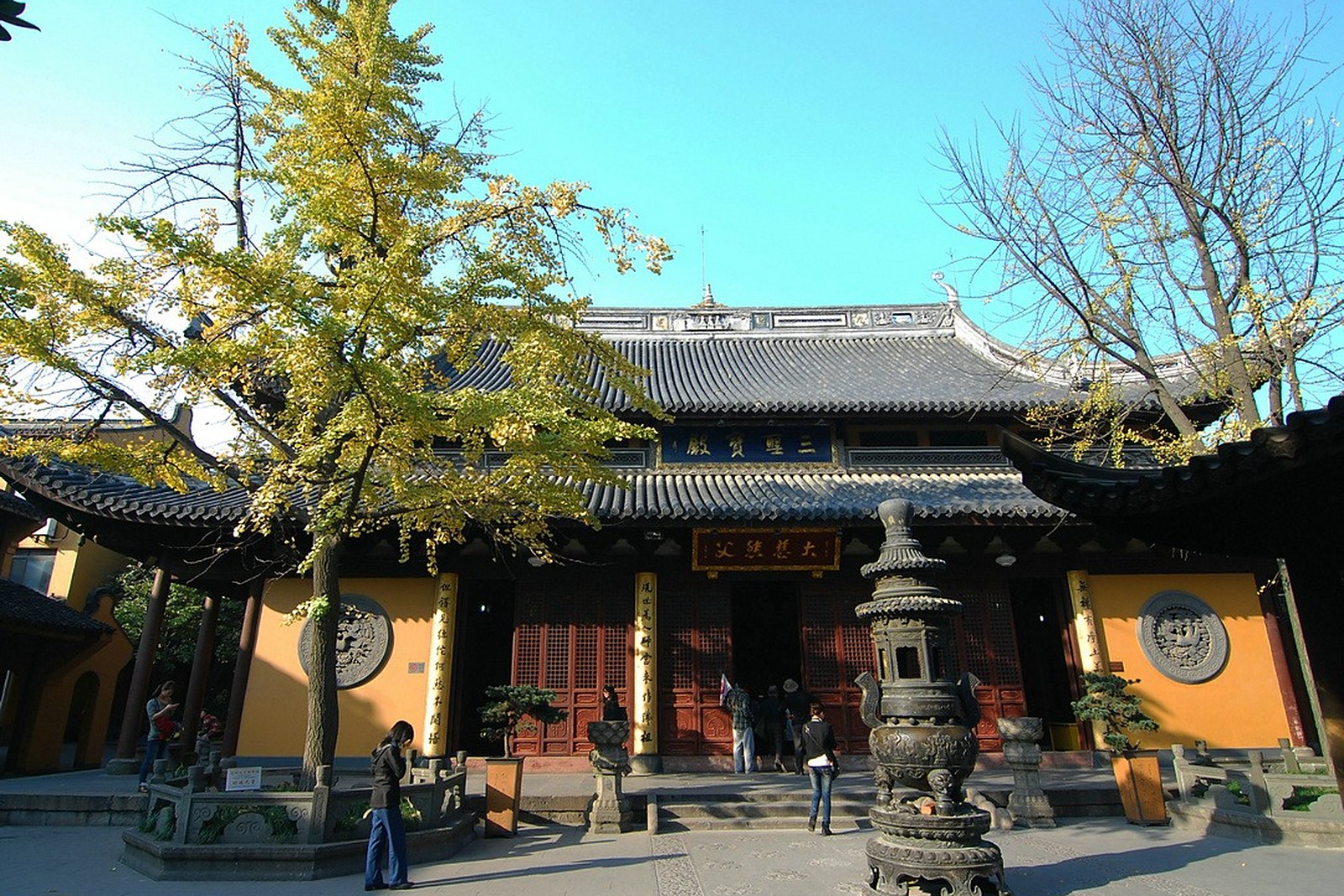
The self-aware postscript: I rested under the old ginkgo by the 大雄宝殿 Dàxióng Bǎodiàn Grand Hall, yellow wall glowing behind me, and watched a lay volunteer sweep leaves that would be back by evening. “Twenty years I have swept here,” she said, “the tower never moves and the leaves always return — that is the whole teaching, and it costs nothing”. That is the visit in miniature. 龙华寺 Lónghuá Sì suits whoever treats it as a working monastery with a thousand-year address first and a photogenic pagoda second, and exhausts anyone expecting silence during the fair or a ticket that buys enlightenment.
The rest of the district fans out from here: the Gothic twin spires of 徐家汇天主堂 Xújiāhuì Tiānzhǔtáng Xujiahui Cathedral stand a metro hop northwest, the plane-tree mansions of 武康路 Wǔkāng Lù Wukang Road wait to the north, the cranes and river paths of 西岸滨江 Xī’àn Bīnjiāng the West Bund Waterfront curve along the Huangpu to the northeast, and the white louvres of 徐家汇书院 Xújiāhuì Shūyuàn Xujiahui Library face the cathedral square at the district’s heart — all inside the same 徐汇区 Xúhuì Qū Xuhui District that keeps its oldest temple at the southern end.
Practicalities
- Rating: ★★★★☆ — a genuine ancient monastery with a pagoda in front of it, rare in any Chinese city; the halls and tower outrank the fair stalls outside; go weekday morning.
- Tickets: Modest admission at the gate, small supplement for the pagoda interior (worth confirming the details for current prices and bell-event dates).
- Address: 龙华寺 Lónghuá Sì, 龙华路 Lónghuá Lù Longhua Road 2853, 徐汇区 Xúhuì Qū, Shanghai — south Xuhui, within sight of Longhua station on Metro Lines 11 and 12.
- Time needed: An hour to an hour and a half for the halls and pagoda; half a day adding the vegetarian refectory and the riverside streets around it.
Words and Names
龙华寺 Lónghuá Sì Longhua Temple · 龙华塔 Lónghuá Tǎ Longhua Pagoda · 山门 shānmén main gate · 赤乌 Chìwū the Chiwu era of the Wu kingdom · 大雄宝殿 Dàxióng Bǎodiàn Grand Hall · 龙华晚钟 Lónghuá Wǎnzhōng the Longhua Evening Bell · 庙会 miàohuì temple fair · 素斋 sùzhāi vegetarian temple fare · 龙华路 Lónghuá Lù Longhua Road · 徐汇区 Xúhuì Qū Xuhui District
flowcloud would say that 龙华寺 Lónghuá Sì is the oldest address in Shanghai Buddhism — a monastery traced to the 赤乌 Chìwū third century at 龙华路 Lónghuá Lù Longhua Road 2853, all yellow walls and flying eaves, with the octagonal 龙华塔 Lónghuá Tǎ standing seven storeys in front of its own gate as pagodas almost never do — and that the honest move is a weekday morning among the courtyards, ending at the vegetarian refectory (worth confirming the details for current ticketing and fair dates), because the New Year bell and spring 庙会 miàohuì temple fair fill the quarter shoulder to shoulder, the trinket stalls are the poster half and the ginkgo shade by the 大雄宝殿 Dàxióng Bǎodiàn is the real half, and the temple repays whoever walks its full gate-to-hall sequence slowly. All checked October 2026.
Getting there: Metro Line 11 or 12 to 龙华 Lónghuá Longhua station, exit 2, then a five-minute walk to the temple gate on 龙华路 Lónghuá Lù Longhua Road (worth confirming the details for festival days, when the temple fair crowds the square); the pagoda stands east of the main hall across the courtyards. All checked October 2026.