
Step out of the metro at Shangxinjie and the century arrives in about thirty paces: a stone-stepped lane dropping toward the river, grey-brick buildings with arched windows stacked down the slope, and the great curve of a bridge sailing overhead between you and the sky. 龙门浩老街 Lóngménhào Lǎojiē, Longmenhao Old Street – the name is rendered Longhao for short – occupies the terraced hillside below the Dongshuimen bridge in 南岸区 Nán’àn Qū, Nan’an District, Chongqing being a municipality of southwest China, and it holds the front porch of a national story: when Chongqing formally opened as a treaty port in 1891, the foreign firms and consulates that followed landed on this bank, and the lanes of Longmenhao were where the treaty port actually lived. The peninsula’s lights glitter across the water at the bottom of the stairs, but the street itself is the exhibit.
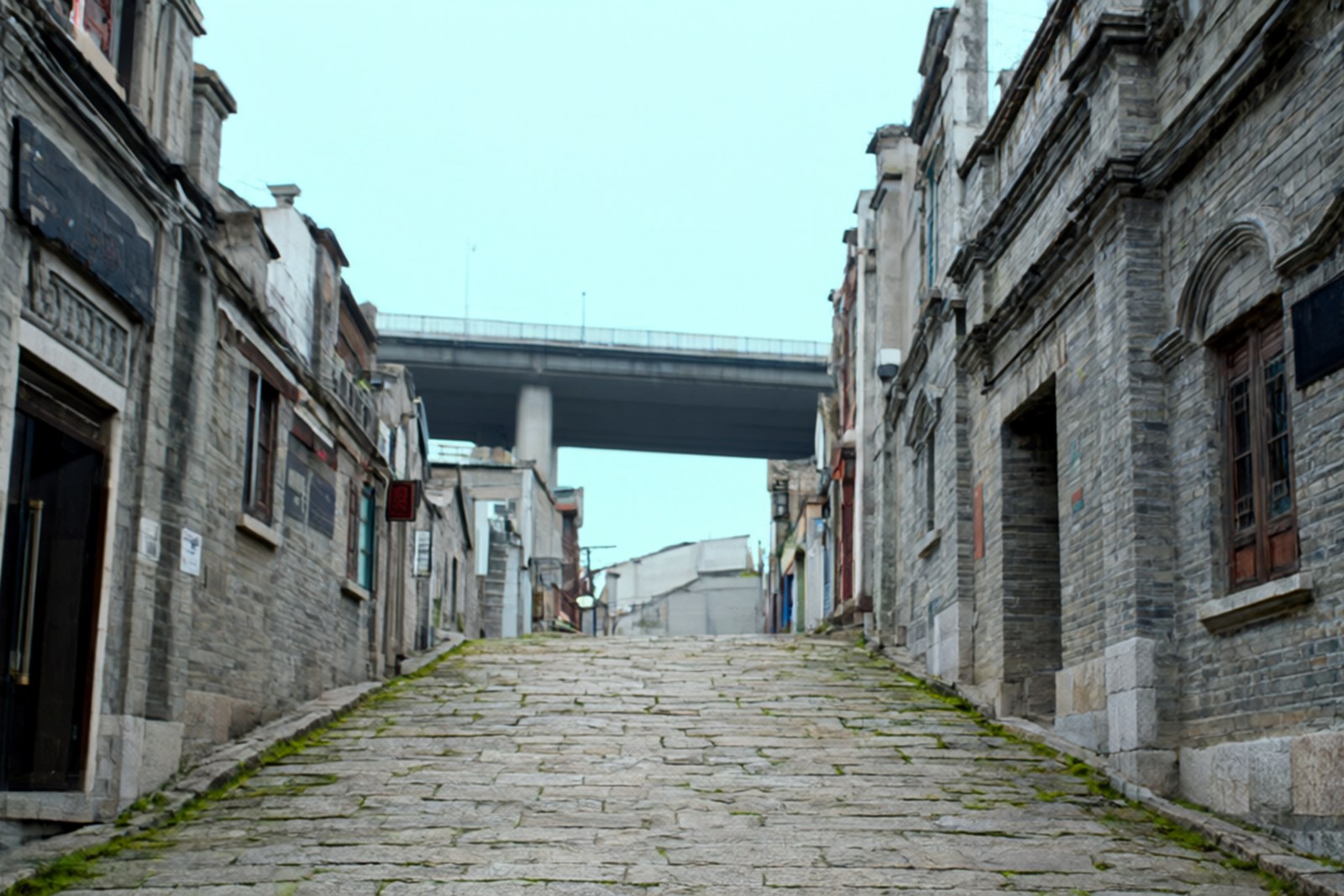
The paper trail is firm. The opening of 1891 brought the customs house and, in its wake, the foreign trading houses that clustered along this stretch of the south bank; the firm of Archibald John Little, the first foreign house to settle here, put down roots in 1896 with a bristle factory among its ventures, and the riverside terraces filled with consulates, banks and merchant villas through the following decades. The war years added a diplomatic layer the street still carries: with Chongqing serving as the wartime capital, more than thirty countries posted envoys to the city, and the former Italian and Belgian embassy buildings survive on these lanes – a chapter worth one sentence here and a museum visit elsewhere. What makes the street remarkable is not any single building but the survival of the whole stepped geography: consulate compounds, bank houses and courtyard homes descending a hillside of stone stairways, the vertical city of old Chongqing preserved in a single slope.
Renewal came the careful way. The municipal government adopted a protection plan for the old street in 2015, and after restoration the first section reopened on 22 September 2018; at the end of 2022 the extension quarter of 下浩里 Xiàhàolǐ, Xiahaoli, opened across the line of the Dongshuimen bridge, adding the 米市街 Mǐshì Jiē, Mi Shi Street, grain-market lane and the former Yongxing foreign trading house among its restored buildings. The district runs to around 300 mu – some 20 hectares – with more than 200 buildings, which makes it one of the larger historic quarters on the upper Yangtze, and in 2025 the national Ministry listed it among China’s tourism and leisure streets, the official stamp on what visitors had already worked out. The restoration reads well precisely because it reads old: the stone steps still fall the way the porters fell, the grey brick keeps its weather, and the new tenants – cafes, small museums, and the Shiji bookshop, which has become the street’s literary living room – occupy the buildings without sanding them smooth.
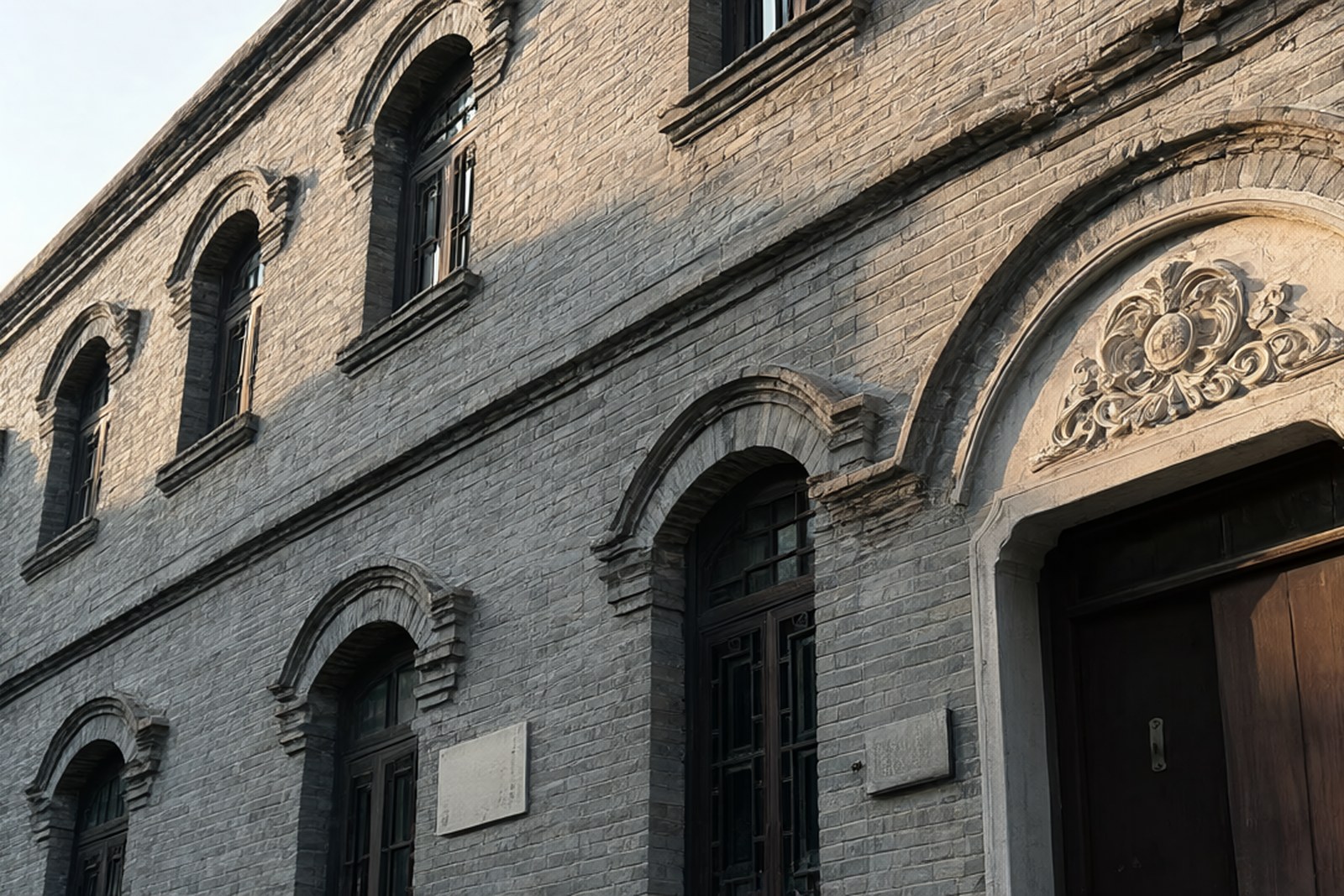
Plan the visit as a descent and let the street do the narrating. The metro end drops you into the upper lanes among the embassy-era buildings; the middle terraces hold the restored compounds and the views open as you fall; and the river end delivers you to 南滨路 Nánbīn Lù, Nanbin Road, the treaty-port waterfront where the same history continues along the bank – with the port-opening heritage park on the Ma’anshan stretch, beside the cableway’s south station, a short walk south for those who want the sequel. Practical hours are simple because the street is a public district rather than a gated site: wander it at any hour, catch the cafes and shops from late morning, and save the last hour of daylight for the terraces, when the lamps come on along the steps and the peninsula across the water answers them light for light. Two hours is the honest minimum; a half day with a long lunch is the better number.
Practicalities
Tickets. There is no ticket: Longmenhao is a free, open-street district, and its museums, cafes and shops charge on their own terms inside it. As of October 2026, subject to change – check before you go.
Opening hours. The street itself is open at all hours; individual cafes, bookshops and exhibition spaces keep their own schedules, with the quarter liveliest from late morning to mid-evening.
Closing day. There is no closing day: an open public district does not shut for the calendar, so only individual venues need checking if your trip depends on one.
Getting there. Metro Line 6 to 上新街 Shàngxīnjiē, Shangxinjie, Station, Exit 1: the old street begins across the road and runs downhill toward Nanbin Road. The river end connects to the Nanbin Road waterfront and its bus stops.
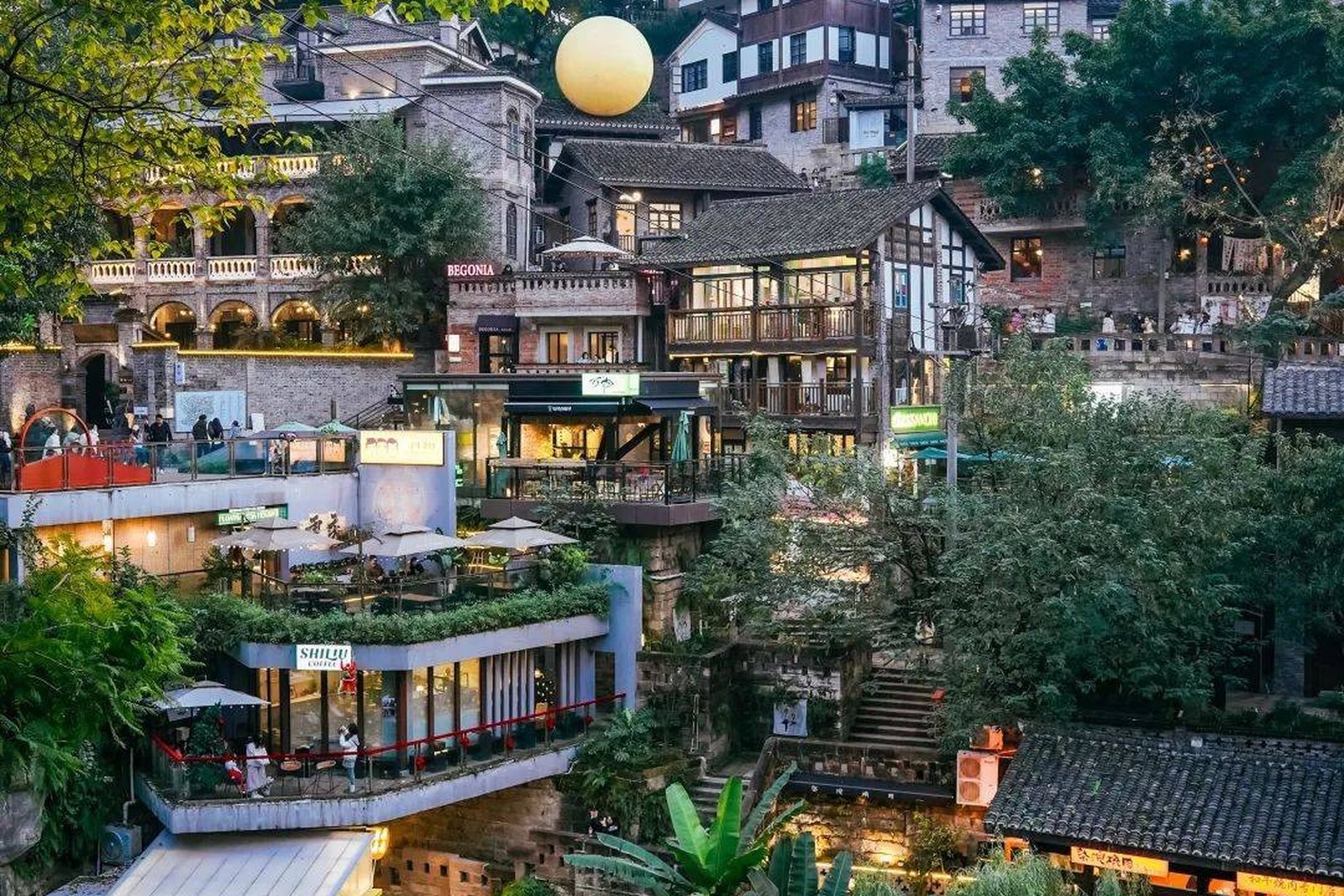
flowcloud would say that Longmenhao is the rare old street that knows what it is – the exact slope where a closed river city opened its doors, kept in brick and stone steps rather than in plaques – and that the best way to read 1891 is downhill, one terrace at a time.
Getting there: Longmenhao Old Street is the restored treaty-port quarter of Nan’an District, Chongqing, a municipality of southwest China, terraced down the hillside below the Dongshuimen bridge from the metro end at Shangxinjie to the Nanbin Road waterfront; Chongqing opened as a treaty port in 1891 and the foreign firms and consulates that followed landed here, with the firm of Archibald John Little settling in 1896 and the former Italian and Belgian embassy buildings surviving from the wartime capital years; protected by a 2015 plan, the first section reopened on 22 September 2018, the Xiahaoli extension followed at the end of 2022, and the street of some 20 hectares and more than 200 buildings entered the national tourism and leisure street list in 2025; entry is free with no closing day and shops keeping their own hours, and the arrival is metro Line 6 to Shangxinjie Station, Exit 1 (checked October 2026, subject to change).