
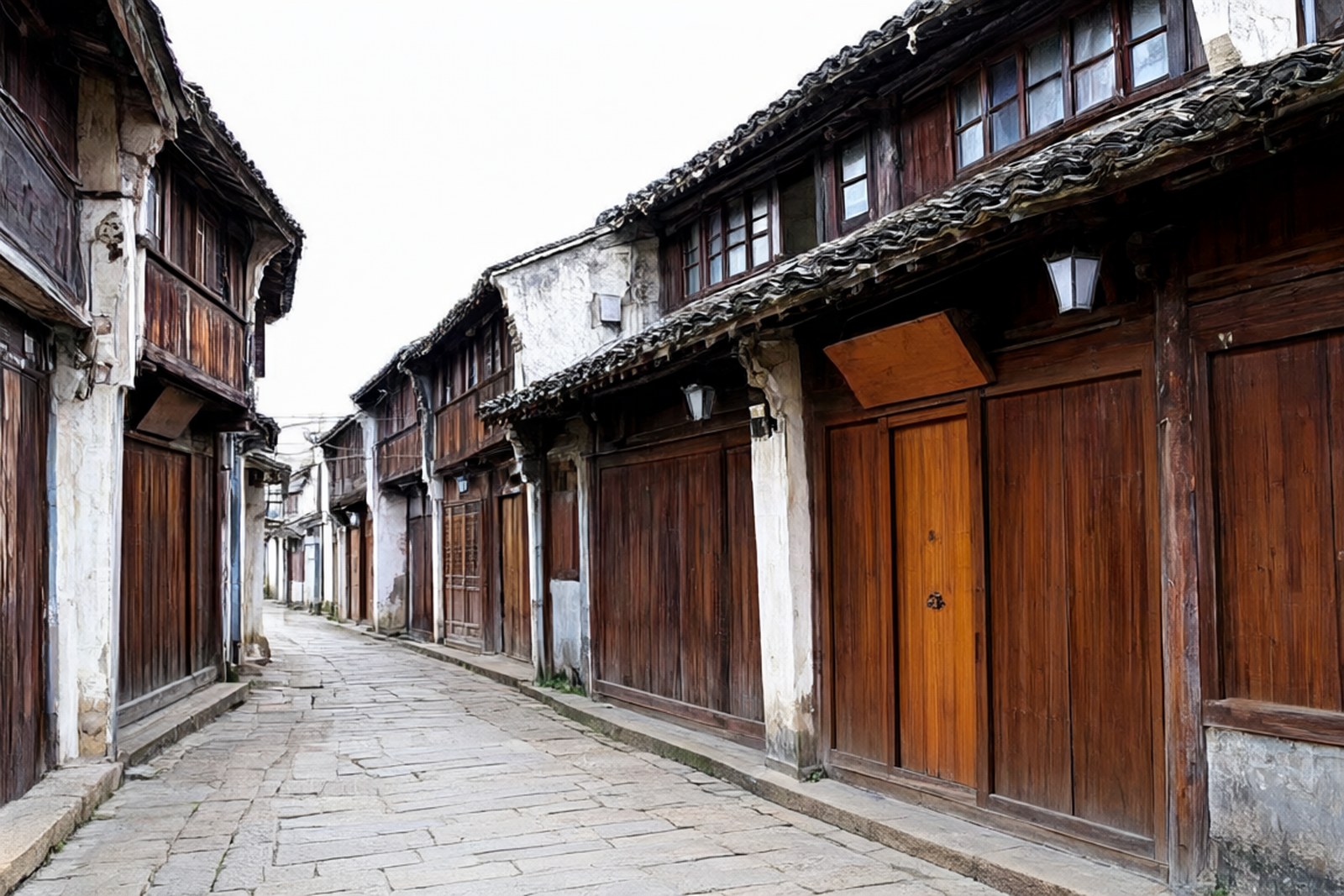
Six hundred years of river town, and then a decade of cameras. 龙兴 Lóngxīng, Longxing, sits 36 kilometres from the city centre on Highway 210 in the south-east of the former 渝北区 Yùběi Qū, Yubei, now the northern part of Liangjiang New Area, Chongqing, a municipality of southwest China, and it is a town that was built to be lived in long before it was ever built to be looked at. The old street still has its two- and three-storey timber frames, its small grey tiles, bamboo infill and whitewashed walls, its clan halls and its old opera stage, and about 50,000 square metres of it sits inside the protected core. What is not free is the thing that brings most visitors now, a full-scale reconstruction of the wartime capital’s streets built at the edge of the old one.
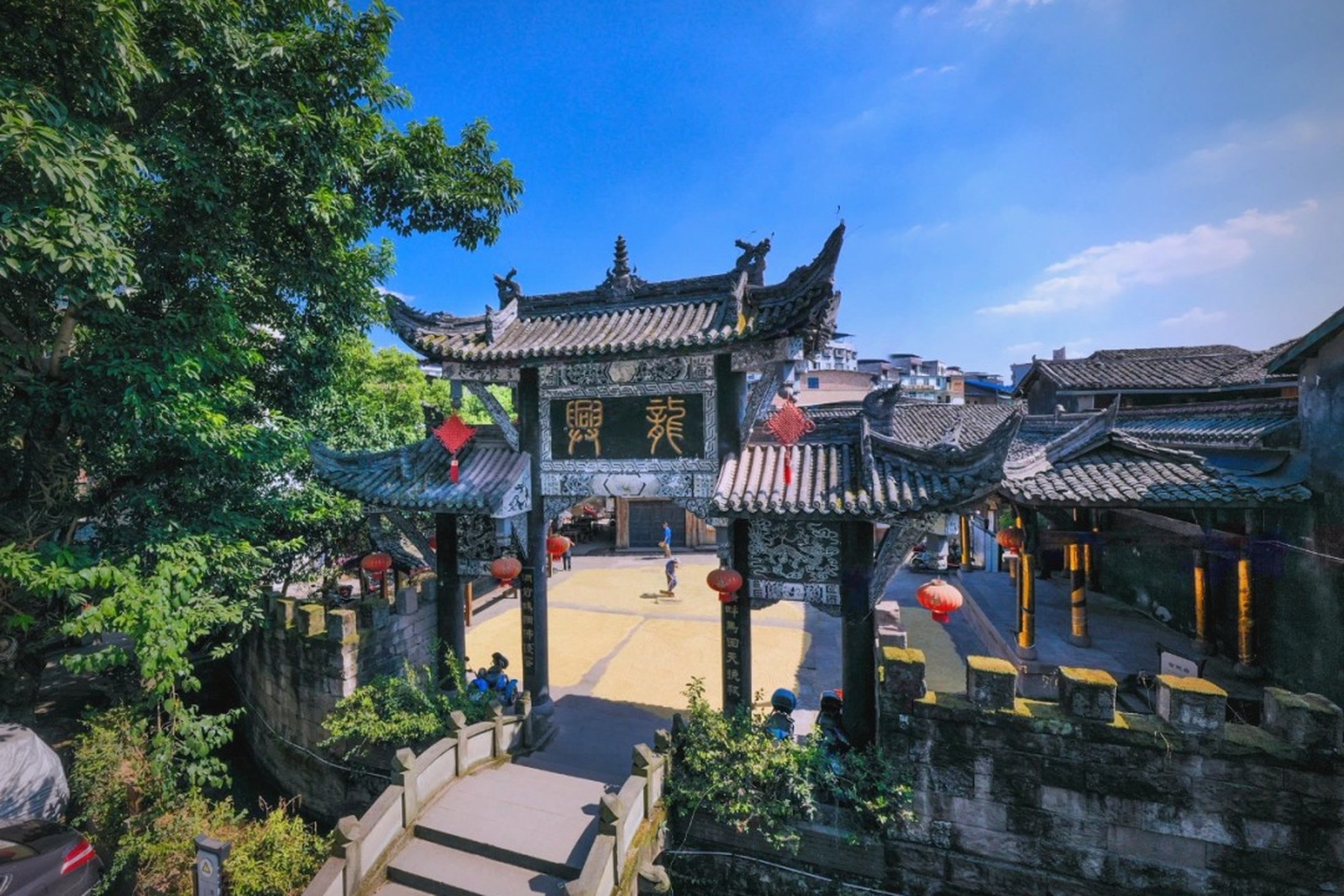
The name is younger than the town by a couple of centuries, and how it got it is worth having. A market was established here in the early Qing, and in 1844, the twenty-fourth year of the Daoguang reign, it was renamed for 龙藏寺 Lóngcáng Sì, Longcang Temple, which had itself been renamed for a story: that the Ming emperor Jianwen, who disappeared when his dynasty fell, came into Sichuan and spent a night at a small Guanyin shrine here, hiding in the stone cave beneath the shrine’s altar until the search for him had gone past. A bridge over the stream was named 回龙桥 Huílóng Qiáng for the same night, and the river, then called 太洪江 Tàihóng Jiāng, became 御临河 Yùlín Hé, the Yulin. In September 2005 Longxing was listed in the second batch of National Historical and Cultural Towns.
What survives is a working town rather than a preserved one, and that is the better thing to walk. The street carries a century-old tavern, a dried-tofu shop, an oil mill and a brewery, and you can watch yinmi being steamed and sunned on the stones; Sichuan opera is performed seated in a teahouse, and storytellers work the rooms above the old stage. Twelve crafts are on the town’s intangible-heritage list, among them Longxing brown sugar, long-jin dried tofu, yinmi pastry, Li’s sugar painting and Tan’s dough modelling, and the town has been a filming location since 2019.
The film city is a national AAAA site built against the wartime capital, its streets a one-to-one reconstruction of the region’s 1940s buildings, and it has stood in for The Continent, Chongqing Negotiations and The Declaration of Cairo. Its plan is worth reading off the doorways: a Victory Monument, a Hengdali clock shop, a Sino-French pharmacy, the Guotai theatre, the offices of the Xinhua Daily and a Du Yuesheng residence. The reconstruction is convincing enough that the two places get used in the same sentence, which is also the practical problem: the town is free, the film city is sold on a ticket, and the two stand within walking distance.
Practicalities
Tickets. The old town itself is free and open at all hours, with no ticket, no gate and no closing day – it is a town people live in, and the point of the protected core is that it is not a scenic enclosure. The film city inside it is the opposite: a national AAAA site, ticketed, and the current price is about 77 yuan for an adult, which is what the ticketing platforms sell and what you will pay at the gate. That figure is worth setting against its own history, because a district publicity route in 2020 quoted 40 yuan, so the long-standing price was a little over half of today’s.
Opening hours. The film city publishes timed day sessions through the ticketing platforms, split across the afternoon, so check the slot you buy rather than assuming an all-day entry. The free town has no hours; its businesses keep shop hours, and the crafts are made in the open on the street, which means the interesting part of the day is a working day rather than a timetable.
Closing day. Neither the town nor the film city keeps a weekly closing day in the published arrangement, and inventing one would be the wrong kind of help. What changes on a schedule is the town’s business geography, which follows a three-band plan in which parts of the street are given over to quality lodging and a night economy, and part of the film city’s street is closed to through traffic in the evening, which is a change of circulation inside one site rather than a rest day. A film crew working a lane is a temporary arrangement, not a closing day.
Getting there. Buses from the city reach the town centre: the 984 to 文化广场 Wénhuà Guǎngchǎng, Culture Square, leaves about 680 metres of walking, and the 980 to 龙兴影视城 Lóngxīng Yìshìchéng, the Longxing film city, about 780. Tourist coach lines run here from the university town, Beibei, Hechuan, Lianglu, Longtou Temple, Fuling and Qijiang, which is the easiest way to reach a place 36 kilometres out without a car. By road it is Highway 210 and the Chongqing-Changshou expressway, and the film city is normally entered from 金御大道 Jīnyù Dàdào (checked October 2026, subject to change).
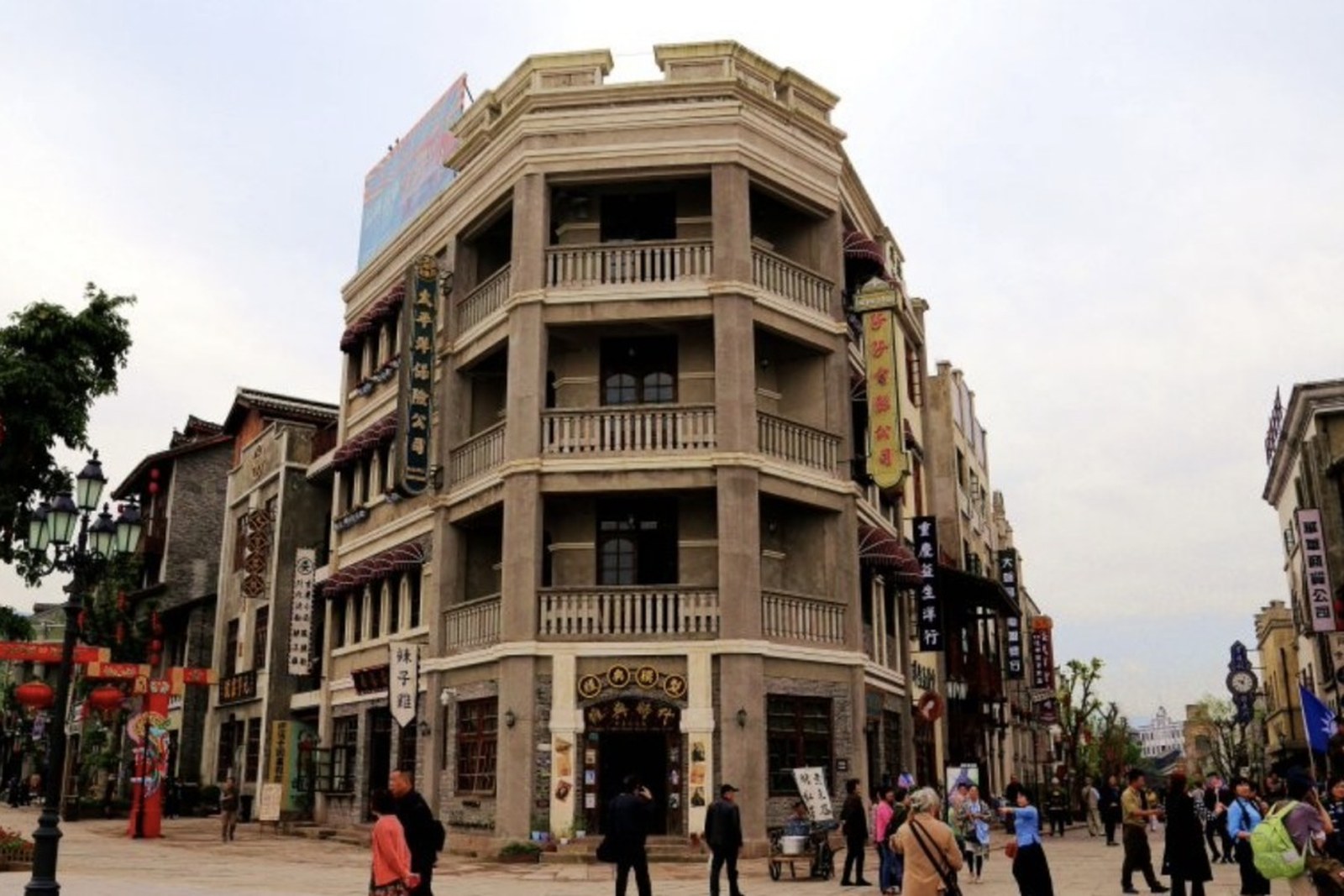
flowcloud would say that Longxing is the rare town where the film set is the younger half and the better half, and that the two things worth doing are incompatible by design – walk a free street of timber frames where the brown sugar is still made in the open, then pay about 77 yuan to walk a street built in 2015 to look like 1942.
Getting there: 龙兴 Lóngxīng, Longxing, stands 36 kilometres from the city centre on Highway 210 in Yubei, the former 渝北区 Yùběi Qū and now the northern part of Liangjiang New Area, Chongqing, a municipality of southwest China – a market town named in 1844 out of the legend of the Ming Jianwen Emperor hiding in a cave beneath a shrine altar, listed in the second batch of National Historical and Cultural Towns in September 2005, with about 50,000 square metres of Ming-and-later timber frame in its protected core, twelve intangible-heritage crafts, and a national AAAA film city inside it whose wartime street was used for The Continent, Chongqing Negotiations and The Declaration of Cairo. The town is free, open at all hours and has no closing day; the film city is ticketed at about 77 yuan against the 40 yuan a 2020 district route still quoted. The 984 to Culture Square and the 980 to the film city are the local buses, and Highway 210 is the road approach (checked October 2026, subject to change).