
露德堂 Lùdétáng, the Loudetang Church, stands on the shore of 金堂湖 Jīntáng Hú Jintang Lake at 正兴镇 Zhèngxīng Zhèn Zhengxing Township in 璧山区 Bìshān Qū, Bishan District, and nothing in the countryside around it prepares a visitor for it: a grey-white French Gothic church built in 1899-1902 by the Paris Foreign Missions Society with Boxer-indemnity funds, modelled on the shrine town of Lourdes and dedicated to Our Lady of Lourdes – the Lourdes church of the church’s Chinese name. It is counted among the handful of surviving Lourdes churches in the country, it is the best-preserved Catholic church in the southwest on the record’s own description, and it is a protected site standing in farm country an hour from the metro. This page is the district’s ace, and it is written on the building because the building is the argument.
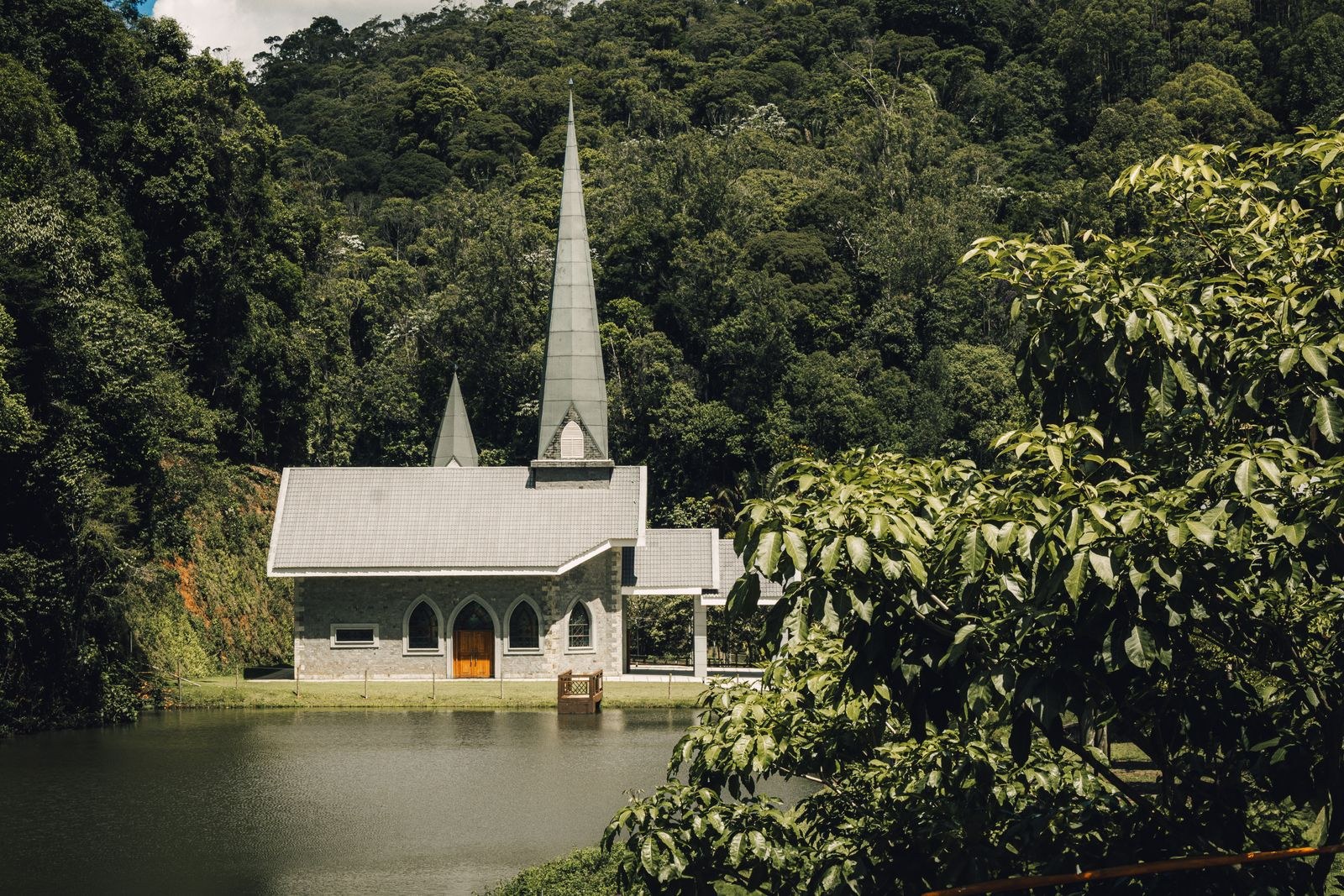
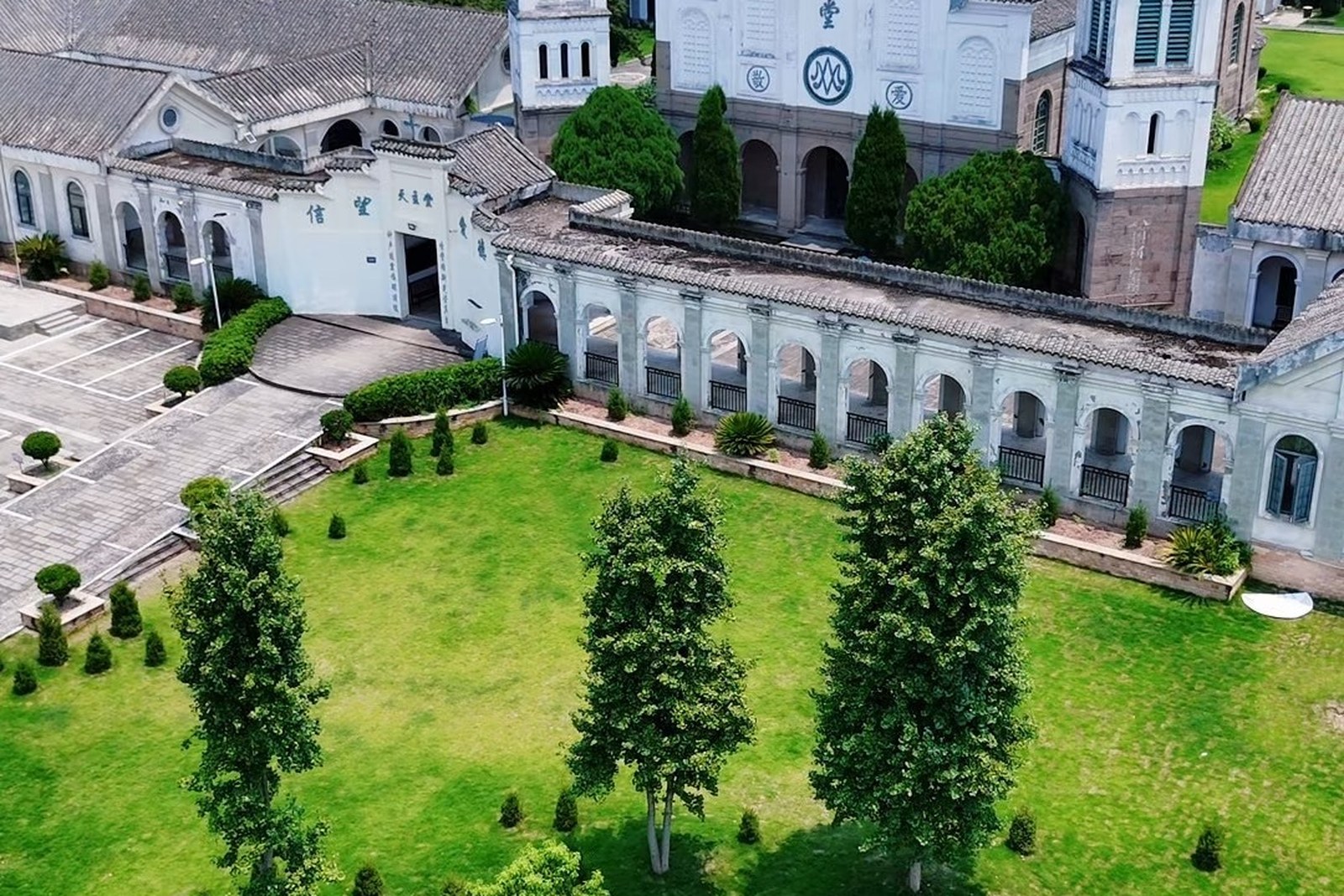
The history is the reason the building is here, and the record carries it in unusual detail. The Paris Foreign Missions Society’s priest built the church in 1899-1902 on Boxer indemnity money after the district’s earlier church was destroyed in the disturbances of the era, modelling it on the Lourdes shrine and naming it for Our Lady of Lourdes; the complex grew to a full mission station – church, priest’s house, bell tower, cloisters and gardens on the lake shore. The building ran the century’s dangers in school clothes: granary in the fifties, then the township middle school’s chapel-and-classrooms until 1989, when it was handed back to the church – institutional uses that are exactly why it survived the decades when such buildings did not, and the record is frank about the debt. The protection grading followed, and the church today is both a working parish and the district’s most photographed building.
The building itself is the sight, and its engineering is the local legend. The main hall runs about six hundred square metres under a blue vaulted ceiling on ten octagonal stone columns that the light famously leaves shadowless – a daylighting trick the guides demonstrate, and one the record’s own reporters went to test and half-conceded – and the vault is shaped to carry a whisper its full length, so the two ends of the hall hold a conversation at speaking volume. The cloister upstairs runs on porcelain balustrades, the compound keeps two of the forty-eight wells the fathers are said to have sunk, and the local tradition insists the wells were prospecting bores – a story the record reports with appropriate scepticism and then notes the punchline to: gas fields were struck nearby after liberation, making Bishan one of Chongqing’s first gas-using counties. The church’s blend of French Gothic massing and Sichuan courtyarded planning is the architectural summary the page can honestly make: the shell is imported, the plan is local, and both are original.
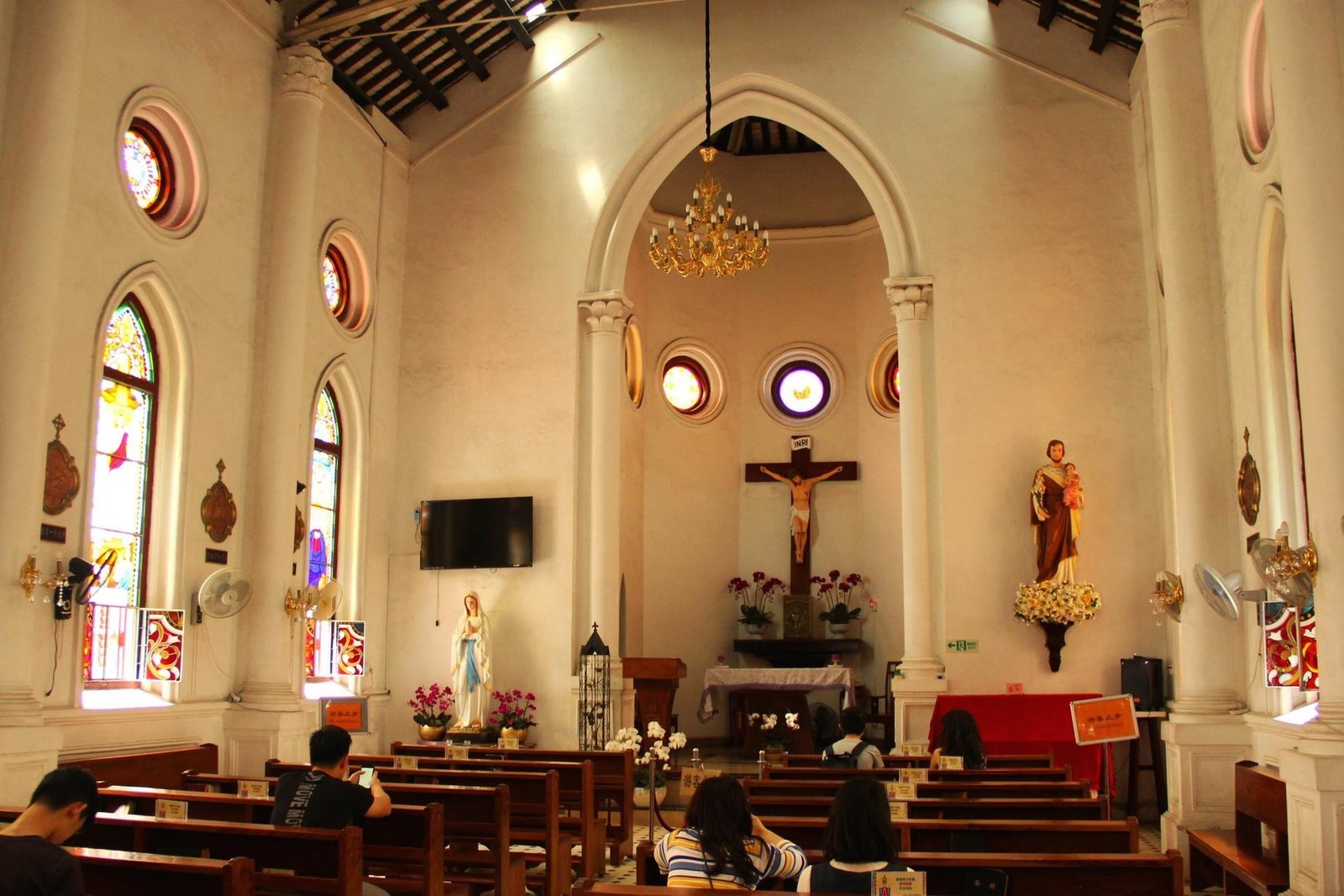
What the record supports is the church, the lake, the township, the dates and the indemnity origin, the missionary builder, the dimensions, the column and vault lore, the porcelain balustrade, the wells, the granary-and-school years, the 1989 restitution and the protection status; what it does not support is any posted ticket figure beyond the record’s own note of a token fee for the main hall, any mass timetable, or any claim about current restoration work, and none is invented here. The record consulted prices the hall visit in single yuan figures and the grounds free, and the page keeps to that shape of fact: a token ticket, a working parish, a protected site.
The church also gives the batch its stranger, and the district’s tourism writing treats it that way. A Gothic church on a farm lake is the sight the neighbouring districts cannot copy – the wetland and the lake parks are replicable civic work, the mountain is regional, but a French mission church of this quality standing on the old road corridor is a singular asset, and Bishan’s travel pages lean on it accordingly. A visitor runs it as the second half of a Zhengxing afternoon – the lake, the church, the drive home through the orchard belt – and the building repays the detour at every one of its borrowed scales. All checked October 2026.
Words and Names
露德堂 Lùdétáng, the Loudetang Church, on the shore of 金堂湖 Jīntáng Hú Jintang Lake at 正兴镇 Zhèngxīng Zhèn Zhengxing Township, 璧山区 Bìshān Qū, Bishan District: a French Gothic Catholic church built 1899-1902 by the Paris Foreign Missions Society with Boxer-indemnity funds, modelled on the Lourdes shrine and dedicated to Our Lady of Lourdes, with a main hall of about six hundred square metres on ten octagonal stone columns famed as shadowless under a blue vault that carries a whisper its length, a cloister with porcelain balustrades, and two of the forty-eight wells tradition says the fathers sank. Granary and township-school buildings through the fifties to the eighties are credited with its survival; it returned to the church in 1989 and is a protected heritage site, described in the record as the southwest’s best-preserved Catholic church and among the country’s few surviving Lourdes churches. Grounds free, the record notes a token fee for the main hall; no mass timetable or current-works claim is on the record consulted, and none is invented here.
What the Locals Know
The local knowledge is the light and the quiet. The church photographs best in the late afternoon, when the western light comes down the nave between the columns and the shadowless-column legend is at its most testable; the locals bring visitors then, and the hall’s whisper-carry makes the demonstration part of every visit. The grounds are the second stop – the two surviving wells, the porcelain-balustrade cloister and the lake lawn are the compound’s own circuit, and the wedding-photo trade that works the lawn on weekends is the district’s own verdict on the building. Mass days belong to the parish and the visitor plans around them rather than through them; weekdays are the empty-hall hour the photographers want. What the record does not carry is any timetable, ticket beyond the token hall fee, or restoration news, and the page declines all three – the dates, the dimensions and the lore are the facts, and the light is the rest.
Practicalities
Tickets: The grounds are free and the record notes a token fee for the main hall – single yuan figures on the record’s own note, quoted as noted and no more invented than that. No mass timetable, donation schedule or current-works charge is on the record consulted; the honest form is a token ticket, a working parish and a protected site, in that order.
Opening hours: Not posted on the record consulted – a working parish keeps a parish calendar, and the practical answer is to plan the visit for the late afternoon, when the western light comes down the nave between the columns and the shadowless-column legend is at its most testable. Weekdays are the empty-hall hour the photographers want; mass days belong to the parish, and the visitor plans around them rather than through them.
Closing day: None on the record consulted – the church survived granary and school decades precisely by staying in use, and it is a working parish today rather than a museum with a rest day. The wedding-photo trade that works the lawn on weekends is the district’s own verdict on the building, and it is the one weekly rhythm the grounds visibly keep.
Getting there: The church stands on the 金堂湖 Jīntáng Hú Jintang Lake shore at 正兴镇 Zhèngxīng Zhèn Zhengxing Township, 璧山区 Bìshān Qū, Bishan District – reached by road from the county town through the orchard belt, about an hour from the metro. Run it as the second half of a Zhengxing afternoon – lake, church, the drive home through the grape rows – and the building repays the detour at every one of its borrowed scales.
flowcloud would say that 露德堂 the Loudetang Church is the district’s singular building – a French Gothic church of 1899-1902 built on Boxer-indemnity funds by the Paris Foreign Missions Society on 金堂湖 Jintang Lake at Zhengxing, its ten octagonal columns famed shadowless under a whisper-carrying blue vault, its porcelain-balustrade cloister and surviving wells, saved by granary and school decades and returned to the church in 1989 – and that the correct visit is the late-afternoon light in 璧山区 Bishan District, because the building is the argument and no timetable beyond the token hall fee survives in the record consulted. All checked October 2026.