
The Love Ladder – 爱情天梯 Àiqíng Tiāntī – is a real staircase with a real story, cut into the mountain country above 中山古镇 Zhongshan Ancient Town in southern 江津区 Jiāngjīn Qū, Jiangjin District. In the 1950s Liu Guojiang 刘国江, then nineteen, led the widowed Xu Zhaoci 徐朝清 – the older woman he had grown up beside – up the mountain to live beyond the reach of the village gossip; and to keep the way climbable he spent the next half-century cutting stone steps into the cliff path, some six thousand of them, hand-chiselled, climbing the whole face of the mountain to the couple’s house at the top. Both have since died; the staircase remains. This page is written on the object itself, because the object is the story.
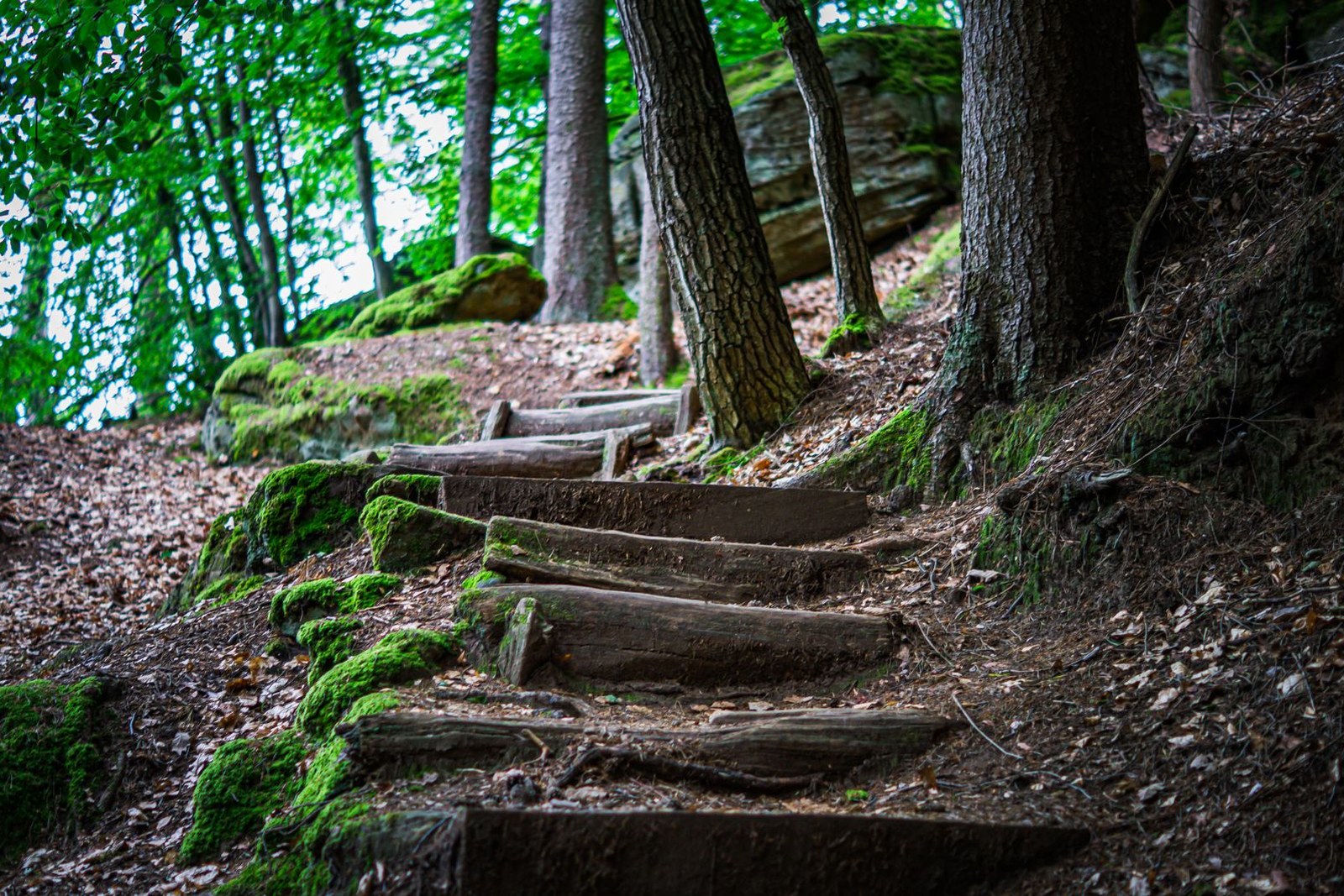
The story, briefly and on the record: the marriage scandalised the village, the couple moved up the mountain, and for fifty years Liu Guojiang cut and maintained the steps so that his wife could go down and back safely – widening the ledges where the path crossed bare rock, chiselling handholds where it climbed. The story surfaced in the 2000s when outsiders found the stairway, and it made the pair national figures; the press called the steps the Love Ladder and the name stuck to the mountain. The decades at the top, the tools, the house – these are the documented spine, and the page adds nothing to them. What the visitor walks is the monument they left: a working staircase, not a sculpture, built for one person’s feet and inherited by everyone’s.
The climb is the experience, and it is honest work. From the valley the stairway rises through forest on a half-day round trip, steep and real, the steps uneven exactly where a chisel left them, slick in rain, shaded most of the way and cool at the top where the mountain air pools. The house at the top keeps the couple’s things as a small museum – the tools, the furniture, the photographs – and the walk down is the part visitors remember, the whole climb laid out beneath the feet like a ledger of half a century’s Sundays. Sensible shoes and a morning start are the entire technique; the stairway is the place where the district’s romance trade and its mountain reality meet, and the mountain is the one that sets the terms.
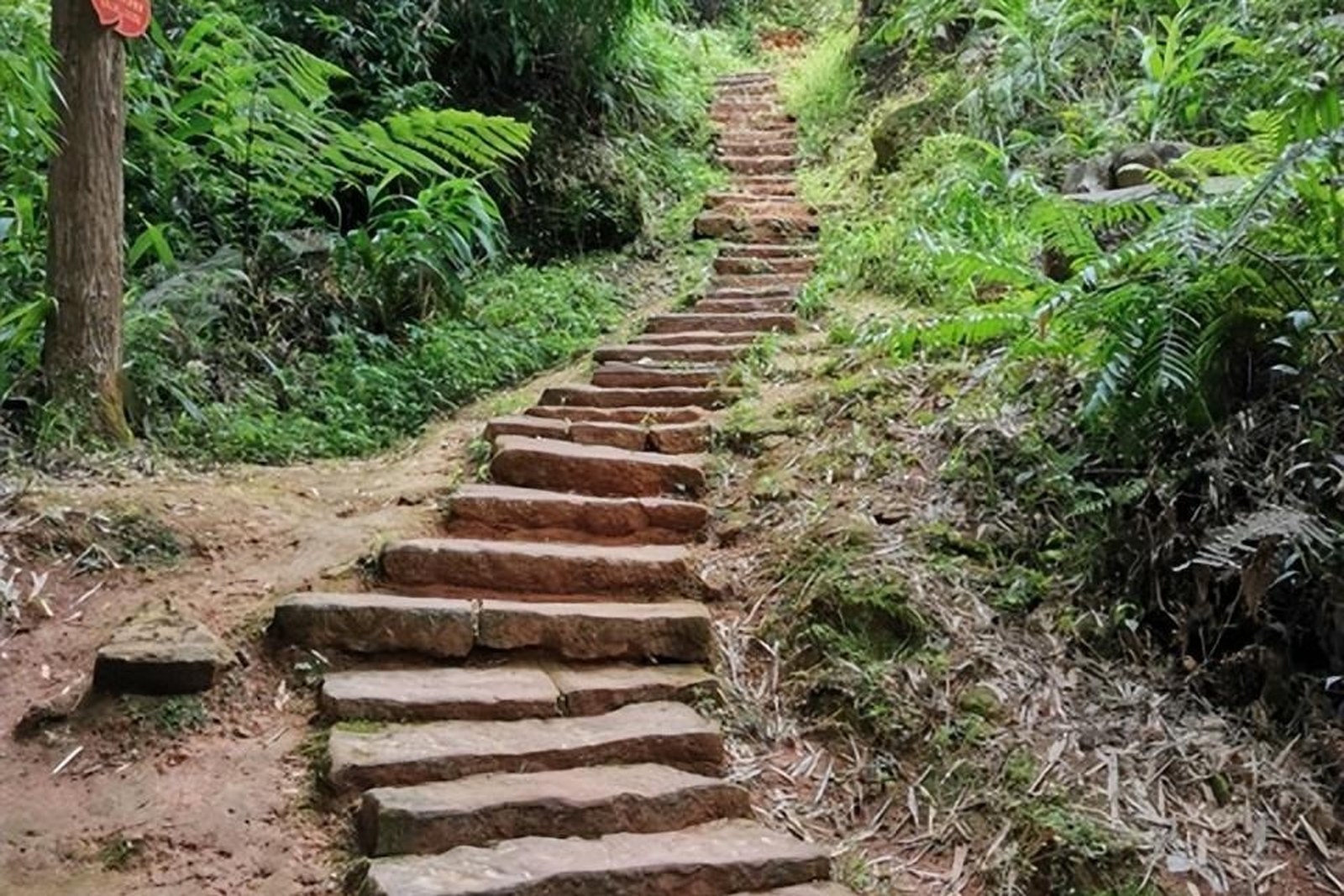
What the record supports is the staircase, the couple, the 1950s beginning, the nineteen-year-old’s age at the move, the roughly six thousand steps, the half-century of cutting, the story surfacing in the 2000s, the national attention, and the house at the top keeping the couple’s things; what it does not support is any exact step count beyond the roughly six thousand, any ticket figure, any posted hours, or any reconstruction claim about the house, and none is invented here. The couple are buried in the district and the staircase is their monument; the page keeps the sentiment to what the stones carry, which is enough.
The Love Ladder also organises the batch’s geography. It sits in the mountains behind Zhongshan old town – the salt-road street down the valley is the natural base, the riverside inns the natural beds – and the district’s map of the south runs waterfall, old town, ladder: the Simian Mountain drives, the Zhongshan overnight, the ladder walk between them. A visitor who climbs in the morning and walks the street in the afternoon has taken the district’s south in one honest day, and the staircase makes the argument the whole travel column leans on: in Jiangjin the sights are made of labour, water and time, in proportions a visitor can still feel underfoot.
Words and Names
爱情天梯 Àiqíng Tiāntī, the Love Ladder, in the mountains above 中山古镇 Zhongshan Ancient Town in southern 江津区 Jiāngjīn Qū, Jiangjin District: roughly six thousand stone steps cut by hand into the mountain path by 刘国江 Liu Guojiang, beginning in the 1950s when he was nineteen and moved up the mountain with the widowed 徐朝清 Xu Zhaoci, and continuing across half a century until the stairway ran the whole face of the climb to their house at the top. The story became nationally known in the 2000s; both are since deceased, and the house keeps their things as a small museum. The climb from the valley is a half-day round trip. No exact step count, ticket figure or posted hours is on the record consulted, and none is invented here.
What the Locals Know
The local knowledge is the weather and the base. Rain makes the chiselled steps slick, and the locals simply do not climb in it – the stairway is a dry-morning walk, early, before the day-trippers’ cars line the valley road; the forest shade keeps the climb cool even in the hot months, which is the district’s own trick for summer. The base matters as much as the timing: the climb starts on the Zhongshan side of the valley, and the visitors who bed down in the old town’s riverside inns get the empty staircase the early risers earn. Water, real shoes and a willingness to rained-out are the whole list; the house at the top is the rest stop, and the small museum is the view.
Practicalities
Tickets: None on the record consulted – the staircase is a mountain path, not a gated sight, and the climb costs what legs cost. The house at the top keeps the couple’s things as a small museum, and no entry figure for it is on the record either; the page declines both rather than inventing them, which is the honest shape of a monument built by one man’s labour and inherited by the public.
Opening hours: Daylight only as the working norm – the chiselled steps are slick work in the dark, the forest holds the shade through the middle of the day, and the half-day round trip wants a morning start with the top reached by early afternoon. No posted hours table is on the record consulted; the honest clock is the weather’s, a dry morning being the entire technique.
Closing day: None – a hand-cut staircase has no closing day, and no published rest day is on the record consulted. Rain is the de facto closure: the steps turn slick exactly where the chisel left them, the locals simply do not climb in it, and a wet day is a reorganised itinerary – the old town below instead, the ladder another morning.
Getting there: The staircase climbs the mountains above 中山古镇 Zhongshan Ancient Town in southern 江津区 Jiāngjīn Qū, Jiangjin District – reached by road up the valley on the Zhongshan side, with self-drive or a hired car out of the old town the working options; no trailhead timetable, fare or through-service is on the record consulted, so none is invented here.
flowcloud would say that the Love Ladder is the district’s strangest and most honest monument – roughly six thousand steps cut by one man across fifty years so his wife could walk down the mountain safely, climbing the whole face of the ridge above Zhongshan to the couple’s house at the top – and that the correct visit is a dry morning from a bed in the old town below, because the staircase is a working thing built for feet, and it repays the legs that use it. All checked October 2026.