
Lugou Bridge: The Marco Polo Bridge, Uncountable Stone Lions and Lugou Dawn Moon of Fengtai District, Beijing
卢沟晓月悬秋水,百态石狮阅古今。Lúgōu xiǎoyuè xuán qiūshuǐ, bǎi tài shíshī yuè gǔjīn – Moon over Lugou hangs on the autumn water; the stone lions in their hundred postures have read all of ancient and modern.
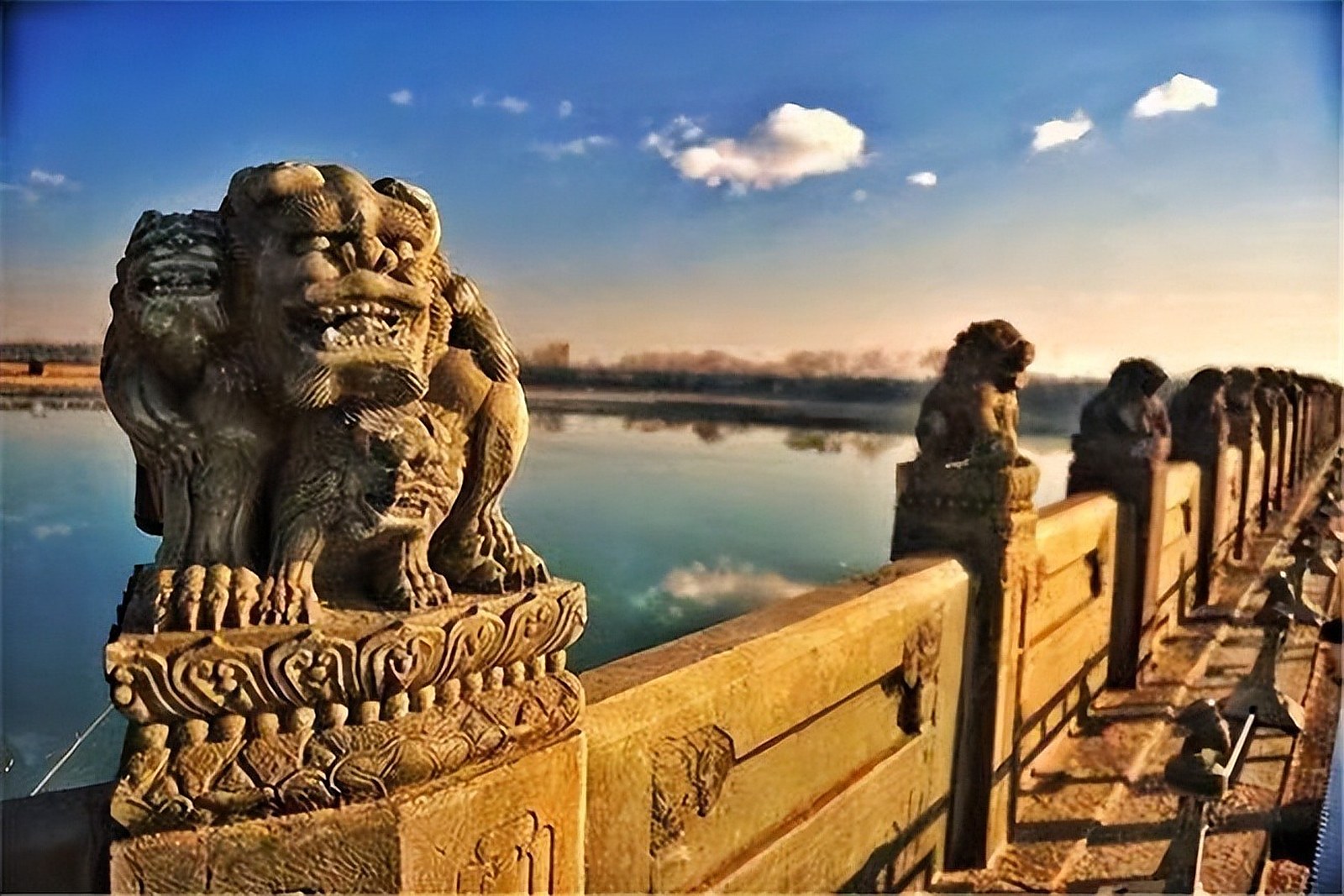
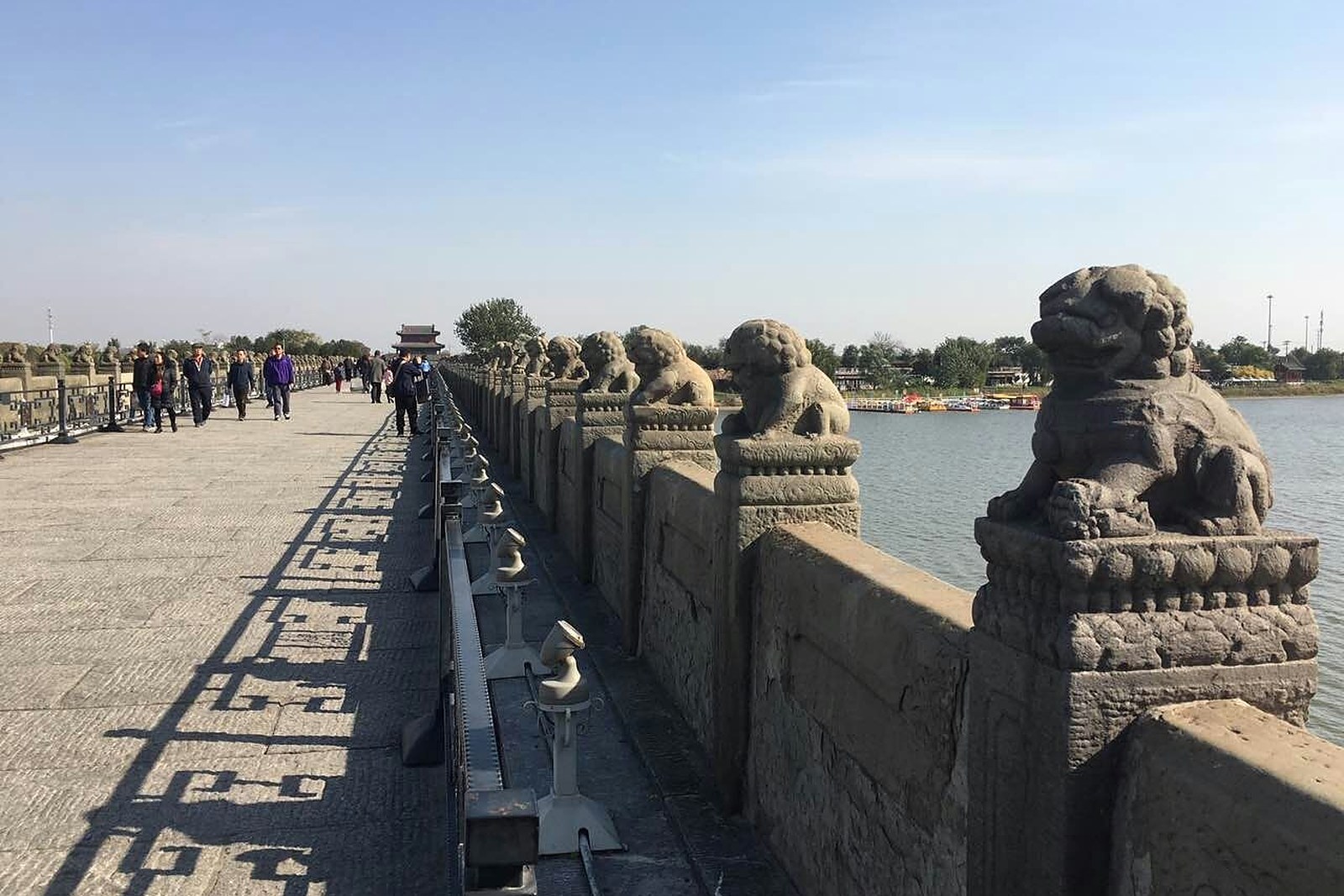
卢沟桥 Lúgōu Qiáo Lugou Bridge, known to the West as the Marco Polo Bridge, is not a bridge with a poem attached — it is, plainly put, the oldest great stone bridge still standing in the Beijing region, an eleven-arch span of a little over two hundred and sixty metres carried across the 永定河 Yǒngdìng Hé Yongding River in the west of 丰台区 Fēngtái Qū Fengtai District, Beijing — and the place where the full weight of the twentieth century came ashore. The Jin dynasty began it in 1189 and finished it in 1192, setting piers pointed with iron — the 斩龙剑 zhǎnlóng jiàn, “dragon-cutting swords” that split the spring ice — and lining its balustrades with carved lions that later reigns kept adding: hundreds of them, no two alike and famously uncountable, for every full survey lands on a different total (worth confirming the details), and the city’s oldest joke insists the lions of Lugou cannot be counted at all. Around the close of the thirteenth century 马可·波罗 Mǎkě Bōluó Marco Polo walked it and swore no bridge on earth its equal — Europe has called it by his name ever since. The view earned its own place among the 燕京八景 Yānjīng Bājǐng Eight Views of Yanjing — 卢沟晓月 Lúgōu Xiǎoyuè, the dawn moon over the water, fixed in stone by the 乾隆 Qiánlóng Qianlong emperor at the bridge’s east end. The river below, renamed 永定河 — “forever steady” — by the 康熙 Kāngxǐ Kangxi emperor in 1698, has never entirely kept the promise of its name. Beside the bridge stands 宛平城 Wǎnpíng Chéng Wanping City, a walled Ming garrison town completed in 1640 to command the crossing; and it was here, on the night of 7 July 1937, that the 七七事变 Qīqī Shìbiàn July Seventh Incident — the Marco Polo Bridge Incident — opened the full-scale War of Resistance, the first shots of the whole nation’s war fired over this deck. 中国人民抗日战争纪念馆 Zhōngguó Rénmín Kàngrì Zhànzhēng Jìniànguǎn, the Museum of the War of Chinese People’s Resistance Against Japanese Aggression, opened within the walls in 1987 and keeps the record whole.
Call it honestly: a bridge-and-city ticket with a great museum behind it. The bridge and the 宛平城 Wǎnpíng Chéng fortress are ticketed, singly or combined, at rates worth confirming the details before you go (worth confirming the details); the memorial museum inside the walls is free but runs on reservations with its own closed days (worth confirming the details), and hours shift with the season (worth confirming the details). The river is the wildcard: the 永定河 Yǒngdìng Hé ran sand for years, and although ecological releases have put water back along this reach in recent seasons, a dry-bed photograph is still possible at the wrong month (worth confirming the details). Crowds gather thick on 7 July and the national holidays, when memorial ceremonies fill the town; weekdays keep the deck to gulls and photographers. The stone surface is polished round by eight centuries of feet — take the side slabs in wet weather, and give the souvenir strip by the gate the slip until the way out.
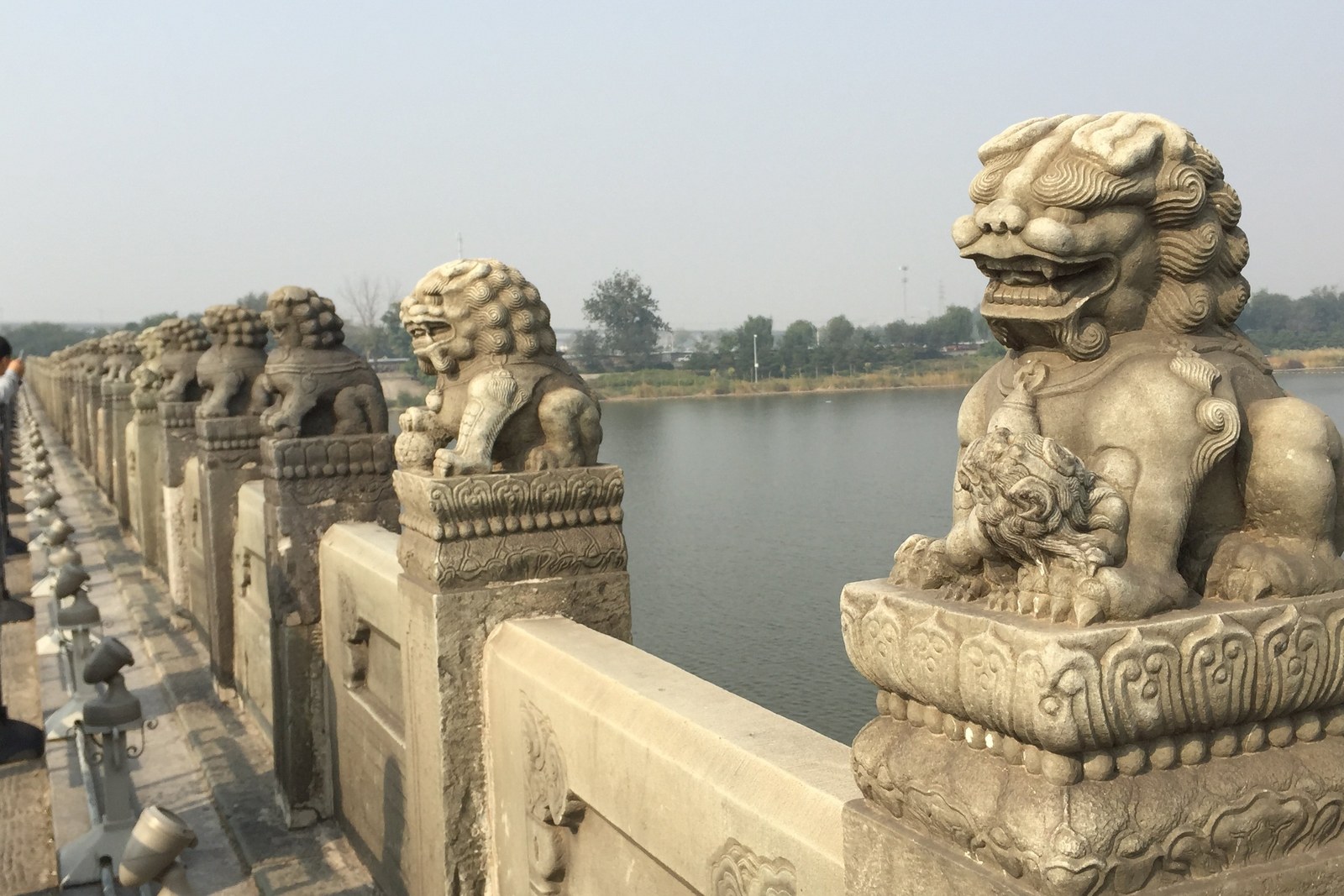
The honest star is the bridge deck at first light, not the famous stele at noon. Cross westward while the tour radios are still silent and the 永定河 Yǒngdìng Hé is grey-gold under the arches, and give the balustrade the slow eye it demands: cubs under paws, lions astride lintels, a whole stone population of jokes and warnings, each plinth a different hand. What gets oversold is the 卢沟晓月 Lúgōu Xiǎoyuè stele as a photograph — Qianlong calligraphy that any resident will tell you is the crowded half by ten in the morning; what repays the effort is walking back into 宛平城 Wǎnpíng Chéng and reading the walls, where the pockmarks of 1937 shells are left unrepaired on purpose, scar and stone holding the same argument as the museum inside. Give the memorial halls two unhurried hours — the collections are national in weight — then walk the riverbank greenway below the bridge, where herons work the shallows in the wet season (worth confirming the details). Come for the layering of the place: stone, then scar, then story.
The self-aware postscript: I crossed at opening with an old Wanping resident who had counted the lions three times in his life and received a different answer each time, to his evident delight. That is the visit in miniature. 卢沟桥 Lúgōu Qiáo suits whoever treats it as a history walk first and a bridge second — arrive at opening, read the walls, let the museum do the heavy lifting — and disappoints whoever sprints in for one postcard of arches and leaves before the stones have said anything. Everything else on this Fengtai list lies within a short ride: the garden valley of 北京园博园 Běijīng Yuánbóyuán a little way up the same river to the north-east, the miniatures of 北京世界公园 Běijīng Shìjiè Gōngyuán to the east, the bright eye of 北京汽车博物馆 Běijīng Qìchē Bówùguǎn toward the South Fourth Ring, and the ancient lotus water of 莲花池公园 Liánhuāchí Gōngyuán beside the rail station — all in the same 丰台区 Fēngtái Qū Fengtai District where the nation’s modern memory begins with this crossing.
Practicalities
- Rating: ★★★★☆ — the most history-bearing stone bridge in the capital; the deck at dawn and the scarred walls of Wanping outrank the stele crowds; go early and the crossing stays a story.
- Tickets: Ticketed entry for the bridge and Wanping City, combined or separate; the memorial museum is free with reservation (worth confirming the details for current rates, museum closed days and seasonal hours).
- Address: 卢沟桥 Lúgōu Qiáo Lugou Bridge and 宛平城 Wǎnpíng Chéng Wanping City, east bank of 永定河 Yǒngdìng Hé Yongding River, 丰台区 Fēngtái Qū Fengtai District, Beijing — on the old west road out of the city, a short drive from 北京西站 Běijīng Xīzhàn Beijing West Railway Station.
- Time needed: Two hours for the bridge and the fortress walls; half a day adding the memorial museum at an honest pace.
Words and Names
卢沟桥 Lúgōu Qiáo Lugou Bridge · the Jin stone bridge the West calls the Marco Polo Bridge 永定河 Yǒngdìng Hé Yongding River · the sand-heavy river renamed “forever steady” in 1698 卢沟晓月 Lúgōu Xiǎoyuè Moon over Lugou · the dawn-moon view that made the bridge a poem 燕京八景 Yānjīng Bājǐng Eight Views of Yanjing · the classical sight list that fixed the bridge’s fame 宛平城 Wǎnpíng Chéng Wanping City · the Ming garrison walled town of 1640 beside the bridge 七七事变 Qīqī Shìbiàn July Seventh Incident · the 1937 Marco Polo Bridge Incident that opened the full-scale war 中国人民抗日战争纪念馆 Zhōngguó Rénmín Kàngrì Zhànzhēng Jìniànguǎn Museum of the War of Chinese People’s Resistance Against Japanese Aggression · the memorial museum inside Wanping City, opened in 1987 石狮 shíshī stone lions · the bridge lions, no two alike, famously beyond counting
flowcloud would say that 卢沟桥 Lúgōu Qiáo is Fengtai’s memory made stone — a Jin bridge of 1192 over 永定河 Yǒngdìng Hé, its hundreds of 石狮 shíshī lions famously uncountable under the 卢沟晓月 Lúgōu Xiǎoyuè of the 燕京八景 Yānjīng Bājǐng Eight Views, the Ming walls of 宛平城 Wǎnpíng Chéng still pocked by the first night of 七七事变 Qīqī Shìbiàn in 1937, and 中国人民抗日战争纪念馆 Zhōngguó Rénmín Kàngrì Zhànzhēng Jìniànguǎn keeping the record since 1987 — and that the honest move is a dawn crossing before the coaches, because the bridge-and-town tickets, the museum reservations and the seasonal river water all shift (worth confirming the details), the noon stele is the crowded half, and the deck repays whoever reads the lions first and the museum second while losing whoever sprints in for one postcard of the arches. All checked October 2026.
Getting there: Bus routes west from the central city stop within a short walk of the 宛平城 Wǎnpíng Chéng east gate along the old west corridor; metro Line 16 runs into 丰台区 Fēngtái Qū as far as 榆树庄 Yúshùzhuāng Yushuzhuang, leaving a short bus or taxi ride west to the water — a further extension toward 宛平城 has long been on the boards (worth confirming the details for the current metro reach, bus numbers and river-season conditions). All checked October 2026.