
Lulang Forest Sea — Spruce, Mist and the Little Switzerland of the Plateau
云杉万顷锁烟雨,原上牧歌不肯归 Yúnshān wàn qǐng suǒ yānyǔ, yuán shàng mùgē bù kěn guī – Ten thousand acres of spruce lock in mist and rain; on the meadows the herders’ songs refuse to go home
鲁朗林海 Lǔlǎng Línhǎi East of Bayi the G318 climbs out of the valley and over 色季拉山口 Sèjìlā Shānkǒu the Sekyim La, and at the pass the world changes texture: below lies an ocean of forest, ridge after ridge of spruce and fir so dense and deep a green that the valley floor seems upholstered. This is the Lulang forest sea, the panorama that headlines every Nyingchi itinerary.
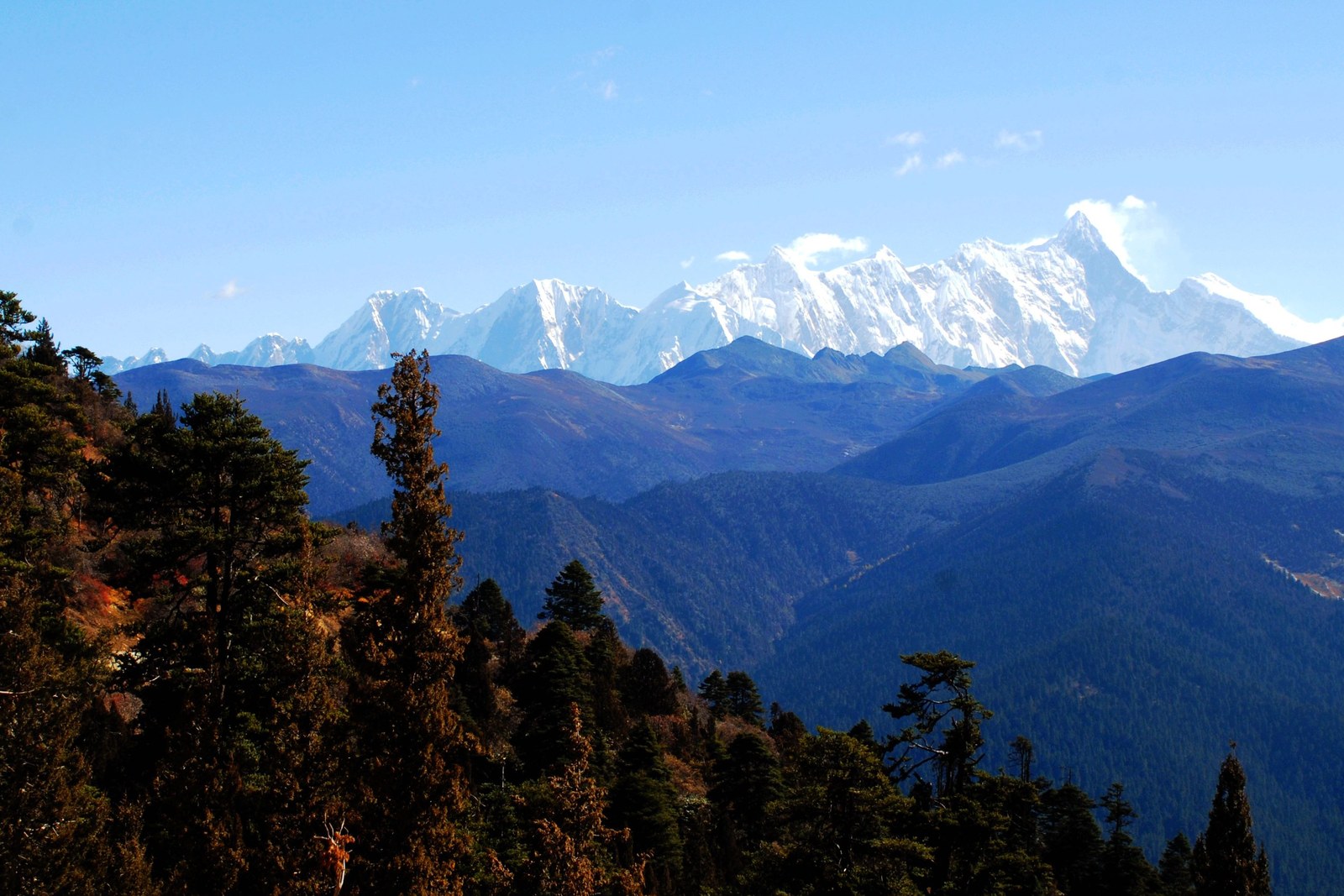
On clear mornings a cloud sea fills the valley to the brim, and at its head – when the shy one allows – the white pyramid of 南迦巴瓦峰 Nánjiābāwǎ Fēng Namcha Barwa rises above the tide. The pass terrace is the classic first stop, and the cold wind up there is part of the ritual: travelers step out of warm cars, gasp once at the view, and stay far longer than the cold should allow.
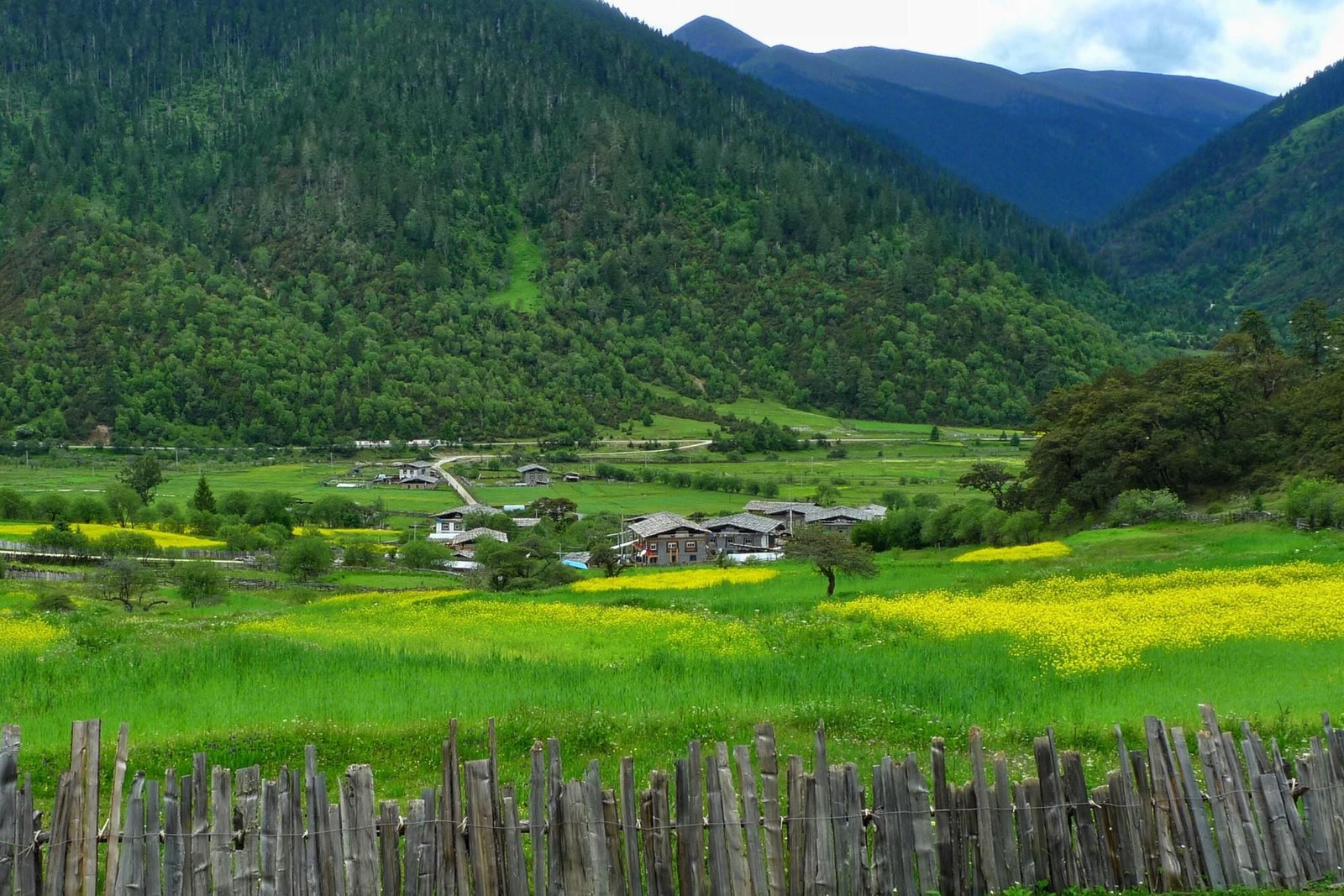
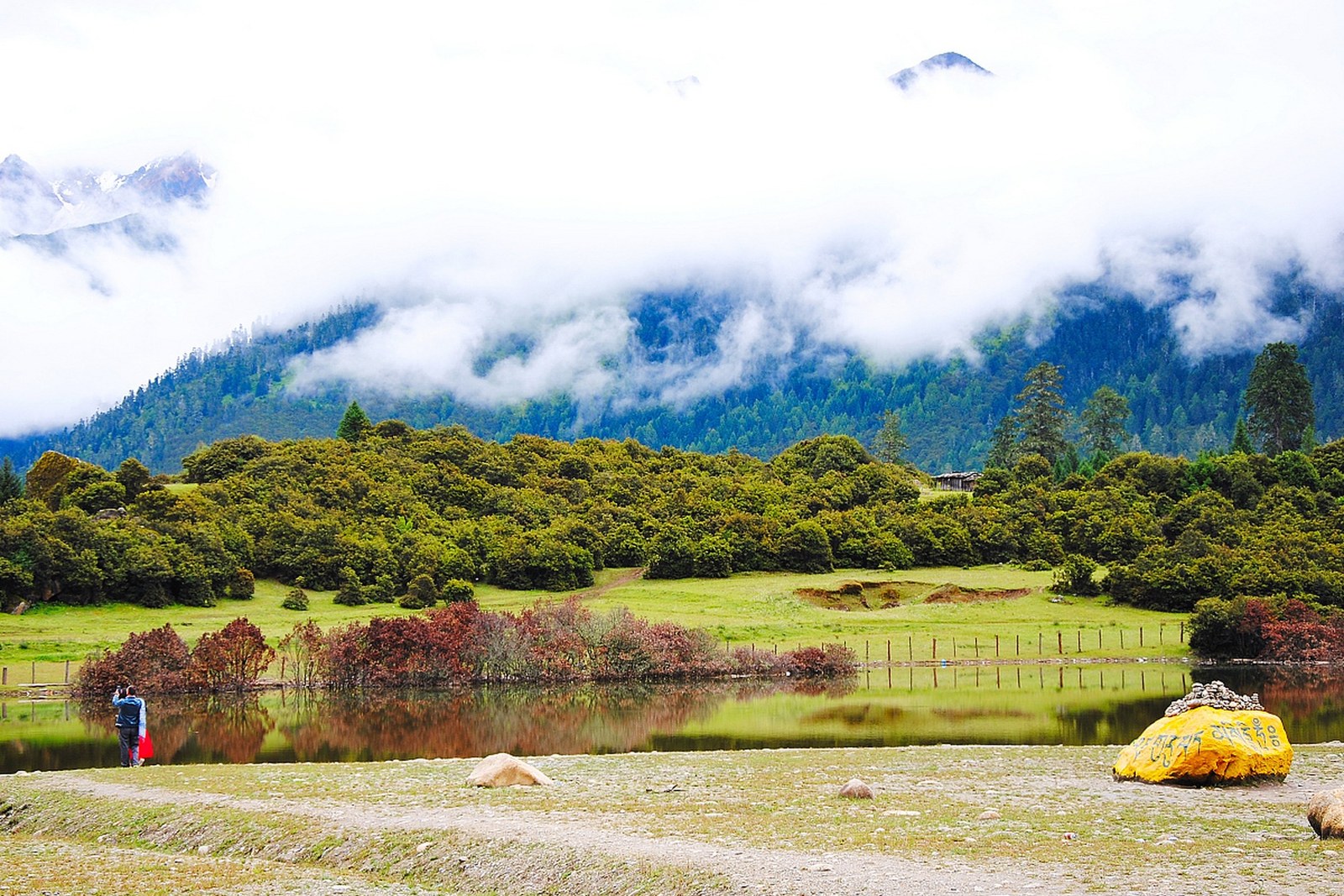
Down in the valley the forest opens into meadow country. 鲁朗镇 Lǔlǎng Zhèn Lulang town, rebuilt in timber style as an alpine resort, spreads along streams and pastures where yaks graze between the lodges and horse trails loop the small 扎塘鲁措 Zhātáng Lǔcuò Zhata Tso lake. The name Lulang is usually glossed as the dragon king’s valley, and the constant drizzle that keeps it green gives the place a soft light photographers chase for hours; wildflowers run through the meadows from spring to autumn.
The valley is also the region’s most pleasant stop. Evenings bring the famous 石锅鸡 shíguō jī stone-pot chicken to long communal tables, nights are cold and starry, and mornings raise again the question of clouds at the pass. Between the pass terrace, the town’s meadow walks and the side road toward Bomi through some of the gorge country’s finest forest, travelers find themselves staying a day longer than planned – which the valley, politely, seems to expect.
Practicalities
- Lulang sits 70-plus kilometers east of Bayi over the Sekyim La on the G318; the pass terrace is the first stop.
- Mornings give the cloud-sea odds; by afternoon clouds usually close over the peaks.
- The town’s stone-pot chicken restaurants make lunch the second attraction – order a pot for the table.
- Weather swings fast at the pass; carry windproof layers even in summer.
Words and Names
鲁朗林海 Lǔlǎng Línhǎi the Lulang Forest Sea, the spruce-fir ocean below the pass; 色季拉山口 Sèjìlā Shānkǒu the Sekyim La, the G318 viewing pass; 鲁朗镇 Lǔlǎng Zhèn Lulang town, the alpine resort in the valley; 扎塘鲁措 Zhātáng Lǔcuò Zhata Tso, the small lake beside the meadows; 鲁朗石锅鸡 Lǔlǎng shíguō jī the valley’s famous stone-pot chicken. Beyond the forest sea, the same 林芝市 Línzhī Shì Nyingchi keeps more places worth the detour: 雅鲁藏布大峡谷 Yǎlǔzàngbù Dà Xiágǔ the canyon of the great bend, 南迦巴瓦峰 Nánjiābāwǎ Fēng the peak at its head, 巴松措 Bāsōngcuò the green lake west of town, or 米堆冰川 Mǐduī Bīngchuān the glacier that reaches the farm fields – four more doors into the same Nyingchi. Once the pass terrace is behind you, our Nyingchi food map fills the table.
flowcloud would say Lulang is where the plateau lets you exhale – green, soft, and suspiciously comfortable. All checked November 2026.
Getting there: Lulang sits 70-plus kilometers east of Bayi over the Sekyim La on the G318, an easy 90-minute drive with the pass terrace as the first stop; continue to Bomi beyond. Mornings hold the cloud sea and the best peak odds. All checked November 2026.