
Luoshuai sits where the road seems to run out of county and into rainforest: a Li village of 56 households and 203 people at the foot of the Yinggeling nature reserve in Yuanmen community, ringed by hills with the Fairy Creek running past the doors. In 2010 the county handed its redevelopment to a tourism company with an unusual brief, and the village answered with a phrase that became its brand: the whole village is one big guesthouse. That is still the best one-line description of the place – a village that decided to become its own lodging.
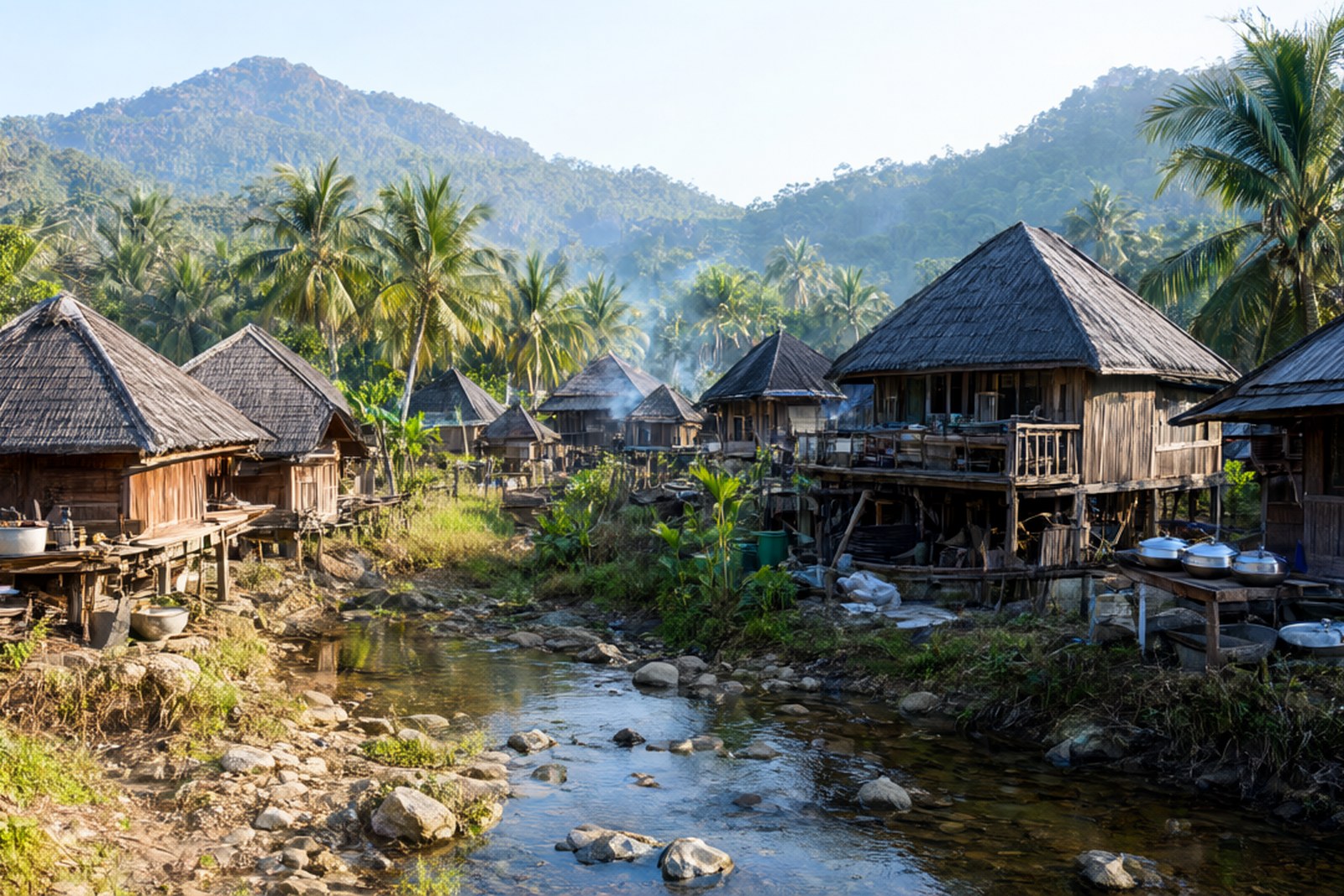
The setting explains the ambition. The county’s own page puts forest cover around the village at 97 per cent and claims ion counts of up to ten thousand per cubic decimetre in the air – a promotional figure, quoted here as claimed – but the substance behind it is real enough: ravine rainforest on every side, a stream clean enough to wade, and footpaths that walk out of the village into the reserve’s green margin within minutes.
The 2010 model was written as an ecological contract. The county brought in the Hainan Tianya Inn tourism company to rebuild the village whole, on promises printed on the official page: fell not one tree, move not one blade of grass, discharge no untreated water, and draw on water, wind and solar power where possible. Families kept their new houses and were offered one or two rooms each to run as their own guest rooms, while the company built the shared plant – a quasi-four-star inn, fifteen villas with 108 beds in all, a restaurant sized for 260 diners and parking for seventy cars. The village opened in November 2011; by the county government’s last published account in 2019 it had taken more than half a million visitors at about 120,000 a year, and household incomes had climbed with it – 9,283 yuan per head by 2016. The honours followed: a national five-star leisure farm rating, a national civil-village title, and a place on the national list of villages of distinctive minority character.
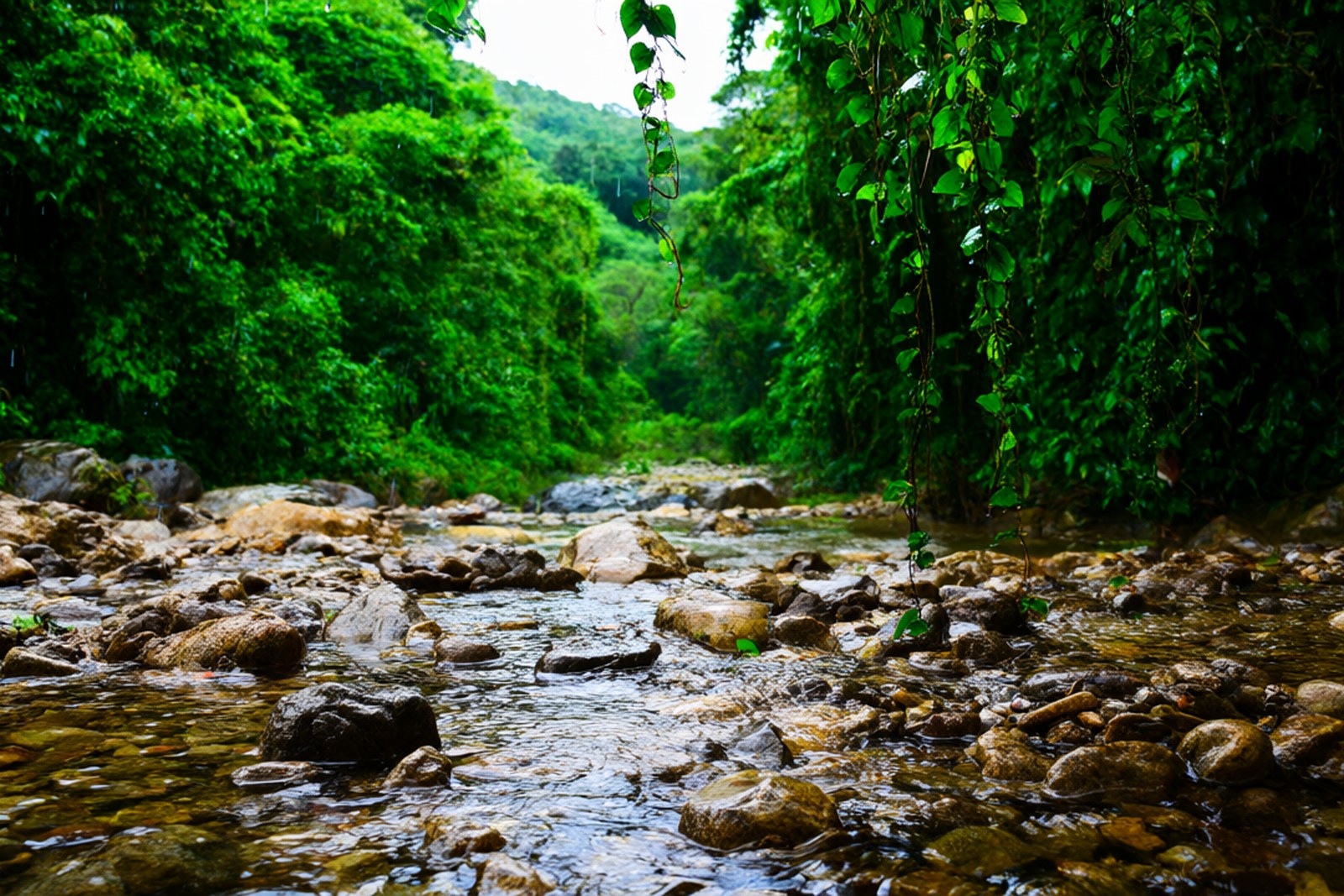
A day here is unhurried by design. The walk is the sight: boat-profiled Li houses along the lanes, grandmothers at the backstrap looms most afternoons according to visitors’ notes, the shaded Fairy Creek walk upstream and, in summer, barefoot paddling where the stones make rapids. The long-table feast – fish-tea jars and three-colour rice down boards set through the middle of the table – and the bamboo-pole dance can be booked through the village operators with a day or two of notice. On beds: the county page counts a few dozen rooms between the inn and the villas, but its figures date to 2019 and the operator’s recent status is not officially updated, so telephone before counting on a room – the companion stay piece on this site tracks the lodging side in detail.
Position Luoshuai correctly and it pairs like a bracket with the rest of the county: it is the rainforest side, at the foot of the Yinggeling reserve – the science and the booking rituals of that reserve’s Yingge-zui experience zone live in this site’s Qiongzhong piece – while the crater and tea country sit across town. A clean day plan runs Yacha, then Luoshuai for the village and the creek, a look up the Yuanmen road toward the Yinggeling wall, and back into town for the tea rows at dusk. Against Hainan’s other Li-village attractions – the performance villages, the festival villages – Luoshuai’s pitch stays quiet: no shows, no gates, just a village that lives inside its own guesthouse.
Practicalities
Tickets. Free – an open village with no gates or ticketing; the long-table feast, bamboo-pole dance and creek activities are arranged and paid through the village operators. Checked October 2026, subject to change.
Opening hours. Open at all hours as a village; the inn, restaurant and experience programmes keep their own hours, with no published uniform timetable.
Closing day. No published closing day – villages do not close; book experiences a day or two ahead so your evening does not depend on walk-in demand.
Getting there. Luoshuai lies in Yuanmen community southwest of Yacha, along the G361 corridor toward Shiyun – roughly twelve to fifteen kilometres and twenty to twenty-five minutes from the county town, by the map’s measure. Leave the Dan-Bai expressway at the Yacha interchange and cross town; the crater sits nine kilometres out the opposite, southeastern side, so the two make a full day either side of lunch in Yacha.
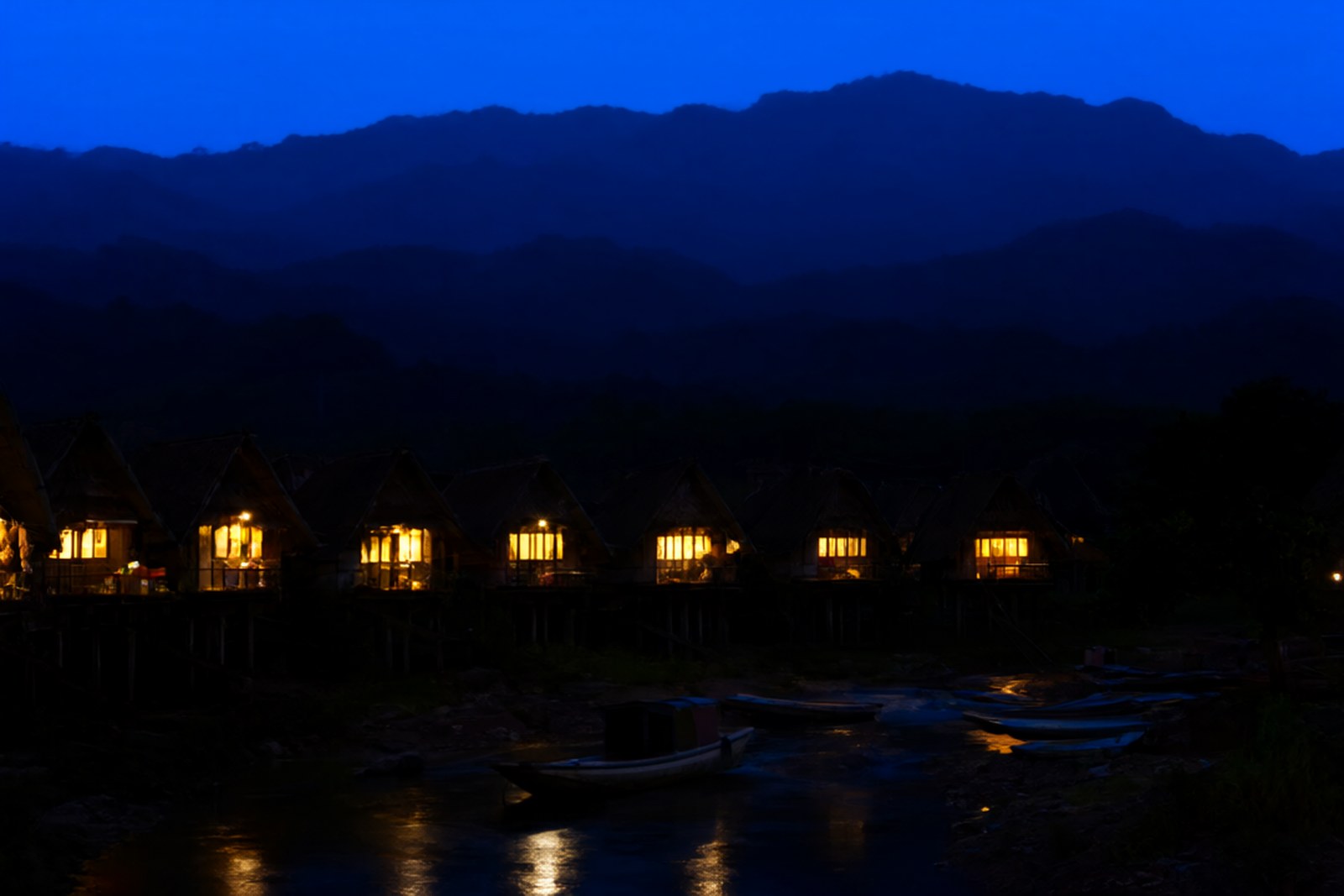
flowcloud would say that Luoshuai is the proof a village can be its own infrastructure – houses that are rooms, a creek that is a pool, a feast that is a restaurant – and that the whole-village guesthouse was Hainan’s quietest good idea of 2010.
Getting there: Luoshuai village lies in Yuanmen community, Baisha Li Autonomous County, Hainan, at the foot of the Yinggeling reserve along the G361 corridor southwest of Yacha – roughly twelve to fifteen kilometres and twenty to twenty-five minutes from the county town after the Dan-Bai expressway’s Yacha interchange; the village is free and open at all hours with no published closing day, and experiences such as the long-table feast and bamboo dance need a day or two of advance booking (checked October 2026, subject to change).