
青石板上的马蹄印,比脚印深。Qīng shí bǎn shàng de mǎtí yìn, bǐ jiǎoyìn shēn – On the bluestone slabs, the hoof prints run deeper than footprints.
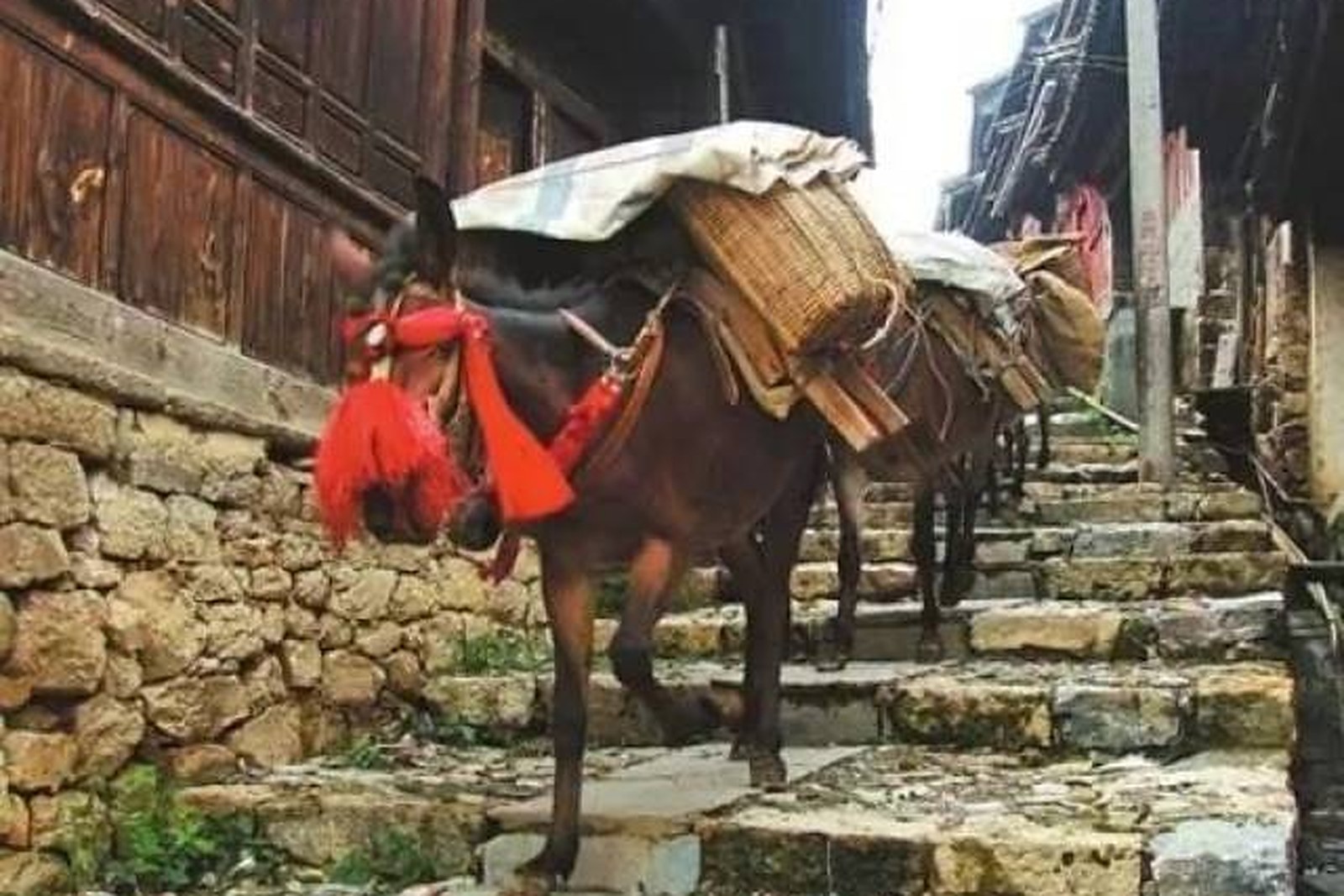
鲁史古镇 Lǔshǐ Gǔzhèn the old town of 鲁史 Lǔshǐ lies in the northeastern hills of 凤庆县 Fèngqìng Xiàn Fengqing County, wedged between the 澜沧江 Láncāng Jiāng Lancang River to the south and the 黑惠江 Hēihuì Jiāng Heihui River to the north – a pinch locals call 夹江 jiá jiāng, river-trapped worth confirming. The place first appears as 阿鲁司 Ālǔsī, a stop the traveller 徐霞客 Xú Xiákè passed through in 1639 worth confirming; an inspector’s post opened a market here in 1598 worth confirming, town status followed in 1929, and by the prefecture’s own count the market has run for some 426 years worth confirming. It made its money as the first great town of the 滇西 Diānxī western-Yunnan tea-horse road: 凤庆 Fèngqìng tea carried north to 巍山 Wēishān, 下关 Xiàguān and 昆明 Kūnmíng, and beyond toward Tibet, India and Myanmar worth confirming. The plan survives as 三街七巷一广场 sān jiē qī xiàng yì guǎngchǎng three streets, seven lanes and one square: 楼梯街 Lóutī Jiē the staircase street, 上平街 Shàngpíng Jiē and 下平街 Xiàpíng Jiē, seven named lanes and the 四方街 Sìfāng Jiē market square at the heart. The showpiece is the staircase itself, the best-preserved tea-horse segment in western Yunnan: 266 m long, 4 m wide and 66 steps worth confirming, its bluestone hollowed by hooves into print-shaped dips, and listed by the State Council on 5 March 2013 as part of the 茶马古道鲁史段 Chámǎ Gǔdào Lǔshǐ Duàn in the seventh batch of national key cultural relics protection units worth confirming. The houses are the hybrid the trade produced – 四合五天井 sìhé wǔtiānjǐng four-side courtyards and 三房一照壁 sānfáng yī zhàobì three-wing compounds, Jiangnan bones with 南诏 Nánzhào Bai details – in the 张家大院 Zhāngjiā Dàyuàn and 骆家大院 Luòjiā Dàyuàn and the lanes behind them, with a 文昌宫 Wénchāng Gōng, a 魁星楼 Kuíxīng Lóu, an old stage and a 云大书院 Yúndà Shūyuàn worth confirming.
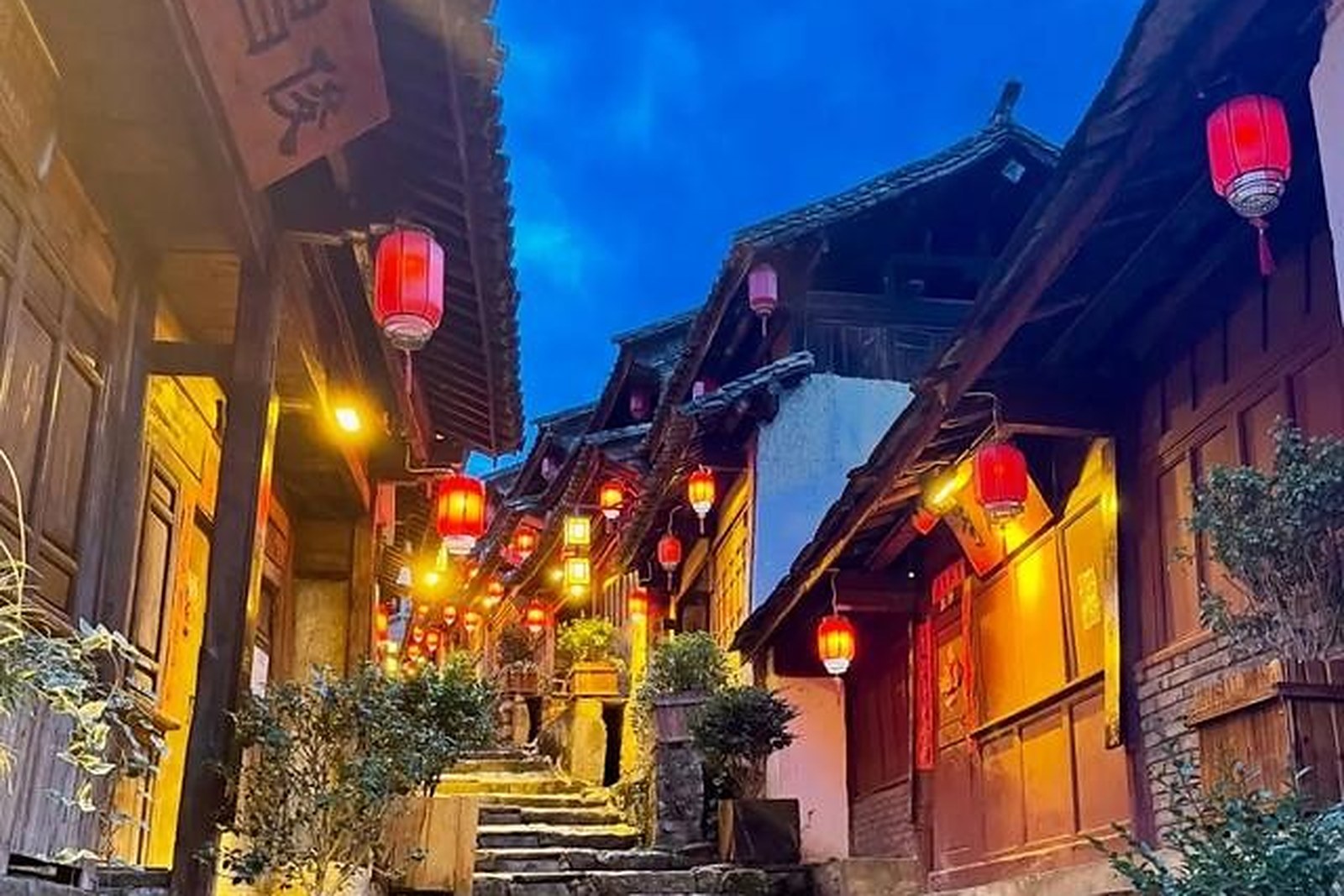
The town is free and open around the clock – the honest ticket price for a tea-horse town is zero worth confirming – with inns and shops roughly 8:00 to 20:00 worth confirming. It sits about 82 to 84 km and two hours’ drive from the 凤庆 county seat worth confirming, reached by the 凤鲁公路 Fènglǔ Gōnglù; buses run from the county bus station to 鲁史镇 Lǔshǐ Zhèn and drop you at the town edge worth confirming. 云县站 Yúnxiàn Zhàn on the 大临铁路 Dàlín Tiělù (opened 30 December 2020) is about 35 km from the county seat worth confirming, and 凤庆中和机场 Fèngqìng Zhōnghé Jīchǎng, the prefecture’s third airfield, opened on 26 September 2023 worth confirming. Sleep inside the old town in a converted courtyard inn at 100 to 200 yuan worth confirming, which buys you the town after the day-trippers leave and the lanterns come on. Eat the local list – 粑粑卷 bābā juǎn a rice pancake wrapped around sprouts and noodles, 鲁史臭豆腐 Lǔshǐ chòudòufu the town’s fermented tofu, 鲁史火腿 Lǔshǐ huǒtuǐ ham and 风肝 fēnggān wind-dried liver – and buy the souvenirs that made the county famous: 凤庆滇红 Fèngqìng Diānhóng Dianhong black tea, walnuts and the town’s old-method soy sauce worth confirming.
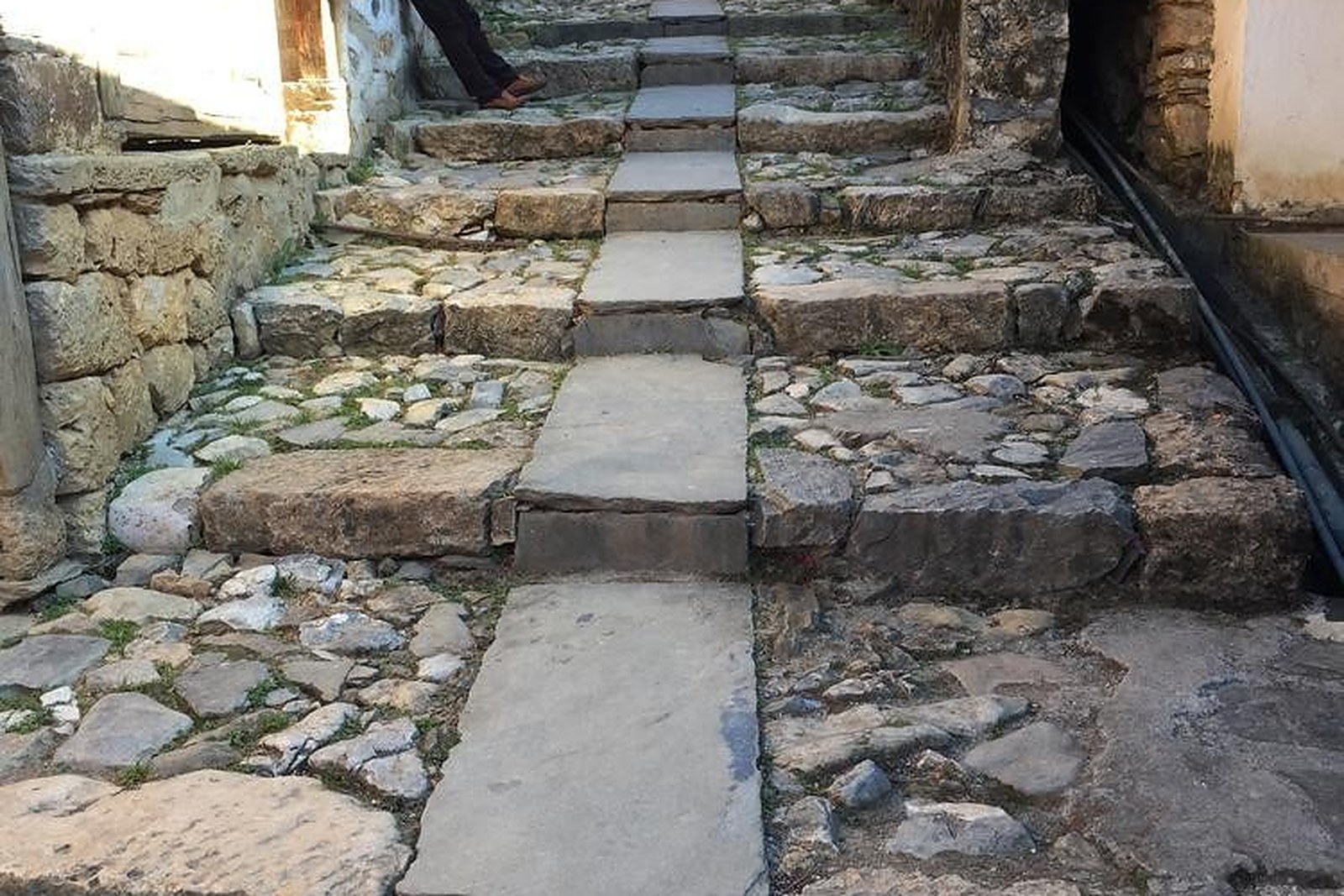
Come between November and April, when the slabs are dry and the lanes are cool; the summer rains turn the stone green and slick and the tourists thin. Morning is the hour for 楼梯街 Lóutī Jiē, when low side light rakes across the hoof prints and the shop fronts are just opening their 排窗 páichuāng counter boards; the square wakes around 8:00 and the market still meets daily worth confirming. Midday, work the lanes behind the stairs – 骆家巷 Luòjiā Xiàng and the rest – where the courtyards keep their silence and the 木柜台 mùguìtái counters and 马鞍石 mǎ’ānshí millstones lean against the walls as leftover proof of the mule trade. Late afternoon, take the ridge viewpoint for the town in one frame: grey tiles stacked down the slope, the square at the centre, sugarcane and tea hills beyond. Two courtesies: this is a lived-in village, so ask before you photograph people, and wear flat shoes – the stairs are polished by four centuries of hooves, not by sandpaper. Pair the day with the 凤庆 county seat’s 文庙 Wénmiào Confucian temple and 青龙桥 Qīnglóng Qiáo bridge, and, for tea drinkers, the 3,200-year-old 锦绣茶尊 Jǐnxiù Cházūn tea king tree up in 小湾镇 Xiǎowān Zhèn worth confirming – the ancestor of every cup of Dianhong you will ever drink. All checked October 2026.
Practicalities
- Rating: 鲁史古镇 Lǔshǐ Gǔzhèn is a tea-horse-road market town in 鲁史镇 Lǔshǐ Zhèn, north-eastern 凤庆县 Fèngqìng Xiàn, between the 澜沧江 Láncāng Jiāng and 黑惠江 Hēihuì Jiāng – provincial famous town from 2006, Chinese historical and cultural town from January 2019, and its 楼梯街 Lóutī Jiē staircase street listed by the State Council on 5 March 2013 in the seventh batch of national key cultural relics protection units as part of 茶马古道鲁史段 Chámǎ Gǔdào Lǔshǐ Duàn worth confirming.
- Tickets: Free and open around the clock, with inns and shops roughly 8:00-20:00 and some old houses and small exhibitions free or nearly so worth confirming.
- Address: North-eastern 凤庆县 Fèngqìng Xiàn, between the 澜沧江 Láncāng Jiāng and 黑惠江 Hēihuì Jiāng – about 82-84 km and two hours by road from the county seat via the 凤鲁公路 Fènglǔ Gōnglù, with buses from the county bus station; 云县站 Yúnxiàn Zhàn on the 大临铁路 Dàlín Tiělù is about 35 km from 凤庆 town worth confirming.
- Time needed: A full day and an overnight – morning on the 楼梯街 Lóutī Jiē, midday in the lanes and courtyards, late afternoon from the ridge viewpoint; November to April is the dry season.
Words and Names
茶马古道 Chámǎ Gǔdào the tea-horse road · 楼梯街 Lóutī Jiē the staircase street · 马帮 mǎbāng the mule caravans · 三街七巷一广场 sān jiē qī xiàng yì guǎngchǎng three streets, seven lanes, one square · 四方街 Sìfāng Jiē the market square · 三房一照壁 sānfáng yī zhàobì three wings and a screen wall · 粑粑卷 bābā juǎn the rice-pancake wrap · 滇红 Diānhóng Dianhong black tea · 夹江 jiá jiāng the river-pinched setting · 凤庆 Fèngqìng Fengqing
flowcloud would say: 鲁史的台阶是被马蹄一寸寸啃出来的——六百年来马帮负责赶路,青石板负责记账,如今换成游客的鞋底继续打卡。
Getting there: 鲁史镇 Lǔshǐ Zhèn, north-eastern 凤庆县 Fèngqìng Xiàn between the 澜沧江 Láncāng Jiāng and 黑惠江 Hēihuì Jiāng – about 82-84 km and two hours by road from the county seat via the 凤鲁公路 Fènglǔ Gōnglù (worth confirming the details), free and open around the clock, and the honest plan is a full day plus an overnight for the 楼梯街 Lóutī Jiē at dawn. All checked October 2026.