
Luxun Park: A Century-Old City Park with the Tomb of Lu Xun, a Famous Morning-Exercise Crowd and a Sino-Japanese Cherry Garden at Dongjiangwan Road 146 in Hongkou District, Shanghai
一园晨武声犹壮,百代文魂气自清。Yī yuán chén wǔ shēng yóu zhuàng, bǎi dài wén hún qì zì qīng – The sound of morning exercise in the park remains strong; the literary spirit of a hundred generations keeps its own clarity.
鲁迅公园 Lǔxùn Gōngyuán Luxun Park is not a manicured garden showpiece — it is, plainly put, the great old public park of north Shanghai and the literary pilgrimage site of the whole country: the park fills its block at 东江湾路 Dōngjiāngwān Lù Dongjiangwan Road 146 in 虹口区 Hóngkǒu Qū Hongkou District, beside the 虹口足球场 Hóngkǒu Zúqiúchǎng Hongkou Football Stadium, and its story reaches back to around 1905, when this ground was first laid out as a park for the growing northern suburbs — known in its early decades as 虹口公园 Hóngkǒu Gōngyuán Hongkou Park. Its fame, however, rests on one man: 鲁迅 Lǔ Xùn Lu Xun, the founding giant of modern Chinese literature, who lived his last years in this district and whose tomb was moved here in 1956, set on a terraced mound with a statue, cypresses and his name cut large in stone. Around the tomb grew the 上海鲁迅纪念馆 Shànghǎi Lǔxùn Jìniànguǎn Shanghai Lu Xun Memorial Hall, and in later years a 樱花园 Yīnghuā Yuán cherry garden planted as a Sino-Japanese friendship grove. What you actually visit is a free, leafy, loudly alive neighbourhood park that happens to hold one of China’s most solemn literary shrines.
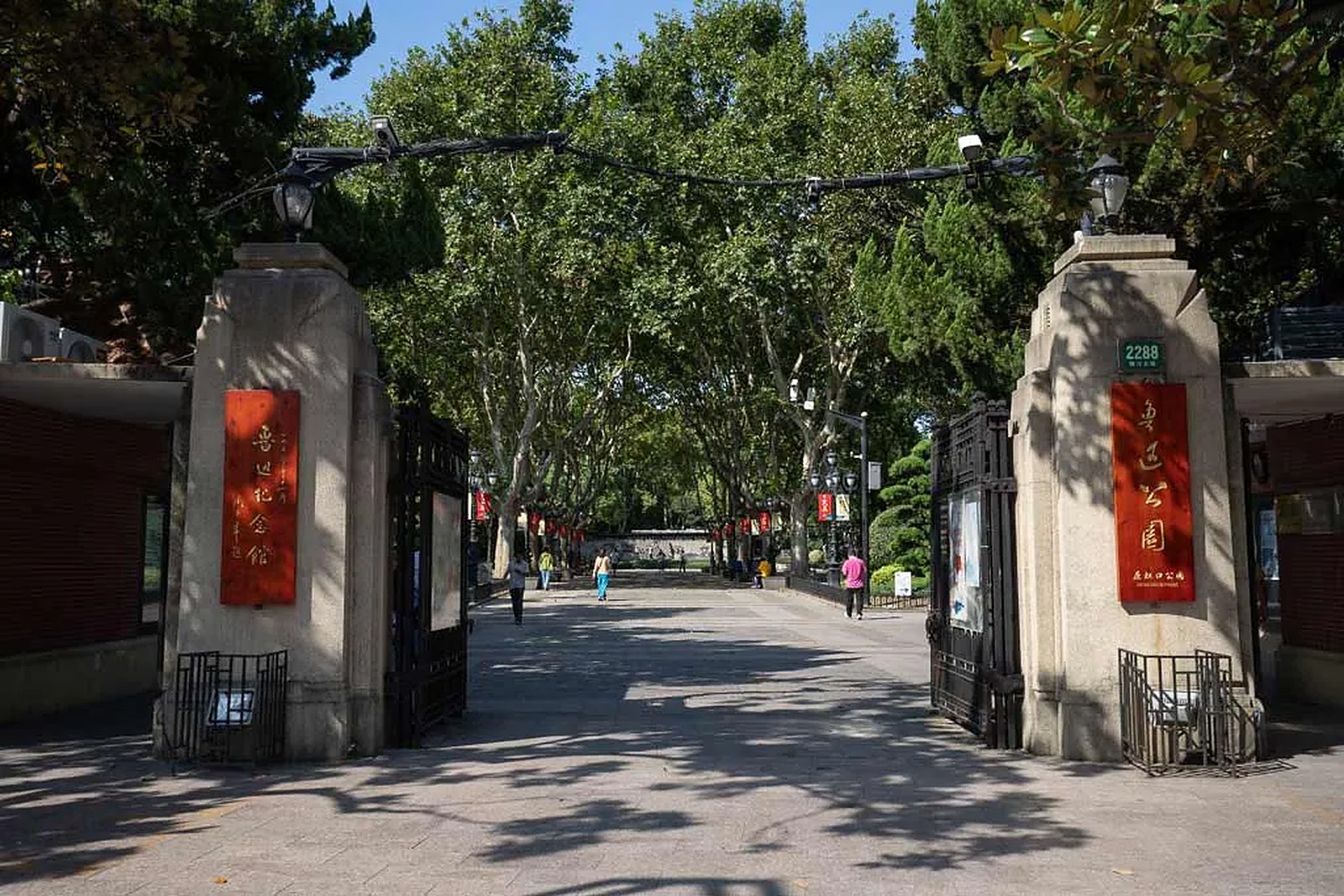
Call it honestly: entry to the park is free, and the memorial hall inside is free of charge too (worth confirming the details for the memorial hall’s current opening hours and any reservation requirement), and 虹口足球场站 Hóngkǒu Zúqiúchǎng Zhàn Hongkou Football Stadium station on Metro Lines 3 and 8 sets you down at the gate within minutes. The honest warning is timing: this park is famous precisely for being used — dawn and morning hand the paths, lawns and pavilions to an army of morning exercisers, tai chi circles, dancers, singers and chess players that is among the best in the city, so visitors wanting hushed contemplation of the tomb should come early for the atmosphere or late afternoon for the quiet. Weekends add families and strollers to the crowd. Give it an hour and a half to two hours, longer if you read the memorial hall properly.
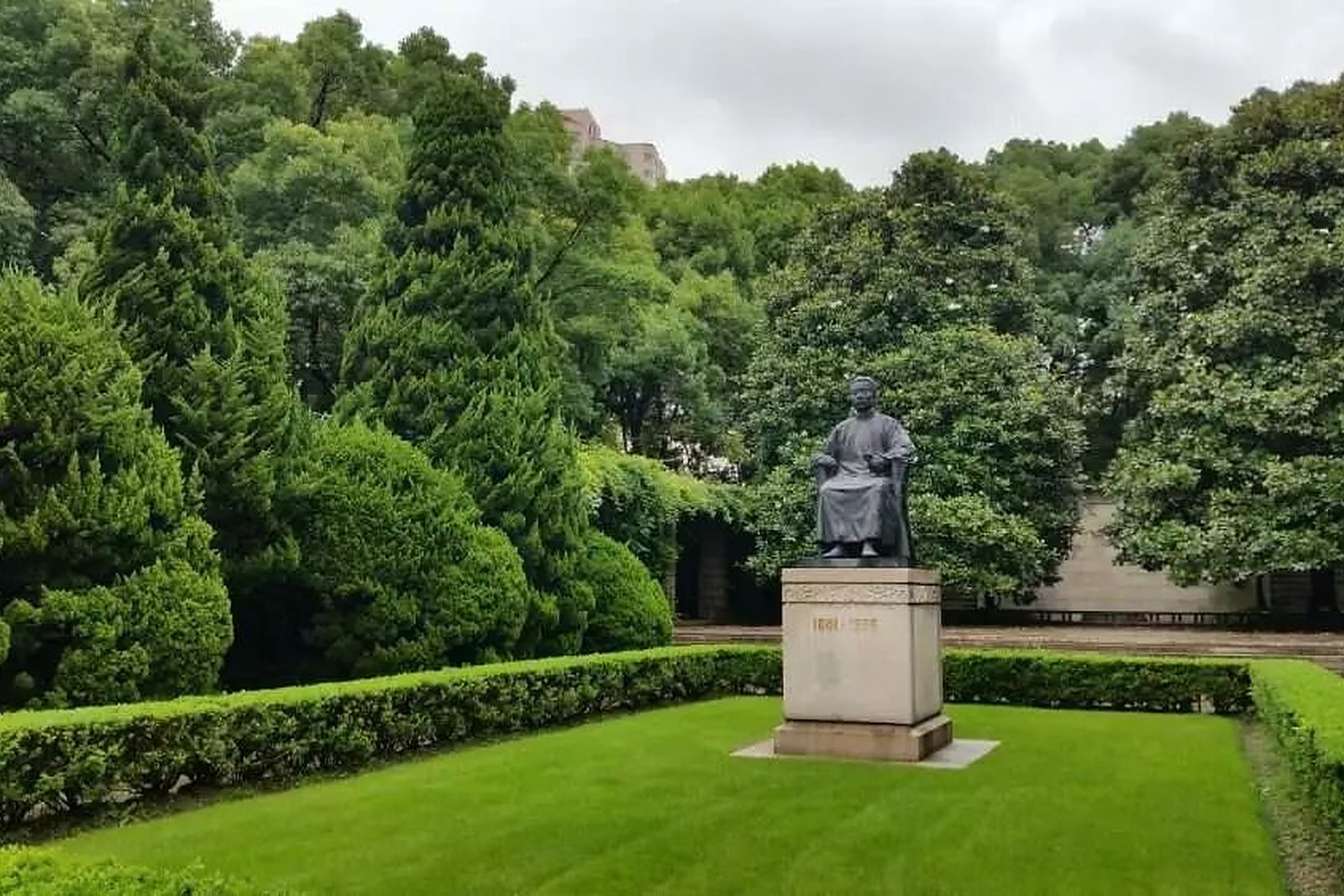
The honest star is the tomb of Lu Xun himself — the broad stone terrace, the seated statue, the inscription in his own honour, and the quiet queue of visitors who still leave flowers there, a piece of national memory sitting inside an ordinary park rather than behind a museum rope. What gets oversold is the cherry garden: the 樱花园 Yīnghuā Yuán is genuinely lovely for a week or two of spring blossom, but posters make it look like the whole park blooms at once, and off-season it is simply a pleasant corner (worth confirming the details for the current blossom season, which shifts with the weather). What repays the effort is the park’s daily life around the monument: the morning exercisers who treat the literary shrine as their own backyard, the shaded paths, the lake corner, and the memorial hall’s manuscripts and photographs for those who want the man behind the tomb. Come for the layering of the place: gate, then crowd, then the stone quiet at the centre.
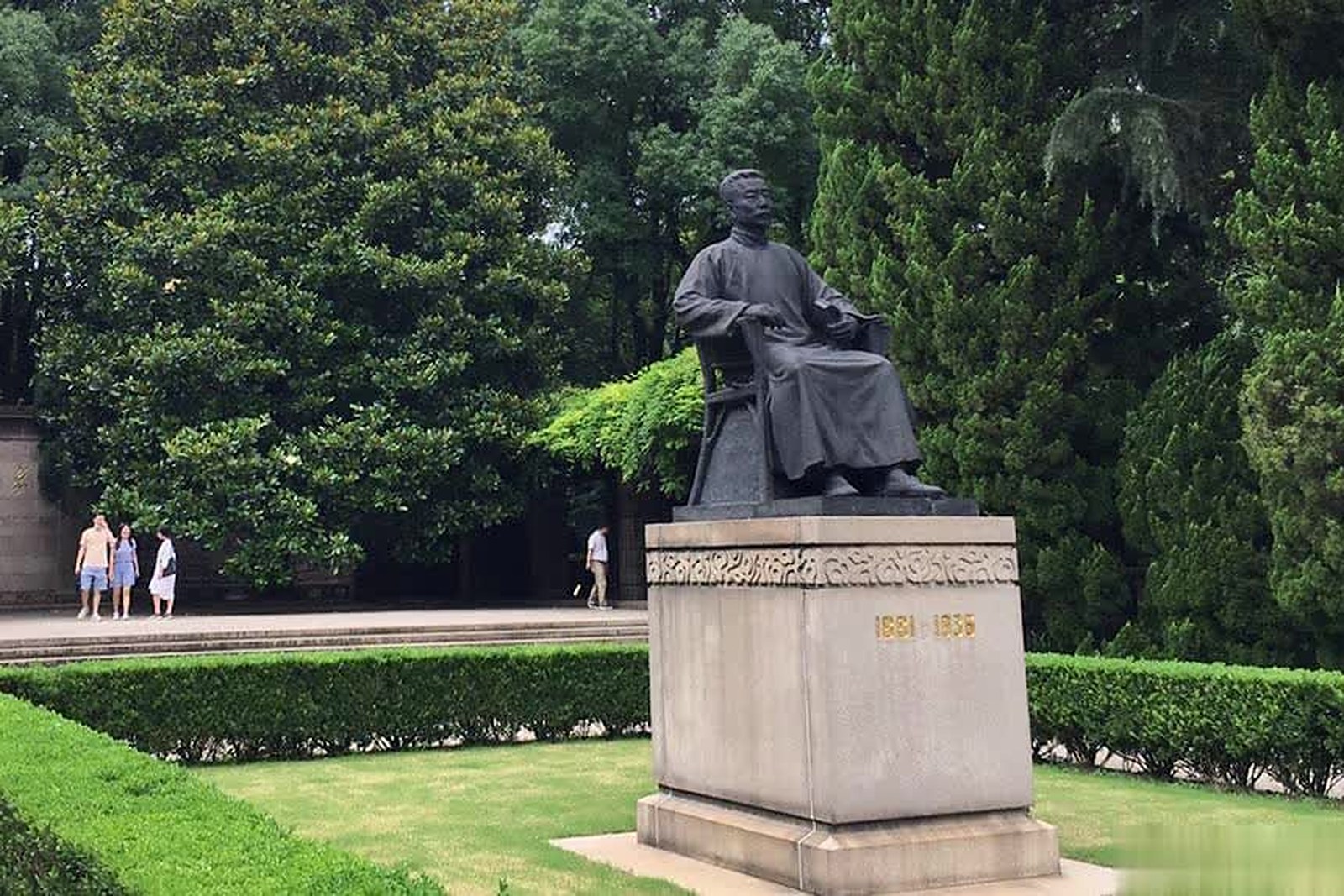
The self-aware postscript: I stood at the edge of the tomb terrace one weekday morning while a retired teacher led a line of tai chi regulars on the lawn below. “We exercise beside him every day,” she said, between slow movements, “for twenty years now — the tomb is not sad to us; he is just the most patient neighbour in the park”. That is the visit in miniature. From the terrace steps, looking back over the exercisers toward the trees, the park holds both halves of itself in one view — a city park fully alive and a memorial fully kept, the angle no postcard manages. 鲁迅公园 Lǔxùn Gōngyuán suits whoever treats it as a living neighbourhood park with a great writer’s tomb at its heart first and a monument checklist second, and disappoints anyone expecting a fenced, ticketed scenic area with nothing but quiet.
Nearly everything else on this Hongkou list lies within a short walk or ride: the L-shaped lanes of 多伦路文化名人街 Duōlún Lù Duolun Road Cultural Celebrities Street wait a short walk south near 四川北路 Sìchuān Běi Lù Sichuan North Road, the concrete maze of 上海1933老场坊 Shànghǎi 1933 Lǎochǎngfáng Shanghai 1933 Old Millfun stands a short ride east at 溧阳路 Lìyáng Lù Liyang Road, the galleries of 上海犹太难民纪念馆 Shànghǎi Yòutài Nànnán Jìniànguǎn the Shanghai Jewish Refugees Museum sit further south-east on 长阳路 Chángyáng Lù Changyang Road, and the riverfront viewing platforms of 北外滩滨江 Běiwàitān Bīnjiāng the North Bund Riverside open along the 黄浦江 Huángpǔ Jiāng Huangpu River to the south — all inside the same 虹口区 Hóngkǒu Qū Hongkou District whose green heart this century-old park remains.
Practicalities
- Rating: ★★★★☆ — a genuinely alive century-old park with one of modern China’s most important tombs and the city’s best morning-exercise scene; go early, and expect company rather than silence.
- Tickets: Free entry to the park and the Lu Xun Memorial Hall (worth confirming the details for the memorial hall’s current hours and reservation system).
- Address: 鲁迅公园 Lǔxùn Gōngyuán, 东江湾路 Dōngjiāngwān Lù Dongjiangwan Road 146, 虹口区 Hóngkǒu Qū Hongkou District, Shanghai — a short walk from Hongkou Football Stadium station on Metro Lines 3 and 8.
- Time needed: An hour and a half to two hours for the tomb, the memorial hall and the paths; half a morning if you linger over the morning exercisers.
Words and Names
鲁迅公园 Lǔxùn Gōngyuán Luxun Park · 虹口公园 Hóngkǒu Gōngyuán Hongkou Park, the site’s old name · 鲁迅 Lǔ Xùn Lu Xun, the founding writer of modern Chinese literature · 鲁迅墓 Lǔ Xùn Mù the Tomb of Lu Xun, relocated here in 1956 · 上海鲁迅纪念馆 Shànghǎi Lǔxùn Jìniànguǎn Shanghai Lu Xun Memorial Hall · 樱花园 Yīnghuā Yuán the cherry garden, planted for Sino-Japanese friendship · 晨练 chénliàn morning exercise · 东江湾路 Dōngjiāngwān Lù Dongjiangwan Road · 虹口足球场站 Hóngkǒu Zúqiúchǎng Zhàn Hongkou Football Stadium station · 虹口区 Hóngkǒu Qū Hongkou District
flowcloud would say that 鲁迅公园 Lǔxùn Gōngyuán is the rare park where national memory and neighbourhood life share the same lawn — laid out around 1905 as 虹口公园 Hóngkǒu Gōngyuán Hongkou Park, renamed for 鲁迅 Lǔ Xùn Lu Xun after his tomb was moved to this ground in 1956, and kept busy ever since by the morning exercisers who make its paths at 东江湾路 Dōngjiāngwān Lù Dongjiangwan Road 146 in 虹口区 Hóngkǒu Qū Hongkou District famous across the city (worth confirming the details for the memorial hall’s current hours and reservation rules) — and that the honest move is an early morning entered through 虹口足球场站 Hóngkǒu Zúqiúchǎng Zhàn Hongkou Football Stadium station on Metro Lines 3 or 8, because the solemn-monument expectation is the poster half and the tai chi, dancing and flower-bearing visitors around the tomb are the real half, and the park repays whoever comes at dawn to watch both halves meet. All checked October 2026.
Getting there: Metro Line 3 or 8 to 虹口足球场 Hóngkǒu Zúqiúchǎng Hongkou Football Stadium station, exit 1, then a short walk south to the park gates on 东江湾路 Dōngjiāngwān Lù East Jiangwan Road 146 (worth confirming the details for the memorial-hall entry, which keeps its own ticket clock); the 鲁迅墓 Lǔxùn Mù Lu Xun tomb sits on the park’s rise. All checked October 2026.